What Are Privacy Coins? The Complete 2026 Guide to Private Crypto
Privacy coins are cryptocurrencies designed to hide details of a transaction, such as the sender, receiver, and amount, on their public blockchains. Unlike Bitcoin, where transactions are traceable, privacy coins use advanced cryptography to make payments far harder or practically impossible to track, improving financial confidentiality.
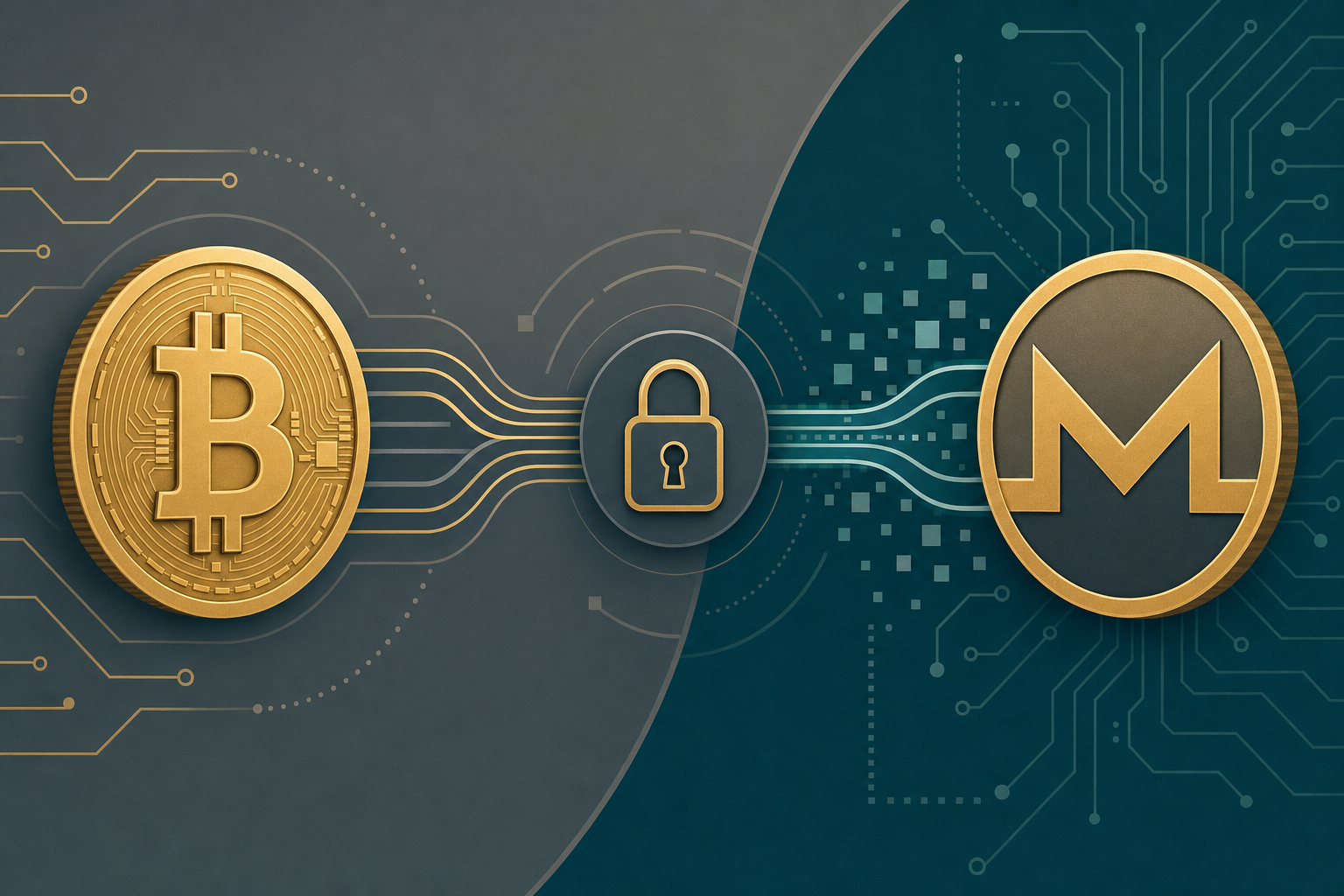
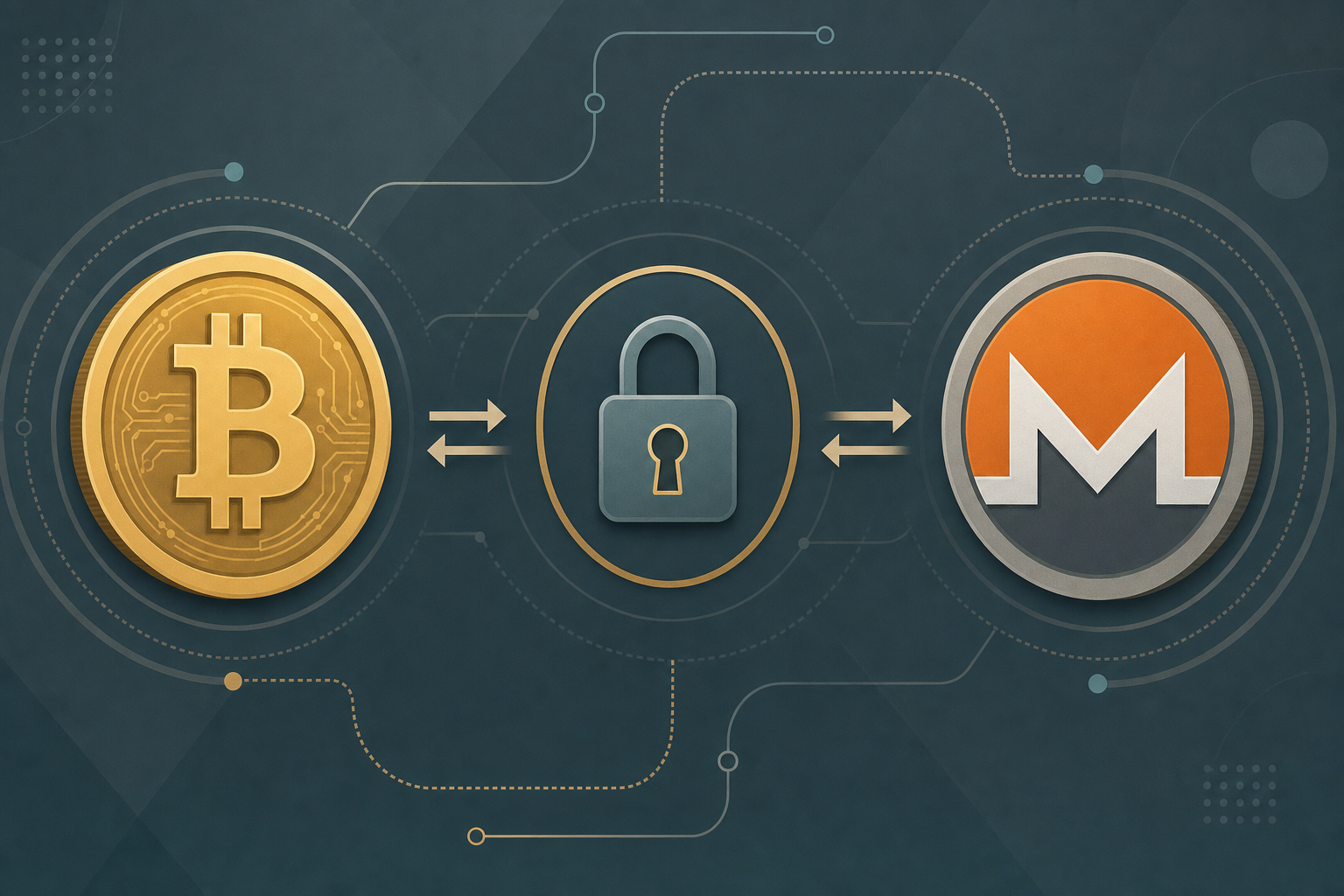
If you already hold Bitcoin or other crypto, you can swap BTC to XMR privately using non-custodial tools to increase your on-chain privacy.
What Are Privacy Coins Explained Simply
To understand what privacy coins are, start with how normal cryptocurrencies work.
On Bitcoin or most blockchains, every transaction is recorded on a public ledger. Anyone can see which address sent how much to which address, forever. Addresses are pseudonymous, but with enough clues, they can often be tied back to real people.
Privacy coins try to fix this. They are cryptocurrencies built so that:
- Wallet addresses are hard to link to a real identity
- Transaction amounts are hidden or obscured
- Who paid whom is very difficult to determine from the blockchain
Instead of making all the details of a payment public, privacy coins reveal only what is needed to prove that a valid transaction happened, without exposing sensitive information.
In simple terms, privacy coins make it possible to send and receive crypto without broadcasting your financial life to the whole world.
How Do Privacy Coins Work?
Under the hood, privacy coins use different cryptographic techniques to hide data while still keeping the network secure and auditable. Each project combines these building blocks in its own way.
Key privacy technologies used by privacy coins
Here are the most common techniques behind major privacy cryptocurrencies:
- Ring signatures
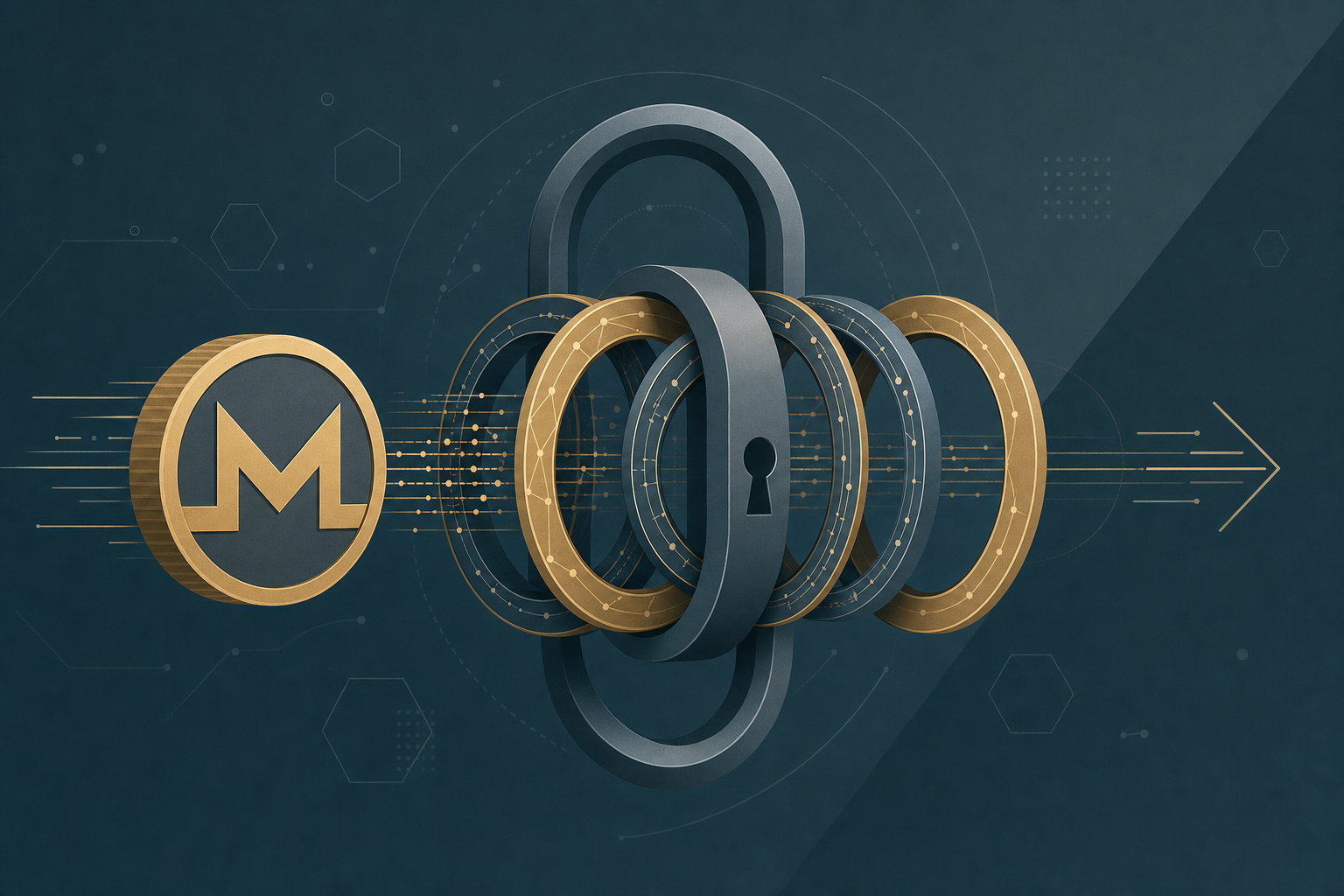
Used heavily by Monero, ring signatures mix your transaction with decoys. When you send coins, the blockchain shows a “ring” of possible senders. An outside observer cannot know which one is real, only that one of them is valid. - Stealth addresses
Instead of sending coins directly to a publicly reused address, stealth address systems generate a unique one-time address for every payment. Only the true recipient can see which outputs belong to them, making it very hard to see who is getting paid. - Confidential transactions
Amounts are hidden using cryptographic commitments. The network can still verify that inputs equal outputs (no coins are created out of thin air), but the actual numbers remain concealed. - Zero-knowledge proofs (ZKPs)
Coins like Zcash use zk-SNARKs or related systems that let someone prove “this transaction is valid” without revealing any of its underlying details. This enables fully shielded transactions where sender, receiver, and amount can all be concealed. - CoinJoin & mixers (Bitcoin-level privacy)
While not “privacy coins” in the strict sense, CoinJoin and mixing tools bundle multiple users’ transactions together, breaking straightforward tracing. Some privacy-focused coins automate similar ideas at the protocol level.
Differences between major privacy coin designs
Not all privacy coins work the same way. A few important design choices include:
- Default vs optional privacy
Monero (XMR) enforces privacy on every transaction by default.
Zcash (ZEC) lets users choose between transparent addresses (like normal crypto) and shielded addresses (fully private). - Base-layer vs add-on privacy
Some projects, like Monero, build privacy directly into the core protocol.
Others, like Dash or Bitcoin + CoinJoin, rely on optional features or third-party tools. - Auditability vs maximum anonymity
Some systems aim for a balance where supply can be easily audited, while others push for maximum privacy, which can make external auditing more complex.
You do not need to understand every cryptographic detail to use privacy coins. Wallets and non-custodial swap tools like GhostSwap abstract the heavy math away, so you just choose your coin and send.
Why Do Privacy Coins Matter?
Knowing what privacy coins are is only half the story. The real question is: why do they exist at all?
Financial privacy is becoming rare
Most people are used to private banking by default. Your bank account history is not public for the world to inspect.
Public blockchains flipped this model. Suddenly, anyone with a block explorer can see transaction histories and follow money trails. Over time, as addresses are linked to exchanges, merchants, and KYC accounts, those on-chain trails can reveal a lot about your life.
Privacy coins are an attempt to bring back something closer to “cash-like” privacy in an increasingly transparent financial system.
Mitigating surveillance and data leaks
On-chain analytics firms and chain surveillance tools are getting more sophisticated every year. They cluster addresses, track behavior patterns, and can often identify which exchange, wallet, or service was involved in an individual transaction.
This opens up risks:
- Criminals could target wealthy addresses they discover on-chain
- Companies or governments could draw detailed profiles of people’s spending
- Data leaks from centralized services could permanently tie addresses to real identities
Privacy coins help reduce the amount of traceable information available in the first place, cutting the data at the source.
Not just for “people with something to hide”
Common legitimate reasons people use privacy coins include:
- Protecting salary payments for remote workers
- Preventing competitors from analyzing a business’s on-chain finances
- Preserving personal security in high-risk regions
- Donating to sensitive causes without exposing your identity
In many countries, the discussion around privacy coins sits at the intersection of financial freedom, civil liberties, and regulatory concerns. Some exchanges have delisted them due to compliance pressure, even while their core code remains fully legal and open-source.
Privacy Coins Examples and Use Cases
To make the concept concrete, here are some of the most well-known privacy coins and how they are used in practice.
Monero (XMR)
Monero is the best-known privacy-focused cryptocurrency and one of the longest-running projects in this niche.
- Uses ring signatures, RingCT (Ring Confidential Transactions), and stealth addresses
- Privacy is enabled by default on every transaction
- Emphasizes fungibility, so every coin is indistinguishable from every other coin
Monero is commonly used for private peer-to-peer payments, donations, and as a “privacy layer” next to more public assets like Bitcoin. For example, users often swap BTC for XMR when they want to move value into a more private asset without going through a centralized exchange.
Zcash (ZEC)
Zcash introduced zero-knowledge proofs (zk-SNARKs) into a production cryptocurrency.
- Supports both transparent (t-address) and shielded (z-address) transactions
- Shielded transactions hide sender, receiver, and amount
- Gives users the choice between public and private transfers
Zcash is often used when people want “switchable privacy” or regulatory flexibility since its transparent mode is easier to handle for some businesses and institutions.
Other privacy-oriented projects
Beyond XMR and ZEC, there are additional coins and protocols that focus on privacy:
- Firo (FIRO) which experiments with new privacy protocols like Lelantus
- Secret Network (SCRT) focusing on privacy-preserving smart contracts
- Bitcoin + CoinJoin tools as a more limited, opt-in form of transaction privacy
Each project takes a different approach to the balance between usability, scalability, and privacy strength.
You can swap XMR for BTC, ETH, USDT and 1,500+ other coins on GhostSwap without KYC.
Typical use cases for privacy coins
- Everyday private payments
Paying freelancers, friends, or vendors without exposing wallet balances or transaction history. - Cross-border transfers
Moving value across borders in regions with capital controls or unstable banking systems, while keeping counterparties more private. - Donations
Supporting open-source projects, journalism, or NGOs where donor privacy is important. - Privacy layer for traders
Temporarily converting transparent coins into privacy coins to reduce traceability between public exchange accounts or on-chain activities.
Pros and Cons of Privacy Coins
Like any technology, privacy coins come with trade-offs. Understanding them helps you decide whether and how to use them responsibly.
Advantages of privacy coins
- Improved financial privacy
Transactions are far less linkable to your real-world identity or total holdings. - Better fungibility
With strong privacy, coins do not carry a visible “history” on-chain, so they are less likely to be blacklisted for what previous owners did. - Protection from profiling
Harder for data brokers, chain analytics firms, or malicious actors to map your full transaction history. - Closer to digital cash
Mimics the privacy and freedom of physical cash payments in a digital, borderless form.
Disadvantages and risks
- Regulatory uncertainty
Some centralized exchanges have restricted or delisted privacy coins following guidance in certain jurisdictions. This can affect liquidity and access. - Perception issues
Because privacy can also be abused by criminals, privacy coins sometimes receive negative media coverage or political pushback. - Technical complexity
Advanced cryptography makes the code more complex to audit, and there can be a higher learning curve for users. - Transaction size and speed
Privacy features can increase transaction size and verification time compared to simpler chains, although many projects work continuously on optimization.
Before using any privacy coin, it is wise to understand local regulations and choose reputable wallets and tools.
How Privacy Coins Relate to Trading on GhostSwap
Because many large centralized exchanges now apply strict listing standards, actually obtaining and using privacy coins can be tricky for everyday users.
This is where non-custodial swap platforms become useful. GhostSwap lets you swap one coin for another directly from your own wallet, without account creation, custodial deposits, or KYC. That aligns naturally with the privacy-first philosophy behind coins like Monero.
Using BTC & XMR together
Bitcoin remains the most liquid and widely recognized cryptocurrency, but its transaction history is fully public. Some users combine Bitcoin’s liquidity with Monero’s privacy by moving between them as needed.
- Hold or earn BTC for its ecosystem and adoption benefits
- Swap a portion into XMR to gain stronger on-chain privacy
- Swap back to BTC or other assets when you need to interact with more public services
On GhostSwap, this can be done as a single step through a non-custodial swap, without leaving your wallet or exposing your identity to a centralized intermediary.
Non-custodial by design
When you trade on GhostSwap, you remain in control of your keys. The platform does not hold user funds, which reduces custodial risk and minimizes the sensitive data any single service has about you.
Combined with privacy coins, this allows a flow where your personal information is not tied to your on-chain actions, as long as you handle wallets and network hygiene carefully.
Ready to Start Trading?
Privacy coins are most powerful when you can move into and out of them fluidly.
If you already hold BTC and want to explore privacy in practice, you can swap crypto instantly using a private, non-custodial swap and receive Monero directly to your own wallet.
Frequently Asked Questions
Are privacy coins legal?
In most countries, simply owning or using a privacy coin is not illegal. However, regulations differ by jurisdiction, and some centralized exchanges have delisted privacy assets due to compliance concerns.
It is your responsibility to understand and follow local laws regarding cryptocurrency use, taxation, and reporting. Using privacy coins for clearly illegal activities is still illegal, just as using cash for a crime is illegal.
Can privacy coins be tracked?
Strong privacy coins like Monero are designed to resist conventional blockchain analysis. With properly used wallets and up-to-date protocol features, tracking specific transactions or linking them to real identities becomes extremely difficult in practice.
However, privacy is never absolute. Poor operational security, reusing addresses, leaking personal information through exchanges or devices, or using outdated tools can still expose you. Think of privacy coins as powerful tools, not magic invisibility cloaks.
Which is better for privacy: Bitcoin with mixers or Monero?
Bitcoin with CoinJoin or mixers can improve privacy compared to sending BTC directly, but it remains a transparent-chain system at its core. Many privacy researchers and practitioners consider Monero’s default, always-on privacy features to provide stronger and more consistent anonymity in everyday use.
That said, Bitcoin’s liquidity, adoption, and infrastructure are unmatched. In practice, many people use both: Bitcoin for broad ecosystem access and Monero as a privacy layer, moving between them using non-custodial swaps.
How do I buy or swap into a privacy coin safely?
First, choose a reputable wallet from the official project site. For Monero, start at the official Monero website; for Zcash, consult Zcash’s wallet listings.
Then, decide whether to use a centralized exchange (which often requires KYC) or a non-custodial instant swap platform. With GhostSwap, for example, you can send BTC from your own wallet and receive XMR back, without creating an account or giving up custody of your funds.
What is the market size of privacy coins?
Exact figures change daily with market prices, but you can track the latest market capitalization and rankings for privacy coins on sites like CoinGecko’s privacy coin category or CoinMarketCap’s privacy-focused list.
These resources show which projects are most established by market cap, trading volume, and historical data, helping you evaluate liquidity and relative size.