Is Monero legal? In most countries in 2026, simply owning or using Monero (XMR) is legal, but some jurisdictions restrict or ban privacy coins on regulated exchanges. The key distinction is that Monero itself is generally lawful, while illegal uses of any cryptocurrency are not. Always check your local regulations before you swap BTC to XMR.
Is Monero Legal Explained Simply
Monero is a type of cryptocurrency designed to protect user privacy. It hides who sent a transaction, who received it, and how much was sent.
Whether Monero is legal depends on where you live. In many places, it is legal to buy, hold, and spend XMR just like Bitcoin. In some countries, regulators have pushed exchanges to delist Monero and other privacy coins from their platforms.
Lawmakers are not banning the Monero software itself. Instead, they are regulating businesses such as centralized exchanges and payment processors. That is why you may still use Monero on non-custodial platforms and self-custody wallets, even if a local exchange does not list it.
How Does Monero’s Legal Status Work?
1. Difference between owning Monero and using it illegally
Most legal systems focus on behavior, not tools. Owning or transacting with Monero is typically fine. Using Monero to launder money, evade taxes, or fund crime is illegal, just as it would be with cash or any other digital asset.
Authorities care about:
- Source of funds (were they obtained legally?)
- Purpose of transactions (are they connected to criminal activity?)
- Compliance with reporting and tax obligations
This is why the same legal principles apply across cash, bank transfers, Bitcoin, and Monero. The technology is neutral; its use can be lawful or unlawful.
2. How regulators classify Monero
Most regulators classify Monero as a virtual asset or cryptocurrency, similar to Bitcoin, but with stronger privacy features. That categorization triggers obligations for regulated entities like banks and custodial exchanges, such as:
- Know-Your-Customer (KYC) checks
- Anti-Money Laundering (AML) monitoring
- Suspicious activity reporting
Because Monero transactions are private by default, some regulated companies argue that they cannot perform required monitoring. As a result, they choose to delist or avoid XMR even when the coin itself is not explicitly banned.
3. Examples of regional approaches in 2026
Regulation changes quickly, and you should always seek up-to-date local guidance. In broad terms:
- United States: Monero is not banned at the federal level. Some regulated exchanges have chosen not to list XMR due to compliance concerns, but holding and using Monero remains legal for individuals, subject to tax and AML laws.
- European Union: XMR is generally legal to own. However, under stricter AML rules, many licensed exchanges in EU member states delisted privacy coins. The EU’s evolving MiCA framework is focusing on service providers rather than banning specific coins outright. For the EU rule that applies from July 2027 and which exchanges still list XMR, see our Monero delistings tracker.
- Japan & South Korea: Financial regulators have pressured local exchanges to delist privacy coins, including Monero. That affects access through regulated platforms, not personal wallets.
- Other regions: Many countries have no Monero-specific laws, but general crypto rules still apply.
Because Monero is open-source and distributed, enforcement tends to focus on on-ramps and off-ramps, not the protocol itself.
Why Does Monero’s Legal Status Matter?
1. Access to exchanges and liquidity
When regulators pressure centralized exchanges, one of the first impacts is reduced liquidity. If major exchanges delist XMR, it can become harder for everyday users to acquire or sell Monero using traditional accounts.
That is one reason non-custodial swap platforms like GhostSwap have become popular: they provide liquidity without holding your funds or requiring KYC, while still letting you move between assets like BTC and XMR.
2. Privacy rights vs surveillance
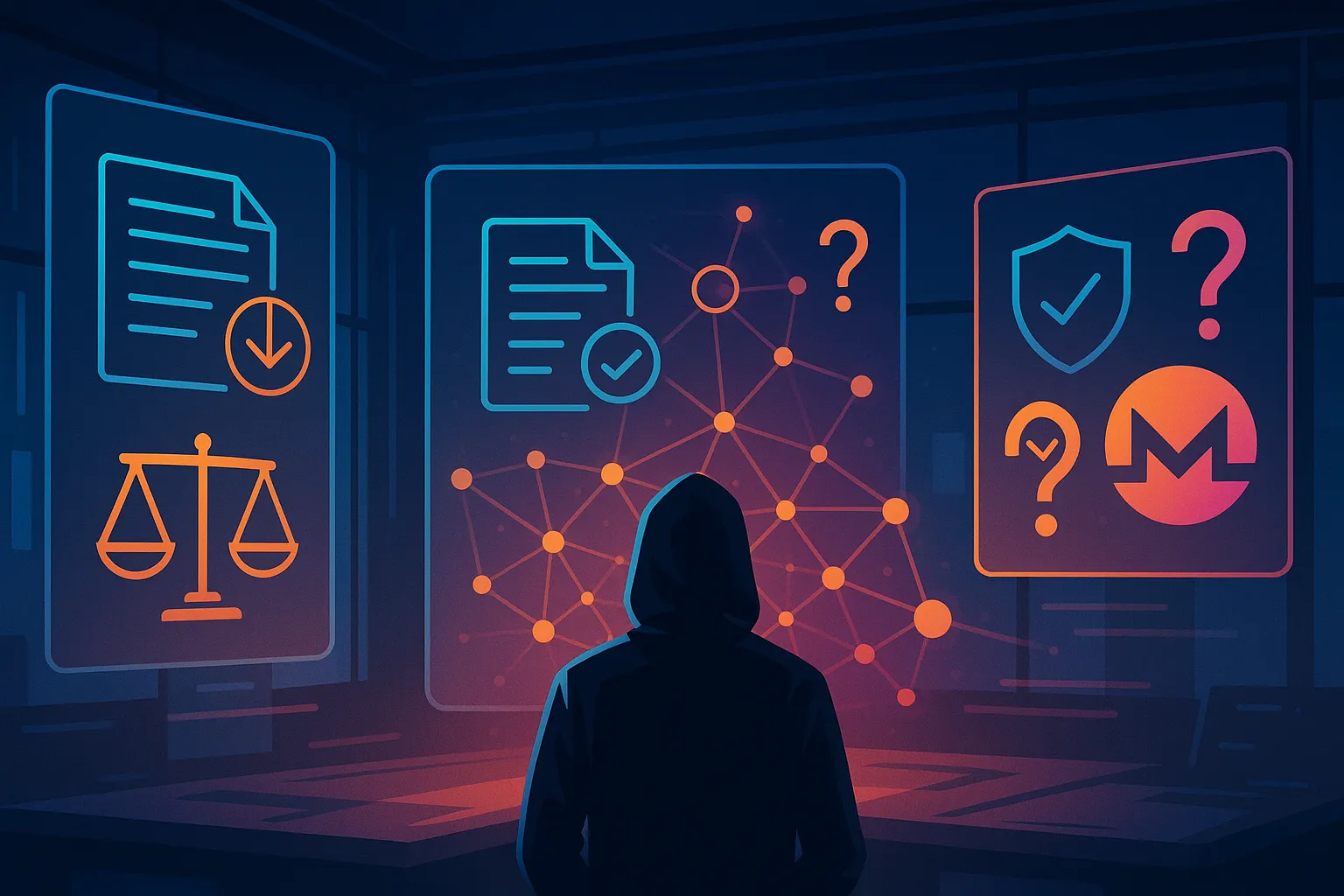
Monero sits at the heart of a broader debate about financial privacy. Supporters view it as a digital equivalent of cash, allowing law-abiding people to transact without being tracked. Critics argue it can obscure criminal activity and hinder investigations.
How governments treat Monero gives insight into their stance on privacy: whether they prioritize individual confidentiality or total financial traceability. This debate is shaping many new crypto laws worldwide.
3. Tax and reporting obligations
Even if Monero is legal in your country, you usually still have to:
- Report capital gains or losses on trades
- Disclose holdings when required for tax or compliance
- Keep records of your transactions and cost basis
Privacy does not remove your obligation to follow tax rules. It simply gives you control over who sees your transaction history on a public blockchain.
4. Developer and ecosystem risk
If regulators took an aggressive stance against privacy tech, it could chill innovation or create legal risks for developers. So far, Monero contributors focus on building privacy-preserving tools that are lawful to publish and run as open-source software.
This environment is one reason the Monero community remains active, with ongoing development tracked on resources like the official Monero website.
You can swap XMR for BTC, ETH, USDT and 1,600+ other coins on GhostSwap without KYC.
Monero Legal Examples & Use Cases
1. Everyday private payments
Individuals who value financial confidentiality use Monero for everyday payments where they do not want their entire net worth exposed to whoever knows their wallet address. Examples include paying freelancers, subscriptions, or online purchases where merchants accept XMR.
In many jurisdictions, these transactions are legal as long as both parties comply with applicable tax and consumer laws.
2. Business treasury privacy
Some businesses hold a portion of their treasury in Monero to avoid revealing strategic financial information to competitors. If all payments were made in a fully transparent cryptocurrency, competitors could estimate revenue, expenses, or key suppliers simply by reading the blockchain.
Using XMR can mitigate that exposure while remaining compliant with bookkeeping, audit, and tax rules internally.
3. Donations and humanitarian aid
Nonprofits and activists may accept Monero donations when they need to protect donor identities or operate in hostile environments. Privacy can shield supporters from retaliation while still allowing an organization to document and report funding as required.
Many public projects list Monero addresses for donations alongside Bitcoin and other coins, offering privacy-conscious options to supporters.
4. Hedging against chain surveillance
Traders sometimes move a portion of holdings into Monero as a hedge against growing blockchain surveillance or data breaches at centralized analytics firms. The goal is to avoid having their full crypto history permanently tied to their real identity.
Later, they may swap XMR back to BTC or stablecoins using a non-custodial service when they need more liquidity or exchange access.
5. Research and development of privacy tech
Academics and developers use Monero as a live laboratory for privacy-preserving cryptography. Technologies like ring signatures, stealth addresses, and confidential transactions are studied and sometimes adapted to other blockchains.
This research has legitimate benefits for cybersecurity, digital identity, and secure communications well beyond cryptocurrency trading.
Pros and Cons of Monero in a Legal Context
Advantages of Monero
- Strong on-chain privacy: Monero hides sender, receiver, and amount by default, unlike most transparent blockchains.
- Fungibility: Because history is obscured, coins are harder to “taint,” helping avoid blacklisting of specific units.
- Permissionless use: Anyone with an internet connection can use XMR without signing up or asking approval.
- Active community: A long-running, engaged community supports ongoing updates and audits, as seen on data aggregators such as CoinGecko.
- Resilience to censorship: Since the network is decentralized, it is difficult to shut down globally, even if some platforms delist it.
Disadvantages & Legal Risks
- Exchange delistings: Regulatory pressure can lead centralized exchanges to remove XMR, reducing direct fiat on-ramps.
- Regulatory uncertainty: Laws may change, especially around privacy tech, creating future risk for users and businesses.
- Association with crime narratives: Headlines sometimes focus on illicit uses, which can affect perception and policy.
- Compliance complexity: Businesses that must perform detailed transaction monitoring may find XMR harder to integrate.
- Tax reporting burden: Users must keep their own records, since there is no public, easily readable transaction history.
How Monero’s Legality Relates to Trading on GhostSwap
Non-custodial access vs regulated exchanges
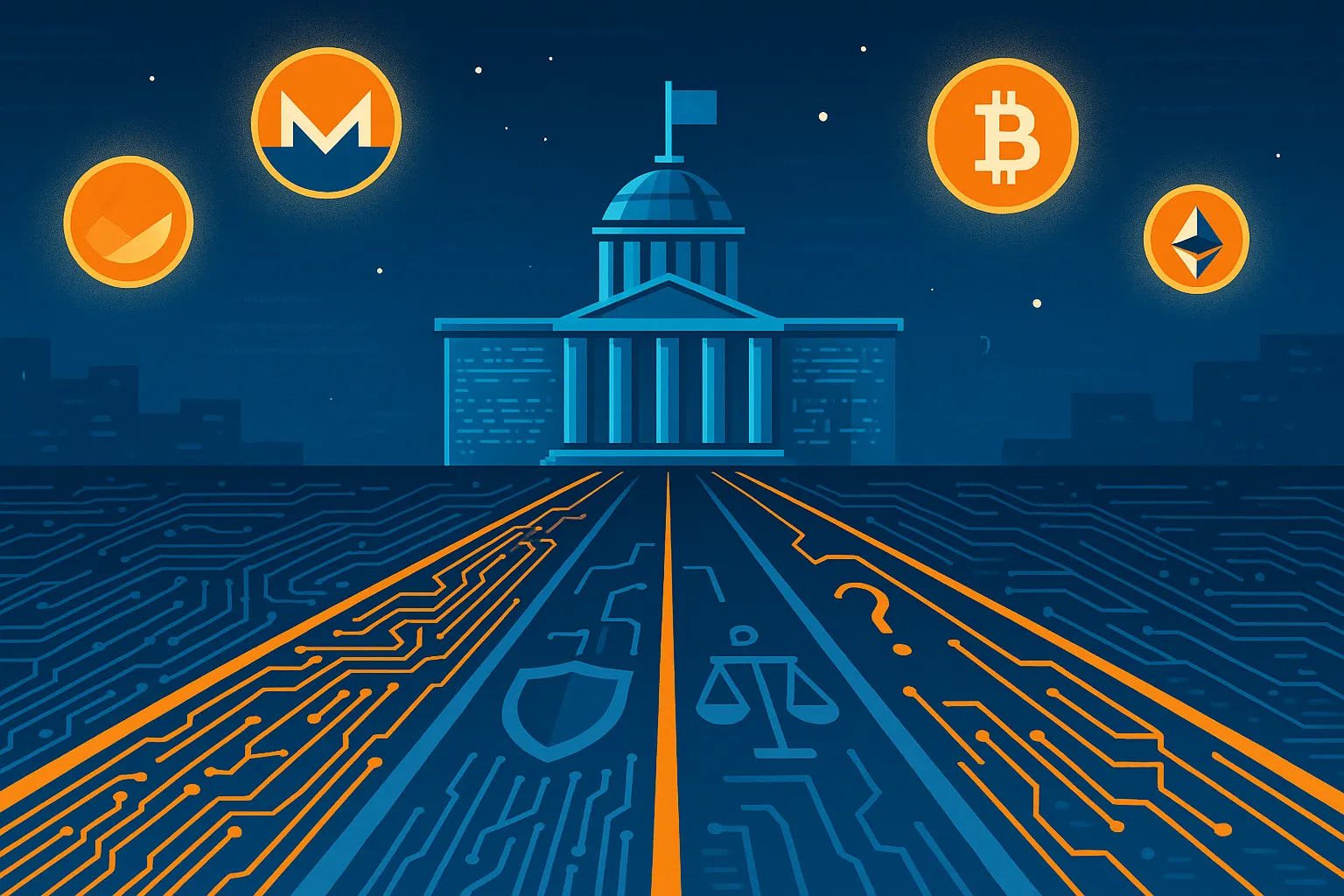
When a centralized exchange delists Monero, it does not mean that XMR became universally illegal. It often means the exchange’s compliance team decided that listing privacy coins was incompatible with their regulatory obligations.
GhostSwap operates as a non-custodial, instant swap platform. You stay in control of your wallets, and the service facilitates swaps between assets like BTC and XMR without taking custody of your funds. This model reduces some regulatory burdens compared to fully custodial exchanges, while still expecting users to respect their local laws.
Using Monero responsibly via swaps
If Monero is legal in your jurisdiction, you can use a private exchange-style service such as GhostSwap to move between transparent coins and XMR. For example, you can perform a non-custodial swap from BTC to Monero for added privacy, then later swap back when you need more liquidity.
It is your responsibility to:
- Confirm that Monero use is permitted locally
- Handle tax reporting on any gains or losses
- Avoid using privacy features for unlawful purposes
KYC-free does not mean law-free
GhostSwap does not require KYC for normal usage, which improves privacy and accessibility. However, lack of KYC does not exempt users from law. Activity may still be investigated by authorities if tied to criminal behavior, and you are still bound by your country’s regulations.
Non-custodial, KYC-free platforms are tools, not legal shields. Used correctly, they help law-abiding users safeguard privacy while staying compliant.
Ready to Trade Monero?
If you have checked your local rules and decided that using XMR fits your risk tolerance, you can start by exchanging a small amount from a transparent coin.
On GhostSwap, you can swap crypto instantly in a non-custodial way, going from BTC to XMR or vice versa, without creating an account or submitting identity documents. Always test with a small amount first, double-check addresses, and keep secure backups of your Monero wallet seed phrase.
Frequently Asked Questions
Is Monero legal in my country?
Monero’s legal status differs by jurisdiction, and regulations change over time. As of 2026, many countries allow individuals to own and use Monero, while some have pressured licensed exchanges to delist it.
You should consult local laws, tax authorities, or a qualified legal professional in your country before trading or using XMR. Public resources like Monero’s listing on CoinMarketCap can help you track which exchanges still support XMR, but they are not legal advice.
Can I get in trouble for using Monero?
Simply using or holding Monero is not inherently illegal in most places. Legal issues typically arise if XMR is used for criminal activity, tax evasion, or to violate sanctions or AML rules.
To reduce risk, keep accurate records of your trades, pay any required taxes, and avoid interacting with clearly illicit markets. Treat Monero like any other asset: use it responsibly and lawfully.
Why did some exchanges delist Monero if it is legal?
Many delistings are risk management decisions rather than responses to direct bans. Exchanges operating under strict AML rules may feel that supporting privacy coins makes compliance more difficult or exposes them to regulatory scrutiny.
These policy choices do not automatically make owning XMR illegal. Instead, they change where and how you can trade it, which is why non-custodial swap platforms like GhostSwap play a bigger role in the Monero ecosystem.
Do I have to pay taxes on Monero trades?
In most tax systems, Monero is treated similarly to other cryptocurrencies. That means trades can trigger capital gains or losses, and spending XMR may count as a taxable disposal event.
Because Monero’s blockchain is private, you are responsible for maintaining your own records of dates, amounts, and prices. Crypto tax software, manual spreadsheets, and exchange histories (for the non-private side of your swaps) can help, but you should confirm details with a tax professional.
Is it safe to swap BTC to XMR on non-custodial platforms?
Non-custodial swaps reduce some risks because you do not give up control of your wallet balances to a central entity for extended periods. However, you still have to manage:
- Address accuracy and network selection
- Wallet security and backups
- Slippage and network fees
Using a reputable, KYC-free service like GhostSwap, starting with small test transactions, and securing your devices and seed phrases are all important steps in managing risk while enjoying Monero’s privacy benefits.