What Is Slippage in Crypto? Complete Guide for 2026 Traders
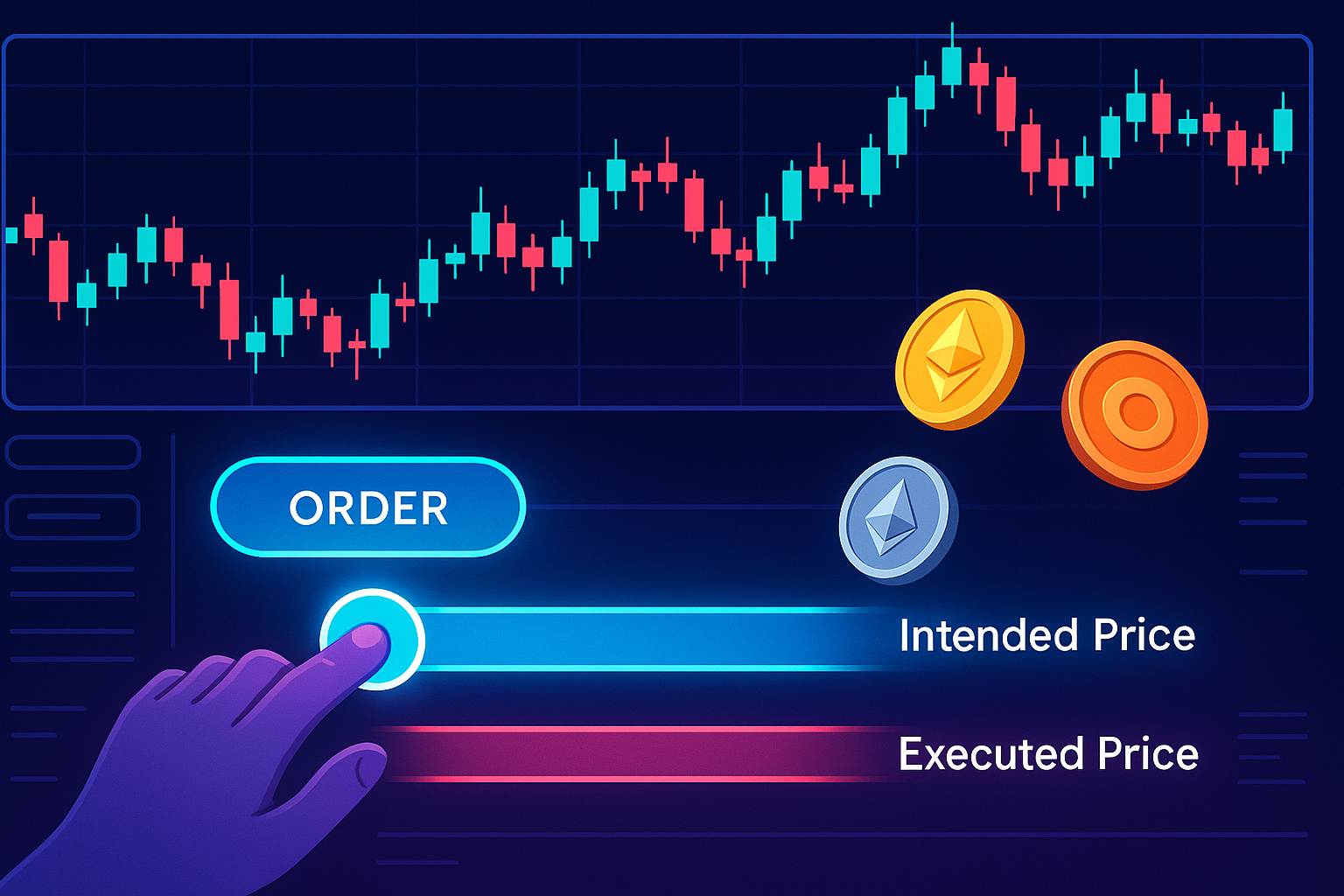
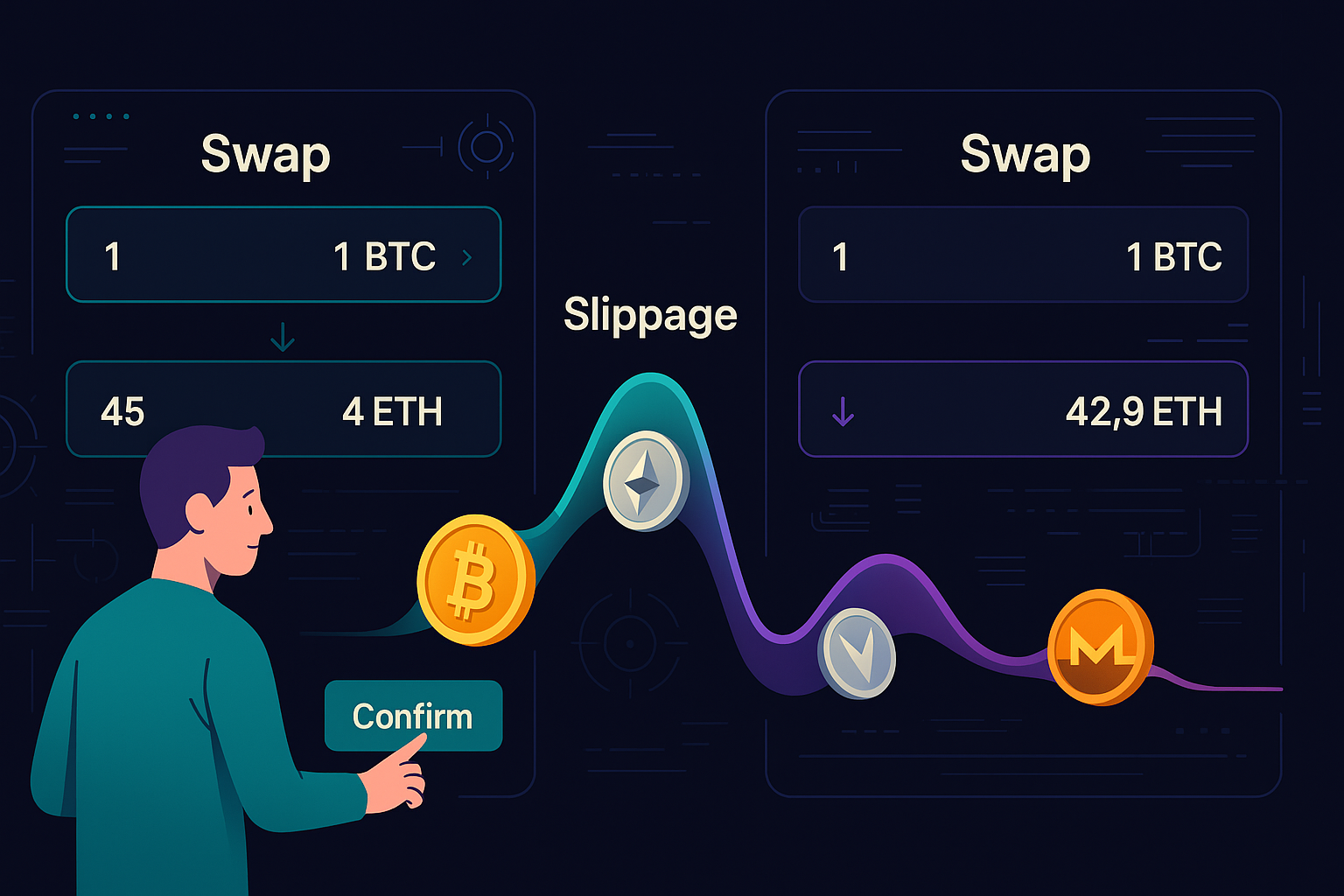
Slippage in crypto is the difference between the price you expect to pay for a trade and the actual price your order fills at. It happens when the market moves between the time you submit your order and when it executes, often in fast or illiquid markets.
If you trade on DEXs, centralized exchanges, or instant swap platforms like GhostSwap, understanding what is slippage in crypto is critical to protecting your capital and avoiding unpleasant surprises at execution.
What Is Slippage in Crypto Explained Simply
In plain language, slippage is a price mismatch.
You click “buy” or “swap” at one price, but your trade actually goes through at a slightly different price. That gap is slippage.
It can be:
- Positive slippage: You get a better price than expected
- Negative slippage: You get a worse price than expected
Slippage is common in all markets, but it is especially visible in crypto because prices move quickly and some tokens have low liquidity.
If you want to swap one coin for another and the market is moving rapidly, the final rate can change during the few seconds it takes to route and execute your order. That is why every serious trader should understand what is slippage in crypto and how to control it.
How Does Slippage Work in Crypto Trading?
To understand how slippage works, it helps to break the process into three steps: quote, execution, and settlement.
1. Quote vs. Execution Price
When you create an order on an exchange or a non-custodial swap, you first see a quote. This is the current best estimate of how much of Coin B you will receive for Coin A.
However, the execution price is determined only when your order actually hits the order book or liquidity pool. In a few seconds, the price can move because:
- Other traders are buying or selling
- Market makers adjust their prices
- Liquidity in the pool changes
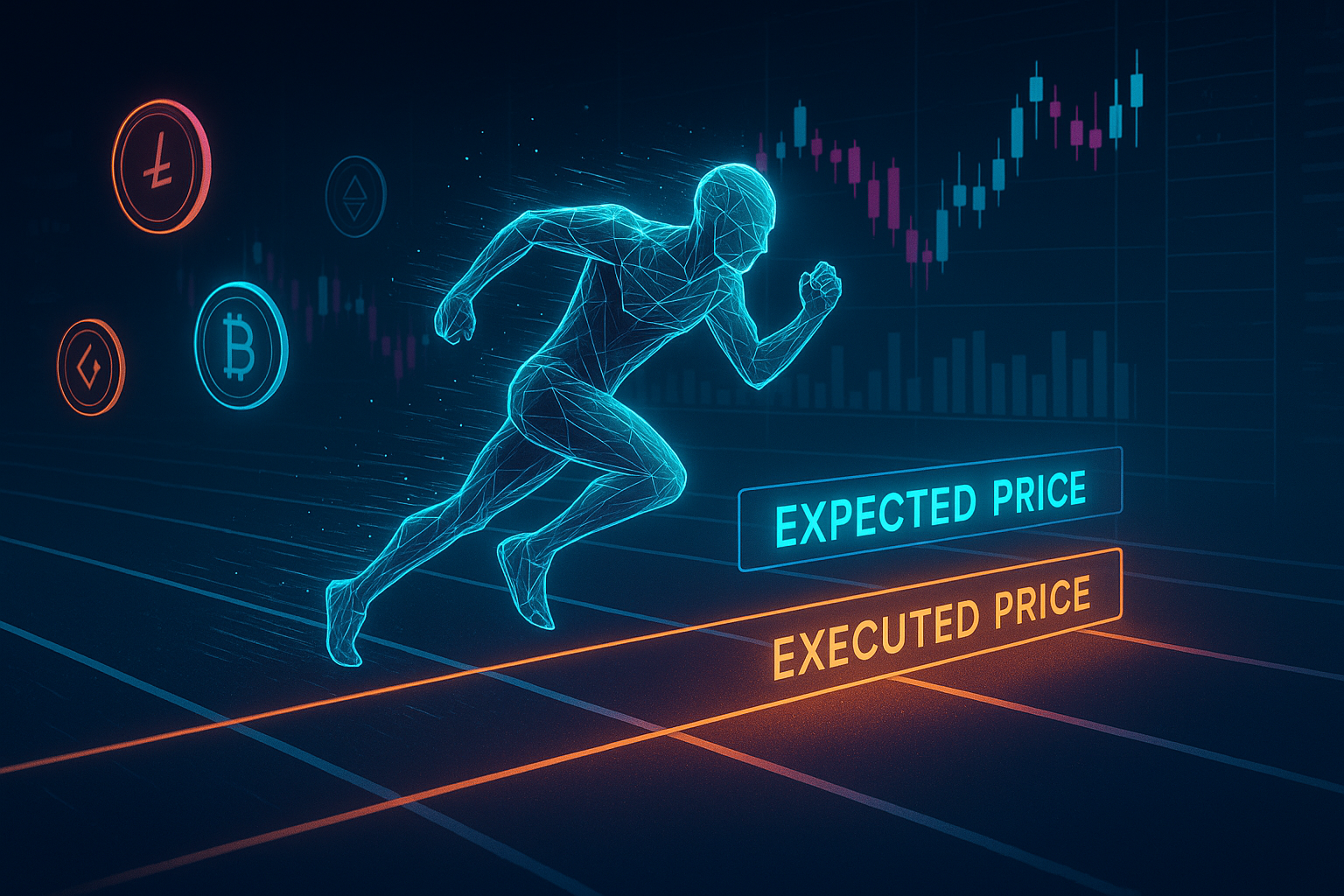
The difference between the quote and the execution price is slippage.
2. Order Types and Slippage
Different order types experience slippage differently:
- Market orders: You accept “best available” price. You are guaranteed execution but not the exact price, so slippage risk is higher.
- Limit orders: You set a maximum buy price or minimum sell price. You control slippage but may not get filled if price moves away.
- Swaps via aggregators/instant swap platforms: The system routes your trade across multiple sources of liquidity and usually lets you set a slippage tolerance.
On non-custodial platforms, the smart contract or routing engine will usually revert the trade if the price moves beyond your allowed tolerance.
3. Slippage on AMMs and Liquidity Pools
Automated Market Makers (AMMs) like Uniswap or Curve use formulas rather than order books. When you trade against a liquidity pool, the price changes with each trade based on the pool’s token balances.
On a simple constant product AMM (“x * y = k”), the larger your trade is relative to the pool, the more you move the price yourself. This in-pool price impact is often referred to as price impact and is a major source of slippage on DEXs.
For a deeper look at how AMMs calculate prices, Uniswap’s official docs provide full math details: Uniswap Docs.
4. Factors That Increase Slippage
Several market conditions make slippage worse:
- Low liquidity tokens or thin order books
- High volatility during news events or big moves
- Large order size compared to total available liquidity
- Network congestion causing delayed confirmations
These factors interact. For example, a large market order in a low-liquidity token on a volatile day can suffer extreme slippage and poor execution.
Why Slippage Matters in Crypto Trading
Slippage directly affects your real entry and exit prices, and therefore your profits and losses.
1. Impact on Profitability
Even a 1% average negative slippage per trade can quietly eat into your returns, especially for day traders or high-frequency strategies.
Suppose you aim for 2% profit per trade. If you consistently lose 0.5% on each entry and 0.5% on each exit due to slippage, your entire edge disappears.
2. Risk Management and Stop Losses
Slippage is crucial when using stop losses. In fast markets, stop-market orders can trigger far away from your intended level.
This can cause:
- Bigger losses than planned
- Unexpected liquidation in leveraged positions
- Higher realized volatility in your portfolio
Understanding what is slippage in crypto helps you choose appropriate order types and position sizes so that execution risk does not blow up your strategy.
3. Fair Pricing and Arbitrage
Professional market makers and arbitrageurs pay close attention to slippage. Execution quality determines whether an arbitrage opportunity is profitable or not after fees and price impact.
Retail traders may not run complex algorithms, but the same principles apply. Better control of slippage often means better spreads and less capital “leaking” to the market.
Slippage Examples and Common Use Cases
Example 1: Small Spot Trade on a Major Coin
You market buy $500 of BTC on a large centralized exchange. Order books on BTC are deep and liquid.
The quote shows 1 BTC = 60,000 USDT. Your trade executes almost instantly at an effective rate of 60,020 USDT per BTC.
Your slippage is about 0.03%, which is negligible for most traders.
Example 2: Trading a Low-Cap Token on a DEX
You want to swap 1 ETH for a new low-cap ERC‑20 token via an AMM pool. Liquidity is thin, with only about $50,000 in the pool.
The interface warns of a 6% price impact. You proceed with a 5% slippage tolerance. During confirmation, another trader buys the same token, moving the price up.
Your transaction still goes through, but you get 7% fewer tokens than the initial estimate because of price impact and volatility. This is painful negative slippage.
Example 3: Positive Slippage During a Sudden Dip
You submit a market sell order for 1 ETH. The last price is 3,000 USDT, but while your order executes, a small local dip pushes bids slightly higher due to an aggressive buyer stepping in.
Your order fills at an effective rate of 3,020 USDT. You experience positive slippage, getting a better outcome than expected.
Example 4: Stop Loss in a Flash Crash
You set a stop-market order to sell BTC at 55,000 USDT in case of a breakdown. A sudden “flash crash” pushes price from 56,000 to 54,000 in seconds.
Your stop triggers after price passes 55,000. The first available bid is around 54,200. You are filled there, suffering slippage of roughly 1.5% relative to your intended stop.
Example 5: Instant Cross-Chain Swap
You use a non-custodial swap to move funds from BNB Chain to Bitcoin. The service aggregates rates across several routes and shows an estimate with a 1% slippage buffer.
Network congestion on BNB causes a slightly slower confirmation, but prices remain stable. Your final rate ends only 0.2% away from the quote, well inside your tolerance.
You can swap BNB, BTC, ETH, USDT and 1,500+ other assets across multiple networks instantly on GhostSwap without KYC, which helps you capture opportunities quickly while keeping slippage under control.
Pros and Cons of Slippage in Crypto Markets
Benefits (Yes, There Are Some)
- More guaranteed execution: Allowing some slippage tolerance ensures your trade actually fills, especially in fast markets.
- Efficient price discovery: Slippage reflects real-time changes in supply and demand, helping markets reach fair prices faster.
- Occasional positive slippage: Sometimes the price moves in your favor and you get better than quoted execution.
Drawbacks and Risks
- Unexpected losses: Negative slippage can quietly reduce profits or deepen losses, especially for active traders.
- Higher cost for large orders: Big trades in illiquid markets can move prices significantly against you.
- Execution uncertainty: Stop orders and swaps may not fill anywhere near your mental “target” price during extreme volatility.
- Front-running and MEV on some chains can worsen slippage as bots insert transactions ahead of yours.
How Slippage Relates to Trading on GhostSwap
On a non-custodial instant swap platform like GhostSwap, slippage is managed through smart routing and clear user controls.
1. Smart Routing Across Liquidity Sources
Instead of relying on a single AMM or order book, GhostSwap can source rates from multiple liquidity pools and providers.
This helps:
- Reduce price impact by splitting your trade across venues
- Find the best effective rate available at the moment of execution
- Lower average negative slippage on typical swap sizes
2. Slippage Tolerance Settings
When you initiate a swap, you typically see an estimated rate and a configurable slippage tolerance. If the market moves beyond that tolerance before your transaction is confirmed, the swap will usually fail rather than execute at a bad price.
This helps you protect yourself from extreme moves or unexpected volatility while still getting fast execution when price stays within your chosen band.
3. Non-Custodial, No-KYC Execution
Because GhostSwap is a non-custodial swap, you maintain control over your funds and sign transactions from your own wallet. There is no KYC friction, which means you can react faster to market changes.
Faster reaction and shorter delays between quote and confirmation help reduce the chance that slippage grows while you wait for approvals, documents, or internal transfers found on traditional exchanges.
For accurate live prices and liquidity metrics on specific tokens you plan to swap, you can always cross-check with trackers like CoinGecko or CoinMarketCap before committing to a large trade.
Ready to Start Trading?
If you understand what is slippage in crypto and how to manage it, you are already ahead of many retail traders. The next step is using tools that give you transparent quotes, non-custodial control, and access to deep liquidity.
With GhostSwap, you can swap crypto instantly across 1,500+ pairs, without creating an account or sharing personal documents.
Frequently Asked Questions
What is a good slippage tolerance in crypto?
For highly liquid coins like BTC or ETH, many traders use slippage tolerances between 0.1% and 0.5%. For less liquid or very volatile tokens, you may need a higher tolerance (1% to 3% or more) to avoid failed transactions.
The right value depends on:
- Your time horizon (scalpers need tighter control)
- Token liquidity and typical spread
- Whether you prefer guaranteed execution or price precision
Is slippage always bad in crypto trading?
No. Slippage is simply the gap between expected and actual price, and it can be positive or negative. Positive slippage gives you a better deal than expected.
The problem is uncontrolled negative slippage, which can erode profits or worsen losses. Managing slippage tolerance and position size is how you minimize the downside while accepting that some variability is inherent in live markets.
How can I reduce slippage on my trades?
You can reduce slippage by:
- Trading during periods of higher liquidity and lower volatility
- Avoiding very large market orders in thin markets
- Using limit orders on order-book exchanges when possible
- Adjusting slippage tolerance carefully on DEXs and instant swaps
- Splitting large trades into smaller chunks
Using a private exchange style workflow with non-custodial tools like GhostSwap also helps you execute faster without account delays, which can indirectly reduce slippage.
What is price impact vs. slippage on DEXs?
Price impact describes how much your own trade shifts the token price in a liquidity pool. It is the immediate effect of your trade size relative to pool depth.
Slippage is the total difference between the price you expected and the actual executed price, which can include price impact plus any additional market moves before confirmation. On AMMs, they are closely related, but not identical concepts.
Why do my swaps sometimes fail due to slippage?
If the market moves too much between the time you sign your transaction and when it is mined or included in a block, the final rate can fall outside your set slippage tolerance.
In this case, most non-custodial swap contracts will revert the transaction to protect you from an execution far worse than you agreed to. Raising your tolerance slightly or trading during calmer periods can reduce failed swaps, but it also increases your exposure to potential negative slippage.