How Do Crypto Exchanges Work? Complete 2026 Guide for New & Advanced Traders
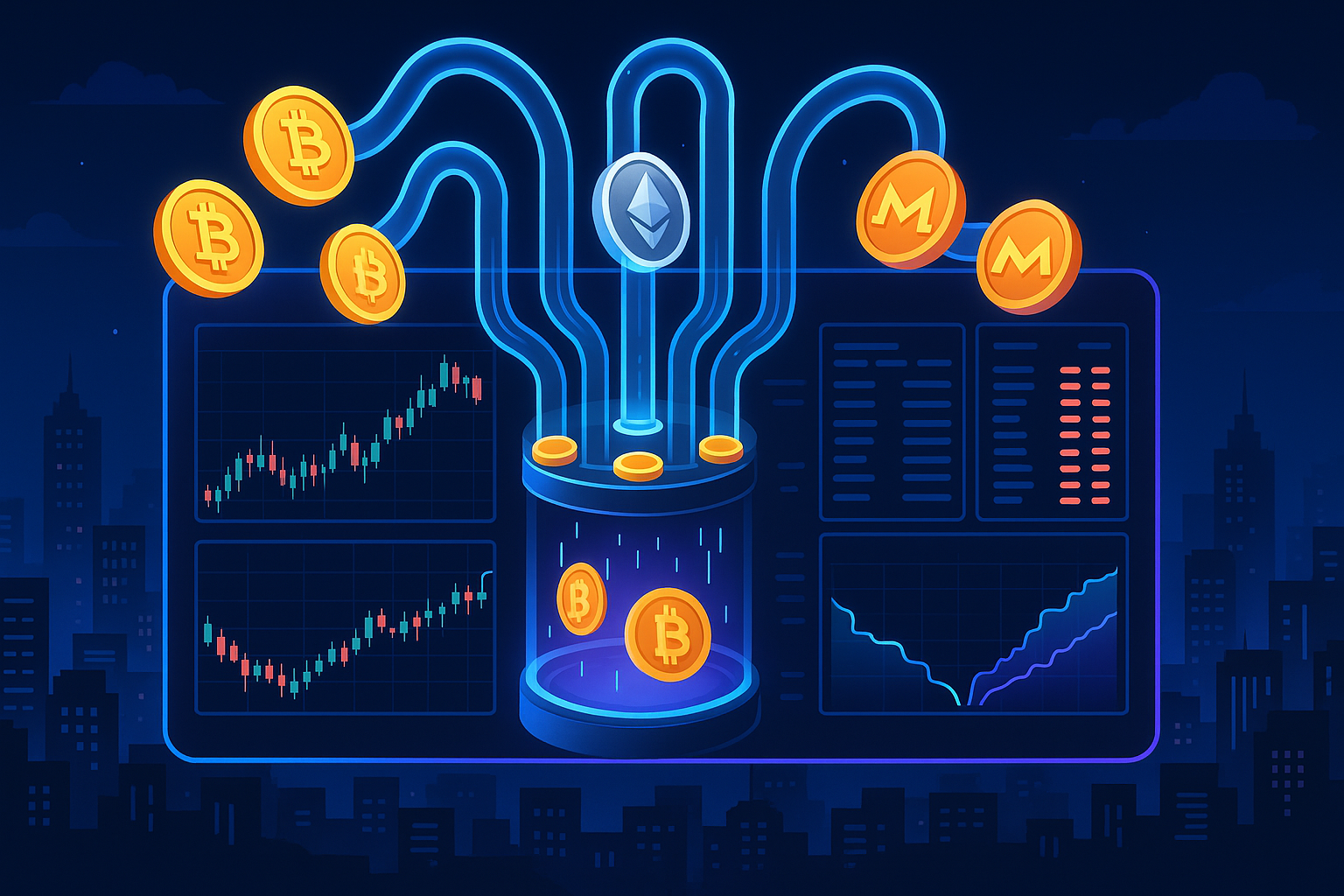
Crypto exchanges are platforms or protocols that match people who want to buy digital assets with people who want to sell them, using order books or swap algorithms to set prices and execute trades. They handle pricing, trade matching, and settlement so users can exchange one cryptocurrency or token for another safely and efficiently.
If you have ever wondered, “how do crypto exchanges work behind the scenes?” you are not alone. Whether you are trading on a big centralized exchange or a non-custodial swap service like GhostSwap, the basic principles are the same: price discovery, matching buyers and sellers, and securely settling the trade.
How Do Crypto Exchanges Work Explained Simply
At the simplest level, a crypto exchange is a meeting place.
Some people arrive wanting to buy bitcoin, ETH, or stablecoins. Others show up wanting to sell. The exchange connects them and helps them agree on a fair price.
When you place a trade, you are basically saying, “I will give X amount of coin A if someone gives me Y amount of coin B.” The exchange’s system looks for someone who wants the opposite side of that deal.
Once there is a match, the exchange makes the swap. Your balance of the first coin goes down and your balance of the second coin goes up.
On custodial exchanges, your coins sit in wallets controlled by the company. On non-custodial exchanges and instant swap services, you trade directly from your own wallet, and the service never takes long-term control of your funds.
The core idea is simple: connect buyers and sellers, or swappers, in a safe, fast, and transparent way so you do not have to find trading partners manually.
How Does a Crypto Exchange Work Technically?
Behind the simple trading screen is a lot of complex infrastructure. Understanding it helps answer the question “how do crypto exchanges work” in a deeper, more technical way.
Order books vs. swap engines (AMMs)
Most crypto exchanges use one of two main models:
- Order book exchanges (common on centralized exchanges)
- Automated market makers or AMMs (common in decentralized exchanges and routers)
Order book model:
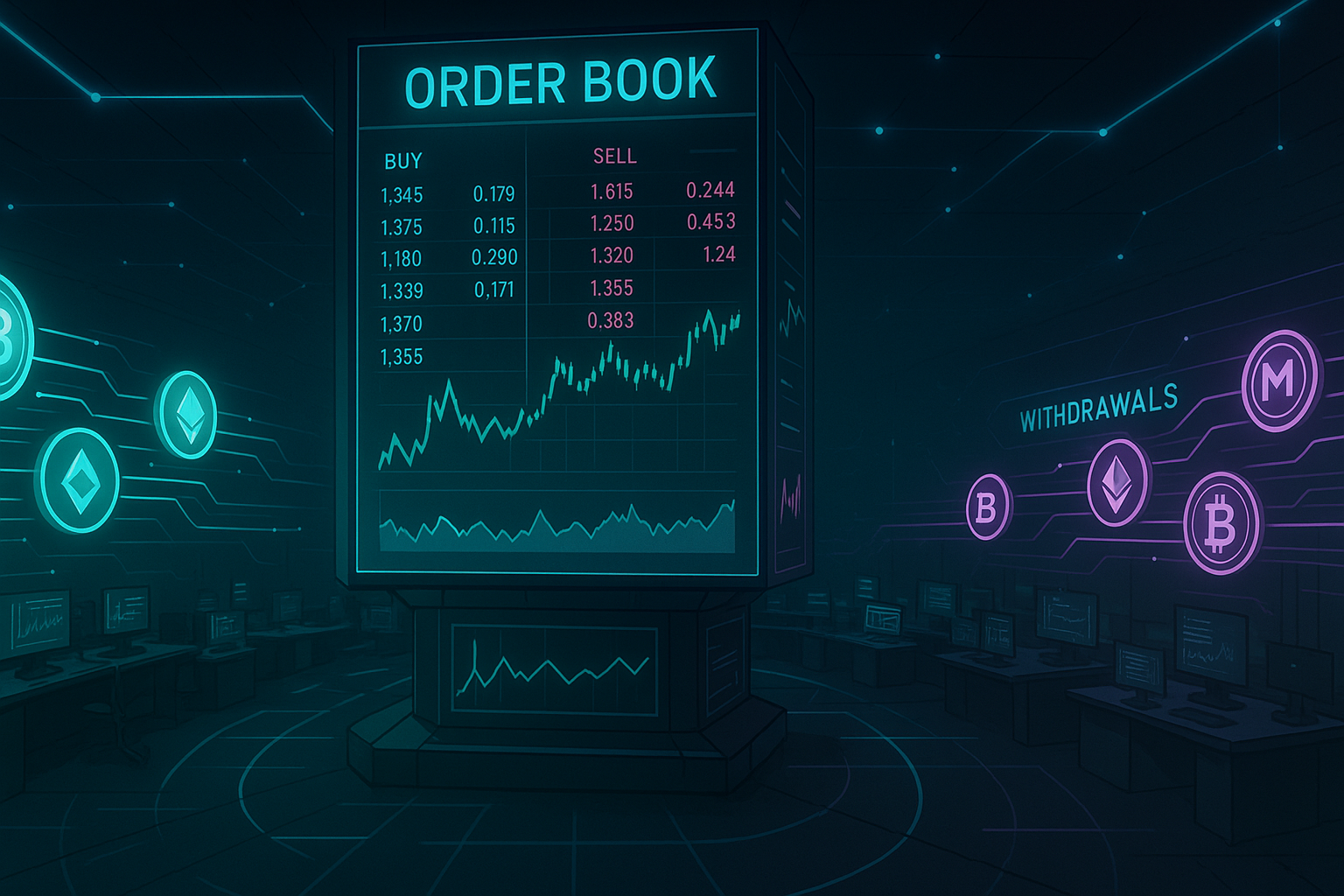
- Every buy order and sell order is recorded in a list called an order book.
- Each order has a price and an amount, for example: “buy 0.5 BTC at $65,000.”
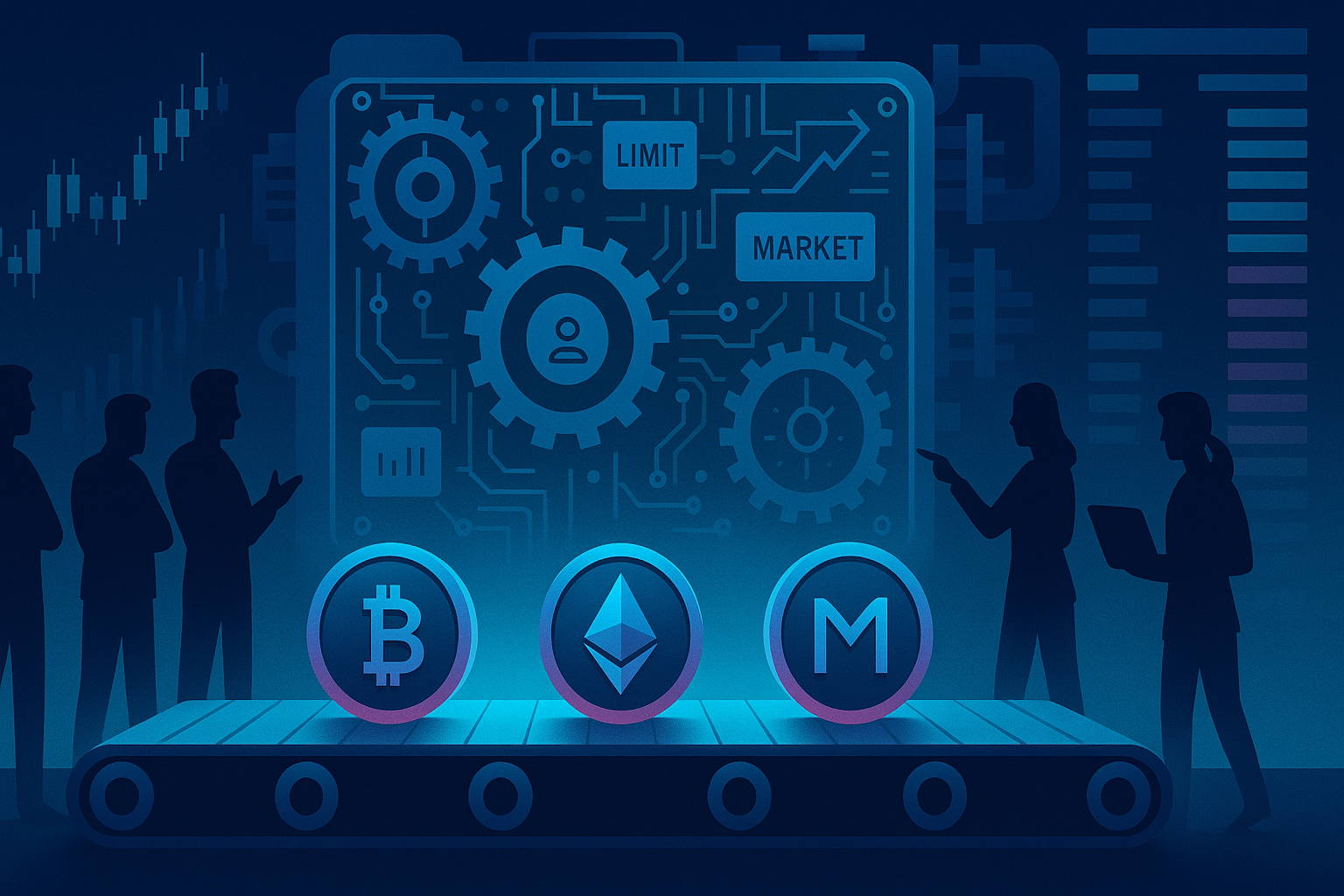
- The exchange’s matching engine constantly compares buy and sell orders.
- When a buy price meets or exceeds a sell price, the system executes a trade.
The best bid is the highest price someone is willing to pay. The best ask is the lowest price someone is willing to sell at. Together they form the market price you see on the screen.
AMM / swap model:
- Instead of an order book, AMMs use liquidity pools, which are smart contracts funded with pairs of tokens.
- Prices are set by an algorithm, typically based on the ratio of tokens in the pool.
- When you swap coin A for coin B, the pool’s ratios change, and the algorithm recalculates the price.
Many non-custodial instant swap services aggregate prices from multiple AMMs and DEXs to route your trade through the best pools automatically. This is similar to what happens when you swap through an interface like Uniswap or 1inch, but with a simpler, one-step user experience.
Custodial vs. non-custodial crypto exchanges
Another key part of how crypto exchanges work is how they hold (or do not hold) your assets.
- Custodial exchanges keep user funds in wallets they control. Your account balance is a claim on those wallets.
- Non-custodial exchanges or swap services execute trades directly to and from wallets you control.
Custodial platforms can offer features like margin trading, futures, and integrated fiat on-ramps, but they come with counterparty risk. You trust the company not to be hacked, mismanage funds, or block withdrawals.
Non-custodial exchanges reduce that risk because you keep the private keys. A service like GhostSwap non-custodial swap facilitates the trade but does not hold your assets in long-term custodial wallets.
Deposits, withdrawals, and wallets
For custodial exchanges, the flow looks like this:
- You create an account and pass KYC if required.
- The exchange assigns you deposit addresses for different coins.
- You send coins to those addresses; the exchange credits your internal balance after sufficient confirmations.
- Trades happen inside the exchange’s database, often off-chain for speed.
- When you withdraw, the exchange sends coins from its wallets to your external address.
On non-custodial services, deposits and withdrawals are effectively the same transaction. You send coin A from your wallet, and you receive coin B directly back to your wallet, with no persistent “account” or stored balance in the middle.
Price feeds, liquidity, and market makers
To understand how do crypto exchanges work in live markets, you also need to know:
- Price feeds: Exchanges use on-chain data, internal trades, and external APIs (like CoinGecko or CoinMarketCap) to display reference prices, but the “real” price is whatever level buyers and sellers actually trade at.
- Liquidity: Deep order books or large liquidity pools mean large trades can happen with low price impact.
- Market makers: These are traders or algorithms that continuously post buy and sell orders to keep markets active and reduce spreads.
High liquidity and active market makers are what make it possible for you to execute trades quickly at a fair price.
You can swap BTC, ETH, USDT and 1,500+ other coins on GhostSwap without KYC, using non-custodial swaps that route through deep liquidity sources behind the scenes.
Why Do Crypto Exchanges Matter?
Crypto exchanges are the main gateway between everyday users and the blockchain economy.
Without exchanges, acquiring or selling digital assets would be slow and manual. You would need to negotiate prices in chat rooms or forums, then trust strangers to send funds after you pay them.
Exchanges solve that problem at scale by providing:
- Fast conversion between assets so you can move in and out of positions in minutes.
- Price discovery as thousands of trades reveal what the market thinks an asset is worth.
- Access to global liquidity, meaning you can trade with people all over the world without meeting them directly.
They also underpin many use cases:
- Investors buying BTC or ETH as a long-term store of value.
- Traders speculating on altcoins and memecoins.
- DeFi users rotating between stablecoins and governance tokens.
- Businesses paying or receiving crypto from customers.
Whether you use a big centralized platform or a private exchange interface that plugs into DEX liquidity, the ability to swap assets instantly is a core building block of the crypto ecosystem.
Crypto Exchange Examples and Use Cases
To make “how do crypto exchanges work” more concrete, it helps to see specific situations where you might use one.
1. Swapping one coin for another
Suppose you hold some LTC but you want to move into ETH to use DeFi apps.
- You open your exchange or swap service.
- You choose the LTC/ETH pair.
- You enter how much LTC you want to trade.
- The platform shows how much ETH you will receive, minus fees.
- You confirm the trade and the balances update.
On a non-custodial instant swap platform, this is as simple as selecting the pair and providing your receive address. No account balance is stored and you keep control of your wallet.
2. Rotating into stablecoins during volatility
When markets get turbulent, many traders move into stablecoins like USDT or USDC.
On an exchange, this is just another trade. You might sell BTC for USDT on a BTC/USDT pair to lock in profits or reduce risk.
Later, when you are ready to buy back in, you can swap USDT back into BTC or another asset. The exchange lets you quickly change your risk exposure without dealing with banks or wire transfers.
3. Bridging between chains via swaps
Many modern users operate on multiple chains: Ethereum, BNB Chain, Polygon, Arbitrum, Solana, and more.
Some swap services integrate cross-chain functionality, allowing you to send an asset on one network and receive an asset on another network. Technically this involves routing trades across liquidity sources and sometimes using bridge protocols, but from the user’s perspective it feels like a simple swap.
4. Rebalancing a crypto portfolio
If you hold several assets, you might decide you want 40% in BTC, 30% in ETH, and 30% in stablecoins.
To rebalance, you trade some coins for others until your allocations match your target percentages. Exchanges make this kind of portfolio management practical even for small amounts.
5. Privacy-conscious value transfer
Some users like to separate their on-chain identity from their spending or long-term storage addresses.
They may swap assets through a non-custodial, no-KYC interface and send the output to a fresh wallet. While this is not full anonymity, it can help reduce address clustering and improve basic on-chain privacy, especially compared to reusing the same address everywhere.
Pros and Cons of Using Crypto Exchanges
To evaluate how crypto exchanges work for your needs, it is useful to look at strengths and trade-offs.
Advantages of crypto exchanges
- Liquidity: Easily enter or exit positions at market prices.
- Speed: Trades execute in seconds, often faster than on-chain transfers alone.
- Variety: Access to hundreds or even thousands of trading pairs.
- Price discovery: Real-time market prices guide investment decisions.
- Tools and analytics: Charts, order types, and APIs for more sophisticated strategies (mainly on centralized exchanges and advanced DEX UIs).
Disadvantages and risks
- Custodial risk: On centralized custodial platforms, you rely on the exchange’s security and solvency.
- Regulatory friction: KYC and geo-restrictions can limit access or privacy.
- Smart contract risk: On DEXs and AMMs, bugs or exploits in smart contracts can endanger funds.
- Slippage and fees: On illiquid pairs, you may get worse prices than expected, plus network and platform fees.
- Complexity for beginners: Order types, gas fees, and network choices can be confusing at first.
Non-custodial instant swap services are one attempt to keep the advantages (speed, variety, liquidity) while reducing some of the downsides (custodial risk, heavy KYC friction).
How Crypto Exchanges Relate to Trading on GhostSwap
GhostSwap is a non-custodial, instant swap platform that builds on the same core principles as other crypto exchanges but simplifies the user experience.
Instead of maintaining an order book and internal user balances, GhostSwap works more like a smart router. It connects your trade request to deep liquidity across multiple sources behind the scenes, so you can swap one asset for another quickly at competitive rates.
From your perspective, it feels like a streamlined version of how crypto exchanges work:
- You pick the asset you are sending and the asset you want to receive.
- You input the receive address for the output asset.
- You send the input asset from your own wallet.
- Once the trade executes, you receive the output asset directly.
There is no account balance held by GhostSwap, no long-term custody, and no mandatory KYC. You keep control of your funds and your private keys at all times while still benefiting from the liquidity and price discovery of broader crypto markets.
Ready to Start Trading?
Now that you understand how crypto exchanges work, you can choose the method that fits your goals and risk tolerance.
If you want a fast, non-custodial way to swap crypto instantly across 1,500+ trading pairs without opening an account or completing KYC, you can try GhostSwap.
Just connect your wallet or use a standard send-from-wallet flow, select the coins you want to exchange, and let the backend routing engine handle the complexity for you.
Frequently Asked Questions
How do crypto exchanges set prices?
On order book exchanges, prices come from the interaction of all active buy and sell orders. The highest bid and lowest ask define the current market price.
On AMM-based platforms, prices are calculated by formulas that look at how much of each token is in the liquidity pool. When someone trades, the ratio changes and the price adjusts.
Many interfaces show reference prices from external data providers, but at any moment the “real” price is whatever level traders are actually willing to transact at.
Are non-custodial exchanges safer than custodial ones?
Non-custodial exchanges remove the risk of a centralized platform holding your funds, because you keep assets in your own wallets.
However, they are not risk-free. You still need to protect your private keys, and if you use DEXs or AMMs, you are exposed to smart contract risks and potential exploits in the underlying protocols.
Many users like to combine non-custodial swaps with good wallet hygiene, such as using hardware wallets for larger amounts and double-checking addresses before every transaction.
Why do some exchanges require KYC while others do not?
Centralized exchanges that hold user funds and offer fiat on-ramps generally must follow local regulations, which often include Know Your Customer (KYC) rules and Anti-Money Laundering (AML) checks.
Non-custodial protocols and interfaces that never take long-term control of funds may fall under different regulatory categories, depending on jurisdiction. Many of them can operate without collecting identity documents, focusing instead on allowing direct wallet-to-wallet swaps.
Always check the legal status in your own country and make sure you understand what information any platform collects.
What fees do crypto exchanges charge?
Fees vary by platform and trade type, but they usually include:
- Trading fees: A small percentage of each trade, often lower for high-volume users on centralized exchanges.
- Network fees: Blockchain transaction costs (like gas on Ethereum), paid to miners or validators.
- Deposit/withdrawal fees: Some custodial exchanges charge fixed amounts for sending assets on-chain.
On many non-custodial swap interfaces, you mainly see a single quoted rate that already factors in the trading route and any platform fee, plus the network fee you pay from your wallet.
Can I lose money just by using an exchange?
You can lose money through price movements, slippage, high fees, or platform risks.
If the market moves against you between the time you submit and the time your trade executes, you may get fewer coins than expected. On illiquid pairs, large orders can significantly impact price.
On custodial platforms, insolvency or hacks can result in partial or total loss of funds. On DEXs, critical smart contract bugs or exploits can have similar effects. This is why many users prefer non-custodial swaps for routine trades and avoid leaving large balances on centralized exchanges for long periods.