XRP Price Prediction 2026-2030: Can Ripple Revisit Its All‑Time High?
| Year | Low | Average | High |
|---|---|---|---|
| 2026 | $0.95 | $1.60 | $2.40 |
| 2027 | $1.20 | $2.10 | $3.10 |
| 2028 | $1.40 | $2.45 | $3.65 |
| 2029 | $1.60 | $2.80 | $4.20 |
| 2030 | $1.80 | $3.20 | $5.00 |
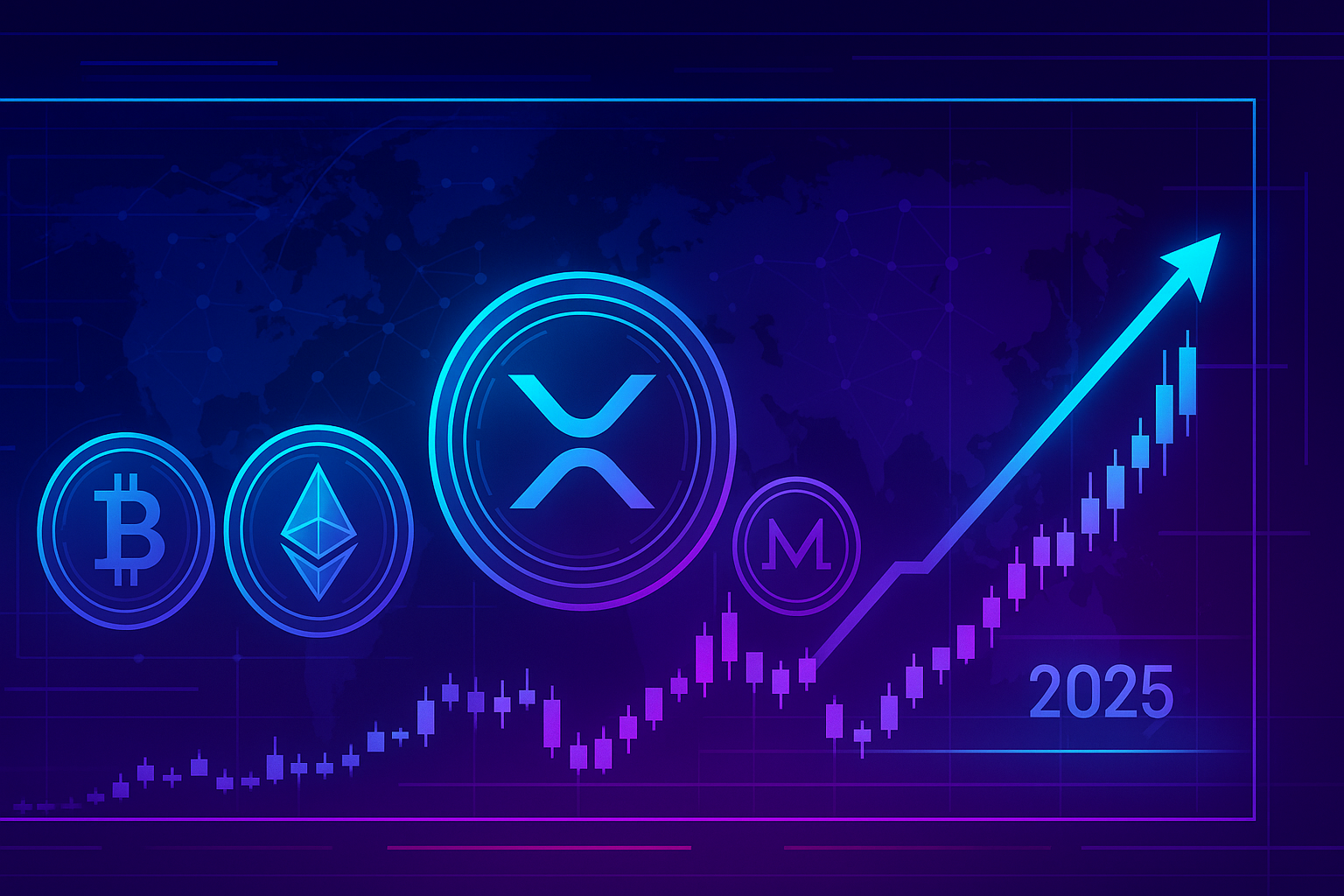
This XRP price prediction 2026-2030 article explores realistic scenarios for XRP based on its current market position, past performance, and likely adoption trends. With XRP trading around $1.38 today, a return to its 2025 all‑time high near $3.65 would require roughly a 2.6x move. Below we break down how that might happen, what could stop it, and what to watch if you plan to trade or swap XRP to BTC privately in the coming years.
This is not financial advice. Cryptocurrency markets are volatile. Always do your own research before investing.
XRP Price Overview
XRP is the native cryptocurrency of the XRP Ledger (XRPL), designed to be a fast, low‑cost bridge asset for cross‑border payments and liquidity provisioning. It is closely associated with Ripple, a company building enterprise payment solutions that can optionally use XRP for settlement.
As of 12 March 2026, XRP’s key market data is:
- Current price: $1.38
- Market cap: $84.54 billion (rank #5)
- 24h trading volume: $2.25 billion
- All‑time high (ATH): $3.65 on 18 July 2025
- All‑time low (ATL): $0.002686 on 22 May 2014
- Circulating supply: 61.23 billion XRP
- Total / max supply: ~100 billion XRP
- 1‑year performance: -37.51%
Despite the drawdown from its 2025 peak, XRP remains one of the largest and most liquid crypto assets globally. Its value proposition centers on high throughput, sub‑cent transaction fees, and integration with institutional payment rails, particularly for remittances and forex corridors.
For live market metrics and historical charts, you can reference data aggregators like CoinGecko or CoinMarketCap.
XRP Price History
Understanding XRP price prediction for 2026 and beyond starts with its historical behavior across multiple market cycles. XRP has gone through extreme booms and busts driven by macro crypto cycles, regulatory headlines, and adoption news.
Early years and first major rally (2013‑2017)
XRP traded for fractions of a cent in its early years, bottoming around $0.002686 in May 2014. As crypto infrastructure grew and Ripple signed early banking pilots, speculative interest picked up.
The big breakout came during the 2017 bull market:
- In early 2017, XRP was still below $0.01.
- By April‑May 2017, it spiked above $0.30 as exchanges listed XRP and media coverage intensified.
- In January 2018, XRP briefly surpassed $3 on several exchanges during the peak of the ICO bubble and broad altcoin mania.
This first cycle established XRP as a top‑tier altcoin by market cap but also set expectations for extreme volatility.
Bear market, legal overhang, and consolidation (2018‑2020)
After the 2018 peak, XRP entered a prolonged downtrend along with the rest of the crypto market. Prices fell below $0.30 and then even under $0.20 at various points.
Key factors during this period included:
- Altcoin bear market: Capital rotated out of speculative altcoins into stablecoins and later into Bitcoin.
- Centralization debate: Questions about Ripple’s large XRP holdings and escrow releases weighed on sentiment.
- Limited retail narrative: Compared to DeFi and later NFTs, cross‑border payments were less appealing to retail traders.
SEC lawsuit and its impact
A major structural event for XRP was the U.S. Securities and Exchange Commission lawsuit against Ripple, filed in December 2020. The SEC alleged that XRP was an unregistered security when sold by Ripple.
Immediate impacts included:
- Several U.S. exchanges delisted or suspended XRP trading.
- Price crashed sharply on regulatory fears.
- Long‑term uncertainty about XRP’s status in the U.S. market.
Over subsequent years, court rulings clarified parts of the case, with some decisions recognizing that secondary market sales of XRP did not necessarily constitute securities transactions. While the legal process went through appeals and negotiations, market participants gradually priced in lower regulatory risk compared to the initial shock.
2021‑2025: New narratives, new ATH
The broader crypto bull cycle around 2021 lifted XRP again, though not as aggressively as some Layer 1 competitors. However, the combination of partial legal clarity, renewed institutional interest in payments infrastructure, and improved risk appetite helped XRP regain momentum.
In July 2025, XRP marked a new all‑time high of $3.65. Drivers included:
- Improved macro sentiment for risk assets and crypto.
- More corridors using Ripple or XRPL‑based liquidity solutions.
- Speculation that sustained usage could tighten circulating supply on exchanges.
Since that peak, XRP has corrected by more than 60%, mirroring typical post‑peak drawdowns seen in prior cycles. As of March 2026, it trades about 37% lower than a year ago, but still far above multi‑year lows, which sets an important context for any XRP price prediction 2026‑2030.
XRP Technical Analysis
While precise real‑time technical indicators change daily, we can outline the key zones and structures that matter for medium‑term XRP forecasts around the current $1.38 level.
Key support and resistance levels
Based on recent price action around the 2025 top and subsequent consolidation, the following zones are likely significant:
- Immediate support: Around $1.20 to $1.25, where buyers previously stepped in after sharp intraday sell‑offs.
- Stronger support area: $0.95 to $1.05, a psychological region where many long‑term holders may look to accumulate if the broader market weakens.
- First resistance: Near $1.70 to $1.80, where rallies have recently stalled.
- Major resistance: $2.50 to $2.70, the mid‑range of the 2025 distribution zone below the ATH.
- Macro resistance: The ATH band from $3.50 to $3.65.
If XRP can hold above the $1.20 support and slowly grind higher, a retest of the $2+ range in the next cycle upswing becomes more plausible. A clean break and weekly close above the $3.65 ATH region would be needed to confirm a new macro price discovery phase.
Moving averages and trend structure
On higher timeframes like the weekly chart, long‑term moving averages (such as the 100‑week and 200‑week) are often used to gauge trend direction:
- When XRP trades above both key moving averages, it is generally considered to be in a long‑term uptrend.
- Extended periods below these averages usually correspond with crypto bear markets or asset‑specific drawdowns.
Given the current price in the mid‑range between recent cycle highs and crash lows, XRP appears to be in a consolidation phase where moving averages are flattening. Trend traders often wait for a decisive break and retest of these averages to confirm a new rally or deeper bear phase.
Momentum indicators and patterns
Indicators like the Relative Strength Index (RSI) and MACD can help contextualize XRP’s state:
- RSI on higher timeframes in the 40‑60 zone typically reflects consolidation rather than overbought or oversold extremes.
- Bullish divergence (price making lower lows while RSI makes higher lows) may signal weakening selling pressure.
- Bearish divergence (price making higher highs while RSI makes lower highs) near resistance often precedes pullbacks.
Pattern‑wise, XRP often forms wide trading ranges and rounded bases between cycles. If the $0.95‑$1.05 region holds on future dips, the market could be carving out a multi‑year accumulation zone that supports the more optimistic XRP price prediction 2028‑2030 scenarios below.
XRP Price Prediction 2026
For 2026, XRP is starting the year in a post‑ATH consolidation with a meaningful drawdown, but still a large market cap and deep liquidity. Macro conditions, regulatory developments, and flows into large‑cap altcoins will all influence price behavior.
Base case scenario
In our base case, we assume:
- No severe global recession that crushes risk assets.
- Regulatory environment for XRP stabilizes without new major negative surprises.
- Moderate growth in the use of XRPL and Ripple‑connected payment solutions, with some corridors using XRP as a bridge asset.
Under this scenario, XRP may oscillate in a broad range as the market digests the previous cycle’s gains. Our 2026 base case aligns roughly with the table above:
- 2026 low: $0.95
- 2026 average price: $1.60
- 2026 high: $2.40
This suggests that XRP could spend much of 2026 trading modestly above or around its current level, with at least one attempt to break into the mid‑$2 region if market sentiment improves.
Bullish scenario
A more bullish 2026 outcome would require:
- Stronger than expected inflows into altcoins due to a renewed crypto bull cycle.
- Large financial institutions or remittance providers publicly scaling corridors that use XRP for on‑demand liquidity.
- Clear progress on any outstanding legal or regulatory matters.
Under those conditions, XRP could front‑run later‑cycle gains and approach the top of our range earlier than expected, potentially revisiting $2.40 or even briefly testing the $2.50‑$2.70 resistance zone if momentum is strong.
Bearish scenario
Conversely, a bearish 2026 might involve:
- Macro shocks that drive risk‑off behavior in global markets.
- Negative regulatory headlines targeting large‑cap altcoins or cross‑border payment tokens.
- Capital rotation away from XRP into newer narratives like high‑throughput Layer 1s or real‑world asset tokens.
In that case, XRP could break below $1 and test the $0.80‑$0.95 area or even lower for a period. While this is not our base assumption, traders should factor such downside into risk management.
You can swap XRP for BTC, ETH, USDT and 1,500+ other coins on GhostSwap without KYC if your strategy involves rotating between majors and altcoins as these scenarios play out.
XRP Price Prediction 2027
By 2027, the crypto market is likely to be in a different phase of its macro cycle. Historically, Bitcoin halving events and their aftermath have influenced liquidity and investor appetite for altcoins like XRP, even if specific timelines vary.
Adoption and integration outlook
For XRP, 2027 could be a year where past infrastructure work starts to mature:
- Payment corridors that began as pilots could become routine, potentially increasing transactional demand for XRP.
- XRPL‑based projects and sidechains may add new utility beyond pure payments, such as tokenization or programmable money use cases.
- If central bank digital currency (CBDC) experiments connect to or settle across XRPL in limited contexts, narrative value could grow even if volumes remain modest.
These developments would not guarantee a price explosion, but they could support a trend of higher lows compared to previous years.
Price range expectations for 2027
Our 2027 estimates, based on moderate growth and a maturing cycle, are:
- 2027 low: $1.20
- 2027 average: $2.10
- 2027 high: $3.10
This implies that a retest of the $3 zone, slightly below the 2025 ATH, is plausible but not guaranteed. To convincingly break and hold above $3.65, XRP would likely need both a strong crypto bull market and visible, real‑world traction that converts narrative into sustained demand.
Risks to the 2027 outlook
Key downside risks include:
- Stagnant transaction growth on XRPL, signaling limited demand beyond speculation.
- Sharper competition from faster, more flexible payment‑focused chains or private settlement networks.
- Exogenous shocks such as restrictive regulatory regimes in major remittance markets.
In such adverse scenarios, XRP could spend much of 2027 in the $1.20‑$1.80 range, with failed breakouts above $2 that get sold into by long‑term holders.
XRP Price Prediction 2028
As we move further out to 2028, uncertainty naturally increases. However, by this time XRP will either have entrenched itself as a core component of certain payment rails, or it will have ceded ground to competing solutions.
Macro and cycle considerations
By 2028, crypto may have undergone at least one more full boom‑bust cycle. If history is any guide, late‑cycle phases often see capital rotate into large, established altcoins as traders seek assets that could “catch up” to Bitcoin or Ethereum.
If XRP remains in the top 5‑10 coins by market cap, it stands to benefit from these flows. The key question is whether fundamental usage grows enough to justify higher valuations beyond pure speculation.
Price projection for 2028
Our 2028 XRP price prediction balances potential cycle‑driven exuberance with the reality of competition and regulatory friction:
- 2028 low: $1.40
- 2028 average: $2.45
- 2028 high: $3.65
The top of this range mirrors the previous ATH of $3.65. This reflects a common pattern in crypto where assets revisit prior highs in later cycles, sometimes forming a double top or a prolonged resistance zone before a true breakout.
A sustained move beyond $3.65 would likely require:
- Real, measurable increases in XRP‑denominated volumes across payment corridors.
- Favorable or at least neutral regulatory stances in multiple major jurisdictions.
- Demonstrated resilience of XRPL under high load and continued protocol improvements.
Absent these, XRP may encounter heavy selling as early investors take profits near familiar levels.
XRP Price Prediction 2029-2030
The 2029‑2030 period is where purely technical and cycle‑based analysis becomes less reliable, and fundamental adoption assumptions matter more. To produce a reasoned XRP long‑term forecast, we need to consider what the crypto and payments landscape might look like by the end of the decade.
Potential role of XRP in the 2030 payments stack
By 2030, several broad scenarios are possible:
- Enhanced cross‑border rails: Banks, fintechs, and remittance companies might commonly use blockchain‑based systems to settle value, whether via XRPL, other public chains, or permissioned networks.
- Coexistence with CBDCs: Many countries may have launched CBDCs. Private networks like XRPL could act as neutral bridges or liquidity layers between different fiat and CBDC systems.
- Diversified liquidity sources: Institutions might tap multiple digital assets for on‑demand liquidity, including XRP, stablecoins, and other high‑liquidity tokens.
If XRP secures a durable role as one of several key bridge assets, its valuation could reflect long‑term transaction demand in addition to speculative cycles.
Price prediction ranges for 2029 and 2030
In line with the table summary, our indicative ranges are:
- 2029 low: $1.60
- 2029 average: $2.80
- 2029 high: $4.20
- 2030 low: $1.80
- 2030 average: $3.20
- 2030 high: $5.00
A $5 XRP by 2030 would represent roughly a 3.6x gain over the current $1.38 price. While ambitious, this is modest compared to past crypto cycle multiples. It also assumes that XRP successfully surpasses its previous ATH and sustains a larger, more mature market cap.
What could drive a breakout beyond $5?
There is upside optionality above $5, but only if:
- XRP becomes deeply embedded in high‑volume corridors, handling a meaningful share of global remittance and forex flows.
- XRPL evolves with features that attract broader DeFi, tokenization, and enterprise use cases, expanding utility beyond payments.
- Regulatory clarity in major markets like the U.S., EU, and Asia is supportive enough to enable institutional participation at scale.
In an extreme bull scenario with strong network effects, XRP could overshoot even optimistic fair‑value estimates temporarily. Conversely, if adoption stalls or better solutions emerge, XRP could spend much of 2029‑2030 in a sideways range between $1.50 and $3.
Is XRP a Good Investment?
Whether XRP is a good investment depends on your risk tolerance, time horizon, and thesis about the future of global payments and digital assets. Below are key pros and cons to consider for long‑term holders and active traders.
Pros of investing in XRP
- Large, liquid market: XRP is a top‑5 coin by market cap, with deep order books and high daily volume, which can reduce slippage for sizable trades.
- Clear use case: Its focus on cross‑border payments and liquidity provisioning is concrete and understandable, compared to more speculative narratives.
- Fast and cheap transactions: XRPL offers low fees and quick finality, which supports both retail and institutional use.
- Institutional connections: Ripple has relationships with banks and payment providers, which may create optionality for future XRP integration.
- Historical resilience: Despite legal headwinds and multiple bear markets, XRP has remained a top altcoin across cycles.
Cons and risk factors
- Regulatory uncertainty: While some clarity has emerged, XRP’s history with the SEC and potential future scrutiny in other jurisdictions remain risk factors.
- Competition: Alternative payment networks, stablecoins, and even bank‑controlled systems may compete for the same use case XRP targets.
- Supply dynamics: The large total supply and historical concerns over concentrated holdings can weigh on perceptions of scarcity.
- Dependence on adoption: If real‑world payment volumes using XRP do not grow meaningfully, its valuation may rely mostly on cyclical speculation.
- Crypto market beta: As a high‑beta asset, XRP is likely to be highly correlated with overall crypto market booms and busts.
As always, diversification and position sizing are crucial. Many investors treat XRP as one component of a broader crypto portfolio, balancing it with Bitcoin, Ethereum, and stablecoins while tactically rotating using tools like non‑custodial swap platforms.
What Experts Say About XRP
Analyst and expert opinions on XRP are mixed, reflecting both enthusiasm about its payments focus and concerns about regulation and competition. While specific price targets vary widely, some themes recur across research notes and commentary.
Institutional research views
Several institutional crypto research desks have characterized XRP as a “payments infrastructure token” with value tied to liquidity usage rather than pure store‑of‑value dynamics. Reports often stress that XRP’s upside depends heavily on the size and frequency of corridors that use it for settlement, not just on speculative cycles.
Many analysts note that, compared to smaller altcoins, XRP’s large market cap may limit extreme upside multiples, but also provides relative resilience in severe bear markets.
Crypto analyst and trader commentary
On the trading side, technical analysts frequently comment on XRP’s tendency to move in sharp bursts:
- Long periods of sideways consolidation, sometimes lasting months.
- Sudden vertical rallies when resistance breaks and momentum traders pile in.
- Equally rapid retracements once speculative fervor cools.
Because of this behavior, many swing traders focus on clear support and resistance levels, using XRP as a high‑volatility instrument during the most active phases of the cycle.
Regulation‑focused perspectives
Legal and compliance experts often frame XRP as a test case for how regulators treat long‑standing crypto assets that originated before modern frameworks were in place. The outcomes of ongoing legal processes are widely seen as precedent‑setting, which is why regulatory news can cause oversized price moves.
Investors following an XRP price prediction through 2030 should therefore track legal developments closely, as they can materially shift the risk‑reward profile. Looking to act on this analysis? You can buy XRP with BTC instantly with no account required.
Factors That Could Affect XRP Price
Any long‑term XRP price forecast must be conditional on a series of external and project‑specific factors. Below are some of the most important drivers that could push XRP higher or lower over the next five years.
1. Regulatory environment
Regulation is perhaps the single most important non‑market factor for XRP:
- Clarity around XRP’s legal status in major jurisdictions can enable or restrict institutional adoption.
- New rules on stablecoins, cross‑border transfers, and digital asset custody could indirectly impact XRP demand.
- Adverse rulings or enforcement actions might limit exchange listings or institutional participation.
Investors should monitor policy updates from regulators in the U.S., EU, UK, and major Asian markets to gauge the regulatory climate for XRP and similar assets.
2. Adoption and transaction volume
Fundamental adoption metrics could strongly influence medium‑to‑long‑term value:
- Number and size of payment corridors actually settling with XRP.
- On‑chain transaction counts and volume, adjusted for spam or wash activity.
- Integration of XRP into fintech apps, wallets, and remittance services used by end‑customers.
Steady growth in these areas would support the more bullish XRP price prediction for 2028‑2030, while stagnation would undermine high‑end forecasts.
3. Competition from other networks
XRP does not operate in a vacuum. Competing solutions include:
- Stablecoins on fast Layer 1 networks that offer cheap cross‑border transfers.
- New payment‑optimized blockchains targeting remittances and forex.
- Private, bank‑operated settlement networks that may bypass public tokens altogether.
If these alternatives gain more traction with institutions, XRP’s relative importance in the payments stack could decline, capping price appreciation.
4. Market cycles and macro conditions
Broader crypto and macro trends will also shape XRP’s trajectory:
- Bitcoin bull markets often drive altcoin rallies, including XRP, via increased risk appetite.
- Rising interest rates, liquidity withdrawals, or recessions tend to pressure risk assets, including large‑cap tokens.
- Stock market performance and monetary policy can influence how much capital flows into or out of crypto as an asset class.
Even with strong fundamentals, XRP will likely experience large drawdowns during bear markets, just as it has in previous cycles.
5. Technology upgrades and ecosystem growth
XRPL’s evolution can also affect XRP’s value proposition:
- Protocol upgrades that improve scalability, security, or programmability can attract new use cases.
- Growth in XRPL‑based projects, such as tokenization platforms, DeFi tools, or NFT marketplaces, can diversify demand.
- Developer activity and ecosystem funding are often leading indicators of future adoption.
Investors can follow the official XRPL documentation and developer community resources to stay updated on technical progress.
Ready to Trade XRP?
Swap XRP instantly on GhostSwap — no KYC, no registration, no hassle. Choose from over 1,500 cryptocurrency pairs and move between XRP and assets like BTC in minutes via our non‑custodial XRP to BTC exchange.
Frequently Asked Questions
Will XRP reach $5?
A $5 XRP would represent roughly a 3.6x gain from the current price of about $1.38. Our upper‑bound XRP price prediction for 2030 sets $5 as a realistic but optimistic target, assuming:
- Healthy overall crypto market conditions.
- Continued top‑tier status for XRP by market cap and liquidity.
- Meaningful adoption in cross‑border payment flows and XRPL‑based applications.
There is no guarantee XRP will reach or hold $5, but under favorable conditions it is within a plausible long‑term range.
Is XRP a good long-term investment?
XRP can be a viable long‑term investment candidate for investors who:
- Believe in the growth of blockchain‑based cross‑border payments.
- Are comfortable with regulatory and competitive risks.
- Use proper risk management and diversification across multiple crypto assets.
However, XRP is still a high‑volatility, high‑beta asset. It may not be suitable for conservative investors or those with short time horizons. Always size positions according to your risk tolerance and consider dollar‑cost averaging rather than lump‑sum entries.
What will XRP be worth in 2030?
Our data‑driven XRP price prediction for 2030 estimates:
- Low: $1.80
- Average: $3.20
- High: $5.00
This range is not a guarantee but a scenario analysis based on XRP’s current market position, historical behavior, and the assumption of moderate adoption growth. Actual prices could be significantly higher or lower depending on regulation, competition, and macro conditions.
Where can I buy/swap XRP?
You can obtain XRP through centralized exchanges, on‑chain DEXs that support XRPL or wrapped versions, or via non‑custodial swap services. If you prefer speed and privacy, GhostSwap lets you swap crypto instantly between XRP and BTC or 1,500+ other coins without creating an account or passing KYC.
Simply choose your input and output assets, provide a receiving address, and complete the transfer from your own wallet. This model keeps you in control of your keys while enabling rapid asset rotation.
Is XRP better than other payment-focused coins?
Whether XRP is “better” than a competing coin depends on your criteria:
- For liquidity and track record: XRP’s longevity and large market cap are strong points.
- For decentralization and governance: Some competitors may offer different trade‑offs that certain users prefer.
- For specific features: Other networks might provide more programmability or native stablecoin support.
Instead of treating it as a binary choice, many investors hold a basket of payment or infrastructure tokens and rebalance over time using tools like GhostSwap to adjust exposure as narratives and data evolve.
Ultimately, XRP’s appeal lies in its focused payments use case, institutional connections, and established market presence. Evaluating it against competitors means comparing technology, adoption metrics, regulatory risk, and your own investment objectives.
Ready to Swap?
Convert your crypto instantly on GhostSwap — no KYC, no sign-up required.
Popular swaps: BTC to XMR | BTC to ETH | XMR to BTC | ETH to XMR | BTC to SOL