How to Buy Crypto Without KYC in 2026: Step‑by‑Step Private Buying Guide
To buy crypto without KYC in 2026, the quickest method is using a non‑custodial instant swap. You send one coin from your wallet and receive another directly, with no account or ID. For most users, the fastest path is a wallet + a non‑KYC swap such as GhostSwap.
Quick step‑by‑step summary: how to buy crypto without KYC
- Set up a non‑custodial wallet and secure your seed phrase.
- Get some initial crypto (from P2P, ATM, or a friend) to fund your first swap.
- Use a no‑KYC swap service to exchange into the coin you actually want.
- Confirm the transaction on‑chain and keep your funds in your own wallet.
This guide explains how to buy crypto without KYC in 2026 using practical methods, how they compare, and how to stay safe while keeping control of your identity and funds.
What You Need Before You Start
Buying cryptocurrency without KYC starts with your own wallet and a basic setup. Unlike centralized exchanges, you are responsible for custody, security, and transaction details.
1. A non‑custodial crypto wallet
You need a wallet where you control the private keys. Popular options include:
- Browser / mobile wallets: MetaMask, Rabby, Trust Wallet, Phantom
- Hardware wallets: Ledger, Trezor, Keystone
- Bitcoin wallets: Sparrow, BlueWallet, Phoenix, Muun
Choose a wallet that supports the networks you plan to use. For example, if you want to hold ETH and ERC‑20 tokens, you need an Ethereum‑compatible wallet. If you plan to receive BTC, you need a Bitcoin wallet with SegWit (bech32) support for lower fees.
2. Back up your seed phrase securely
When you create a wallet, you will receive a 12‑24 word recovery phrase. This phrase controls all your funds.
- Write it offline on paper or a metal backup plate.
- Store it in a safe place, not in screenshots, cloud storage, or note apps.
- Never share it with anyone or enter it into websites.
If someone gets your seed phrase, they can drain your wallet. If you lose it and your device breaks, you lose access to your coins permanently.
3. A small initial amount of crypto
To use non‑KYC methods, you normally start with some crypto already in hand. Some ways to get your first funds are:
- Cash‑to‑crypto Bitcoin or crypto ATMs in your city
- Peer‑to‑peer (P2P) trade with a trusted person
- Getting paid in crypto for freelance work
- Gift or transfer from a friend or relative
Once you have an initial coin like BTC, ETH, or USDT, you can privately exchange it for thousands of other assets using a non‑custodial swap like GhostSwap’s instant swap interface.
4. Network fees and minimum amounts
Every blockchain charges a network fee for transactions.
- Typical minimums: Many instant swap services and DEXes require a minimum amount (often around $20–$50 equivalent) to cover fees and routing.
- Fee‑efficient networks: Consider using low‑fee chains like Polygon, Arbitrum, Optimism, BNB Chain, or Tron for smaller trades.
Check current gas prices on resources like Etherscan Gas Tracker or the BTC mempool to avoid overpaying.
5. Time needed
If you have a wallet and some crypto already, swapping without KYC usually takes:
- 5–15 minutes for an instant crypto‑to‑crypto swap
- 10–30 minutes at a Bitcoin ATM, including travel and queue
- 10–60 minutes for a P2P trade, depending on the payment method and coordination
Account creation and full ID verification on centralized exchanges can take hours or days, which is what many users want to avoid.
Method 1: Using GhostSwap (No KYC — Recommended)
The simplest way to buy or change coins without KYC in 2026 is to use a non‑custodial instant swap platform. GhostSwap lets you trade more than 1,500 pairs directly from your wallet without registration or identity checks.
Step 1: Go to GhostSwap.io
Open your browser and visit GhostSwap.io. You do not need to sign up or create an account.
- Make sure the URL is spelled correctly and consider bookmarking it.
- Use a secure device with up‑to‑date software and a trusted browser.
Because GhostSwap is non‑custodial, you always keep control of your funds in your own wallet. The service simply coordinates your swap on‑chain.
Step 2: Select crypto in the exchange widget
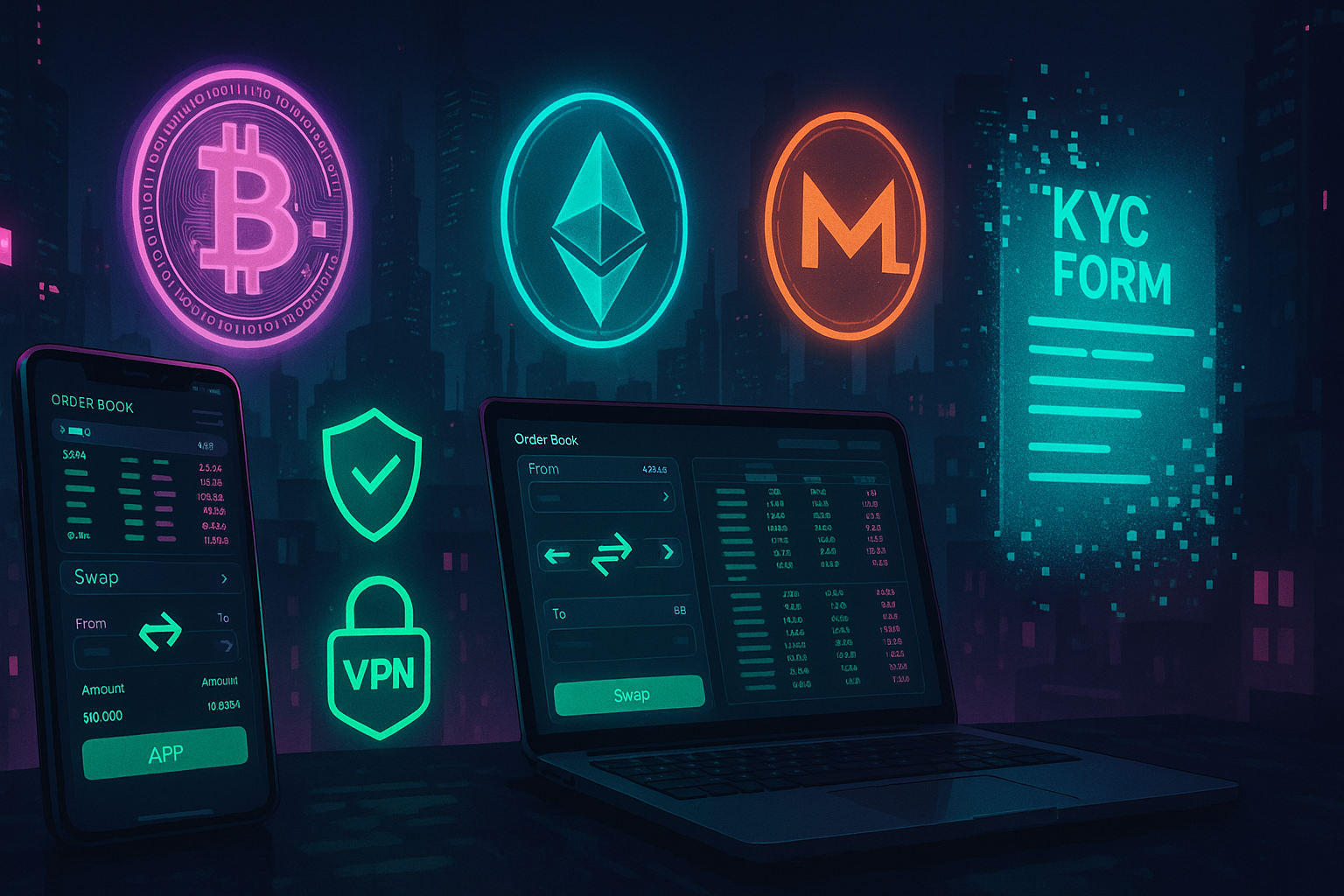
On the homepage you will see an exchange widget.
- In the “You send” field, choose the coin or token you currently hold (for example, BTC, ETH, USDT, USDC).
- In the “You get” field, select the coin you want to buy without KYC, such as a specific altcoin or stablecoin.
- Enter the amount you want to swap and review the estimated rate and fees.
Rates are calculated in real time using market data similar to what you see on CoinGecko or CoinMarketCap.
Step 3: Enter your wallet address
Next, you specify where you want to receive the coins.
- Copy and paste your destination wallet address for the “You get” asset.
- Double‑check that the network matches what your wallet supports (for example, USDT on Tron vs USDT on Ethereum).
- Optionally, add a refund address in case the transaction needs to be returned.
Always verify your address carefully. Sending to the wrong address or network can result in permanent loss of funds.
Step 4: Send your crypto and receive crypto
After confirming the details, GhostSwap will generate a deposit address and instructions.
- Send the exact amount of the “You send” coin from your wallet to the provided deposit address.
- Wait for blockchain confirmations. The number required depends on the network (for example, Bitcoin usually needs more confirmations than a fast EVM chain).
- Once confirmed, GhostSwap executes the swap and sends the “You get” coins to your receiving address.
This typically takes a few minutes, depending on network congestion. You can track the transaction via block explorers linked on the swap page or via your wallet app.

Pros and cons of GhostSwap for no‑KYC crypto
Pros
- No KYC: No ID upload, no selfies, no proof of address, no registration.
- Instant and simple: Most swaps are completed within minutes.
- 1,500+ trading pairs: Wide coin coverage, making it easy to move between majors, stablecoins, and altcoins.
- Non‑custodial: You are not depositing into an exchange wallet; you send directly from and to your own wallet.
- Privacy: Only the on‑chain transaction is visible; your personal identity is not tied to an exchange account.
Cons
- Crypto‑to‑crypto only: You cannot directly deposit bank transfers or card payments unless you use an additional “buy crypto” on‑ramp option.
- Network fees: On‑chain swaps still require you to pay blockchain transaction fees.
You can swap BTC, ETH, USDT and hundreds of other assets for 1,500+ coins on GhostSwap without KYC, keeping your trading fast and private.
Method 2: Using a Centralized Exchange
Many people search for “how to buy crypto without KYC” and immediately think of big centralized exchanges. In 2026, almost all major centralized platforms require full identity verification for fiat deposits and meaningful trading volume.
Why centralized exchanges usually require KYC
Centralized exchanges hold user funds and often support bank transfers, cards, and other regulated payment methods. Due to AML and KYC regulations, they typically must:
- Collect government‑issued ID (passport, ID card, driver’s license)
- Require selfies or video verification
- Ask for proof of address and sometimes source‑of‑funds documents
This process can take from several hours to multiple days, especially in busy periods or in strict jurisdictions. While CEXs can offer deep liquidity and advanced order types, they are not aligned with the goal of buying crypto without KYC.
Limited non‑KYC use on centralized exchanges
Some smaller or offshore exchanges may still allow limited activity without full verification, but it comes with trade‑offs:
- Lower withdrawal limits and restricted fiat options
- Higher risk of sudden account freezes or KYC demands
- Regulatory uncertainty and potential service shutdowns
If your priority is privacy and avoiding ID submission, using a non‑custodial swap or decentralized method is generally safer than relying on a centralized platform that could change its rules at any time.
Method 3: Other Ways to Buy Crypto Without KYC (P2P, DEX & ATMs)
Beyond instant swap services, there are several other ways to buy cryptocurrency without KYC in 2026. Each has different requirements, privacy levels, and risks.
P2P marketplaces and person‑to‑person trades
P2P trading means buying crypto directly from another person using local payment methods such as cash, bank transfers, or mobile money.
- Online P2P platforms: Some marketplaces match buyers and sellers, holding coins in escrow until payment is confirmed. Many now require at least basic KYC, but some offer limited trading without full verification.
- In‑person cash trades: Meeting someone you trust to exchange cash for crypto, which is usually the most private if handled correctly.
Pros
- Can start with local fiat currency and end with crypto in your wallet.
- Potentially strong privacy if you use cash and avoid sharing personal details.
Cons
- High risk of scams and chargebacks if you use reversible payment methods.
- Personal safety risk when meeting strangers with cash.
- Time‑consuming negotiation, price discussion, and coordination.
For non‑KYC users, P2P is often best combined with non‑custodial swaps: buy a major coin P2P, then use a private exchange like GhostSwap to convert into the exact altcoin you want.
Decentralized exchanges (DEXes)
Decentralized exchanges are smart‑contract based trading platforms on chains like Ethereum, BNB Chain, Solana, and others.
- You connect your wallet directly to the DEX.
- You sign transactions on‑chain to swap tokens.
- No traditional account or identity verification is needed.
Pros
- No account creation or KYC for on‑chain trading.
- Full control of your private keys and funds.
- Access to many smaller tokens that might not be listed on CEXs.
Cons
- Each chain has its own DEXs, tokens, and gas fees.
- Complex routing and slippage settings can be confusing for beginners.
- Scam tokens and rug pulls are common on permissionless DEXes.
A practical workflow is to use a cross‑chain, non‑custodial swap like GhostSwap to move between major coins and networks, then use a DEX if you need an ultra‑niche token that only exists on a specific chain.
Bitcoin and crypto ATMs
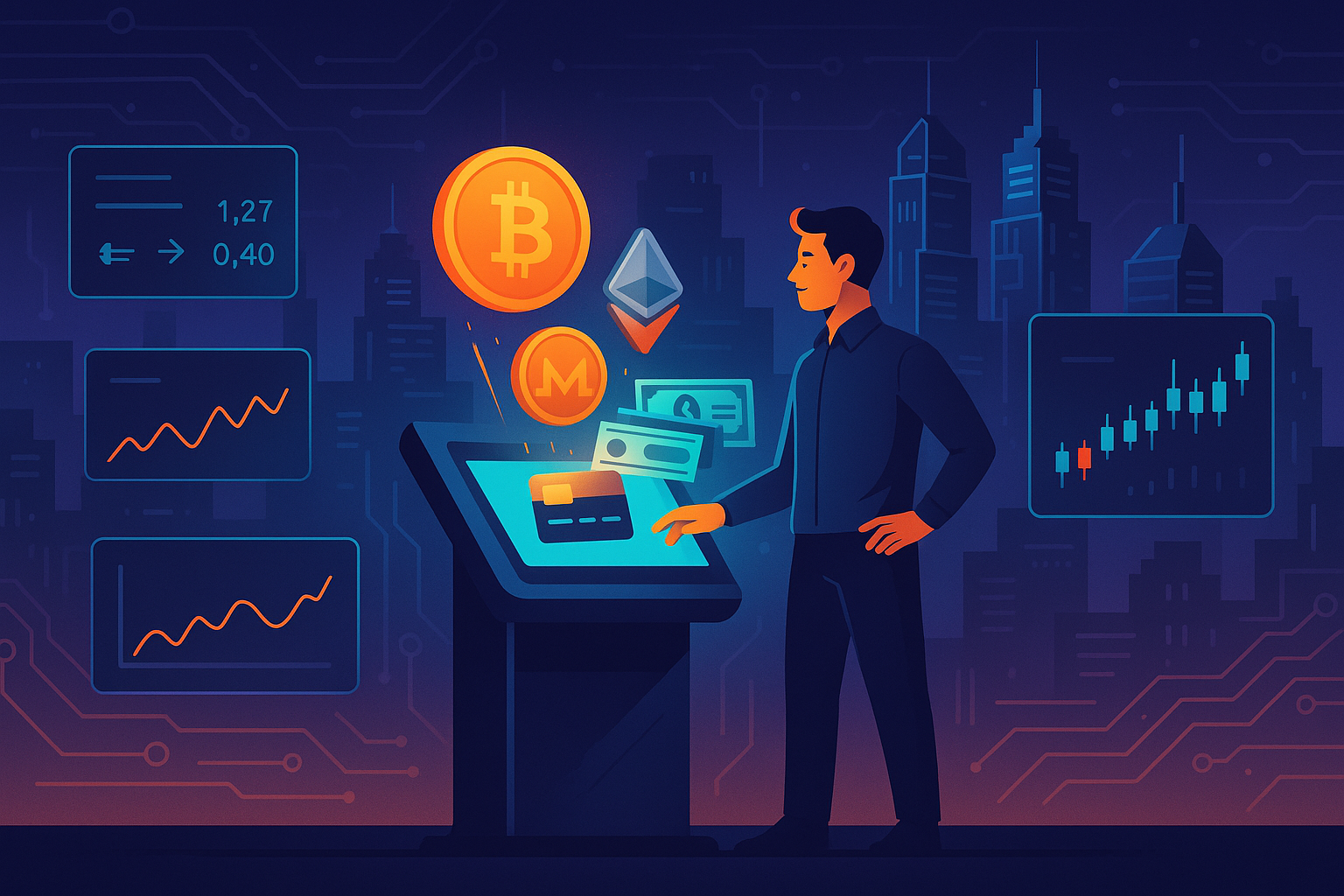
Crypto ATMs are physical kiosks where you can insert cash and receive Bitcoin or other assets to your wallet.
- You scan your wallet QR code.
- Deposit cash bills into the machine.
- Receive BTC or another coin to your address.
Pros
- Useful for turning physical cash into crypto with minimal online footprint.
- Fast once you find a nearby ATM and know the process.
Cons
- Fees can be significantly higher than online methods.
- Many ATMs now require phone numbers, ID scans, or selfies above certain limits.
- Limited coin selection, often only BTC or a few majors.
A common pattern is to buy BTC at an ATM for cash, then use a non‑custodial swap to privately convert that BTC into other coins or stablecoins in your own wallet.
Tips for Staying Safe When Buying Crypto Without KYC
By skipping centralized KYC processes, you are taking more responsibility for your own privacy and security. These best practices help reduce risk.
1. Use trusted wallets and verify downloads
- Download wallets only from official websites or app stores.
- Beware of fake apps impersonating well‑known wallets.
- Keep your operating system, browser, and wallet app updated.
Consider using hardware wallets for larger holdings to reduce exposure to malware and phishing attacks.
2. Double‑check addresses and networks
- Always verify the entire wallet address when copying and pasting.
- Confirm the blockchain network (for example, ERC‑20 vs BEP‑20 vs TRC‑20 for stablecoins).
- Send a small test transaction first if you are moving a large amount.
Once a transaction is broadcast to the blockchain, it cannot be reversed. Careful verification is essential for no‑KYC users.
3. Protect your privacy while transacting
- Avoid posting your wallet addresses or transaction screenshots publicly.
- Use separate addresses for different activities when possible.
- Consider privacy‑enhancing tools where legal in your jurisdiction.
While blockchain addresses are pseudonymous, repeated use and linking with personal data can compromise your privacy over time.
4. Be extremely careful with P2P and cash trades
- For in‑person deals, choose public locations with cameras, like cafes or bank lobbies.
- Never share more personal information than necessary.
- Wait for on‑chain confirmations before handing over large amounts of cash.
If something feels off, walk away from the trade. No deal is worth risking your safety.
5. Avoid custodial “wallets” that can freeze funds
Some apps marketed as “wallets” are actually custodial services. They hold your keys and can:
- Freeze your assets
- Demand KYC later
- Limit withdrawals without explanation
Look for the phrase “non‑custodial” or “self‑custody” and verify that you receive a recovery phrase. Platforms like GhostSwap work with your own wallet instead of acting as a custodian, which aligns better with non‑KYC usage.
Ready to Trade [Coin]?
If you already hold BTC, ETH, USDT or another major asset, you can swap crypto instantly on GhostSwap into [COIN] and 1,500+ other pairs without KYC, keeping control of your keys at all times.
Ready to Get Started?
Buying crypto without KYC in 2026 is very achievable if you combine the right tools and methods:
- Use a non‑custodial wallet and protect your seed phrase.
- Obtain your first coins via cash, P2P, work payments, or an ATM.
- Leverage non‑custodial swaps like GhostSwap to move between assets and chains privately.
As regulations tighten around centralized exchanges, non‑KYC methods give you an alternative path that still respects your privacy and self‑custody. Just remember that with greater freedom comes greater responsibility for security, transaction accuracy, and compliance with your local laws.
When you are ready to take the next step, you can start using a private exchange with non‑custodial swaps to manage your portfolio across hundreds of assets without creating an exchange account.
Frequently Asked Questions
Can I do this without ID?
Yes, you can buy and swap crypto without submitting ID if you use non‑custodial methods. These include:
- Cash purchases via Bitcoin or crypto ATMs that do not require KYC under certain limits
- P2P trades with trusted individuals or platforms that allow limited non‑KYC volume
- Crypto‑to‑crypto swaps and decentralized exchanges that operate via your wallet
In all these cases, you remain in control of your wallet and do not upload identification documents. However, you should still follow the laws and regulations that apply in your country.
What is the best method?
The best method depends on what you already have and what you want:
- If you already hold crypto and want to change coins without KYC, a non‑custodial instant swap like GhostSwap is usually the simplest and fastest.
- If you only have cash and no crypto, a P2P trade or crypto ATM is typically your starting point.
- If you want niche tokens on a specific chain, you might combine a private swap to a base asset with a DEX trade for the final token.
For most users, a combination of these methods offers the best balance between privacy, speed, and safety.
How long does it take?
Timeframes vary by method:
- Non‑custodial swaps: Usually 5–15 minutes, depending on blockchain confirmations.
- DEX trading: Often under 5 minutes if the network is not congested.
- P2P trades: 10–60 minutes or more, depending on communication and payment processing.
- Crypto ATMs: 10–30 minutes, not counting travel time.
Centralized exchanges with full KYC can take hours or days before you can move significant amounts, which is why many users prefer non‑KYC options when speed matters.
Is it safe to use GhostSwap?
GhostSwap is designed as a non‑custodial instant swap platform, which means:
- You never deposit funds into a long‑term exchange account.
- You initiate a one‑time on‑chain transaction from your wallet to complete a swap.
- Your received funds go directly back into an address you control.
No platform is completely risk‑free, and you should always verify URLs, check transaction details, and safeguard your wallet. However, using a non‑custodial swap model removes many of the centralized exchange risks like large hot‑wallet hacks or unexpected account freezes tied to KYC reviews, while letting you maintain privacy when trading crypto in 2026.