BTC to USDC Swap: How to Convert Bitcoin to Stablecoins Safely and Efficiently
Introduction
Crypto markets move fast, and sometimes the smartest move is not to buy or sell more Bitcoin, but to rebalance into a stable asset. That is where a BTC to USDC swap becomes extremely useful. Swapping Bitcoin (BTC) to USD Coin (USDC) lets you lock in gains, reduce volatility, or prepare funds for spending and yield strategies without leaving the crypto ecosystem.
Whether you are an active trader, long term holder, or DeFi user, learning how to convert BTC to USDC efficiently can save you both time and money. The good news is that modern non custodial platforms make it simple to swap crypto instantly between BTC and USDC without opening complex order books or creating multiple exchange accounts.
This guide explains why the BTC to USDC pair matters, the benefits and risks, and walks you through a practical, step by step process to perform a secure, low friction swap.
Why BTC to USDC Swaps Matter
Bitcoin is the leading digital asset, but it is highly volatile. USDC, on the other hand, is a U.S. dollar pegged stablecoin designed to hold a relatively steady value of around 1 USD.
Being able to move smoothly between BTC and USDC matters for several reasons:
- Risk management: When the market overheats or you see signs of a downturn, a BTC to USDC swap lets you secure unrealized profits without completely exiting crypto.
- Liquidity and payments: USDC often integrates more easily with payment processors, DeFi protocols, and exchanges, making it a convenient “cash like” asset for transfers and trades.
- Tax planning (jurisdiction dependent): Swapping to USDC might realize capital gains, but it can also simplify tracking your cost basis and reduce complexity compared with constant fiat on and off ramps.
- DeFi access: Many DeFi lending, borrowing, and yield products prefer or require stablecoins like USDC.
In short, a simple BTC to USDC swap is one of the core building blocks of an active crypto strategy.
What Is a BTC to USDC Swap, Exactly?
A BTC to USDC swap is a transaction where you convert a certain amount of Bitcoin into an equivalent value of USDC at the current market rate. Under the hood, this can happen via:
- Centralized exchanges (CEXs): Traditional order book trading on platforms that take custody of your funds.
- Non custodial swap services: Instant swap platforms that route your trade through liquidity sources without requiring you to deposit into a custodial account.
- Decentralized exchanges (DEXs): Smart contract based platforms where liquidity pools facilitate the trade, often involving tokenized BTC representations on other chains.
Each method has trade offs in terms of speed, privacy, custody control, fees, and ease of use. Many users prefer a non custodial swap model to retain full control over their wallets.
Key Benefits of Swapping BTC to USDC
Before looking at the potential drawbacks, it helps to understand the major benefits of swapping BTC to USDC.
1. Reduced Volatility
Bitcoin prices can swing dramatically. Holding some portion of your portfolio in USDC can reduce overall volatility. When you swap BTC to USDC:
- You can protect part of your capital from sharp market drops.
- You maintain exposure to the crypto ecosystem while avoiding extreme price movements.
- You have a “dry powder” reserve to buy dips when opportunities appear.
2. Faster Access to Trading Opportunities
Having USDC on hand lets you react quickly to new market opportunities, token launches, or yield strategies without waiting for a bank transfer to clear. Many spot markets on CEXs and DEXs use USDC as a base pair, which simplifies trade routing.
3. Easier Integration With DeFi and Payments
USDC is widely supported across Ethereum, layer 2 networks, and other blockchains. That makes it easier to:
- Provide liquidity or lend assets on DeFi protocols.
- Pay for services that accept stablecoins.
- Move value quickly between wallets and platforms with less price risk.
4. Non Custodial Control
When you use a private exchange that supports non custodial swaps, you retain control over your funds. You do not keep large balances on centralized platforms, which reduces exposure to exchange hacks, insolvency, or withdrawal freezes.
Risks and Drawbacks of a BTC to USDC Swap
No strategy is without trade offs. Before converting BTC to USDC, consider the main risks and limitations.
1. Counterparty and Platform Risk
How you perform the swap matters. Using a custodial exchange means trusting that platform with your funds. Using a smart contract on a DEX means trusting the contract’s security and the underlying blockchain.

Non custodial swap platforms reduce direct custody risk, but you still need to verify that the service is reputable, transparent in its fees, and uses sensible routing for liquidity.
2. Stablecoin Issuer and Regulatory Risk
USDC is designed to be fully backed by reserves, but like any stablecoin it introduces a different kind of risk compared with BTC:
- You rely on the issuer and underlying financial infrastructure.
- Regulatory changes could affect availability or usage in some jurisdictions.
- Blacklisting or compliance features could, in theory, restrict certain addresses.
This does not mean USDC is unsafe, but it is structurally different from a decentralized asset like Bitcoin.
3. Market Timing Risk
Swapping BTC to USDC at the wrong time may mean missing out on upside if Bitcoin continues to rise afterward. Since no one can predict markets perfectly, consider:
- Swapping in tranches instead of all at once.
- Defining rules for re entering BTC (for example, after a certain percentage drop).
- Avoiding emotional decisions driven solely by fear or greed.
4. Fees and Slippage
Every BTC to USDC swap has transaction costs. These may include:
- Network fees for sending BTC and receiving USDC.
- Trading or service fees charged by the platform.
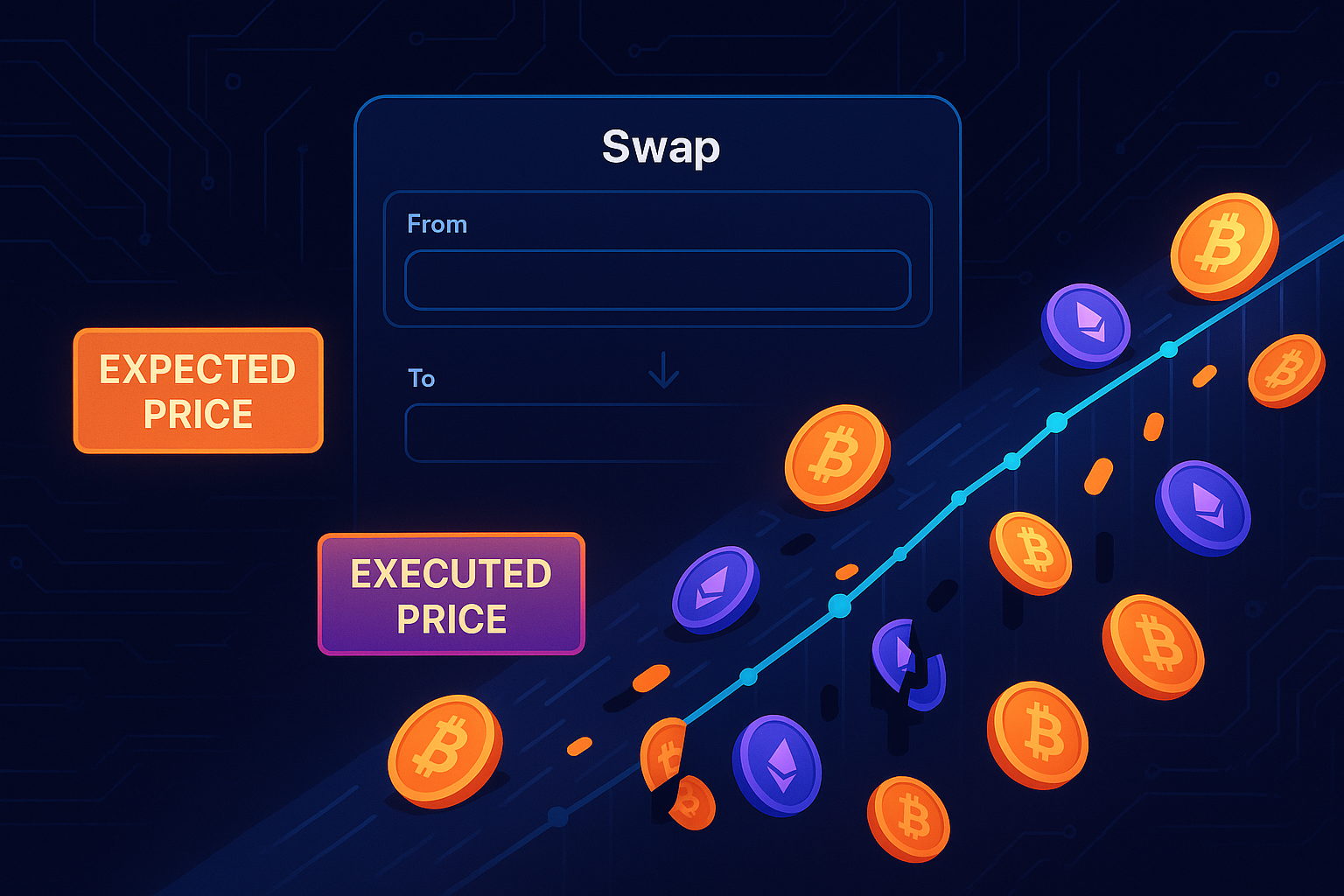
- Slippage if the execution price differs from the quoted rate.
Choosing the right tool and timing your transaction when network congestion is lower can help minimize these costs.
Step by Step Guide: How to Perform a BTC to USDC Swap
This walkthrough uses the general flow you will see on many non custodial swap platforms. Exact screens differ by service, but the logic is similar.
Step 1: Prepare Your Wallets
- Bitcoin wallet: Make sure your BTC is in a wallet where you control the private keys and can send transactions.
- USDC compatible wallet: Have a receiving wallet ready that supports USDC on the target chain (for example, Ethereum or a specific layer 2). Confirm the correct network to avoid sending to the wrong chain.
- Backup: Double check that you have backed up your seed phrases or private keys before moving funds.
Step 2: Choose a Swap Platform
You can perform a BTC to USDC swap through a CEX, DEX, or an instant non custodial swap site. If you prefer to avoid full KYC onboarding, non custodial options such as GhostSwap’s dedicated BTC to USDC swap page can provide a simple and private flow without requiring you to maintain custodial balances.
When choosing a platform, evaluate:
- Reputation and community feedback.
- Clarity around fees and rates.
- Supported networks for USDC withdrawals.
- Customer support availability.
Step 3: Select the Trading Pair and Amount
- On the platform, select BTC as the asset you are sending.
- Select USDC as the asset you wish to receive.
- Enter the amount of BTC you want to swap. Many interfaces will automatically show an estimated amount of USDC you will receive, based on current market rates.
Take a moment to review:
- The exchange rate.
- Any displayed platform fee.
- The minimum and maximum allowed trade size.
Step 4: Enter Your USDC Receiving Address
Provide the wallet address that will receive USDC. Be extremely careful here:
- Ensure it is on the correct network (for example, Ethereum mainnet if that is what the platform uses for USDC).
- Copy and paste the address, then visually confirm the first and last few characters.
- Consider sending a small test transaction if you are using a new address or network for the first time.
Step 5: Send BTC to the Provided Address
The platform will give you a BTC deposit address or QR code:

- From your Bitcoin wallet, initiate a transaction to that address.
- Set an appropriate network fee based on how quickly you want confirmation.
- After sending, the platform will wait for a predefined number of confirmations before processing the swap.
Step 6: Wait for Confirmation and Receive USDC
Once the BTC transaction is confirmed and processed, the platform will execute the swap and send USDC to your specified wallet. You will see:
- The final amount of USDC received.
- A transaction hash on the destination chain that you can track with a block explorer.
Confirm the USDC balance in your receiving wallet. Make sure your wallet is set to display the correct asset and network.
Practical Tips for an Efficient BTC to USDC Swap
1. Check Network Fees Before You Swap
On both Bitcoin and the USDC host network (such as Ethereum), fees can spike during peak usage. To keep swap costs reasonable:
- Use fee tracking tools or explorers to gauge current network conditions.
- Consider scheduling larger swaps during off peak hours.
- For smaller amounts, explore lower fee networks if supported for USDC.
2. Compare Effective Rates, Not Just Headline Fees
Some platforms advertise low or zero fees but offer worse exchange rates, which can be more expensive overall. When evaluating a BTC to USDC swap, focus on:
- The total BTC you send versus the USDC you actually receive.
- Slippage tolerance settings if available.
- Any hidden service or withdrawal fees.
3. Start with a Small Test Swap
If you are using a new platform or network, consider a small trial run first. This lets you verify:
- That your addresses are correct.
- That the platform behaves as expected.
- That your wallet properly recognizes the incoming USDC.
After a successful test, you can confidently increase the amount.
4. Maintain Good Security Hygiene
Security basics still apply during a swap:
- Only use platforms through their official URLs or trusted links.
- Beware of lookalike domains and phishing attempts.
- Keep your devices and browsers updated, and use hardware wallets where possible.
5. Document Your Transactions
For accounting and tax purposes, keep a record of:
- Transaction hashes on both BTC and USDC chains.
- Timestamps and exchange rates at the time of the swap.
- Any fees paid.
Modern portfolio trackers can automate much of this, but having your own backup records is still valuable.
When Does a BTC to USDC Swap Make Sense?
Here are some realistic scenarios where converting BTC to USDC is strategically useful:
- Protecting profits: After a strong BTC rally, you might swap a portion into USDC to lock in gains while leaving the rest to ride long term.
- Funding stablecoin yields: To participate in a DeFi lending pool or savings product that pays yield on USDC.
- Short term uncertainty: Ahead of major macroeconomic events or regulatory announcements when volatility is expected to spike.
- Preparing for a specific purchase: When you know you will need a certain amount of dollar equivalent value soon, and you want to avoid Bitcoin price fluctuations.
Align your swap with a clear purpose rather than reacting only to short term price moves.
Conclusion
Mastering the BTC to USDC swap is a practical skill for anyone serious about managing their crypto portfolio. Converting Bitcoin into a widely used stablecoin like USDC lets you reduce volatility, access DeFi, and stay ready for new opportunities without fully leaving the digital asset space.
Whether you choose a centralized exchange, a DEX, or a non custodial service, take the time to understand the trade offs in fees, privacy, and custody. Many users find that a focused, non custodial BTC to USDC swap interface offers a strong balance of simplicity and control.
By following the steps and best practices outlined in this guide, you can approach each swap with confidence, minimize unnecessary costs, and ensure your BTC and USDC work together as part of a coherent, risk aware crypto strategy.