BTC to AVAX Swap: How to Exchange Bitcoin for Avalanche Safely and Efficiently
Introduction
As the crypto ecosystem evolves, many Bitcoin holders are looking to diversify into high-performance smart contract networks like Avalanche (AVAX). A BTC to AVAX swap lets you move value from the security and brand recognition of Bitcoin into a fast, low-fee, DeFi-friendly ecosystem without touching traditional banks or centralized brokers.
Whether you are chasing lower transaction fees, exploring DeFi, or just want to rebalance your portfolio, knowing how to complete a Bitcoin to Avalanche swap safely is essential. The good news is that with modern non-custodial tools, you can swap crypto instantly without creating an exchange account or handing your funds to a centralized custodian.
This guide explains why BTC to AVAX swaps matter, the main benefits and risks, and walks you through a clear, step-by-step process so you can execute your first swap with confidence.
Why BTC to AVAX Swaps Matter
Bitcoin remains the largest and most recognized cryptocurrency, but its primary design focuses on security, decentralization, and store-of-value properties. Avalanche, on the other hand, is built for high throughput, smart contracts, and a rich DeFi ecosystem. Moving some of your BTC into AVAX unlocks use cases that Bitcoin alone cannot provide.
Key reasons traders and investors swap BTC for AVAX
- Access to DeFi and Web3 — AVAX is the native token of Avalanche, one of the leading smart contract platforms. Holding AVAX lets you access decentralized exchanges, lending protocols, yield farming, NFT marketplaces, and more.
- Lower fees and faster settlement — Avalanche is designed for low transaction costs and high throughput compared to Bitcoin. For users who interact frequently with the network, swapping BTC to AVAX can significantly reduce operational costs.
- Portfolio diversification — Swapping a portion of BTC to AVAX allows you to diversify across different layers of the crypto stack: Bitcoin for sound money and Avalanche for programmable finance.
- Staking and network participation — AVAX can be used for staking on Avalanche, giving you potential yield for helping secure the network, something you cannot directly do with native BTC.
In short, a BTC to AVAX swap is not just a speculative trade. It can be a strategic move to participate in a broader part of the crypto economy.
Benefits of a BTC to AVAX Swap
Beyond high-level strategy, there are concrete benefits associated with swapping BTC for AVAX using modern non-custodial swap services.
1. Control of your funds
When you use a non-custodial swapping platform, you retain control of your keys. You are not required to deposit your BTC into an exchange wallet and wait for withdrawal approvals. Instead, the swap is executed directly from your own wallet to your AVAX address.
2. Privacy-friendly options
Centralized exchanges usually require extensive KYC and surveillance-level tracking of your trades. A carefully chosen private exchange that supports direct BTC to AVAX swaps can reduce the amount of personal data exposed, as long as you still comply with local legal requirements.
3. Reduced friction and time savings
Without a direct BTC/AVAX pair, a typical centralized route might force you to:
- Deposit BTC to a centralized exchange
- Convert BTC to a stablecoin or intermediary asset
- Trade that asset for AVAX
- Withdraw AVAX to your personal wallet
This process introduces multiple transaction fees, price slippage, and waiting periods. A direct BTC to AVAX swap condenses this into a single, streamlined operation.
4. Reduced counterparty exposure
Every time you send funds to a centralized exchange or keep them there for trading, you are trusting a third party not to suffer hacks, insolvency, or regulatory freezes. Non-custodial swaps reduce this exposure by avoiding prolonged custody situations.
Risks and Drawbacks of BTC to AVAX Swaps
No crypto trade is without risk. Understanding the potential pitfalls of a BTC to AVAX swap will help you plan appropriately.
1. Market volatility and price slippage
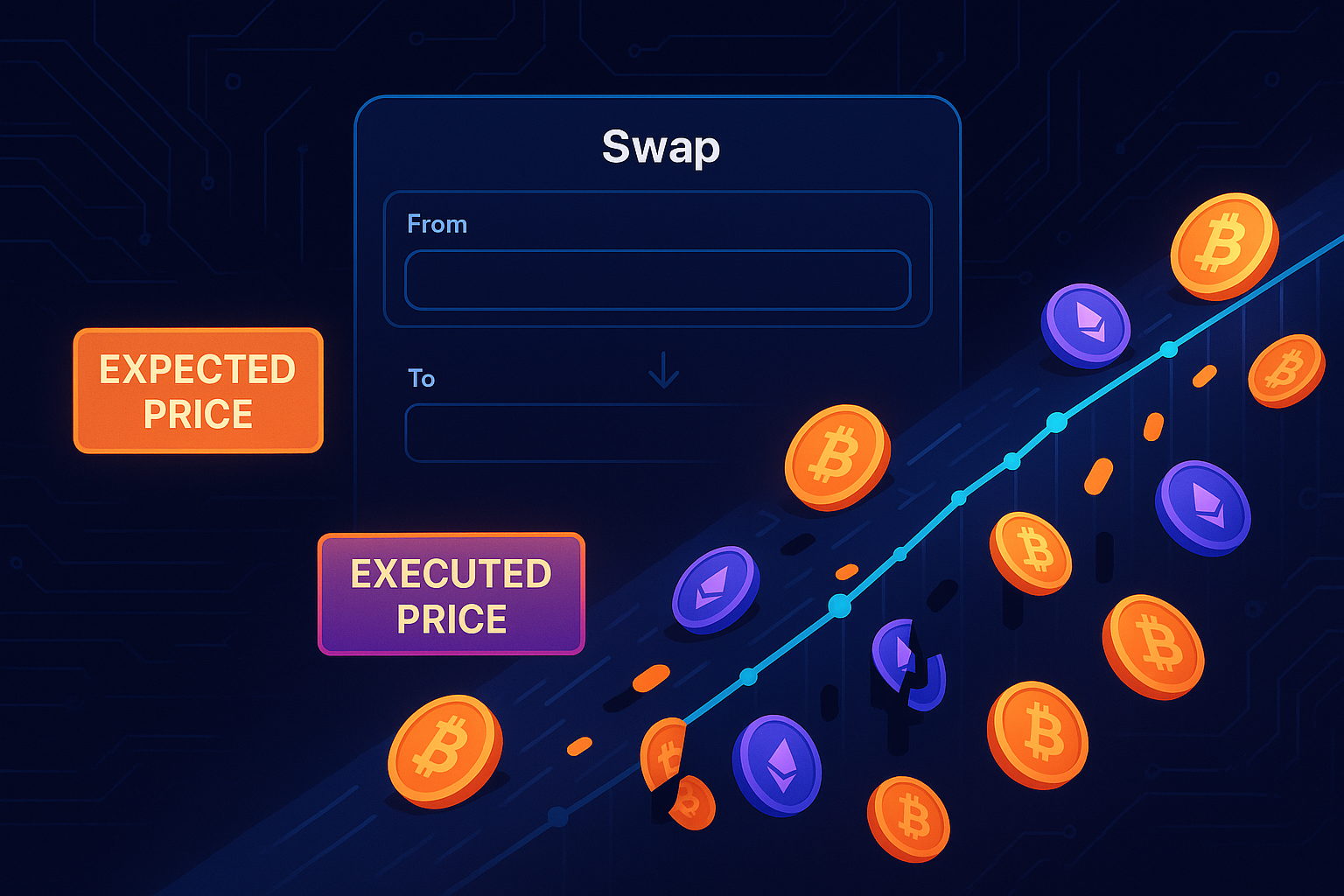
BTC and AVAX are both volatile assets. The exchange rate between them can move quickly, especially during high-volume market events. If you are swapping a large amount in a short liquidity window, you may encounter noticeable slippage between quoted and executed prices.
2. Network fees and congestion
Swaps rely on both the Bitcoin and Avalanche networks. If the Bitcoin network is congested, fees for sending BTC may spike. Similarly, heavy usage on Avalanche can raise gas fees, although they are usually lower than Bitcoin’s. The total cost of a swap includes these network fees as well as any service spread.
3. Custodial vs non-custodial risks
While non-custodial tools remove the risk of centralized exchange failures, they introduce operational risks on your side:
- Sending to the wrong address (especially cross-chain mistakes)
- Using the wrong network (e.g., AVAX C-Chain vs other chains)
- Losing wallet seed phrases or private keys
With non-custodial solutions, you are the bank. This is powerful but unforgiving.
4. Regulatory and tax considerations
In many jurisdictions, swapping BTC to AVAX counts as a taxable event, potentially triggering capital gains calculations. Regulations differ by country, so it is wise to consult a qualified tax professional if you are unsure how swaps are treated in your region.
Step-by-Step Guide: How to Perform a BTC to AVAX Swap
Below is a general workflow you can adapt regardless of the specific service you use. Details may vary slightly by platform, but the core steps remain consistent.
Step 1: Prepare your wallets
- Bitcoin wallet: Ensure you have a secure BTC wallet with sufficient balance and that you control the private keys.
- Avalanche-compatible wallet: Set up a wallet that supports Avalanche C-Chain (for example, a Web3 wallet that can connect to Avalanche). Confirm you can view and receive AVAX on the correct network.
Write down and securely store your seed phrases offline. Never share them with anyone, including support staff or websites.
Step 2: Choose a non-custodial swap service
Select a platform that enables direct BTC to AVAX swaps. Look for:
- Non-custodial architecture
- Transparent rate quotes
- Clear information on network fees and minimum amounts
- Reasonable completion times
On services such as btc to avax swap interfaces, you can usually specify how much BTC you want to send and see an estimated AVAX amount in return before committing.
Step 3: Enter swap details
- Select BTC as the asset you are sending.
- Select AVAX as the asset you will receive.
- Input either:
- The amount of BTC you want to swap, or
- The amount of AVAX you would like to receive (if the interface supports this).
- Paste your AVAX receiving address from your Avalanche-compatible wallet.
Double check the AVAX address and ensure it is on the correct network (typically Avalanche C-Chain for EVM style wallets). A mistaken address can mean permanent loss of funds.
Step 4: Review the quote and fees
Before confirming your BTC to AVAX swap, carefully review:
- The estimated exchange rate and output amount
- Any service fee or spread
- Network fees for Bitcoin and Avalanche
- Expected completion time or number of confirmations required
Some services also let you choose between a floating rate (subject to change until completion) or a more fixed-rate quote within a certain time window.
Step 5: Send BTC to the provided address
Once you confirm the details, the swap platform will present a unique BTC deposit address or QR code. Using your Bitcoin wallet:
- Send the exact BTC amount shown in the quote to the provided deposit address.
- Include any required memo or note if the platform specifies it (many non-custodial services do not require this, but always read instructions).
After you broadcast the transaction, the Bitcoin network will take some time to confirm it. The required number of confirmations depends on the platform and the transaction size.
Step 6: Wait for processing and AVAX delivery
After sufficient BTC confirmations, the service will execute the swap and send AVAX to the address you specified earlier. Typical processing time can range from a few minutes to longer, depending on network load for both chains.
Monitor your Avalanche wallet for the incoming AVAX. Once received, you can send, stake, or interact with DeFi applications as desired.
Practical Tips for a Safe and Efficient BTC to AVAX Swap
1. Always test with a small amount first
For your first swap or when using a new platform, start with a small test transaction. This lets you confirm that:
- The AVAX address is correct
- The swap flow works as expected
- You understand the fee structure and timing
After a successful test, you can confidently scale to larger amounts.
2. Verify URLs and avoid phishing
Attackers often create fake websites that mimic legitimate swap services. Always:
- Type the official URL directly or use a trusted bookmark
- Check the domain name carefully for subtle misspellings
- Avoid clicking swap links from unsolicited emails or DMs
3. Consider timing and market conditions
If markets are extremely volatile, spreads and slippage can widen. When practical, execute swaps during calmer periods or use smaller tranches. You may also choose to wait if Bitcoin fees are unusually high due to mempool congestion.
4. Record transaction details
For tracking and potential tax reporting, keep a log of:
- Date and time of the swap
- BTC amount sent and AVAX amount received
- Transaction IDs for both Bitcoin and Avalanche
- Exchange rate at the time of the swap (if available)
Many wallets and explorers let you export transaction history. This is valuable for both accounting and security audits.
5. Use hardware wallets for higher-value swaps
If you are swapping a significant amount of BTC to AVAX, consider using hardware wallets on both chains for added security. Many non-custodial swap interfaces can connect to hardware devices so you never expose private keys to your browser directly.
Conclusion
A BTC to AVAX swap is a powerful way to bridge the gap between Bitcoin’s store-of-value strengths and Avalanche’s fast, smart contract driven ecosystem. By understanding the benefits, risks, and precise steps involved, you can move between these networks safely, efficiently, and without surrendering custody of your assets.
When you use a reliable non-custodial swap service and follow best practices such as testing small amounts first, double checking addresses, and keeping good records, you dramatically reduce the chances of errors or unpleasant surprises.
Ultimately, learning how to execute a BTC to AVAX swap is part of becoming a more flexible and self-reliant crypto user. It opens the door to DeFi opportunities, staking, and broader participation in the Avalanche ecosystem while still letting you maintain exposure to Bitcoin when that suits your strategy.