
Crypto Tax Guide 2026: A Complete Guide To Reporting Your Crypto Correctly
A crypto tax guide explains how cryptocurrency is taxed, when you owe tax, and how to report it. In most countries, crypto is treated as property, so you pay tax on profits when you sell, swap, or spend coins. This guide covers the basics so you can stay compliant and avoid penalties.
Trading on non-custodial platforms like GhostSwap is fast and private, but your tax obligations still exist and must be handled correctly.
Crypto Tax Guide Explained Simply
What is crypto tax in plain English?
Crypto tax is just the money you owe your government on your cryptocurrency profits and sometimes on your income in crypto.
Whenever you sell, swap, or spend crypto for more than you originally paid, you usually owe tax on the gain. If you earn crypto through work, staking, lending, or airdrops, that income can be taxable too.
What counts as a taxable event?
A “taxable event” is an action with your crypto that triggers a potential tax bill. Common examples include:
- Selling BTC, ETH, or any coin for your local currency
- Swapping one crypto for another (for example, SOL to ETH)
- Spending crypto on goods or services
- Earning crypto through your job, freelancing, or staking rewards
Just buying and holding crypto usually is not taxable until you dispose of it.
What taxes apply to crypto?
In many countries, two types of tax can apply:
- Capital gains tax on profits from selling or swapping
- Income tax on crypto you receive as payment or rewards
Your tax rate depends on your country’s rules, how long you held the asset, and your total income.
How Does Crypto Tax Work?
How capital gains on crypto are calculated
For tax purposes, most jurisdictions treat crypto as property or a capital asset. That means they use capital gains rules similar to stocks.
The basic formula is:
- Capital gain or loss = Selling price (or fair market value at disposal) minus Cost basis
Your cost basis is how much you originally paid for the crypto, including fees.
Short-term vs long-term gains
Many tax systems distinguish between short-term and long-term capital gains:
- Short-term gains: Crypto held for less than 1 year before disposal, often taxed at higher, regular income rates
- Long-term gains: Crypto held for more than 1 year, often taxed at reduced rates
This holding-period rule makes your trading style very important for your eventual tax bill.
When swapping one crypto for another
In most countries, trading one coin for another is treated like selling the first coin.
Example: You swap 1 ETH for some USDT. Tax authorities treat that as if you sold the ETH for its value at that moment, then bought USDT with the proceeds. Any gain on the ETH is taxable.
This is crucial if you do many swaps, including instant non-custodial swaps, because every trade can create a small taxable gain or loss.
Income tax on crypto payments and rewards
When you receive crypto as income, most tax agencies treat it like regular cash income.
- You receive 0.1 BTC as salary → The value in your local currency on that day is taxable income
- You earn staking, lending, or liquidity mining rewards → The fair market value at the time of receipt is usually taxable income
Later, when you dispose of that crypto, you also have a capital gain or loss based on how its price changed since you received it.
Cost basis methods (FIFO, LIFO, etc.)
If you buy the same coin at different prices over time, you must choose which units you are selling for tax purposes. Common methods include:
- FIFO (First In, First Out): Earliest coins you bought are considered sold first
- LIFO (Last In, First Out): Most recently bought coins are considered sold first, if allowed in your country
- Specific identification: You track and choose specific lots to sell, when regulations permit
Your chosen method affects your reported gains and should usually be used consistently year to year.
Stablecoins and DeFi in the tax system
Stablecoins are typically treated the same as other crypto for tax purposes. Selling USDT for USD, or swapping USDC for BTC, can still be taxable events if there are gains.

DeFi activity, such as lending, borrowing, yield farming, and providing liquidity, often creates multiple taxable events. Because DeFi protocols evolve quickly, you need to track each transaction and rely on up-to-date local guidance or a tax professional.
You can swap BTC, ETH, USDT and 1,500+ other coins on GhostSwap without KYC, but you still need to track each swap for tax purposes.
Why Does Crypto Tax Matter?
Avoiding penalties and audits
Tax authorities worldwide are increasing their focus on digital assets. Many now require exchanges, banks, or payment processors to share user data.
If you ignore your crypto taxes, you risk penalties, interest on unpaid tax, and in extreme cases, criminal charges. Proper reporting is usually far cheaper and less stressful than ignoring the rules.
Protecting your long-term gains
A good crypto tax strategy can preserve more of your profits.
By understanding how long-term vs short-term gains are taxed, you can plan when to sell, when to realize losses, and how frequently to trade. Over several years, smart planning can materially increase your net wealth.
Building a clean track record
If you plan to move from crypto into real estate, traditional investments, or business ventures, you may need clear financial records.
Proper crypto tax reporting gives you verifiable income and capital gains history, which can help with loans, visas, or regulatory checks.
Supporting mainstream adoption
Transparent tax treatment helps governments feel more comfortable with digital assets.
When individuals comply with tax rules, it reduces the argument that crypto is only for evasion or illegality and supports broader adoption, clearer legislation, and better consumer protections.
Crypto Tax Examples and Use Cases
Example 1: Simple buy and hold
In January, you buy 1 BTC and hold it all year.
- No tax is due during the year, because you have not sold or swapped it.
- If you still hold it at year-end, you usually do not report a capital gain or loss in most systems.
Only when you sell or use that BTC do you potentially trigger a taxable event.
Example 2: Trading between altcoins
You buy 2 ETH for your local currency. Later, you swap 1 ETH for some SOL on a non-custodial swap platform.
- On the day of the swap, you calculate the value of the 1 ETH in your local currency.
- If that value is higher than your original cost for that 1 ETH, you have a capital gain.
- The SOL you receive has a cost basis equal to the value of the ETH you disposed of.
Even though you never touched traditional currency, the trade is still taxable in most jurisdictions.
Example 3: Getting paid in crypto
A freelancer earns 0.5 ETH as payment for services.
- On the payment date, the local currency value of 0.5 ETH is taxable as income.
- Months later, they sell that 0.5 ETH for their local currency.
- If the price has increased, they have an additional capital gain; if it has decreased, they may have a capital loss.
Example 4: Using crypto for purchases
You use 0.01 BTC to buy a laptop.
- The tax system usually treats this as if you sold 0.01 BTC for that value, then used the cash to buy the laptop.
- You must compare the BTC’s value when you acquired it with its value at the time of purchase to calculate your gain or loss.
Example 5: Realizing losses intentionally
You bought a token that is now worth less than you paid.
- If you sell or swap the token at a loss, that capital loss can sometimes offset gains from other trades.
- This strategy, often called “tax-loss harvesting,” helps reduce your overall tax bill, subject to local rules.
Pros and Cons of Understanding Crypto Tax Rules
Benefits of following this crypto tax guide
- Compliance: Reduce the risk of penalties, audits, or legal trouble.
- Better planning: Schedule trades and withdrawals in tax-efficient ways.
- Clear records: Maintain an accurate transaction history and portfolio overview.
- Stress reduction: Avoid year-end panic about untracked trades.
Challenges and drawbacks
- Complexity: Many chains, tokens, and DeFi protocols create a high volume of transactions to track.
- Changing rules: Crypto tax policies evolve and may differ widely between countries.
- Time cost: Gathering data from multiple wallets and platforms can be time-consuming.
- Privacy concerns: Some users feel uncomfortable sharing detailed transaction histories, even for tax purposes.
How This Crypto Tax Guide Relates to Trading on GhostSwap
Non-custodial trading and taxes
GhostSwap is a non-custodial instant swap platform. You keep control of your private keys, and there is no KYC requirement.
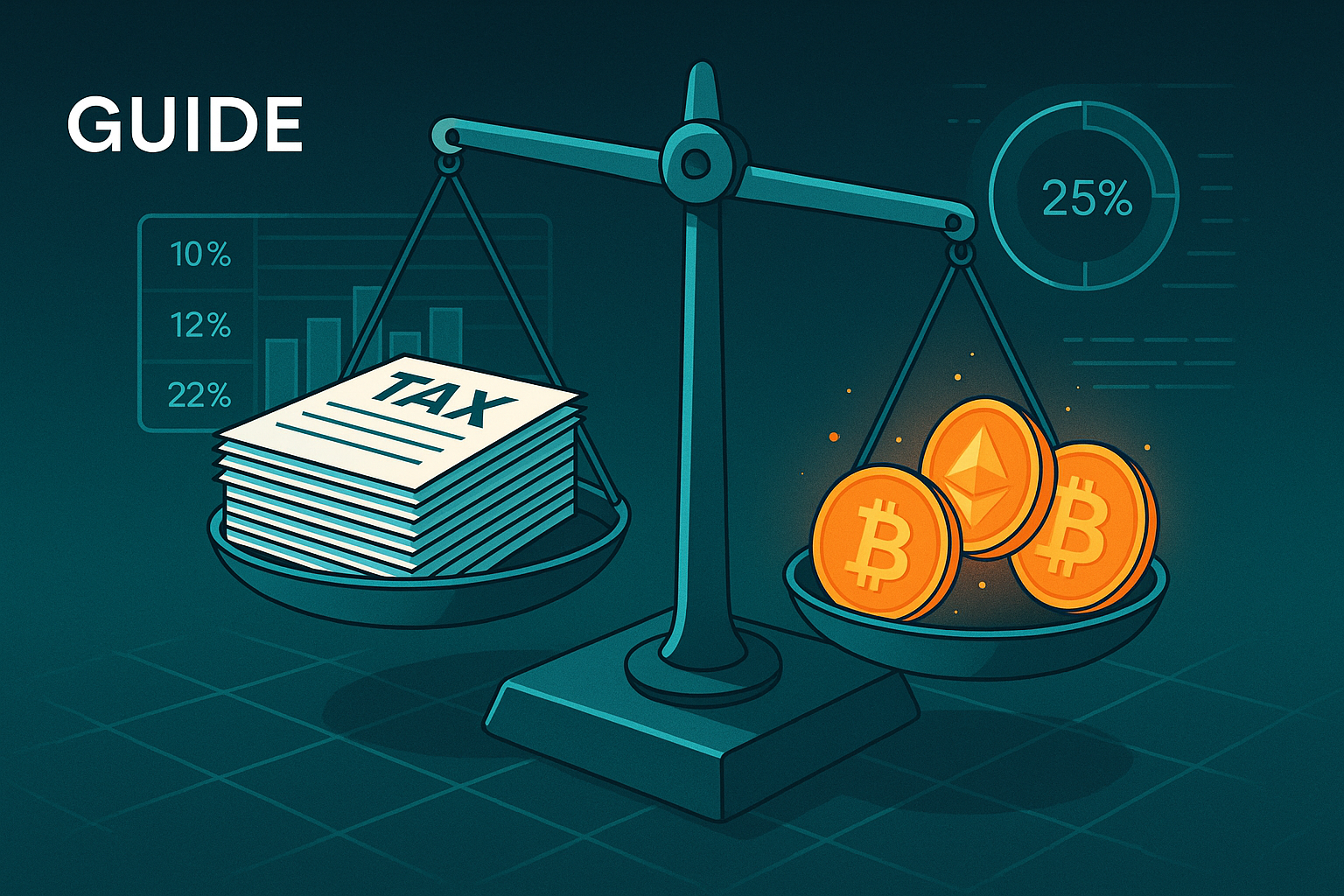
From a tax perspective, however, non-custodial swapping is still typically a taxable disposal. Swapping one coin for another via a private exchange interface does not remove the obligation to report capital gains and losses under your local laws.
Tracking your swaps
Every time you swap, you should record:
- Date and time of the trade
- Coins and amounts sent and received
- Fair market value in your local currency at the time of the trade
- Any fees paid
You can export data from wallets and explorers, then feed it into a portfolio tracker or tax software to calculate your gains, losses, and taxable income.
Using GhostSwap as part of a tax-conscious strategy
Instant swaps can support strategies like rebalancing, taking profits, or realizing losses.
Because GhostSwap does not hold your funds in custody, you can move assets between wallets and chains to implement your strategy while still maintaining privacy and control, but you should keep a parallel log of every swap for tax reporting.
Ready to Start Trading?
You can swap crypto instantly across 1,500+ trading pairs on GhostSwap with no account and no KYC, while keeping full control of your funds. Just remember to log your swaps so this crypto tax guide remains easy to apply at filing time.
Ready to Trade Crypto?
If you are comfortable with how crypto tax works and have a plan to record your transactions, you can start swapping securely using a non-custodial tool like GhostSwap. Visit GhostSwap to trade BTC, ETH, USDT and hundreds of other assets while keeping your keys and your privacy.
Frequently Asked Questions
Do I have to pay tax on every crypto transaction?
In most countries, not every transaction is taxed, but many are.
Buying and holding usually does not create a taxable event until you dispose of the asset. Selling for fiat, swapping coins, spending crypto, or earning it as income are commonly taxable events. Always check your local regulations, as definitions and thresholds vary.
How do I report crypto on my tax return?
The process depends on your country, but typically you will:
- List each taxable disposal (sale, swap, or payment) with date, proceeds, cost basis, and resulting gain or loss
- Summarize total capital gains and losses for the year
- Report any crypto income (salary, rewards, airdrops) as part of your regular income
Many tax agencies provide specific forms for capital gains and foreign or digital assets. Consult a tax professional if unsure.
Are crypto-to-crypto swaps always taxable?
In many major jurisdictions, including the United States, swapping one cryptocurrency for another is considered a taxable disposal of the first asset.
However, some countries still have different or evolving rules. Check local law or speak with a professional advisor to confirm how your region treats crypto-to-crypto exchanges, including swaps done via non-custodial platforms.
What records should I keep for crypto taxes?
At minimum, you should keep:
- Dates and amounts of each purchase, sale, or swap
- Prices in your local currency at the time of each transaction
- Wallet addresses and transaction hashes as backup evidence
- Exchange or platform confirmations and fee details
Most tax authorities recommend retaining records for several years in case of audits.
How do airdrops, forks, and staking rewards get taxed?
Many systems treat airdrops and staking rewards as taxable income when you receive them, based on their fair market value at that time.
Hard forks can be more complex; some jurisdictions tax the new coins as income, while others do not tax them until you sell or swap them. Because rules vary, it is wise to consult updated guidance from your tax authority or a professional advisor.
Is there any official guidance on crypto tax I can read?
Yes. Many tax agencies publish detailed documents about digital asset taxation. For example, the United States Internal Revenue Service (IRS) maintains a virtual currency FAQ and notices about treatment of digital assets, and other countries have similar resources.
For coin prices and historical values to support your calculations, you can use data from sources like CoinGecko or CoinMarketCap, which provide timestamped price information.
This crypto tax guide is educational, not legal or tax advice. Always verify details with your local regulations or a qualified professional before filing.