Ethereum (ETH) vs Bitcoin (BTC): Which Is Better in 2026?
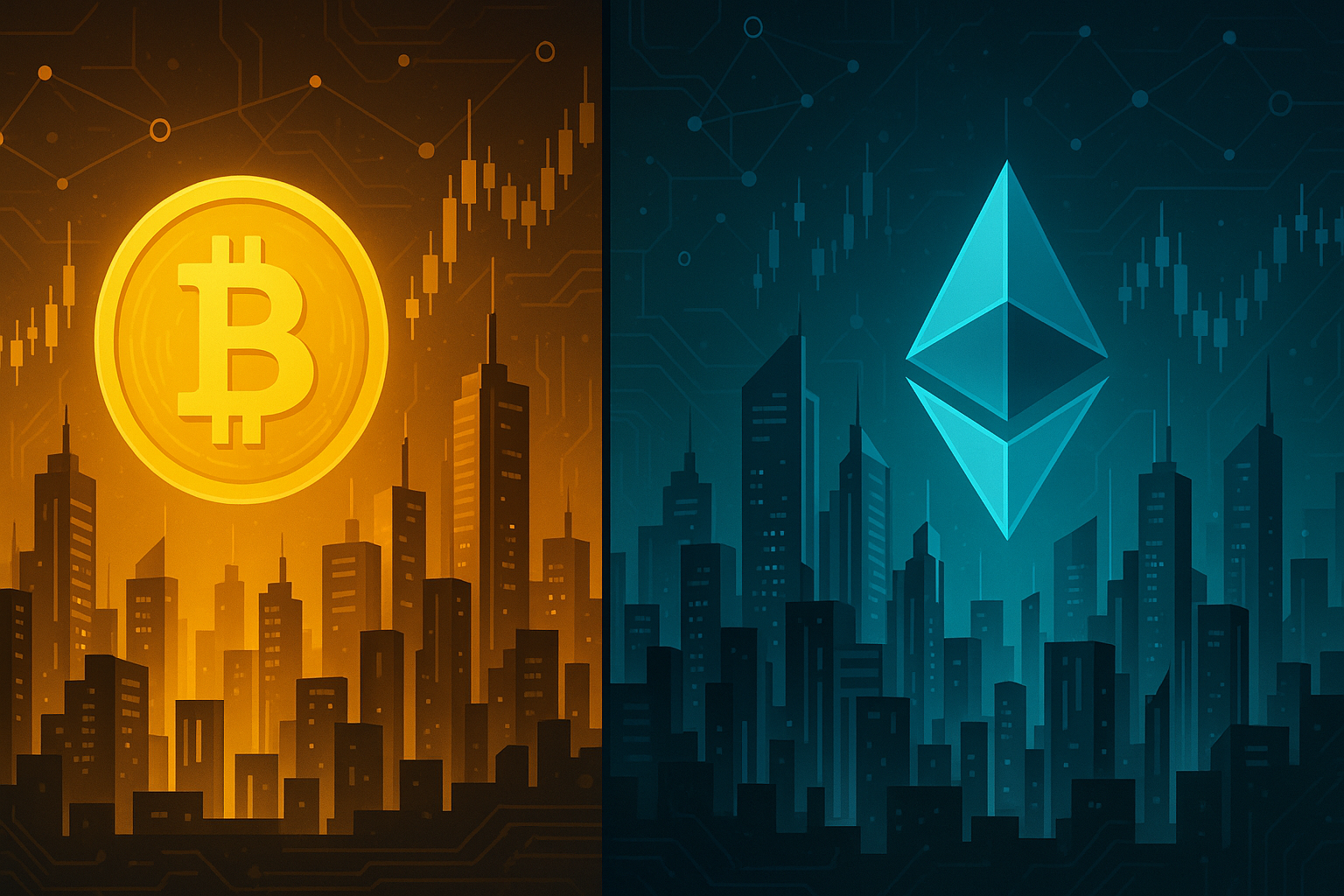
In 2026, Bitcoin (BTC) remains the top store-of-value cryptocurrency, while Ethereum (ETH) leads in smart contracts and decentralized applications. Neither is “better” for everyone. Bitcoin is typically stronger as digital gold and macro hedge, while Ethereum is usually better for DeFi, NFTs, and on-chain innovation. Many investors hold both, and you can swap ETH for BTC instantly on GhostSwap if you want to rebalance between the two.
Below is a quick 2026 comparison of Ethereum vs Bitcoin on core metrics investors look at.
| Feature | Ethereum (ETH) (ETH) | Bitcoin (BTC) (BTC) |
|---|---|---|
| Current Price | Dynamic / market-based* | Dynamic / market-based* |
| Market Cap | Second-largest crypto asset* | Largest crypto asset* |
| Purpose / Use Case | Smart contracts, DeFi, NFTs, programmable money | Digital gold, store of value, peer-to-peer money |
| Consensus Mechanism | Proof of Stake (PoS) | Proof of Work (PoW) |
| Transaction Speed | ~12 seconds per block (L2s can be much faster) | ~10 minutes per block (Lightning is faster) |
| Fees | Variable, often low on L2s; higher in L1 congestion | Variable, generally lower than peak ETH L1 but rising with demand |
*Crypto prices and market caps change constantly. For the latest data, check live market trackers like CoinGecko or CoinMarketCap.
Quick Overview: Ethereum (ETH) vs Bitcoin (BTC)
Ethereum and Bitcoin are the two most important networks in crypto, but they solve different problems.
- Bitcoin (BTC): Designed as hard, censorship-resistant money with a fixed supply cap of 21 million coins. Its primary role is a store of value and long-term savings asset.
- Ethereum (ETH): Built as a programmable blockchain for smart contracts, decentralized finance (DeFi), NFTs, and DAOs. ETH is both the network’s currency and the fuel for applications.
Bitcoin prioritizes security and monetary policy simplicity through Proof of Work. Ethereum moved to Proof of Stake, enabling lower energy usage, staking yields, and a more flexible roadmap for scaling.
From an investment standpoint, BTC is often treated as “digital gold,” while ETH is seen as “digital oil” powering Web3. Liquidity for both is deep, and non-custodial platforms like GhostSwap make it easy to swap ETH to BTC and back instantly when your thesis or risk tolerance changes.
What Is Ethereum (ETH)?
Ethereum is a programmable blockchain launched in 2015 by Vitalik Buterin and a group of co-founders. Unlike Bitcoin, which mainly focuses on being a secure digital currency, Ethereum was designed as a general-purpose platform for smart contracts and decentralized applications (dApps).
Smart contracts are pieces of code that run exactly as programmed on the blockchain without downtime or censorship. This innovation enabled entire sectors like decentralized finance, NFT marketplaces, on-chain gaming, and decentralized autonomous organizations. ETH, the native cryptocurrency, is used to pay gas fees for transactions and contract execution.
In September 2022, Ethereum completed “The Merge,” transitioning from Proof of Work to Proof of Stake. This cut its energy consumption dramatically and introduced staking, where validators lock up ETH to help secure the network and earn rewards. Combined with EIP-1559’s fee burning, Ethereum’s net issuance can be low or even negative in periods of high usage, which some investors compare to a “ultrasound money” narrative.
What Is Bitcoin (BTC)?
Bitcoin is the first and largest cryptocurrency, created in 2009 by the pseudonymous Satoshi Nakamoto. It was designed as a peer-to-peer electronic cash system but has evolved into a global store of value and macro asset. Bitcoin’s key innovation is its combination of Proof of Work, difficulty adjustment, and a fixed supply cap of 21 million coins.
New BTC enters circulation through mining, where participants compete to solve cryptographic puzzles and add blocks to the chain. Approximately every four years, the block reward is cut in half in an event known as the “halving.” This predictable reduction in new supply underpins Bitcoin’s scarcity narrative and is a central part of many long-term investment theses.
Bitcoin’s design is conservative and minimal by intent. Most innovation happens in layers built on top of it, such as the Lightning Network for faster, cheaper payments, and sidechains for more expressive smart contracts. Because of its long track record, decentralization, and liquidity, many institutions treat BTC as the primary crypto asset to hold on their balance sheet.
Ethereum (ETH) vs Bitcoin (BTC): Technology
Consensus: Proof of Work vs Proof of Stake
Bitcoin: Uses Proof of Work, where miners expend energy to secure the network. This has proven highly robust but is energy-intensive. Changes to Bitcoin’s core protocol are rare and require broad community consensus, reinforcing its stability and predictability.
Ethereum: Now runs on Proof of Stake, where validators bond ETH instead of consuming energy. This cuts energy usage dramatically and allows features like staking rewards, slashing for misbehavior, and more flexible upgrades. It also lays the foundation for sharding and other long-term scalability improvements.
Smart Contracts and Virtual Machines
Bitcoin: Has a deliberately limited scripting language. While basic smart-contract-like functions (multisig, time locks, etc.) are possible, it is not designed for rich decentralized applications. More complex logic typically occurs on second layers or sidechains.
Ethereum: Introduced the Ethereum Virtual Machine (EVM), a Turing-complete environment for smart contracts. Developers can write contracts in languages like Solidity and deploy dApps directly on-chain. The EVM has become the de facto standard for many blockchains and rollups, creating a large shared developer ecosystem.
Scalability and Throughput
Bitcoin: Averages about 10-minute block times and limited block space. Throughput is intentionally constrained for security and decentralization. Scaling efforts focus on the Lightning Network and other off-chain or layered solutions rather than increasing on-chain capacity aggressively.
Ethereum: Aims to scale primarily through a “rollup-centric” roadmap. Most transactions move to Layer 2 networks (rollups) that post data to Ethereum for security. This allows much higher throughput while keeping Ethereum as a secure settlement layer. Block times on Ethereum are ~12 seconds, and L2s can offer near-instant finality for most users.
Monetary Policy and Issuance
Bitcoin: Has a fixed maximum supply of 21 million BTC, with a mathematically defined issuance schedule. This hard cap is central to Bitcoin’s appeal as digital gold. No burning occurs by design, and fees are paid to miners along with the block subsidy.
Ethereum: Does not have a fixed maximum supply, but changes like EIP-1559 introduced a base fee burn that can offset issuance. After the move to Proof of Stake, stakers receive rewards, but a portion of transaction fees is permanently destroyed. In periods of heavy activity, this can lead to very low or even negative net ETH issuance.
Ethereum (ETH) vs Bitcoin (BTC): Use Cases
Store of Value vs Programmable Money
Bitcoin’s primary use case is as a store of value and macro hedge. Many investors treat it as an alternative to gold, especially in environments with inflation or monetary debasement. It is often used for long-term holding rather than everyday spending.
Ethereum’s primary use case is as a programmable settlement layer. ETH is used as collateral in DeFi, as gas for executing smart contracts, and as the base currency for NFTs and many on-chain markets. Its value is deeply tied to the growth of the broader Web3 ecosystem.
Decentralized Finance and NFTs
Ethereum: Hosts a large percentage of DeFi total value locked and the most active NFT marketplaces. Protocols for lending, decentralized exchanges (DEXs), stablecoins, derivatives, and asset management are mostly Ethereum- or EVM-based. This makes ETH central to on-chain liquidity and composability.
Bitcoin: DeFi on Bitcoin is growing but remains comparatively small and less composable. Some projects bring DeFi functionality to BTC via wrapped tokens on other chains or via sidechains, but this adds trust or complexity. Bitcoin’s design focus is not DeFi, so experimentation happens more slowly.
Payments and Everyday Transactions
Bitcoin: With the Lightning Network, BTC can support fast, low-fee payments suitable for small transactions and cross-border remittances. Adoption is still early but growing, especially in regions with unstable local currencies.
Ethereum: Supports payments too, but its gas model and congestion can make small payments on the main chain expensive during peak times. However, Layer 2 networks significantly reduce fees and latency, making ETH and ERC-20 tokens more practical for daily use.
You can swap ETH for BTC, ETH, USDT and 1,500+ other coins on GhostSwap without KYC.
Ethereum (ETH) vs Bitcoin (BTC): Price Performance
Bitcoin and Ethereum have both delivered substantial returns since launch, but with different risk and volatility profiles. Bitcoin, as the older and larger asset, has historically been less volatile than many altcoins, including ETH, yet still extremely volatile compared to traditional assets.
Historically, BTC has led major bull and bear cycles, with ETH often following but with greater amplitude both to the upside and downside. During periods of strong risk appetite, Ethereum has frequently outperformed Bitcoin because DeFi, NFTs, and application speculation drive more leverage and activity on ETH.
At the same time, Bitcoin’s clear monetary policy and dominant market cap have attracted more institutional investors, ETFs in several jurisdictions, and large corporate balance sheet allocations. Ethereum has begun to see similar products and institutional adoption but remains seen by some as more “tech-like” and therefore higher risk.
For up-to-date and precise price performance data, including historical charts and ROI calculations, rely on live data sources such as Ethereum on CoinGecko and Ethereum on CoinMarketCap, as well as the corresponding Bitcoin pages. These platforms track daily, weekly, and multi-year performance that you can use to compare ETH vs BTC over different timeframes.
Ethereum (ETH) vs Bitcoin (BTC): Future Potential
Bitcoin’s Long-Term Outlook
Bitcoin’s future potential revolves around further institutional adoption, regulatory clarity, and its role as a macro asset. If more sovereign entities, corporations, and funds adopt BTC as a reserve asset or inflation hedge, its market cap could continue to expand.
Improvements in the Lightning Network and other L2 solutions could also increase its use as a payment rail, though this is secondary to its digital gold narrative. Bitcoin’s conservative governance model suggests slow, incremental changes rather than radical upgrades, which can be a feature for those who value stability.
Ethereum’s Long-Term Outlook
Ethereum’s potential is closely tied to the growth of Web3: DeFi, NFTs, tokenized real-world assets, and decentralized applications. As more economic activity moves on-chain, demand for block space and ETH as gas could increase, especially if Layer 2s and rollups continue to scale and attract users.
Ethereum’s roadmap includes further scaling upgrades and improvements to make the network more efficient and user-friendly. Regulatory progress on tokenization and on-chain financial infrastructure could significantly boost Ethereum’s role as a global settlement and coordination layer.
Risks to Consider
Bitcoin risks: Regulatory pressure on mining, potential competition from state-backed digital currencies, or loss of narrative dominance if another asset captures investor attention.
Ethereum risks: Smart contract vulnerabilities, execution risk on long-term roadmap upgrades, regulatory uncertainties around staking and tokens issued on Ethereum, and competition from other smart contract platforms.
Which Should You Invest In?
Choosing between Ethereum vs Bitcoin in 2026 comes down to your investment goals, risk tolerance, and thesis about how crypto will evolve.
- If you want a simple, long-term store of value: Bitcoin is typically the first choice. Its fixed supply, brand recognition, and institutional adoption make it a core holding for many.
- If you believe in Web3 and decentralized applications: Ethereum offers more direct exposure to activity in DeFi, NFTs, and on-chain innovation.
- If you prefer balance: Many investors allocate to both, using BTC as a more conservative crypto position and ETH as a higher-beta, growth-oriented exposure.
Portfolio sizing matters. Risk-averse investors often overweight BTC, while more aggressive or tech-focused investors may favor ETH. You can always rebalance over time. Non-custodial tools like GhostSwap make it simple to move between the two as market conditions, narratives, or regulations evolve. For a fast, private option, you can swap BTC to ETH instantly on a non-custodial platform with no account required.
How to Swap Ethereum (ETH) for Bitcoin (BTC)
Swapping ETH to BTC does not require a centralized account, order books, or lengthy verification. On GhostSwap, you can swap ETH to BTC instantly without KYC while maintaining control of your own funds throughout the process.
Step-by-Step: Swap ETH to BTC on GhostSwap
- Connect your wallet: Visit GhostSwap.io and choose your preferred wallet (such as MetaMask or a compatible Web3 wallet).
- Select currencies: Choose Ethereum (ETH) as the coin you are sending and Bitcoin (BTC) as the coin you want to receive. You can go directly to the ETH/BTC pair via this private exchange link.
- Enter the amount: Specify how much ETH you want to swap. The interface will show an estimated BTC amount based on real-time rates.
- Provide your BTC address: Paste your personal Bitcoin wallet address where you want the BTC delivered.
- Confirm and send: Review the details, approve the transaction in your wallet, and send the ETH to the non-custodial address provided.
- Receive BTC: After the required confirmations, you’ll receive BTC directly in your wallet. No sign-ups, no custody, and no KYC.
This non-custodial swap model reduces counterparty risk and keeps your coins under your control, which aligns with the core philosophies behind both Ethereum and Bitcoin.
Ready to Swap ETH or BTC?
If you already hold one of these assets and want to diversify into the other, you do not need to open an account with a centralized exchange. A non-custodial swap service like GhostSwap lets you swap crypto instantly between ETH and BTC while preserving your privacy and keeping control of your keys.
Ready to Trade Ethereum or Bitcoin?
Whether you lean toward Ethereum’s smart contract ecosystem or Bitcoin’s digital gold narrative, flexibility is key. GhostSwap provides fast, private, non-custodial swaps across 1,500+ trading pairs, including direct ETH/BTC conversions, so you can adjust your allocation as your conviction evolves. Visit GhostSwap.io to start swapping securely from your own wallet in minutes.
Frequently Asked Questions
Is Ethereum (ETH) better than Bitcoin (BTC)?
Neither is universally “better”; they serve different roles. Bitcoin is generally stronger as a long-term, simple store of value with a fixed supply and conservative design. Ethereum is more flexible and feature-rich, powering smart contracts, DeFi, and NFTs.
For a pure monetary hedge, many prefer BTC. For exposure to on-chain applications and Web3 growth, ETH often makes more sense. A significant number of crypto investors hold both to capture different types of upside.
Can Ethereum (ETH) overtake Bitcoin (BTC)?
In terms of market cap, it is possible but not guaranteed. Ethereum’s addressable market includes global financial infrastructure, applications, and tokenized assets, which is vast. If this vision is realized at scale, ETH could close the gap with BTC.
However, Bitcoin benefits from a powerful first-mover advantage, unmatched brand recognition, and a unique monetary policy. Even if Ethereum’s ecosystem grows faster, Bitcoin may retain its lead as the primary digital store of value. Investors should treat “flippening” predictions as speculative, not certain.
Should I hold both ETH and BTC?
Many long-term investors choose to hold both Bitcoin and Ethereum as a core part of their crypto portfolio. BTC provides exposure to the digital gold thesis, while ETH provides exposure to the growth of decentralized applications and Web3 infrastructure.
Diversifying across both can smooth out some asset-specific risks and allow you to benefit from different narratives and adoption curves. You can always rebalance periodically using non-custodial services like GhostSwap if your views change.
Where can I swap ETH to BTC?
You can swap ETH to BTC on various platforms, but many users prefer non-custodial options to avoid account creation, deposit delays, or centralized custody risk. GhostSwap allows you to exchange ETH for BTC and hundreds of other assets directly from your wallet, with no KYC.
Just connect your wallet, set ETH as the asset you are sending and BTC as the asset you are receiving, input your BTC address, and confirm. The swap is executed behind the scenes, and you receive BTC in your own wallet without ever giving up control of your keys.