ETH to SOL Swap No KYC: How to Exchange Privately and Securely
Introduction
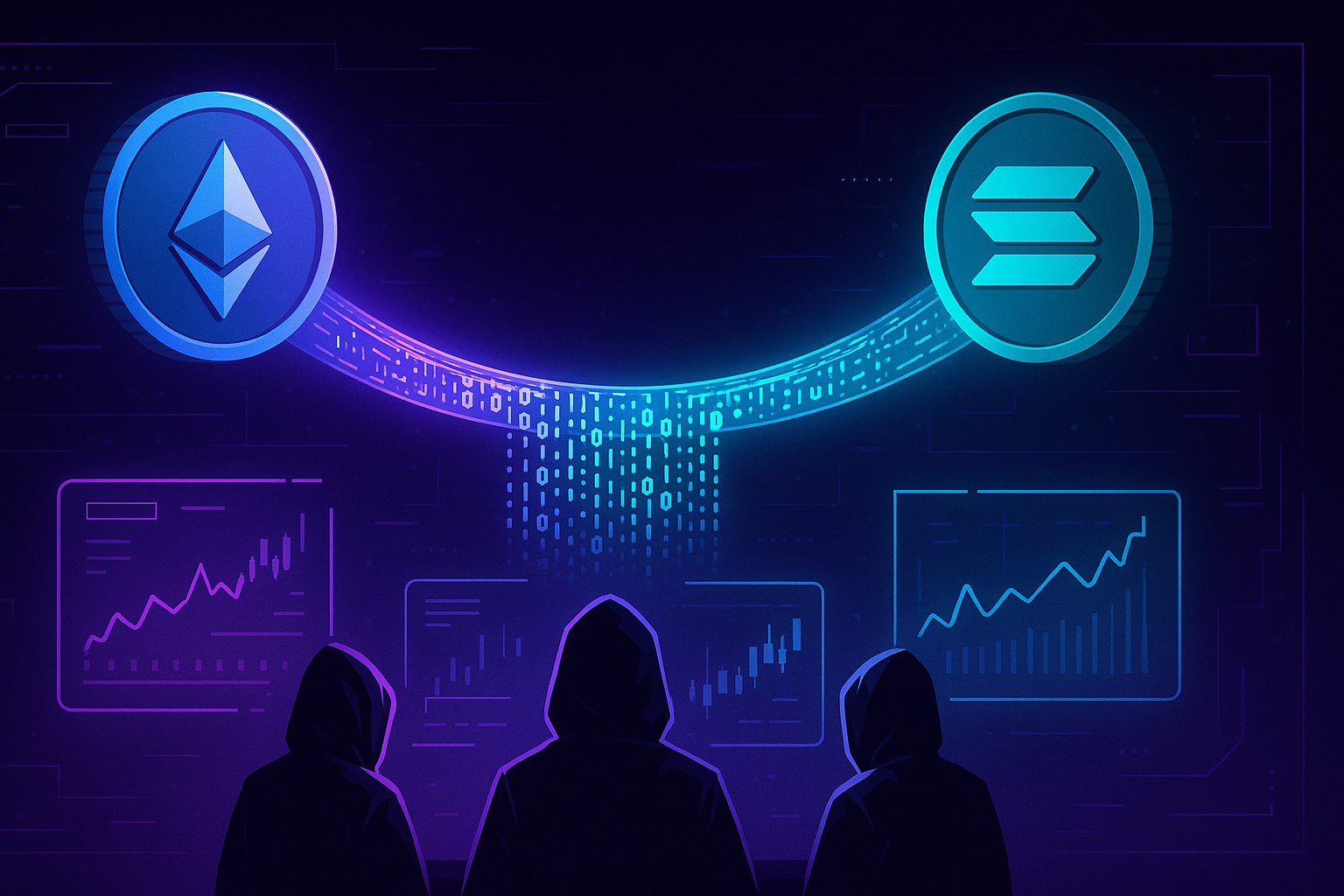
Swapping ETH to SOL without KYC has become a popular topic among crypto users who value privacy, speed and control over their own funds. Instead of going through centralized exchanges that often require full identity verification, many traders now prefer non-custodial platforms that let them swap directly from wallet to wallet.
If you are looking for an eth to sol swap no kyc option, you will find multiple decentralized solutions that allow you to exchange Ethereum for Solana without handing over sensitive personal data.
This guide explains why people choose no‑KYC swaps, the main benefits and risks, and how to complete an ETH to SOL swap step by step using non-custodial, privacy-friendly tools.
Why No-KYC ETH to SOL Swaps Matter
1. Growing Demand for Privacy
KYC (Know Your Customer) requirements have become standard on major centralized exchanges. While they can help with regulatory compliance, they also require users to upload identity documents, proof of address, and other sensitive information.
Many crypto users see this as:
- A privacy concern, since personal data can be hacked or leaked
- A barrier for those in regions with limited access to traditional banking
- Contrary to the original spirit of decentralized, permissionless finance
No‑KYC swaps respect user privacy by removing the need to share identity information in order to exchange tokens.
2. Speed and Convenience
Identity verification on centralized platforms can take hours or even days, especially during peak market activity. By contrast, a non-custodial ETH to SOL swap no KYC is usually completed as quickly as the required on-chain confirmations allow.
You avoid:
- Account sign-ups and email confirmations
- Document uploads and manual reviews
- Withdrawal limits that depend on KYC level
Instead, you interact directly from your own wallet, approve the transaction, and wait for the swap to finalize.
3. Control Over Your Funds
With a non-custodial swap, you never hand your funds over to a third-party custodian. Your ETH stays in your wallet until the swap executes, and your SOL is delivered directly to a destination address you control.
This reduces counterparty risk compared to leaving tokens on centralized exchanges, where funds can be frozen, restricted, or in the worst case lost during hacks or insolvency events.
Key Benefits of ETH to SOL Swap with No KYC
1. Enhanced Financial Privacy
Using a no‑KYC, non-custodial swap means:
- No passport, ID card, or selfie uploads
- No linking of your crypto activity to your legal identity via the platform
- Lower exposure in case a service provider experiences a data breach
While on-chain transactions themselves are usually public, avoiding centralized KYC databases can still significantly improve your overall privacy posture.
2. Global Accessibility
Non-KYC swaps are generally more accessible to users worldwide, including:
- People without traditional banking access
- Residents of regions where major exchanges limit or restrict service
- Users who cannot easily verify identity with conventional documentation
All you typically need is a web3 wallet and access to the relevant blockchain networks.
3. Faster Execution and Fewer Barriers
When you use a platform that allows you to swap crypto instantly without KYC, the flow is simple:
- Connect your wallet or provide sending and receiving addresses
- Confirm the rates and network fees
- Approve the swap and wait for confirmations
There are no account tiers, no compliance questionnaires, and usually no off-chain withdrawal queues. Execution time is dominated by on-chain confirmation speed.
4. Reduced Custodial Risk
Non-custodial swaps help you avoid:
- Exchange hacks that drain user balances held in hot wallets
- Frozen withdrawals during “maintenance” or regulatory scrutiny
- Counterparty insolvency or mismanagement of user deposits
You maintain custody over your assets via your own wallet keys, which aligns with best practices for long-term crypto security.
Risks and Drawbacks of No-KYC ETH to SOL Swaps
No‑KYC swapping is not risk-free. You trade certain conveniences and protections for privacy and autonomy. It is important to understand the main trade-offs.
1. Price Slippage and Liquidity Issues
Some no‑KYC platforms aggregate liquidity from DEXs and other sources. If liquidity is thin or the market is volatile, you may experience:
- Higher slippage between quoted and executed price
- Less favorable rates compared to the largest centralized exchanges
- Partial fills or delays if a route becomes temporarily illiquid
To mitigate this, always check the expected output and any slippage parameters before confirming.
2. Smart Contract and Platform Risk
Decentralized and non-custodial swaps typically rely on smart contracts or cross-chain swap mechanisms. Risks can include:
- Smart contract vulnerabilities if the code is not well audited
- Operational issues such as downtime or misconfiguration
- Malicious or untrustworthy services posing as private exchange tools
Use platforms with transparent documentation, a track record of successful swaps, and ideally third-party audits.
3. Fewer Recovery Options
With centralized, fully KYC-ed exchanges, there is at least a chance of support-based recovery if something goes wrong and funds are stuck. In non-custodial environments:
- Transactions are typically irreversible once confirmed on-chain
- Support teams may have limited ability to intervene
- User error (sending to the wrong address, wrong network, etc.) often cannot be corrected
This places more responsibility on you to double-check every detail.
4. Regulatory and Tax Considerations
No‑KYC does not equal “no rules.” Depending on your jurisdiction:
- Crypto-to-crypto swaps may still be taxable events
- You may be required to report gains or losses, regardless of KYC status
- Using privacy-focused tools could carry additional scrutiny in some regions
Consult a qualified professional regarding regulatory and tax obligations in your country.
Step-by-Step Guide: ETH to SOL Swap No KYC
Below is a general workflow for completing an ETH to SOL swap through a non-custodial, no‑KYC interface. Exact steps can vary slightly depending on the service, but the core process is similar.
Step 1: Prepare Your Wallets
You need:
- An Ethereum-compatible wallet with enough ETH to swap plus gas fees
- A Solana-compatible wallet ready to receive SOL
Common choices include:
- For ETH: MetaMask, Rabby, Trust Wallet, Ledger, Trezor (via web interface)
- For SOL: Phantom, Solflare, Sollet, or hardware wallets with Solana support
Back up your seed phrases securely and never share them with anyone.
Step 2: Choose a Non-Custodial Swap Platform
Look for a service that:
- Does not require account registration or KYC
- Supports ETH to SOL cross-chain swaps
- Allows you to retain custody of your funds throughout the process
Platforms like private exchange and non-custodial swap tools can route trades across networks while minimizing data collection.
Step 3: Select the Trading Pair (ETH to SOL)
On the swap interface:
- Choose ETH as the token you are sending
- Choose SOL as the token you are receiving
- Specify the amount of ETH you want to swap
The platform should show:
- Estimated amount of SOL you will receive
- Fees, including protocol, liquidity, and network fees
- Estimated processing time
Review these details carefully before proceeding.
Step 4: Provide or Connect Your Wallet Addresses
Depending on the platform, you may:
- Connect a web3 wallet (e.g., MetaMask for ETH, Phantom for SOL)
- Or manually input the destination SOL address where you want to receive funds
Double-check the Solana address. On-chain mistakes are generally irreversible.
Step 5: Confirm the Swap and Pay from Your Wallet
Once all details look correct:
- Confirm the quoted rate, maximum slippage, and fees
- Approve the transaction in your Ethereum wallet to transfer ETH to the protocol
- Wait for the Ethereum side of the transaction to confirm
The swap engine will then handle the routing and deliver SOL to your specified Solana address.
Step 6: Verify Receipt of SOL
After the swap completes:
- Open your Solana wallet and look for the incoming SOL
- Check the transaction on a Solana block explorer if necessary
- Record details for your own tracking or tax reporting if needed
If the estimated time has passed and funds are not visible, consult the platform’s support or documentation with the transaction hash. Reputable services typically provide clear status tracking.
Practical Tips for Safe ETH to SOL Swaps Without KYC
1. Start with a Small Test Amount
Before swapping a large balance:
- Try a small ETH amount first
- Confirm that SOL arrives correctly at your destination wallet
- Measure actual fees and slippage compared to expectations
Once you are satisfied, you can increase the size of future swaps.
2. Verify URLs and Watch for Imitation Sites
Always:
- Type the platform’s URL directly or use a known bookmark
- Check for HTTPS and correct spelling
- Avoid following unverified links from social media or unsolicited messages
Phishing sites that mimic popular swap interfaces are a real risk.
3. Check Network Congestion and Gas Fees
On Ethereum in particular, gas fees can spike during periods of heavy activity. Before swapping:
- Review current gas prices using a reputable tracker
- Consider timing swaps during quieter periods to reduce costs
- Account for gas fees as part of your effective exchange rate
Likewise, monitor network status on Solana if you plan to move or trade the SOL immediately after receipt.
4. Understand the Exchange Rate and Slippage
To avoid unpleasant surprises:
- Compare rates across a couple of platforms before committing
- Set a maximum acceptable slippage when the interface allows it
- Be cautious when markets are extremely volatile
A good practice is to calculate the implied price manually and ensure it is in line with broader market rates.
5. Keep Your Wallet Secure
Your privacy benefits from no‑KYC swapping are only as strong as your wallet security. Follow best practices:
- Never share your seed phrase or private keys
- Use hardware wallets for significant holdings
- Regularly update wallet software and browser extensions
- Be wary of signing blind or suspicious transactions
Non-custodial setups put you in control, but also make you responsible for protecting your keys.
6. Track Your Activity for Personal Records
Even if you prefer privacy from centralized intermediaries, it is still wise to:
- Keep your own log of swaps (amounts, dates, transaction IDs)
- Export transaction history from any interfaces that support it
- Store this data securely for future reference
This helps with portfolio management, tax reporting where required, and troubleshooting if you ever need to audit your own activity.
Conclusion: Is No-KYC ETH to SOL Swapping Right for You?
Swapping ETH to SOL without KYC provides a powerful combination of privacy, speed, and user control. By using non-custodial tools that allow you to manage your own keys and transact directly from wallet to wallet, you can bypass many of the friction points associated with traditional centralized exchanges.
At the same time, you must weigh the trade-offs: potential for higher slippage, smart contract risk, fewer recovery options in case of mistakes, and ongoing regulatory and tax responsibilities. Careful platform selection, small test transactions, and strong wallet security can greatly reduce your exposure to these risks.
If your priority is to maintain privacy while moving value across chains, exploring a non-custodial eth to sol swap no kyc solution can be a practical and efficient choice. As with all things in crypto, take time to research, stay informed, and never risk more than you can afford to lose.
Ready to Swap?
Convert your crypto instantly on GhostSwap — no KYC, no sign-up required.
Popular swaps: BTC to XMR | BTC to ETH | XMR to BTC | ETH to XMR | BTC to SOL