ZEC to ETH Swap: How to Exchange Zcash for Ethereum Safely and Efficiently
Introduction
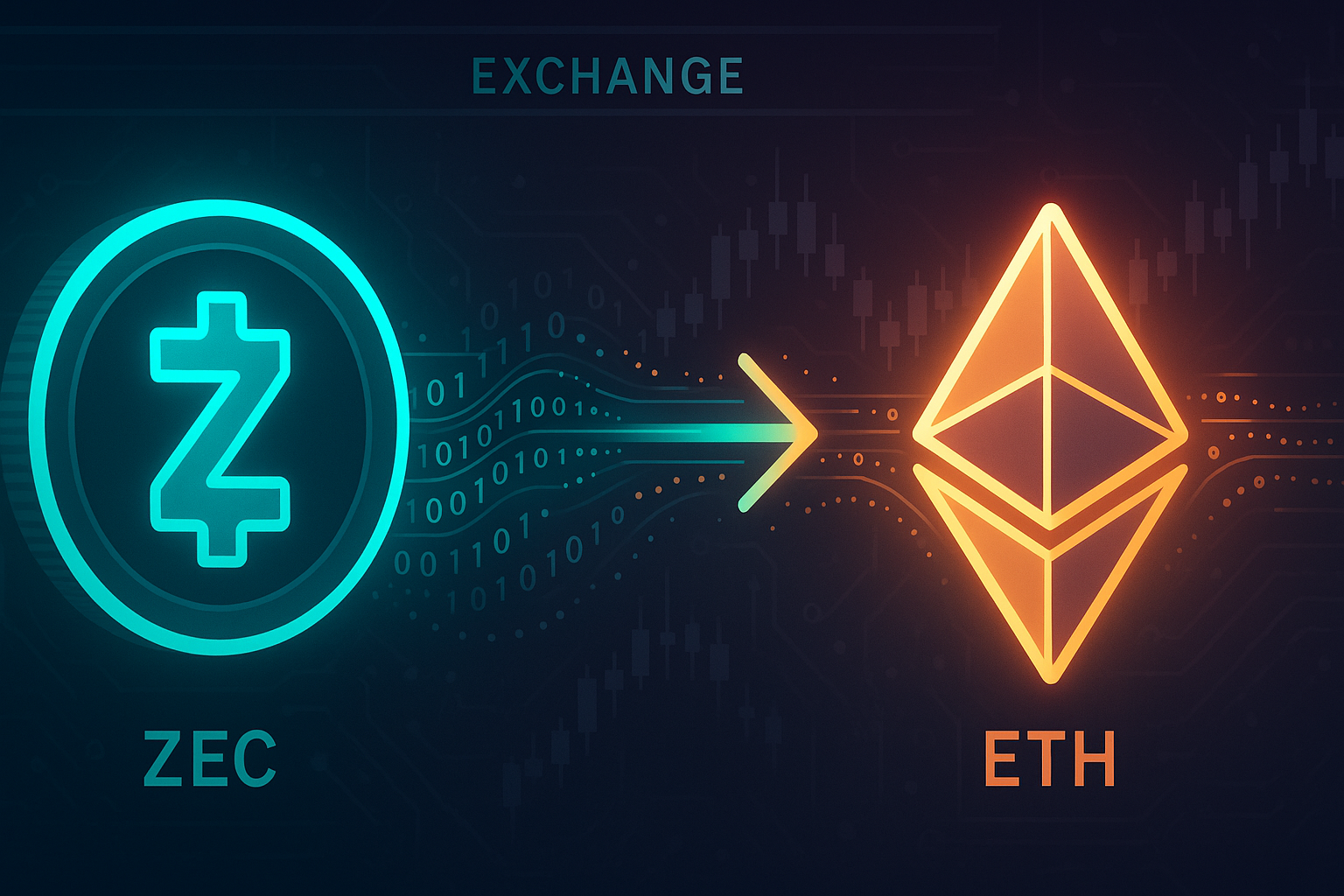
The crypto ecosystem continues to mature, and so does the need to move value smoothly between different blockchains. One of the most common conversions privacy-focused users consider is a ZEC to ETH swap, shifting funds from Zcash to Ethereum for access to DeFi, NFTs, and a wide variety of dApps.
Whether you are cashing out of a long-term ZEC position or looking to enter Ethereum’s DeFi ecosystem discreetly, knowing how to perform a secure and cost-effective ZEC to ETH conversion is essential. Modern platforms make it possible to complete a zec to eth swap in minutes, without creating an account or giving up custody of your coins.
This guide walks you through why swapping ZEC to ETH matters, the benefits and tradeoffs, and a clear step-by-step process for completing the exchange. You will also find practical tips to help you minimize fees, avoid common mistakes, and maintain as much privacy as possible.
Why ZEC to ETH Swaps Matter
On the surface, Zcash (ZEC) and Ethereum (ETH) serve different needs:
- Zcash (ZEC) focuses on privacy, offering shielded transactions that hide sender, receiver, and amount using zero-knowledge proofs.
- Ethereum (ETH) prioritizes programmability, enabling smart contracts, DeFi protocols, NFTs, and countless dApps.
Because of these differences, many users hold both assets. ZEC acts as a tool for private value transfer, while ETH acts as “fuel” for interacting with the broader Web3 ecosystem.
Swapping ZEC to ETH matters for several reasons:
- Access to DeFi and dApps: ETH is required to interact with protocols like Uniswap, Aave, Maker, NFT marketplaces, and countless others.
- Portfolio diversification: Moving some exposure from a privacy coin to a smart contract platform can rebalance risk.
- On-chain yield opportunities: Once in ETH, users can access staking or yield strategies not available directly with Zcash.
- Exit or entry strategy: ZEC can be a privacy-preserving “entry point” before publicly interacting with Ethereum-based assets.
In short, a smooth pipeline between ZEC and ETH enables users to combine Zcash privacy benefits with Ethereum’s utility and liquidity.
Benefits of Swapping ZEC to ETH
While every user’s situation is unique, several common benefits motivate a ZEC to ETH swap:
1. Unlock the Ethereum Ecosystem
Ethereum remains the largest and most battle-tested smart contract platform. By converting ZEC to ETH, you can:
- Trade tokens on decentralized exchanges (DEXs)
- Provide liquidity to pools
- Mint and trade NFTs
- Participate in decentralized governance
- Use stablecoins and tokenized assets not available on the Zcash chain
2. Improved Liquidity and Market Access
ETH typically offers deeper liquidity and tighter spreads on both centralized and decentralized exchanges compared to ZEC. This can mean:
- More predictable pricing
- Lower slippage for large orders
- Better execution when entering or exiting positions
3. Non-Custodial and Private Conversion Options
Historically, converting between coins meant opening an exchange account, passing KYC checks, and trusting a centralized platform with your funds. Today, you can use a non-custodial swap service where:
- You keep control of your private keys
- No permanent account is required
- You can often avoid linking your personal identity to your crypto balances
Platforms that allow you to swap crypto instantly using on-chain transactions and smart routing can be a strong alternative to traditional exchanges, especially for privacy-conscious users.
4. Flexibility for Strategy and Tax Planning
For traders or long-term holders, moving between ZEC and ETH can support:
- Rebalancing between different sectors of the crypto market
- Executing tax-loss harvesting strategies where permitted by law
- Aligning holdings with your evolving risk tolerance and use cases
Always consult a qualified tax professional in your jurisdiction before acting on tax-related considerations.
Risks and Drawbacks of a ZEC to ETH Swap
Every crypto transaction involves tradeoffs. Before performing a ZEC to ETH swap, be aware of the main risks and downsides.
1. Price Volatility
Both ZEC and ETH are volatile assets. Between the time you decide to swap and the time the transaction settles, either coin’s price can move significantly.
- Fast swaps help reduce exposure to short-term swings.
- Limit orders on some platforms can guard against unexpected price spikes or dips, though they are not always available in instant swap tools.
2. Fees and Slippage
Costs associated with a ZEC to ETH swap can include:
- Network fees: Zcash and Ethereum both charge transaction fees to miners or validators.
- Service fees: Swap platforms typically charge a small percentage or fixed fee for providing liquidity and routing.
- Slippage: If the market moves while your order is processing or liquidity is thin, you may receive slightly less ETH than a quoted rate.
Comparing providers and checking estimated outputs before confirming a swap is crucial.
3. Privacy Tradeoffs
Zcash offers strong privacy features through shielded transactions. Ethereum does not, by default. When you perform a ZEC to ETH conversion:
- Your ZEC side of the transaction can be private if you use shielded addresses.
- Your resulting ETH transactions become visible on the Ethereum blockchain, linked to your ETH address.
If privacy is important, you must think carefully about how you fund your ZEC wallet, how you withdraw to ETH, and how you manage your Ethereum addresses afterward.
4. Platform and Smart Contract Risk
Non-custodial swap platforms reduce counterparty risk but may introduce:
- Smart contract vulnerabilities if they rely on complex on-chain logic
- Operational risks, such as downtime or incorrect routing
To mitigate these, choose reputable services, verify domains, and always test with a small amount before committing a large sum.
Step-by-Step Guide: How to Perform a ZEC to ETH Swap
Below is a general step-by-step walkthrough for completing a ZEC to ETH swap using a non-custodial exchange interface. The exact screens vary by platform, but the flow is similar.
Step 1: Prepare Your Wallets
- Set up a ZEC wallet that supports the type of address you want to use (transparent or shielded). Ensure you have the ZEC you intend to swap plus a bit extra for transaction fees.
- Set up an Ethereum wallet such as MetaMask, a hardware wallet (Ledger, Trezor), or another self-custody wallet. Confirm that:
- You control the private keys or seed phrase
- You have at least a minimal amount of ETH for future gas fees after the swap
Step 2: Choose a Non-Custodial Swap Service
Look for a platform that supports direct ZEC to ETH conversion and prioritizes privacy. A good private exchange will:
- Not require account creation or KYC for reasonable limits
- Offer transparent rate quotes and fees
- Execute swaps through on-chain transactions you can verify
Ensure the URL is correct, use bookmarks once you verify the site, and avoid following random links from social media or messages.
Step 3: Select ZEC and ETH as Your Trading Pair
- Open the swap interface.
- Choose ZEC as the coin you are sending.
- Choose ETH as the coin you are receiving.
- Enter the amount of ZEC you want to convert, or the amount of ETH you want to receive if the platform supports both options.
The interface should display:
- Estimated ETH amount
- Exchange rate
- Estimated fees
Step 4: Provide Your Ethereum Receiving Address
- Copy your ETH address from your Ethereum wallet.
- Paste it into the receiving address field.
- Double-check the address carefully:
- Compare the first and last several characters
- Verify it is an Ethereum address (starts with “0x”)
A wrong address could result in irreversible loss of funds.
Step 5: Confirm the Quote and Start the Swap
Before sending your ZEC, review all the details:
- Input amount in ZEC
- Estimated output amount in ETH
- Any service fees or spreads
- Time limit for the quote, if applicable
Once satisfied, confirm the request on the swap platform. You will be shown a unique deposit address for ZEC along with instructions and sometimes a time window within which your payment must arrive.
Step 6: Send ZEC to the Provided Address
- From your ZEC wallet, send the exact amount of ZEC to the deposit address given by the platform.
- Use the recommended fee level so the transaction confirms within the expected time.
- Optionally, copy the transaction ID (TXID) for tracking.
After your ZEC transaction is confirmed, the platform will initiate the exchange and send ETH to your specified Ethereum address.
Step 7: Wait for ETH to Arrive and Verify
Depending on network congestion and platform processing, the full ZEC to ETH swap may take anywhere from a few minutes to longer. To verify completion:
- Check your Ethereum wallet balance for the incoming ETH.
- Use an Ethereum block explorer (like Etherscan) to confirm the transaction on-chain.
- Compare the received amount with the expected amount, allowing for minor differences due to fees or slippage if they were clearly disclosed.
Practical Tips for a Safe and Efficient ZEC to ETH Swap
1. Always Start With a Small Test Amount
Especially when trying a new platform, send a small amount of ZEC first. Confirm that:
- The service works as described
- Your ETH arrives at the correct address
- Timing and fees align with expectations
Once satisfied, you can proceed with a larger swap.
2. Watch Network Conditions and Fees
Both Zcash and Ethereum fees can spike during periods of heavy use. To optimize:
- Check average gas prices on Ethereum before swapping.
- Avoid peak congestion times when possible.
- Consider splitting very large swaps into multiple transactions to reduce the impact of sudden price moves.
3. Preserve Privacy Thoughtfully
If privacy is a key reason you use Zcash, pay attention to how your ETH is handled after the swap:
- Use fresh Ethereum addresses for different activities.
- Avoid reusing public addresses that are already tied to your identity.
- Consider separating wallets used for DeFi from those used for more public or KYC-linked interactions.
Remember that once funds are on Ethereum, their movement is transparent on-chain, even if your identity is not directly known.
4. Double-Check Every Address and URL
Typos, clipboard hijackers, and phishing attacks are common in crypto:
- Verify the domain of the swap service manually.
- Bookmark trusted sites once verified and access them via your bookmarks.
- Check addresses character by character, especially the first and last parts.
5. Keep Security and Backups in Place
Before and after your swap, ensure that your operational security basics are covered:
- Store your wallet seed phrases offline and securely.
- Use hardware wallets for significant amounts whenever possible.
- Keep your device and browser up to date.
6. Understand Tax and Regulatory Implications
In many jurisdictions, swapping one cryptocurrency for another can be a taxable event. Maintain records of:
- Date and time of each swap
- Amounts of ZEC and ETH involved
- Approximate fiat value at the time of the transaction
Consult a local professional to stay compliant with applicable regulations.
Conclusion
A well-executed zec to eth swap lets you combine the strong privacy features of Zcash with the versatility and liquidity of Ethereum. By understanding the process, benefits, and risks, you can move between these ecosystems in a way that aligns with your goals, risk tolerance, and privacy preferences.
When choosing a platform, prioritize non-custodial design, transparent fees, and strong privacy practices. Services that specialize in fast, account-free conversions can be particularly valuable for privacy-focused users who want a straightforward non-custodial swap from ZEC into ETH.
As always in crypto, take your time, test with small amounts first, and keep security top of mind. With the right approach, moving from Zcash to Ethereum can be both efficient and secure, opening the door to a wide range of new opportunities across the Ethereum ecosystem.
Ready to Swap?
Convert your crypto instantly on GhostSwap — no KYC, no sign-up required.
Popular swaps: BTC to XMR | BTC to ETH | XMR to BTC | ETH to XMR | BTC to SOL