What Is Slippage in Crypto? Complete 2026 Guide for Traders
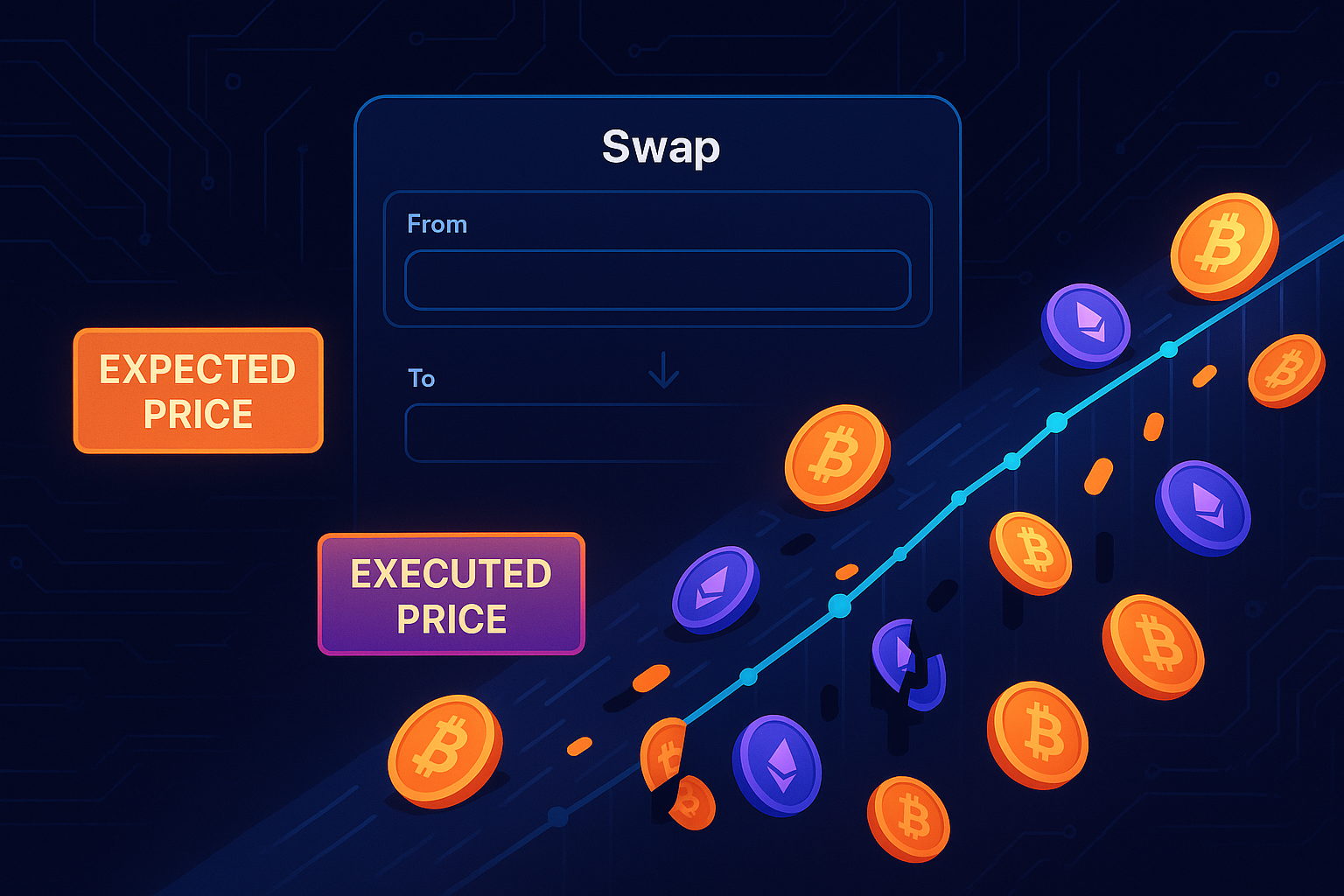
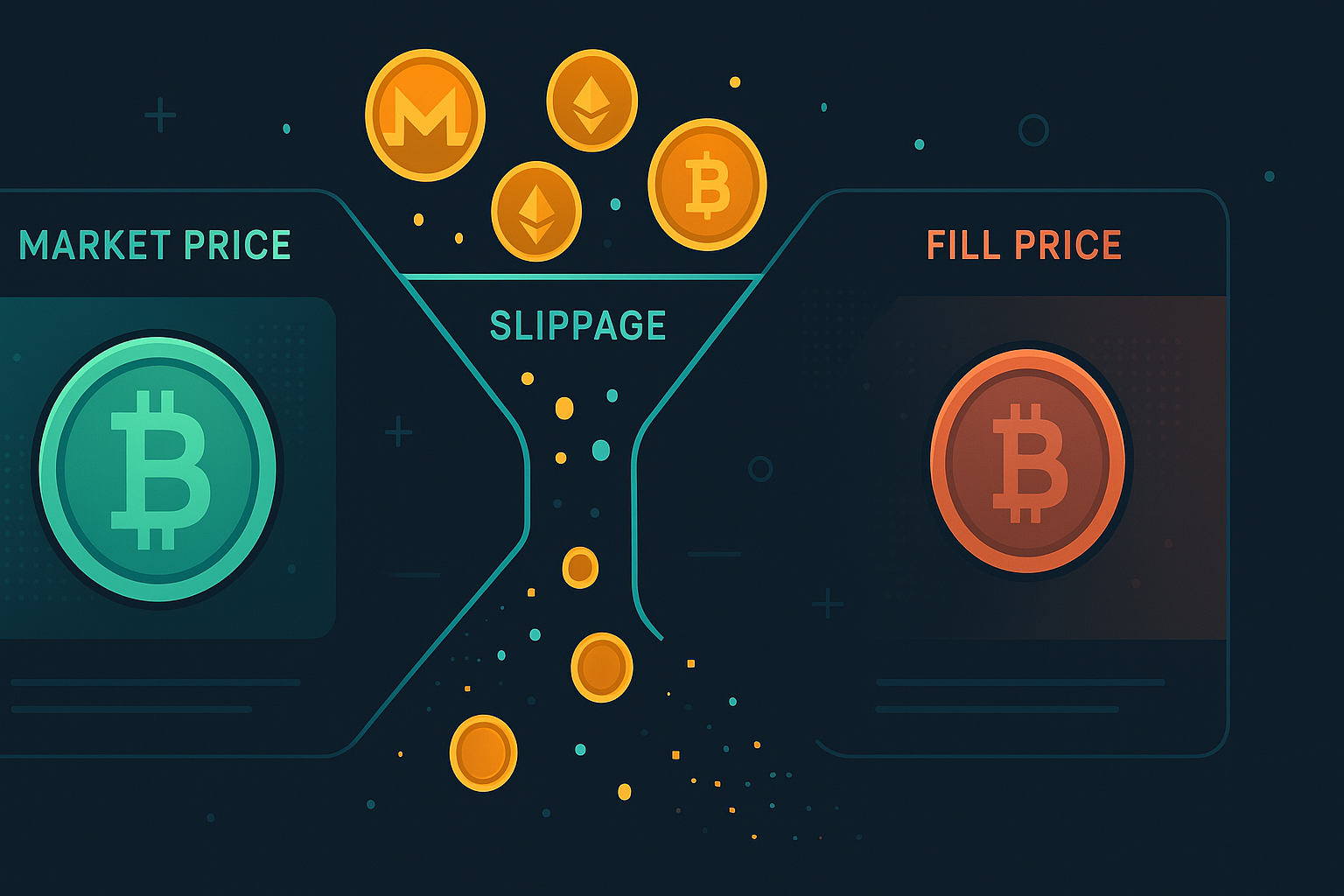
Slippage in crypto is the difference between the price you expect to pay for a trade and the actual price your order is filled at. It happens when the market moves between the time you submit a trade and the time it executes, often in fast or low‑liquidity markets.
If you trade on DEXs, centralized exchanges, or instant swap platforms like GhostSwap, understanding slippage is crucial for protecting your capital and avoiding unpleasant surprises at execution.
What Is Slippage in Crypto Explained Simply
At its core, slippage is a mismatch between the price you wanted and the price you got.
Imagine you see a token trading at $1.00 and press “buy.” By the time your order goes through, the best available price might be $1.02 or $0.98. That small gap is slippage.
Slippage can be positive (you get a better price than expected) or negative (you get a worse price). Because crypto markets are volatile and trade 24/7, negative slippage is especially common when:
- The market is moving very fast
- You trade a large amount in a small market
- There is not enough liquidity on the order book or in the liquidity pool
Platforms like non-custodial swap services help reduce risk by showing you a clear rate and letting you configure slippage tolerance before you confirm your swap.
How Does Slippage in Crypto Work?
Order Books, Liquidity, and Price Impact
On centralized exchanges and some DEXs, trading happens through an order book. This is a list of buy and sell orders at different prices.
When you place a market order, the system matches it with the best available opposite orders in the book. If your order is larger than the nearest orders, it will “walk the book,” filling at progressively worse prices.
The more your order has to walk the book, the more price impact you create and the more slippage you experience.
AMMs and Liquidity Pools
On many DeFi platforms, trades are executed via automated market makers (AMMs) and liquidity pools instead of traditional order books.
In a typical constant-product AMM like Uniswap V2, the price is determined by the formula:
x * y = k
Here, x and y are the reserves of two tokens in the pool, and k is a constant. When you buy token X with token Y, you increase the Y reserve and decrease the X reserve, which automatically changes the price.
The larger your trade relative to the pool size, the more it shifts the price and the more slippage you incur.
Slippage Tolerance Settings
Most DEX interfaces and instant swap platforms allow you to set a slippage tolerance, for example 0.1%, 0.5%, or 1%.
This tolerance is the maximum price deviation you are willing to accept between quote and execution. If the market moves more than your tolerance before the trade confirms, the transaction usually reverts or fails instead of filling at a much worse rate.
On a non-custodial instant swap platform, you typically see:
- The expected rate and estimated received amount
- Any provider or network fees
- Practical slippage limits applied to protect you from extreme price moves
Positive vs Negative Slippage
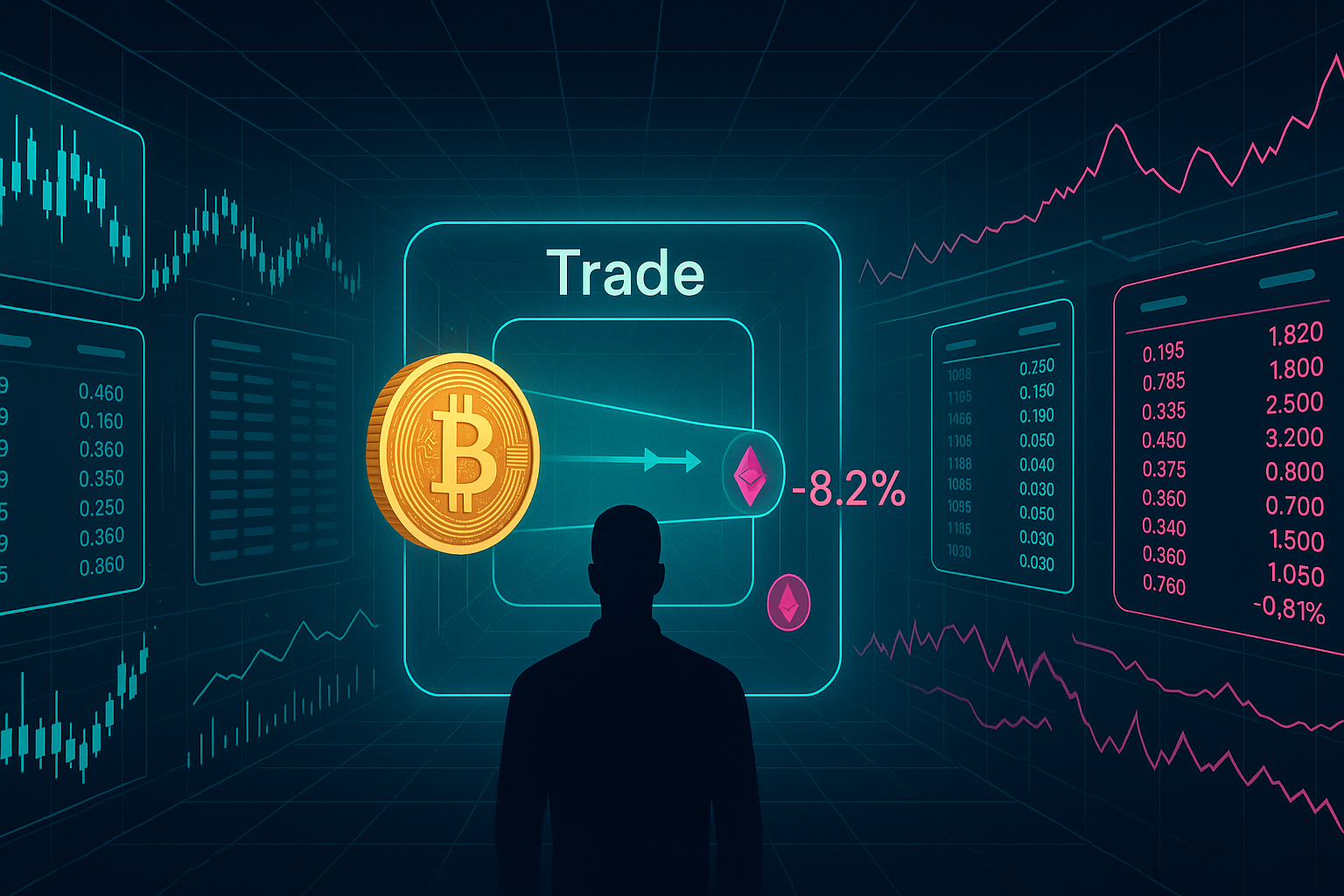
Negative slippage happens when you receive fewer coins (or pay more) than expected. This is the most common concern for traders.
Positive slippage is the opposite. If the market moves in your favor between quote and execution, you might receive more coins than expected or pay less. Some platforms pass positive slippage to the user, while others keep it as part of their business model.
You can swap BTC, ETH, USDT and 1,500+ other coins on GhostSwap without KYC, with transparent quotes that make slippage and fees clear before you confirm your trade.
Why Does Slippage in Crypto Matter?
Hidden Cost of Trading
Slippage is a hidden cost that eats into your profits, especially if you trade frequently or in illiquid markets.
Even a seemingly small 0.5% slippage can add up quickly. For active day traders or arbitrageurs, uncontrolled slippage can be the difference between a profitable and unprofitable strategy.
Risk Management and Capital Preservation
Crypto markets can move dramatically in seconds. If you do not manage slippage, you might:
- Pay far more than intended when entering positions
- Exit trades at much worse prices during volatility
- Trigger unexpected liquidations on leveraged positions
Understanding what is slippage in crypto gives you another lever for risk management alongside position sizing, stop-losses, and portfolio diversification.
Impact on Trading Strategies
Slippage matters differently depending on your strategy:
- Scalping / high-frequency trading: Small slippage can wipe out narrow expected profits
- Long-term investing: Occasional slippage matters less, but it still affects entry/exit quality
- Arbitrage: Accurate slippage estimates are crucial to avoid loss-making trades
- Yield farming & DeFi: Swaps to enter/exit positions can be heavily impacted by pool liquidity and slippage
User Experience on Different Platforms
Slippage also affects how “fair” and predictable a platform feels.
Clear price quotes, transparent fees, and realistic slippage protection, like those offered on GhostSwap’s instant swap interface, help traders feel safer, especially when moving larger amounts between coins or chains.
Slippage in Crypto: Examples and Use Cases
Example 1: Trading a Large Order on a Small-Cap Token
Suppose a small-cap token has a daily volume of $50,000 and thin order books. You decide to buy $5,000 worth.
Because your order is 10% of the daily volume, it quickly consumes the near-market sell orders. Your average fill price ends up 3% higher than the best price you saw when you clicked “buy.” That 3% difference is slippage caused by poor liquidity and large order size.
Example 2: DeFi Swap During High Volatility
You want to swap USDC for ETH on a DeFi AMM during a period of high volatility around a major news event.
The interface shows an estimated rate with 0.5% expected slippage. You set your slippage tolerance to 1%. Before the transaction confirms on-chain, ETH’s price spikes, and the execution price moves 0.9% against you.
The trade still succeeds because the price move remains within your 1% tolerance, but your realized price is worse than the initial quote.
Example 3: Stablecoin Swap With Low Slippage
You swap USDT to USDC on a deep liquidity pool specifically designed for stablecoin trading (for example, a Curve-style pool).
Because the pool is large and optimized for assets that should trade near 1:1, your slippage is extremely low, perhaps below 0.05%. This type of pool is ideal for large size swaps where minimizing slippage is critical.
Example 4: Positive Slippage on a Market Dip
You submit a buy order for a token at market price. Just before your trade executes, a brief sell spike pushes the price slightly down.
Your order fills at a lower price than expected, so you receive more tokens than the quote indicated. This is positive slippage working in your favor.
Example 5: Cross-Chain Swaps and Routing
On an instant, non-custodial swap platform that supports many networks, your BTC to altcoin trade might be routed through multiple liquidity sources.
The system aggregates rates and fees to give you a final quote. Between the time you see this quote and the time all legs execute, market conditions can change. Smart routing plus slippage controls help minimize the risk that you receive significantly fewer coins than expected.
Pros and Cons of Slippage in Crypto
Potential Benefits (Pros)
- Market responsiveness: Prices adjust quickly to new information, which is healthy for price discovery.
- Positive slippage opportunities: Sometimes you get better-than-expected prices.
- Enables large trades: Even in thin markets, slippage is the mechanism that allows big orders to be filled by adjusting the price.
- Supports DeFi innovation: AMM models and dynamic pricing rely on slippage as part of their design.
Drawbacks (Cons)
- Hidden trading cost: Negative slippage reduces your effective return, on top of fees and spreads.
- Poor experience in low-liquidity markets: Slippage can be extreme on small-cap tokens or during market shocks.
- Strategy disruption: For tight-margin strategies, unexpected slippage can turn profitable trades into losses.
- Complexity for beginners: New users may not fully understand slippage tolerance settings and accidentally set them too high or too low.
How Slippage Relates to Trading on GhostSwap
Non-Custodial Swaps and Price Quotes
GhostSwap is a non-custodial instant crypto swap platform, which means you keep control of your funds in your own wallet while swapping between 1,500+ coins.
When you create a swap, GhostSwap aggregates rates from multiple liquidity sources and shows you:
- The expected rate and estimated amount of the destination asset
- Any service and network fees
- A practical time window for completing your deposit
While slippage can never be fully eliminated in fast-moving markets, clear quotes and routing help reduce the risk of extreme deviations.
Why Slippage Still Matters on Instant Swap Platforms
Even though you are not interacting directly with an order book or AMM UI, slippage still exists in the underlying liquidity sources that power your swaps.
Understanding what is slippage in crypto helps you:
- Choose trading pairs and networks with better liquidity
- Time your swaps away from major volatility spikes when possible
- Appreciate the difference between quoted and final received amounts
By combining non-custodial control, a large selection of trading pairs, and aggregated pricing, GhostSwap aims to give you a smoother experience than manually hopping across multiple DEXs and bridges yourself.
Ready to Start Trading?
If you are comfortable with how slippage works and want to swap between BTC, ETH, stablecoins, and hundreds of altcoins with no account or KYC, you can start right away.
Visit GhostSwap to swap crypto instantly, directly from your own wallet, with clear rates and a straightforward interface.
Frequently Asked Questions
What is slippage in crypto and why is it so common?
Slippage in crypto is the difference between the price you see when you submit a trade and the price at which your trade actually executes.
It is common because crypto markets are highly volatile, trade around the clock, and often have fragmented liquidity across many exchanges and networks. Even a small delay between quote and execution is enough for prices to move, especially in smaller markets.
How can I reduce slippage when trading crypto?
You can reduce slippage by:
- Trading more liquid pairs with higher volume and deeper order books
- Avoiding peak volatility periods, such as immediately after major news
- Using limit orders on order-book exchanges instead of market orders
- Setting appropriate slippage tolerance on DEXs and AMMs
- Splitting very large trades into multiple smaller ones when necessary
Instant swap platforms and non-custodial aggregators can also help by routing your orders through the best available liquidity automatically.
Is slippage the same as trading fees or spread?
No, slippage is different from both fees and spread.
- Fees are explicit costs charged by platforms or networks, such as trading fees or gas fees.
- Spread is the difference between the best bid and ask price on an order book.
- Slippage is the difference between your expected trade price and your actual execution price, caused by market movement and liquidity.
When evaluating the total cost of a trade, you should consider all three together.
What is a good slippage tolerance setting on DEXs?
A “good” slippage tolerance depends on the asset, liquidity, and market conditions, but some common guidelines are:
- Highly liquid majors (BTC, ETH, large stablecoins): 0.1% to 0.5%
- Mid-cap tokens with moderate liquidity: 0.5% to 1%
- Low-cap or very volatile tokens: 1% to 3% or more, if you accept the risk
Lower tolerance protects you from bad fills but may cause more failed transactions. Higher tolerance increases the chance of execution but also the risk of getting a worse-than-expected price.
Where can I check liquidity and volatility before trading?
You can use market data sites like CoinGecko and CoinMarketCap to check:
- 24-hour trading volume for different exchanges and pairs
- Price charts to see recent volatility
- Order book depth (on some platforms) for a sense of liquidity
For DeFi-specific liquidity pools, check the official documentation or analytics of the protocol you use, such as Uniswap, SushiSwap, or other AMMs, to see pool size and recent trading activity.