USDT to USDC Swap: Complete Guide to Converting Between Stablecoins
Introduction: Why Swap USDT to USDC?
Tether (USDT) and USD Coin (USDC) are two of the most widely used dollar-pegged stablecoins in crypto. Traders, investors, and DeFi users often need to perform a USDT to USDC swap to move between exchanges, access certain protocols, or manage risk and compliance preferences.
Whether you are arbitraging between markets, rebalancing your portfolio, or simply want exposure to a different issuer, knowing how to swap quickly, safely, and at low cost is essential. Many users now prefer using a non-custodial platform that lets them swap USDT to USDC instantly and privately without signing up to a centralized exchange.
This guide covers why USDT to USDC conversions matter, the main benefits and risks, and gives you a step-by-step walkthrough to perform the swap using modern tools.
Why USDT to USDC Swaps Matter in Today’s Crypto Market
Stablecoins act as the “cash layer” of the crypto ecosystem. A USDT to USDC swap may sound like a minor change, but it can have real implications depending on how and where you use crypto.
1. Different issuers and risk profiles
USDT and USDC are both designed to track 1 USD, but they are issued by different companies with different approaches to:
- Reserves and attestation
- Regulatory relationships
- Transparency and reporting cadence
- Banking partners and asset composition
Some users prefer USDC for perceived regulatory clarity and transparency. Others prioritize USDT because of its long trading history, deep liquidity, and broad support across exchanges and chains. Moving from USDT to USDC lets you align your holdings with your personal risk and compliance preferences.
2. Access to specific platforms, chains, and DeFi protocols
Not every platform supports both USDT and USDC in the same way. Examples:
- Certain DeFi protocols may only accept USDC as collateral or base asset.
- Some centralized exchanges offer fee discounts or better markets in one stablecoin.
- On some blockchains, liquidity is much deeper for one of the two stablecoins.
In these situations, a fast USDT to USDC swap lets you participate in those ecosystems without moving back to fiat.
3. Trading, arbitrage, and liquidity management
Professional and active traders often rotate between USDT and USDC to:
- Take advantage of pricing differences across pairs and venues
- Manage exposure to a specific stablecoin issuer
- Move liquidity where it is needed without waiting for bank wires
Even if you are a long-term holder, holding both USDT and USDC can offer flexibility in times of market stress or when one stablecoin temporarily trades at a premium or discount on certain platforms.
Benefits of Swapping USDT to USDC
1. Diversification of issuer risk
Holding only one stablecoin concentrates your counterparty risk in a single issuer. Converting some USDT to USDC lets you diversify across two large, but distinct, stablecoin frameworks and reserve policies. While both target a 1:1 peg to the US dollar, diversification across them can be a prudent risk management step.
2. Better integration with specific DeFi ecosystems
USDC is often the “default” stablecoin in many DeFi protocols, especially on Ethereum, Base, and several L2s. Benefits include:
- More collateral options using USDC in lending and borrowing platforms
- Higher quality or deeper USDC liquidity pools in some DEXs
- More integrations for yield strategies, DAOs, and NFT marketplaces
If your main DeFi activity centers around these protocols, a USDT to USDC swap can streamline your transactions and reduce internal conversions.
3. Potentially tighter peg and lower slippage in certain markets
While both coins aim to track 1 USD, different venues may show slightly tighter spreads and deeper order books for one stablecoin. Swapping to USDC can sometimes:
- Reduce slippage in highly active DeFi pools
- Improve trade execution on USDC-centric exchanges
- Help avoid markets where USDT volumes are thinner
This is not universal, so it is wise to compare liquidity for your specific chain or platform.
4. Faster, account-free swapping with non-custodial tools
Modern swap services allow you to move from USDT to USDC without creating an account on a centralized exchange or going through lengthy KYC steps. For example, using a non-custodial USDT to USDC swap tool lets you retain control of your funds from your own wallet. This can:
- Improve privacy and reduce data sharing
- Eliminate deposit and withdrawal waiting times
- Limit third-party custody risk
Risks and Drawbacks to Consider
No stablecoin is risk-free, and swapping between them introduces its own tradeoffs.
1. Issuer and regulatory risk still exist
USDC and USDT are both centralized stablecoins. That means:
- You rely on the issuer to manage reserves responsibly.
- Regulatory changes can affect redemption rules or access.
- Blacklisting of addresses is technically possible on-chain.
Swapping does not eliminate these risks, it simply changes your exposure from one issuer to another.
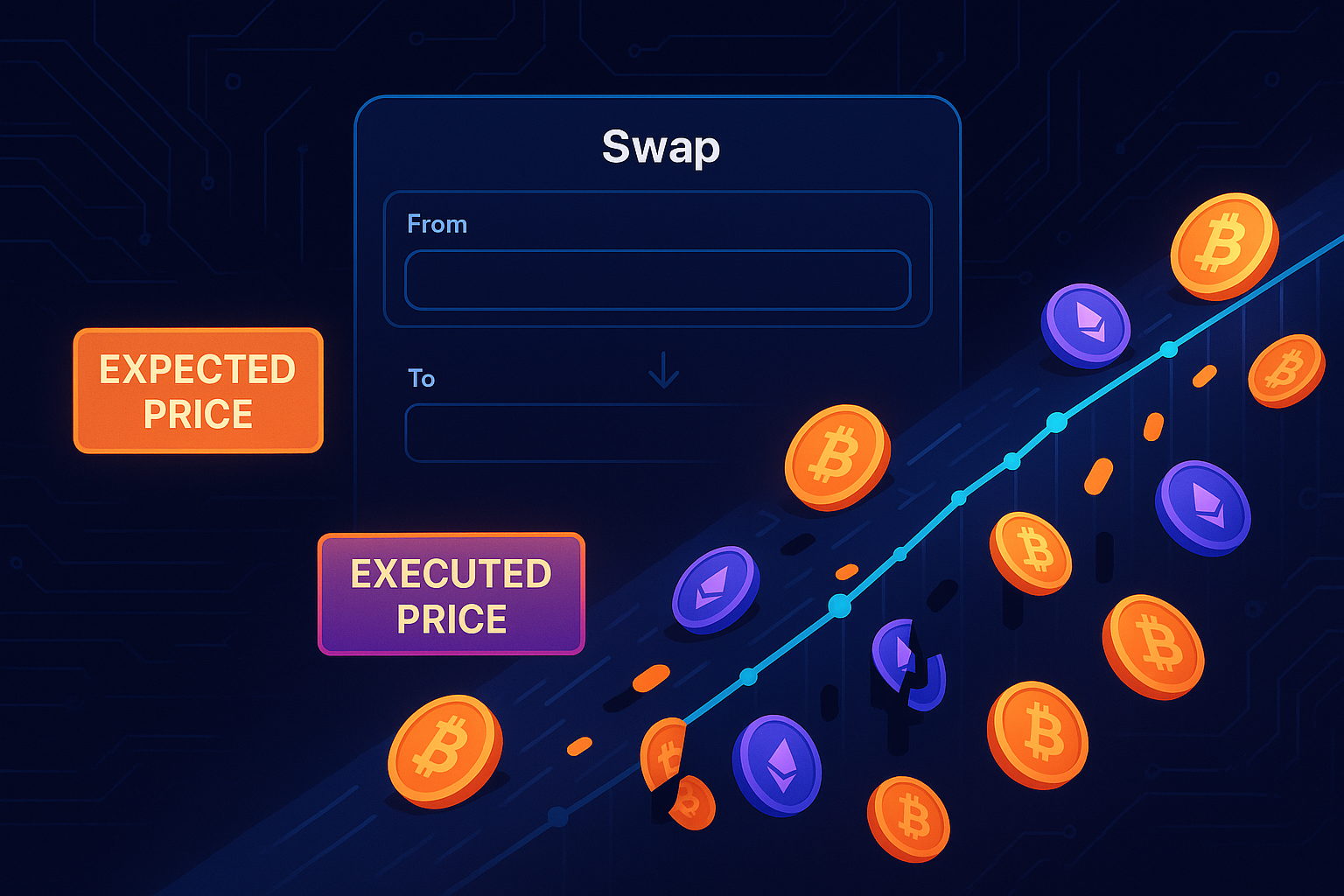
2. Network fees and spreads
Even when swapping 1:1 stablecoins, costs can include:
- Gas fees on the blockchain you use (Ethereum fees can spike in busy periods).
- Trading spreads between USDT and USDC on DEXs or swap platforms.
- Platform fees charged by exchanges or aggregators.
Always check the estimated received amount before confirming. For large amounts, a small percentage difference can add up.
3. Smart contract and platform risk
If you use a decentralized exchange or aggregator for your USDT to USDC swap, you interact with smart contracts. Potential risks include:
- Contract vulnerabilities or exploits
- Routing through low-liquidity pools that increase slippage
- Malicious or misconfigured interfaces that route your funds incorrectly
Sticking to reputable platforms and verifying contract addresses in your wallet can help reduce these risks.
4. Chain mismatches and wrong network deposits
USDT and USDC exist on multiple blockchains:
- Ethereum (ERC-20)
- Tron (TRC-20, primarily USDT)
- BNB Chain (BEP-20)
- Polygon, Arbitrum, Optimism, and others
Sending a token on the wrong network, or to an incompatible address, can lead to permanent loss. Always confirm the network and token type before initiating transfers or swaps.
Step-by-Step Guide: How to Perform a USDT to USDC Swap
There are several ways to convert USDT to USDC. Below is a general workflow using a non-custodial swap platform from your own wallet. Details may vary slightly based on the exact tool you choose.
Step 1: Choose your swap method
You have three primary options:
- Decentralized exchanges (DEXs) like Uniswap, Curve, or other AMMs.
- Instant swap platforms that connect to DEX liquidity in the background.
- Centralized exchanges (CEXs) like Binance, Coinbase, etc.
If you prefer to keep control of your keys and avoid full exchange accounts, consider a private exchange for instant USDT to USDC swaps that connects directly with your self-custodial wallet.
Step 2: Connect or prepare your wallet
- For DEXs and non-custodial swap platforms, you typically use wallets like MetaMask, Trust Wallet, Ledger, or similar.
- Make sure your wallet holds USDT on the correct network (for instance, ERC-20 USDT on Ethereum if the swap occurs there).
- Keep a small amount of the native chain token (ETH on Ethereum, MATIC on Polygon, etc.) to pay gas fees.
Step 3: Select USDT as the token you are giving and USDC as the token you are receiving
In the swap interface:
- Choose USDT in the “From” field.
- Choose USDC in the “To” field.
- Enter the amount of USDT you want to convert.
The interface should automatically display an estimated amount of USDC you will receive, including expected slippage and fees.
Step 4: Review rate, fees, and slippage
Before confirming:
- Check the conversion rate (it should be close to 1:1, with small deviations due to fees and liquidity).
- Review the network fee your wallet shows.
- Consider setting a slippage tolerance that balances protection from bad fills with the risk of failed transactions.
Many instant swap services will show a guaranteed minimum amount of USDC you are set to receive.
Step 5: Approve USDT (if required)
On your first USDT to USDC swap using a DEX or new platform, you usually must:
- Sign an “Approve” transaction that allows the smart contract to spend your USDT.
- Wait for that approval transaction to confirm on-chain.
On later swaps with the same platform, this step might be skipped if approval limits are still sufficient.
Step 6: Confirm and execute the swap
Once approval is done:
- Click the “Swap” or equivalent button in the interface.
- Confirm the transaction in your wallet.
- Wait for on-chain confirmation.
When the transaction is confirmed, your USDT balance decreases and your USDC balance increases in the same wallet.
Step 7: Verify your USDC balance
Check your wallet:
- Ensure USDC appears with the correct balance.
- If the token does not display automatically, you may need to add the official USDC contract address for that network.
- You can also verify the transaction on a block explorer like Etherscan, BscScan, or Polygonscan.
Practical Tips for Efficient and Safe USDT to USDC Swaps
1. Compare total cost, not just quoted rate
When choosing where to swap:
- Include trading or platform fees.
- Factor in gas costs, which can vary by time of day and network congestion.
- Check the final “You will receive” number across different platforms for your typical trade size.
Sometimes, a platform with slightly worse on-screen rates can still be cheaper overall if gas costs are lower or if it routes through better liquidity.
2. Use the right network for your needs
To optimize your USDT to USDC swap:
- For smaller amounts, high Ethereum fees might not be ideal. Consider L2 networks or other chains where both tokens are available.
- Ensure both your USDT and USDC versions exist on the same network to avoid bridging unless you explicitly want to move chains.
- If you need to bridge, use reputable bridges and double-check addresses and network selection.
3. Start with a test transaction
Especially when:
- Using a new platform or DEX
- Swapping on a new network
- Moving a large amount for the first time
Send or swap a small amount first. This verifies:
- That you are on the right chain
- That the route works as expected
- That you understand the fees involved
4. Check contract addresses from official sources
To avoid fake tokens:
- Get contract addresses for USDT and USDC directly from official issuer sites or well-known explorers.
- Confirm that the token in your wallet or DEX interface matches those addresses.
- Avoid blindly importing tokens based on random links or recommendations.
5. Maintain good security hygiene
- Use hardware wallets for larger holdings where possible.
- Never share your seed phrase or private keys, even with platforms that claim they “need it to help.”
- Verify URLs and bookmark trusted swap interfaces to avoid phishing.
- Keep software wallets and browser extensions updated.
Conclusion: Making the Most of Your USDT to USDC Swaps
A USDT to USDC swap is more than a simple 1:1 conversion. It is about choosing the stablecoin infrastructure that best aligns with your trading strategy, DeFi usage, and risk tolerance. By understanding the differences between USDT and USDC, checking costs carefully, and using secure non-custodial tools, you can move between these stablecoins efficiently and with confidence.
When you are ready to convert, using a platform that lets you swap crypto instantly in a private, non-custodial way can streamline the entire process. Always verify networks, contracts, and total costs, start small when testing new tools, and maintain strong wallet security practices. With these fundamentals in place, swapping USDT to USDC becomes a smooth part of your broader crypto strategy rather than a source of friction or risk.