USDC to ETH Swap: A Complete, User-Friendly Guide
Introduction
Converting stablecoins into native assets is one of the most common actions in crypto today. If you hold USD Coin (USDC) and want to gain direct exposure to Ethereum (ETH), a USDC to ETH swap is usually the fastest way to do it. Whether you are planning to stake ETH, use DeFi protocols, or simply speculate on price movements, knowing how to swap safely and efficiently is essential.
In this guide, we will walk through what a USDC to ETH swap is, why it matters, the main benefits and risks, a clear step-by-step process, and some practical tips to avoid costly mistakes. If you are looking for a quick and simple way to execute a USDC to ETH swap, you will also find a few non-custodial tools worth considering.
By the end, you should feel confident performing this swap on your own, understanding the key trade-offs along the way. This article is educational only and not financial advice, so always do your own research and consider your risk tolerance.
What Is a USDC to ETH Swap?
A USDC to ETH swap is the process of exchanging USD Coin (a dollar-pegged stablecoin) for Ether (the native token of the Ethereum network). Instead of going through a traditional centralized exchange order book, you typically use:
- Decentralized exchanges (DEXs) that use liquidity pools and automated market makers (AMMs)
- Non-custodial swap aggregators that source the best rate from multiple liquidity venues
USDC is designed to track 1 USD, giving you price stability. ETH, on the other hand, is volatile but needed for gas fees, DeFi, NFTs, and many other Ethereum-based applications. Swapping from USDC to ETH is therefore both a portfolio decision and a practical necessity for using the Ethereum ecosystem.
Why This Matters
The ability to move easily between stablecoins and volatile crypto assets is a cornerstone of modern crypto markets. Here is why an efficient USDC to ETH swap matters:
- Onboarding and offboarding risk: USDC lets you sit in a relatively stable position during uncertain markets, while ETH gives you upside potential and access to on-chain opportunities.
- Access to DeFi: Many DeFi protocols require ETH for gas or as collateral. If you are sitting in USDC, you will often need to swap before participating.
- Speed vs. traditional finance: Unlike bank transfers or traditional forex, a crypto swap can be extremely fast, often completing in a single blockchain transaction.
For active traders, DeFi users, and long-term holders alike, being able to swap quickly and at a fair rate is a foundational skill.
Benefits of Swapping USDC to ETH
While each user’s goals will differ, several common benefits make USDC to ETH swaps popular.
1. Gaining Exposure to Ethereum
USDC is designed to remain close to 1 USD. ETH, by contrast, is a speculative and utility asset. By swapping USDC to ETH, you:

- Participate directly in Ethereum’s price movements
- Align your holdings with long-term belief in the Ethereum ecosystem
- Potentially earn yield via staking or other on-chain strategies that require ETH
2. Enabling On-Chain Activity
ETH is required for gas fees on Ethereum. Even if you mainly want to use stablecoins, you often cannot do much without at least a small amount of ETH for transaction costs. Swapping USDC to ETH lets you:
- Pay for transaction fees when using DeFi, NFTs, or sending tokens
- Provide liquidity in ETH-based pools
- Interact with smart contracts that settle in ETH
3. Speed, Control, and Non-Custodial Options
Using a non-custodial swap service means you retain control of your funds until the transaction executes on-chain. Benefits include:
- Self-custody: You keep your private keys and do not deposit into a centralized exchange wallet.
- Fast settlement: Swaps typically confirm as quickly as the blockchain processes transactions.
- Fewer intermediaries: Less reliance on centralized entities can reduce counterparty risk.
Risks and Drawbacks to Consider
Every crypto transaction carries some level of risk. Before you execute a USDC to ETH swap, be aware of the following.
1. Price Volatility
ETH is highly volatile. When you move from a stablecoin into ETH:
- Your portfolio becomes more sensitive to market swings.
- Short-term losses are possible if the market moves against you soon after the swap.
- Leverage or borrowing against ETH can magnify both gains and losses.
2. Gas Fees and Network Congestion
On Ethereum, gas fees can spike during busy periods. This affects your swap in two ways:
- Higher cost per transaction: A small swap size might make little sense if gas costs are high relative to the amount.
- Confirmation delays: If your gas price is too low, the transaction might be slow or even stuck pending for a while.
Consider performing swaps when the network is less congested or using scaling solutions where appropriate.

3. Slippage and Execution Risk
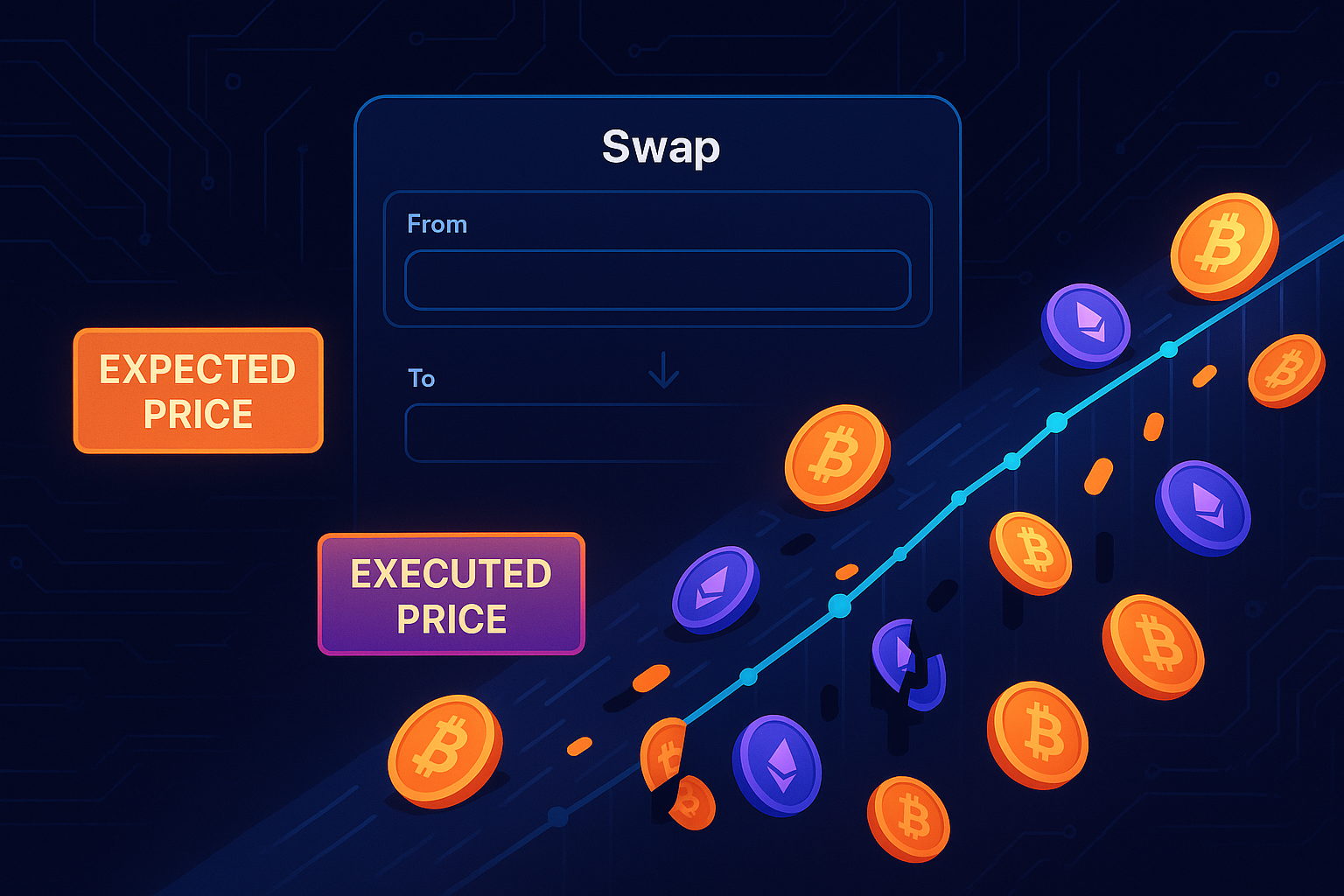
Slippage occurs when the execution price differs from the price you expected, especially in illiquid markets or large trades. Pay attention to:
- Slippage tolerance settings in your DEX or aggregator
- Pool liquidity for the USDC/ETH pair
- Price impact warnings in the interface
4. Smart Contract and Platform Risk
Even reputable protocols can contain bugs or vulnerabilities. You should:
- Use audited, widely used protocols or reliable private exchange interfaces that route through established liquidity sources.
- Be cautious about approving unlimited token allowances.
- Double-check URLs to avoid phishing sites that mimic popular DEXs.
Step-by-Step Guide: How to Swap USDC to ETH
The exact steps can vary slightly depending on the wallet and platform you choose, but the general process is similar. Below is a practical walk-through you can adapt to most non-custodial swapping tools.
Step 1: Set Up and Fund Your Wallet
- Choose a wallet: Popular options include MetaMask, Coinbase Wallet, Trust Wallet, or other Ethereum-compatible wallets.
- Secure your seed phrase: Write it down offline and never share it. This is your key to the wallet.
- Fund the wallet with USDC:
- Receive USDC from an exchange or another wallet.
- Confirm that you are using USDC on the correct chain (for example, Ethereum mainnet).
- Ensure you have a small amount of ETH for gas:
- If your wallet is brand new, buy or transfer a small amount of ETH first.
- Without ETH, your USDC transaction cannot be sent on Ethereum.
Step 2: Connect to a Swap Interface
- Open your wallet’s built-in DEX interface if it has one, or go to a trusted swap crypto instantly platform in your browser.
- Click “Connect Wallet” and select your wallet provider.
- Confirm the connection in your wallet popup.
Step 3: Select USDC to ETH as the Trading Pair
- In the swap interface, set:
- From: USDC
- To: ETH
- Enter the amount of USDC you want to swap, or click “Max” if appropriate.
- Review the expected rate, minimum received, and any platform fees.
Step 4: Adjust Slippage and Gas Settings
Before confirming, refine your transaction settings:
- Slippage tolerance:
- Common values range from 0.1% to 1% for major pairs like USDC/ETH.
- Lower slippage reduces the chance of a bad price, but may cause your transaction to fail if the price moves too quickly.
- Gas fee settings:
- Most wallets offer “Low / Market / High” options.
- Higher gas increases the chance of fast confirmation but costs more.
Step 5: Confirm and Execute the Swap
- Click the “Swap” or “Confirm” button in the interface.
- Your wallet will prompt you with a transaction summary including:
- USDC amount to be spent
- Estimated ETH received
- Gas fee
- Contract details
- Carefully verify all details, then approve the transaction.
Step 6: Wait for Confirmation and Verify Your Balance
- Wait for the transaction to be mined on-chain. This can take from a few seconds to several minutes depending on network conditions.
- Once confirmed:
- Your USDC balance should decrease.
- Your ETH balance should increase by the expected amount (minus fees and slippage, if any).
- Use a block explorer such as Etherscan to verify the transaction hash if desired.
Practical Tips for a Better USDC to ETH Swap Experience
1. Pay Attention to Network Conditions
- Check average gas prices before swapping.
- Consider executing swaps during off-peak hours to save on fees.
- If you are regularly swapping, you might track gas with tools or browser extensions.
2. Double-Check the Token Contract
- On popular wallets, USDC and ETH are typically verified by default.
- If you add tokens manually, always use the official contract address from the issuer or a trusted source.
- Be wary of lookalike tokens with similar symbols or names.
3. Start with a Small Test Transaction
- Especially if you are using a new platform, try swapping a small amount first.
- This lets you verify:
- That your wallet is connected correctly
- That the interface behaves as expected
- How long confirmations typically take
4. Use Reputable Non-Custodial Platforms
- Favor platforms that are transparent about rates, fees, and routing.
- Look for swap interfaces that emphasize security, privacy, and self-custody.
- When in doubt, research user reviews and audit reports.
5. Consider Your Overall Strategy
- Ask yourself why you are moving from USDC to ETH:
- Short-term trade?
- Long-term investment?
- Access to a specific DeFi protocol?
- Align swap timing and size with your broader portfolio and risk profile.
- Remember that you can always move back to stablecoins later if your outlook changes.
Conclusion
Swapping USDC to ETH is a fundamental action in the crypto ecosystem. It lets you move from a stable, dollar-pegged position into a volatile but powerful base asset that fuels a vast array of decentralized applications. When done thoughtfully, a USDC to ETH swap can support your investment goals, provide the ETH you need for gas and DeFi, and keep you in control of your funds.
To get the best results, focus on three key areas: using reputable tools, managing transaction parameters like slippage and gas, and fitting each swap into a clear personal strategy. If you prefer a streamlined, non-custodial approach that lets you swap crypto instantly between USDC and ETH, choose interfaces that prioritize security, transparency, and user privacy.
As with all crypto activity, stay informed, double-check details, and avoid rushing large transactions. With a bit of preparation and the right tools, converting USDC into ETH can be straightforward, efficient, and aligned with your long-term plans in the Ethereum ecosystem.