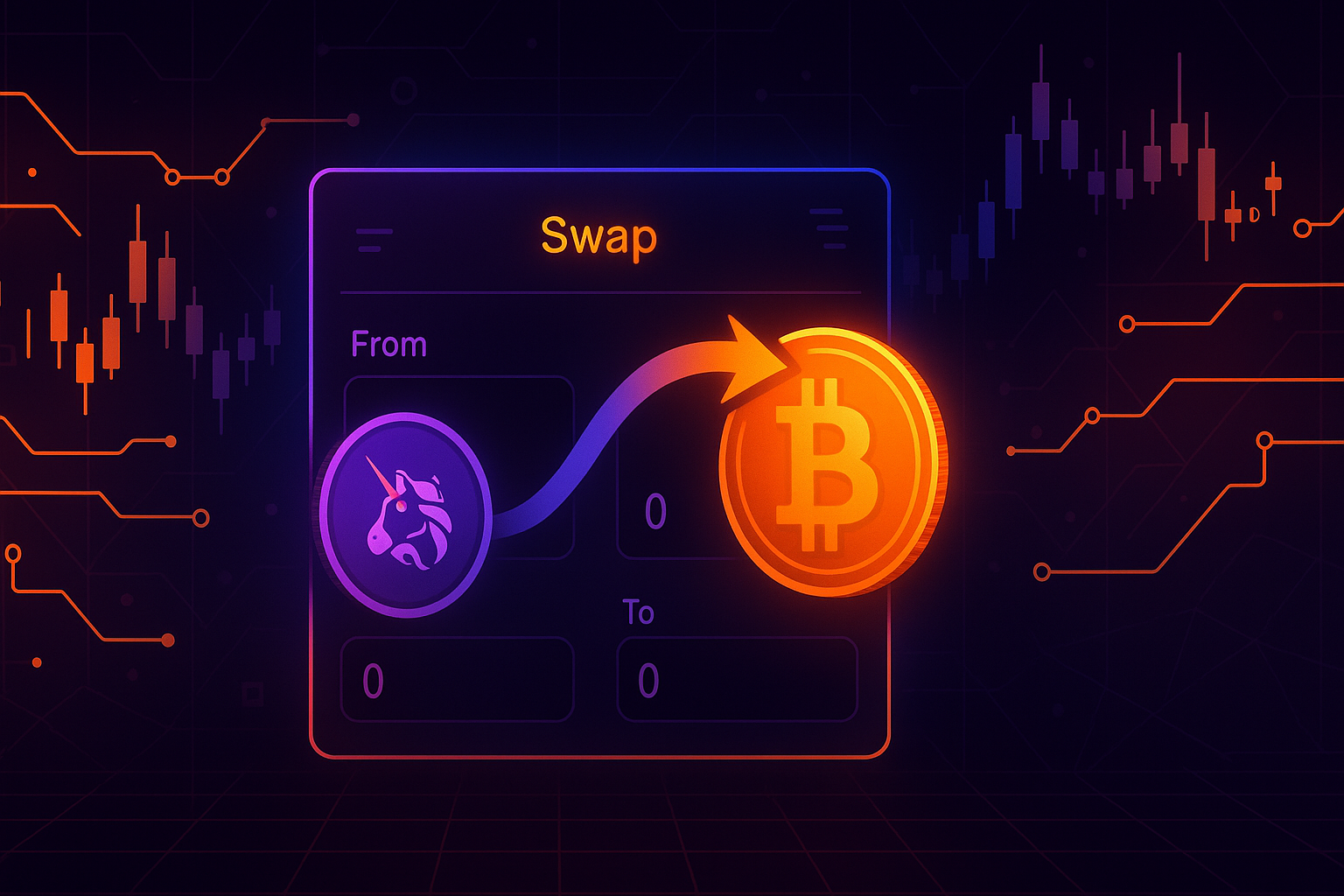
UNI to BTC Swap: How to Exchange Uniswap for Bitcoin Safely and Efficiently
Swapping UNI for BTC has become a common move for crypto users who want to rotate from DeFi tokens into the relative stability and brand strength of Bitcoin. Whether you are taking profits from DeFi, rebalancing a portfolio, or simply trying to consolidate assets, understanding how a uni to btc swap works will help you save on fees, avoid mistakes, and stay safe.
Unlike trading on a centralized exchange, you can now convert UNI to BTC directly from your own wallet using non-custodial services. This approach lets you keep control of your keys, avoid long KYC processes, and often complete the swap faster than with traditional exchanges.
In this guide, we will walk through why swapping UNI to BTC matters, the benefits and risks, and a clear step-by-step process to complete the swap using a private, non-custodial exchange. By the end, you will be able to choose the right platform, calculate fair rates, and execute your swap confidently.
Why Swapping UNI to BTC Matters
UNI is the governance token of Uniswap, a leading decentralized exchange protocol on Ethereum. BTC, on the other hand, is the largest and most established cryptocurrency, widely viewed as digital gold. Swapping from UNI into BTC can be a strategic move for several reasons.
1. Risk management and portfolio rebalancing
DeFi governance tokens such as UNI tend to be more volatile than Bitcoin. When markets are hot, UNI can outperform BTC significantly. However, that same volatility can work against you during downturns. Periodically rotating some UNI exposure into BTC is a common strategy to:
- Lock in profits after a strong UNI price rally
- Diversify away from DeFi specific risk
- Reduce overall portfolio volatility
2. Shifting from DeFi exposure to blue-chip crypto
UNI carries protocol, regulatory, and governance risks that are specific to the DeFi ecosystem. Bitcoin, in contrast, is primarily a monetary asset with a simpler narrative. Moving from UNI to BTC can be attractive if you:
- Expect regulatory changes affecting DeFi
- Believe BTC will outperform DeFi tokens in the next cycle
- Want more exposure to what many see as the base asset of the crypto market
3. Liquidity and accessibility
Bitcoin is accepted and tradable on almost every exchange, on-ramp, and lending platform. By converting UNI to BTC, you may gain:
- Easier access to fiat off-ramps
- More options for using your crypto as collateral
- Better liquidity when you eventually want to exit to cash or another asset
Main Benefits of a UNI to BTC Swap
How you execute the swap matters just as much as the decision to swap. There are several ways to convert UNI to BTC, but non-custodial, instant swap platforms have become especially popular for users who value privacy, speed, and control.
1. Non-custodial control of your assets
With a non-custodial swap, you do not deposit funds into a centralized exchange account. Instead, you send UNI directly from your wallet, and BTC is delivered straight to your BTC address. You retain control of your keys at all times.
This reduces counterparty risk because:
- Your funds are not sitting on an exchange that could be hacked or frozen
- You are not dependent on a single custodian’s security practices
- There is no internal account system holding your balance
2. Privacy and reduced friction
Many users prefer to avoid lengthy KYC procedures for routine swaps. Non-custodial services that facilitate a private exchange between UNI and BTC can help you:
- Minimize the amount of personal information you share
- Avoid uploading documents for small or medium sized swaps
- Reduce friction and waiting times associated with account reviews
3. Simplicity and speed
On a traditional exchange, converting UNI to BTC can involve multiple steps:
- Deposit UNI into the exchange
- Wait for confirmations
- Trade UNI for USDT or another pair if there is no direct UNI/BTC market
- Then trade that asset for BTC
- Finally, withdraw BTC to your wallet
An instant, non-custodial swap service can condense all of this into a single flow, often within minutes, depending on network load.
4. No order books or trading complexity
You do not need to understand limit orders, market orders, or slippage settings. You simply input the amount of UNI you want to swap and provide a BTC address. The service handles the routing and liquidity for you.
Risks and Drawbacks of UNI to BTC Swaps
Every approach to swapping crypto comes with tradeoffs. Before initiating a UNI to BTC swap, be aware of the main risks and limitations.
1. Price volatility during the swap
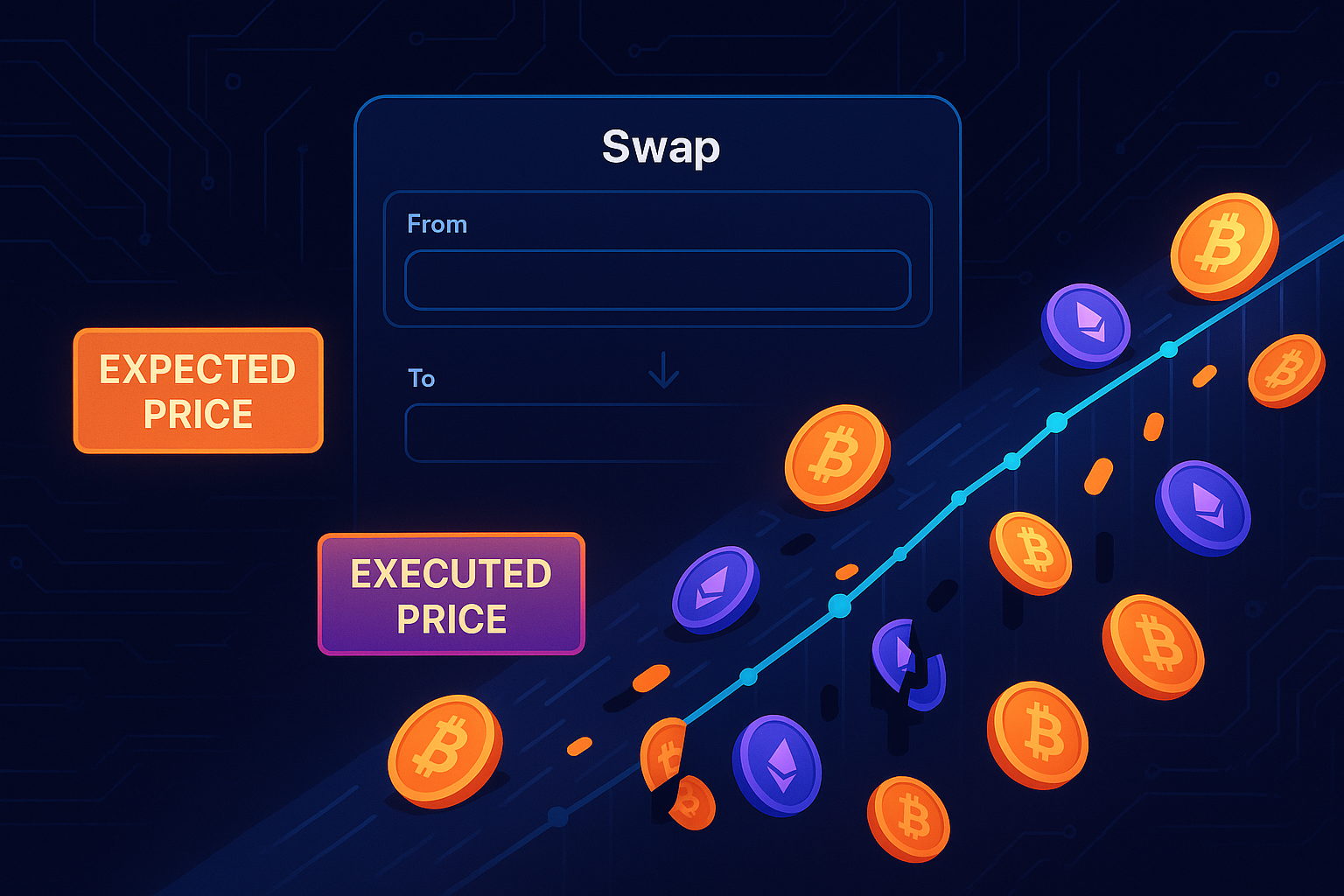
UNI and BTC are both volatile assets. If you use a floating rate swap, the final amount of BTC you receive may differ from the initial quote, especially during high volatility. To manage this:
- Prefer fixed-rate quotes when possible, if they meet your needs
- Avoid swapping during major news events or extreme volatility
- Double-check any slippage or rate-related warnings before confirming
2. Network fees
A UNI to BTC swap typically involves at least two blockchains: Ethereum for UNI and the Bitcoin network for BTC. You will encounter:
- Ethereum gas fees to send UNI to the swap service
- Bitcoin transaction fees to receive BTC in your wallet
These fees vary with network congestion and can materially affect smaller swaps. If fees are exceptionally high, it may be better to wait or adjust the swap size.
3. Service reliability and trust
Non-custodial does not mean risk-free. You still rely on a service to:
- Quote accurate and honest exchange rates
- Execute the swap promptly and correctly
- Handle support issues if something goes wrong
Always research the platform you plan to use, read user feedback when available, and start with small test amounts if you are new to the service.
4. Irreversible transactions
Blockchain transactions are final once confirmed. Sending UNI to the wrong contract address or providing an incorrect BTC address can result in a permanent loss of funds. This is why address verification and test transactions are critical, especially for larger swaps.
Step-by-Step Guide: How to Complete a UNI to BTC Swap
The exact interface will vary depending on the service you use, but the general flow of a non-custodial UNI to BTC swap is similar across platforms. Below is a detailed walkthrough to help you perform the swap safely.
Step 1: Prepare your wallets
- UNI (ERC-20) wallet: A wallet like MetaMask, Trust Wallet, or a hardware wallet that supports Ethereum.
- BTC wallet: A Bitcoin wallet with a valid BTC receiving address. This could be a self-custodial wallet like Sparrow, BlueWallet, a hardware device, or another secure option.
Make sure you:
- Have enough UNI to cover the swap amount
- Have some ETH in your UNI wallet to pay for Ethereum gas fees
- Backed up your recovery phrases and kept them offline
Step 2: Choose a non-custodial swap service
Look for a platform that allows you to swap crypto instantly between UNI and BTC without requiring you to create a custodial account. Key factors to consider:
- Support for direct UNI to BTC swaps
- Transparent fee structure and displayed rates
- Security practices and reputation
- Clear support channels in case of issues
Step 3: Enter swap details
On the swap page:
- Select UNI as the asset you are sending
- Select BTC as the asset you want to receive
- Enter the amount of UNI you want to swap
The interface should display:
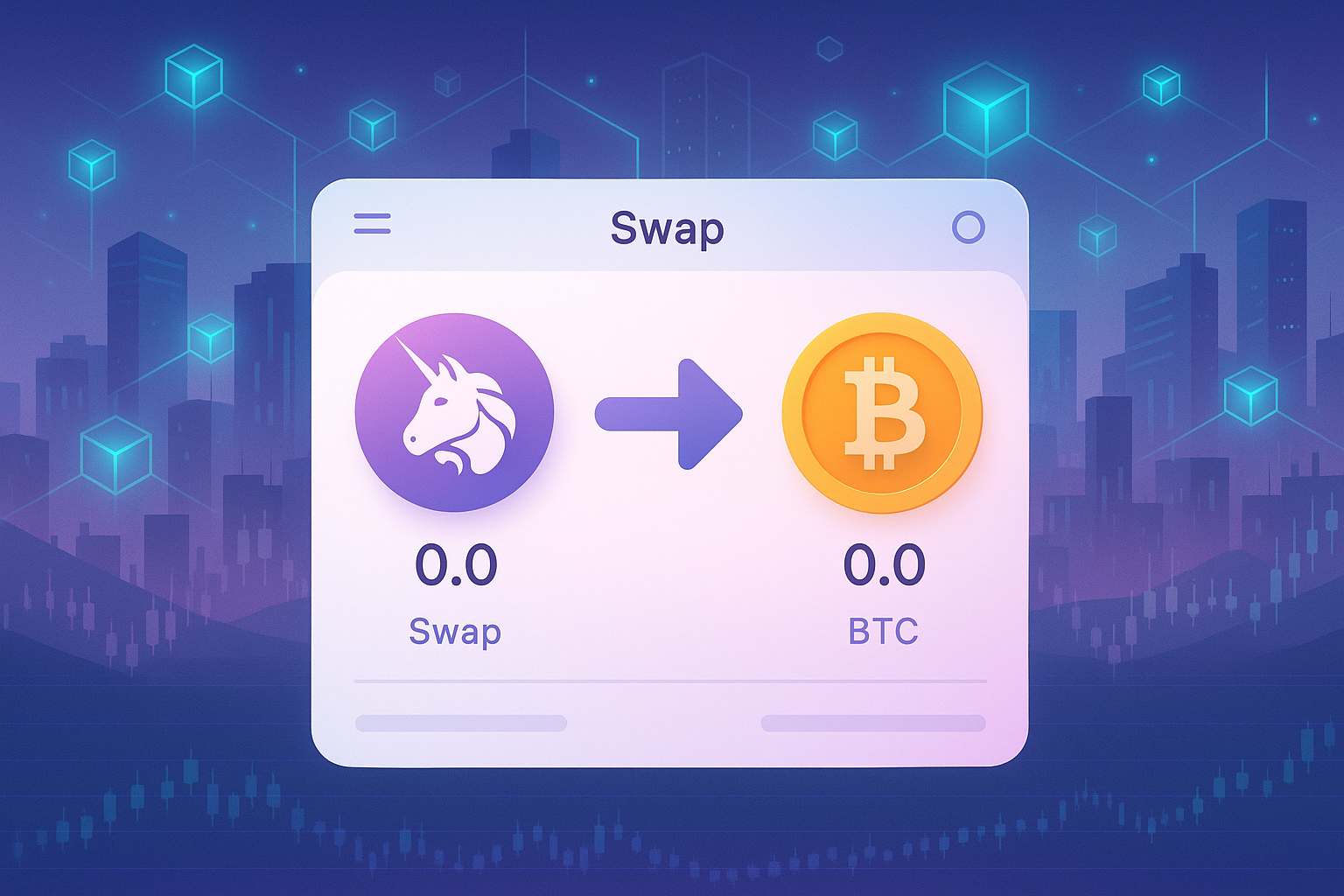
- An estimated amount of BTC you will receive
- Whether the rate is fixed or floating
- Any service fee included in the quote
Step 4: Provide your Bitcoin address
Copy your BTC receiving address from your Bitcoin wallet and paste it into the swap interface. Then:
- Double-check that the address matches exactly
- Verify you are using a standard BTC address compatible with the service
- Consider scanning a QR code instead of manual typing to avoid errors
Step 5: Review and confirm the quote
Before sending any funds, carefully review:
- The amount of UNI you will send
- The expected amount of BTC you will receive
- Rate type (fixed vs floating)
- Estimated processing time
If you are comfortable with the terms, proceed to the next step.
Step 6: Send UNI from your wallet
The service will display a UNI deposit address or a connection prompt for your wallet. To complete this step:
- Ensure the address you see is an ERC-20 compatible address for UNI
- Send the exact UNI amount from your wallet
- Set an appropriate gas fee according to current Ethereum network conditions
Once the transaction is sent, the service will typically require a certain number of block confirmations before processing the swap.
Step 7: Wait for swap execution and BTC delivery
After your UNI transaction has the required confirmations:
- The service will execute the swap on its backend or via liquidity providers
- BTC will be sent to the Bitcoin address you provided
- You will receive a transaction ID (TXID) for the BTC transfer
You can then track the BTC transaction in any Bitcoin block explorer until it confirms in your wallet.
Practical Tips for a Smooth UNI to BTC Swap
1. Start with a small test amount
If it is your first time using a particular service or swapping from UNI to BTC at all, consider starting with a small test transaction:
- Confirm the process works as expected
- Verify BTC arrives correctly at your wallet
- Get a feel for the timing and fees involved
2. Time your swap around network congestion
Use public dashboards or your wallet’s fee suggestions to evaluate Ethereum and Bitcoin congestion. If gas fees or BTC fees are particularly high, waiting for a quieter period can meaningfully reduce total costs for the same swap.
3. Compare effective rates, not just fee labels
Some services advertise low or zero fees but offer worse exchange rates. To accurately compare platforms:
- Look at the total BTC you will receive per unit of UNI
- Subtract expected network fees where applicable
- Use a calculator or spreadsheet if you are swapping large amounts
4. Use non-custodial wallets where you control the keys
To fully benefit from a non-custodial swap, your UNI and BTC should live in wallets where you hold the recovery phrase or private keys. Avoid leaving significant balances on centralized platforms just for convenience.
5. Keep security basics in mind
- Only use the official website or app of the swap service
- Bookmark the correct URL to avoid phishing
- Do not execute swaps over compromised or public Wi-Fi when possible
- Never share your seed phrase or private keys with anyone
Conclusion: Making Your UNI to BTC Swap Safe, Simple, and Efficient
Moving from UNI into BTC can be a smart step for risk management, diversification, or simply aligning your holdings with a more long-term, blue-chip crypto asset. By using a non-custodial service for your uni to btc swap using a non-custodial swap, you can keep control of your keys, cut out unnecessary intermediaries, and execute the trade within minutes.
Take time to understand the fees, verify addresses, and start with smaller amounts until you are fully comfortable with the process. With the right preparation, swapping UNI to BTC can become a straightforward part of your ongoing crypto strategy, helping you manage risk and stay aligned with your long-term goals.