TIA to BTC Swap: Complete Guide to Exchanging Celestia for Bitcoin Safely
Introduction
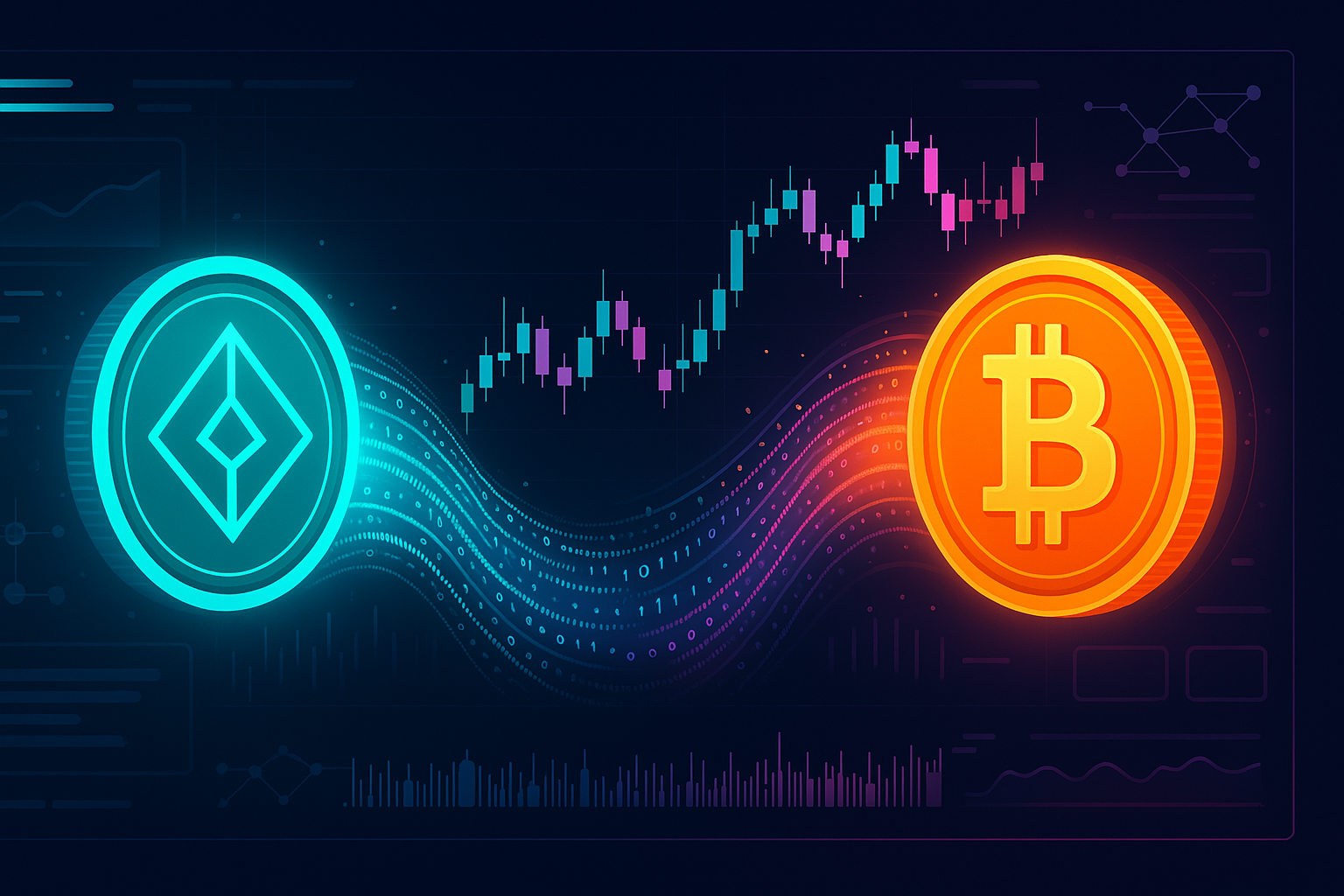
The rise of modular blockchain projects like Celestia (TIA) has created new opportunities for traders who want exposure to both experimental ecosystems and established assets like Bitcoin (BTC). If you hold TIA and are considering reallocating some of your portfolio into BTC, understanding how a tia to btc swap works is essential.
Today, you no longer need to go through complex order books or centralized exchanges to make this trade. With modern cross-chain tools, you can execute a tia to btc swap in a few minutes, often without creating an account or giving up custody of your funds.
This guide explains why swapping TIA to BTC matters, how to do it step by step, what to watch out for, and how to optimize for speed, cost, and privacy while reducing risk.
Why Swapping TIA to BTC Matters
Celestia and Bitcoin occupy very different roles in the crypto ecosystem. Understanding those roles will help you decide when and why a TIA to BTC swap makes sense.
Different risk profiles
Celestia (TIA) is a newer asset tied to an innovative modular data-availability network. It offers upside potential but carries higher technical and market uncertainty. Bitcoin, on the other hand, is the most established cryptocurrency, with the longest track record, the deepest liquidity, and a widely recognized narrative as digital gold.
This difference creates a useful dynamic for portfolio management:
- TIA can represent your higher risk, higher potential return exposure.
- BTC can act as a more conservative crypto allocation focused on long term resilience and liquidity.
Rebalancing and profit taking
If TIA appreciates significantly relative to BTC, converting some TIA into Bitcoin lets you lock in profits while staying in the crypto ecosystem. Similarly, if Celestia’s fundamentals or market sentiment change, a tia to btc swap allows you to rotate into a more established asset without first cashing out to fiat.
Improved liquidity and use cases
Bitcoin enjoys deeper liquidity across exchanges and OTC desks, and is widely accepted as collateral in lending protocols and centralized platforms. Moving part of your TIA position into BTC may unlock:
- More borrowing and lending options
- Better spreads and lower slippage for subsequent trades
- Access to BTC-specific products like futures, options, or yield strategies
Benefits of a TIA to BTC Swap
Swapping between TIA and BTC offers both strategic and practical advantages, especially when you use a non-custodial exchange.
1. Portfolio diversification and risk management
Holding only high-beta altcoins can expose your portfolio to severe drawdowns. By swapping part of your TIA into BTC you can:
- Smooth volatility at the portfolio level
- Preserve gains after strong TIA rallies
- Maintain upside potential with a more balanced asset mix
2. Non-custodial control over your funds
When you use a non-custodial swap platform, you retain control over your private keys. The service simply coordinates the TIA to BTC exchange without taking long term possession of your funds. This reduces counterparty risk compared to parking assets on a centralized exchange account.
3. No account signup or KYC on many platforms
Several cross-chain swap services allow you to trade directly from wallet to wallet without account creation or KYC for modest amounts. This is attractive if you value privacy or if you are tired of onboarding friction.
4. Convenience and speed
Instead of withdrawing TIA to an exchange, trading, and then withdrawing BTC, you can often:
- Specify how much TIA to swap
- Provide a BTC receiving address
- Send TIA once and receive BTC at your Bitcoin wallet
On a streamlined platform where you can swap crypto instantly, this entire process can complete within minutes depending on network congestion.
Key Risks and Drawbacks to Consider
No swap is risk free. Before doing a tia to btc swap, understand the tradeoffs and areas where you need to be careful.
1. Market volatility and price slippage
Crypto prices move quickly. Between the time you initiate the swap and the time your transaction confirms, the effective exchange rate can change. Main concerns include:
- Slippage if liquidity is thin or the pair is routed through multiple assets
- Adverse price movement while your transaction is pending on chain
Using providers that lock in a rate for a short validity period can reduce this risk, but never eliminate it entirely.
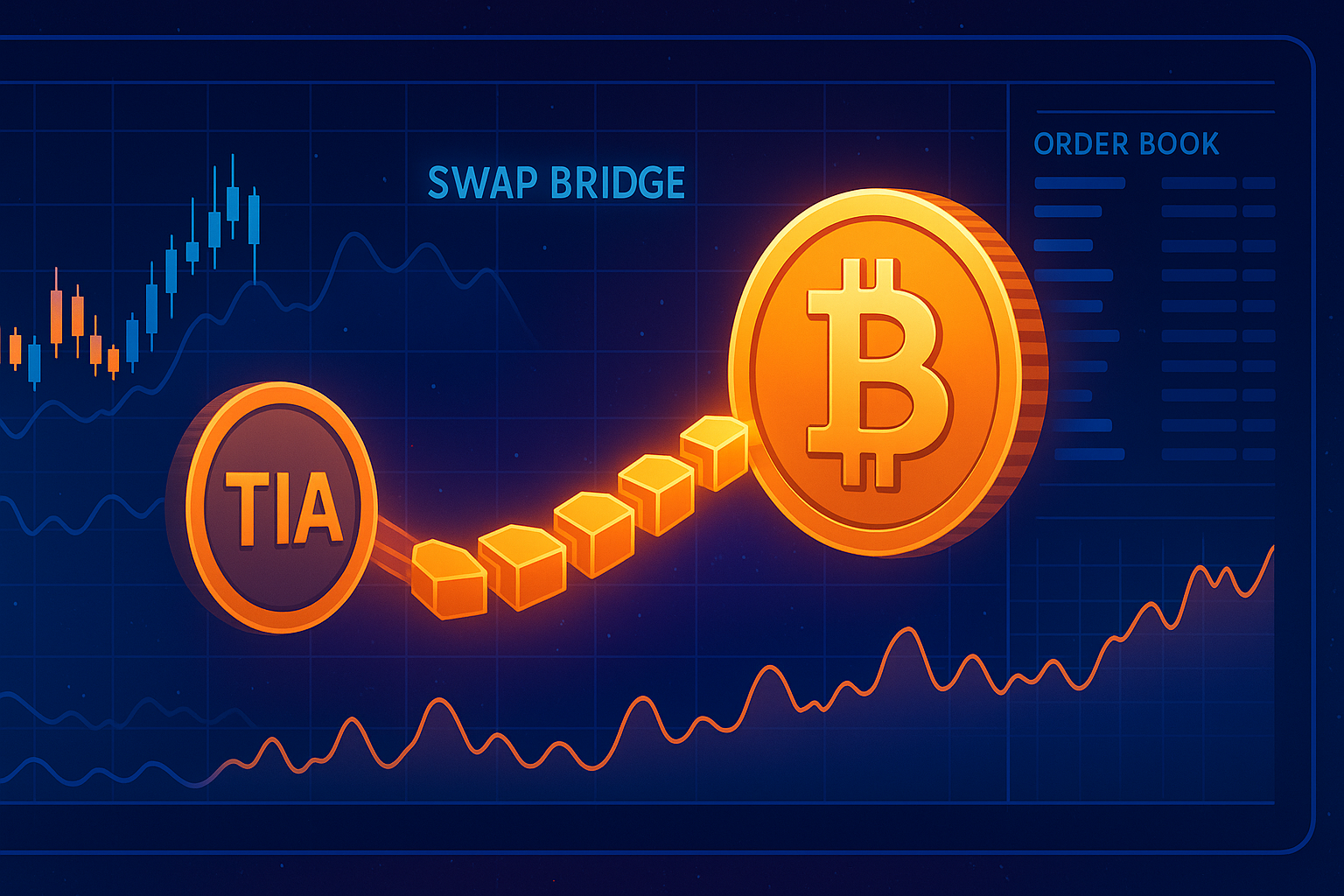
2. Network fees and confirmation times
Each leg of the swap incurs network fees. You will typically pay:
- A fee on the chain where TIA resides (for sending out)
- Fees on intermediary chains or bridges if used
- A Bitcoin transaction fee to receive BTC
During periods of high congestion, Bitcoin fees and confirmation times can spike, slowing the final settlement.
3. Counterparty and platform risk
Even with non-custodial designs, you are trusting a service to route the trade correctly, honor the quoted rate window, and send your BTC to the address you provide. Potential issues:
- Operational failures or downtime on the platform
- Misconfigured or malicious smart contracts on some bridges
- Human error entering wrong destination address
4. Irreversible transactions
On public blockchains, transactions are typically final once confirmed. If you:
- Send TIA to the wrong address
- Provide an incorrect or incompatible BTC address
- Ignore minimum deposit or memo requirements (if any)
you are very unlikely to recover those funds. Double checking every detail is essential.
How a TIA to BTC Swap Works (Conceptual Overview)
Although interfaces look simple, a tia to btc swap usually involves several behind the scenes steps:
- You enter how much TIA you want to swap and your BTC receiving address.
- The swap platform quotes an estimated rate and sometimes locks it for a short period.
- The platform provides a unique deposit address for your TIA.
- You send TIA from your wallet to this deposit address.
- After sufficient confirmations, the service executes the corresponding BTC trade on its backend or via liquidity partners.
- The platform sends the final BTC amount (minus fees) to your specified Bitcoin address.
From the user perspective, you only see a single TIA outbound transaction and a single BTC inbound transaction, which keeps the experience simple.
Step by Step Guide: Performing a TIA to BTC Swap
Below is a generic workflow you can adapt to most non-custodial services that support this pair.
Step 1: Prepare your wallets
- TIA wallet with enough balance for the swap plus network fees.
- BTC wallet where you want to receive your Bitcoin. This can be a hardware wallet, mobile wallet, or desktop wallet.
Verify that you control both wallets and have safely backed up your seed phrases. Never paste seed phrases into web pages or browser extensions.
Step 2: Choose a non-custodial swap platform
Select a reputable service that supports direct TIA to BTC exchange. Look for:
- Clear user interface showing estimated rate and service fee
- No requirement to deposit funds into a centralized account
- Transparent explanations of how swaps are executed and what chains are used
Step 3: Configure the swap
- Select TIA as the asset you want to send.
- Select BTC as the asset you want to receive.
- Enter the TIA amount you want to swap or the BTC amount you want to receive.
- Paste your Bitcoin receiving address carefully.
Some interfaces, such as this dedicated private exchange page for TIA to BTC, streamline these fields so you can see everything clearly on one screen.
Step 4: Review rates, limits, and fees
Before confirming, check:
- Estimated exchange rate between TIA and BTC
- Minimum and maximum swap amounts
- Service fees and expected network fees
- Time window during which the rate is valid, if applicable
If the numbers look reasonable vs. market prices on major exchanges, proceed. If the rate is significantly worse than expected, reconsider the timing or provider.
Step 5: Send TIA to the deposit address
After you confirm the swap, the platform will generate a unique TIA deposit address (and possibly a memo or tag, depending on the network setup). You must:
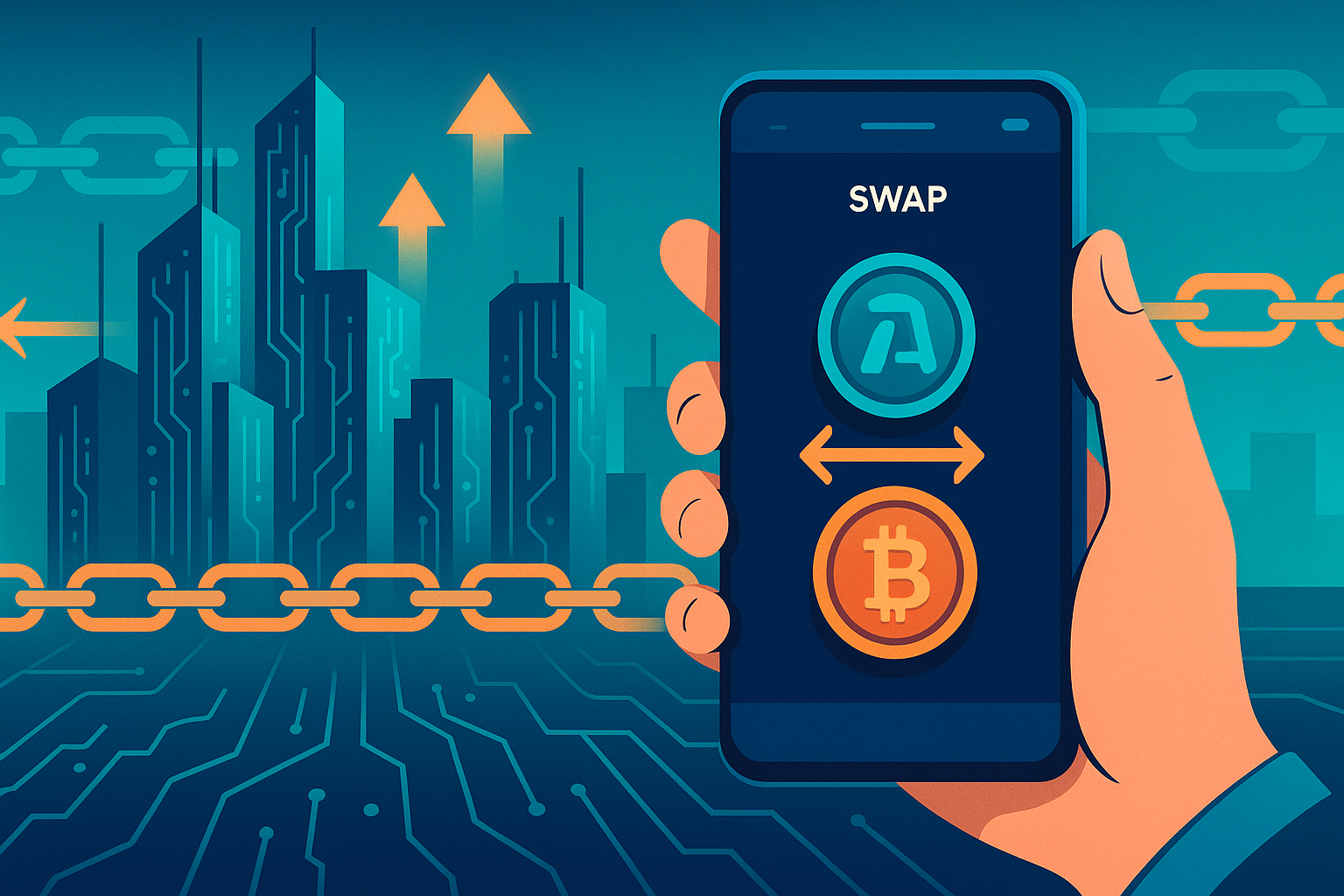
- Copy the address accurately from the interface
- Send exactly the amount of TIA specified, or stay within the platform’s allowed tolerance
- Include any required memo/tag if the instructions say so
Once you broadcast your TIA transaction, the swap service will monitor the chain and wait for enough confirmations before proceeding.
Step 6: Wait for confirmations and BTC delivery
After your TIA transfer is confirmed:
- The service executes the corresponding BTC trade internally.
- It then sends BTC to the Bitcoin address you provided.
- You receive a transaction hash so you can track the BTC on a Bitcoin explorer.
Set expectations that the entire tia to btc swap may take anywhere from a few minutes to longer, depending on congestion and confirmation policies on both networks.
Practical Tips for a Safe and Efficient TIA to BTC Swap
1. Start with a small test amount
If it is your first time using a platform or a new wallet, send a small amount of TIA, complete the swap, and confirm that you receive BTC at the correct address. After that test succeeds, you can repeat the process with larger amounts.
2. Double check destination addresses
Always verify at least the first and last several characters of both:
- The TIA deposit address you send to
- The BTC receiving address you paste into the swap interface
Consider scanning QR codes when possible to reduce manual typing errors. Beware of clipboard malware on compromised devices.
3. Consider timing and network conditions
Network congestion affects both fees and confirmation times. You can:
- Check recent fee levels on the Bitcoin network
- Look at Celestia or associated chain explorers for congestion signs
- Avoid major news events or volatility spikes when slippage can be extreme
4. Compare rates across providers
Even small percentage differences in exchange rates can add up when swapping significant amounts. Before committing, compare the effective rate you get, including all fees. Some users keep browser tabs open with major spot exchange prices for reference.
5. Protect your privacy
If privacy is a priority, favor platforms that do not require account creation or intrusive personal data for modest trades. Using a non-custodial swap also means your assets are not pooled into long term custodial accounts, which may reduce some data aggregation risks.
6. Keep detailed records
For accounting, tax reporting, or simple personal tracking:
- Save screenshots of the swap details before and after executing
- Record transaction hashes on both TIA and BTC sides
- Note the date, time, and amounts involved
Clear records make it easier to reconcile balances and handle regulatory obligations later.
When Does a TIA to BTC Swap Make Strategic Sense?
Beyond the mechanics, the decision to swap is ultimately about your investment thesis and risk tolerance. Some common scenarios:
- Locking in gains: TIA has rallied significantly relative to BTC, and you want to crystallize part of that performance.
- Shifting risk profile: You decide to move from experimental modular infrastructure exposure to the relative stability of Bitcoin.
- Preparing collateral: You need BTC to post as collateral for derivatives, loans, or other structures not available to TIA holders.
- Long term conviction in Bitcoin: You believe BTC will outperform TIA over your time horizon and want to reweight accordingly.
There is no universally correct answer, but having a written plan helps. Decide in advance what price levels, percentage gains, or portfolio weights will trigger swaps rather than reacting emotionally to short term volatility.
Conclusion
Performing a tia to btc swap is no longer a complex, multi-step ordeal requiring centralized accounts and manual order placement. With the right non-custodial tools, you can move from Celestia exposure to Bitcoin in a few clear steps while retaining control over your wallets.
By understanding the benefits, recognizing the risks, and following best practices such as test transactions, address verification, and rate comparison, you can swap TIA to BTC more confidently and align your holdings with your long term strategy. When you are ready to act, using a dedicated non-custodial interface for a tia to btc swap on a private exchange can streamline the entire process and help you focus on what matters most: managing your crypto portfolio with clarity and intent.
Ready to Swap?
Convert your crypto instantly on GhostSwap — no KYC, no sign-up required.
Popular swaps: BTC to XMR | BTC to ETH | XMR to BTC | ETH to XMR | BTC to SOL