SOL to ETH Swap: A Complete Guide to Exchanging Solana for Ethereum Securely
Introduction
If you are active in crypto, you have probably found yourself wanting to move value between different ecosystems. One of the most common moves today is a SOL to ETH swap, shifting funds from the Solana network to the Ethereum network. Whether you are chasing new DeFi opportunities, diversifying your holdings, or rebalancing risk, knowing how to swap SOL for ETH efficiently and securely is essential.
There are multiple ways to execute this swap, ranging from centralized exchanges to non custodial, privacy focused aggregators. Many traders now prefer to use a sol to eth swap tool that is instant, cross chain, and does not require an account. Understanding your options, fees, and risks will help you avoid costly mistakes and delays.
This guide walks through why SOL to ETH swaps matter, the benefits and trade offs of different methods, a step by step walkthrough, and practical risk management tips. By the end, you will be able to make an informed decision about how to convert SOL to ETH in a way that fits your strategy and risk tolerance.
Why SOL to ETH Swaps Matter
Moving Between Two Major Ecosystems
Solana and Ethereum are two of the most important smart contract platforms:
- Solana (SOL) is known for low fees and high throughput, ideal for fast trading, NFTs, and high frequency DeFi.
- Ethereum (ETH) is the most established ecosystem with a large DeFi, NFT, and institutional footprint.
If you participate in both ecosystems, a SOL to ETH swap lets you:
- Access Ethereum only DeFi protocols when you originally funded on Solana.
- Pay for gas and interact with Ethereum based applications.
- Rebalance a portfolio between two major layer 1 networks.
Portfolio Diversification and Risk Management
Holding only one chain’s native token exposes you to both price and ecosystem risk. A direct SOL to ETH swap helps you:
- Diversify chain risk across different technology stacks and security models.
- Hedge volatility if one chain underperforms or suffers congestion or outages.
- Position for narratives such as layer 2 growth on Ethereum or high throughput apps on Solana.
Capital Efficiency
Moving capital directly from SOL to ETH can be more efficient than cashing out to fiat and then buying back in:
- Fewer conversion steps generally mean lower cumulative fees.
- You reduce price slippage from multiple trades.
- You avoid banking delays and extra KYC checks associated with fiat off ramping.
Key Benefits of a SOL to ETH Swap
The main advantages depend on how you perform the swap, but generally include the following.
1. Cross Chain Flexibility
SOL to ETH swaps bridge liquidity between two otherwise separate networks. This gives you:
- Freedom to follow yield or opportunities wherever they appear.
- Access to dApps that are only deployed on one chain.
- Smoother participation in NFT, DeFi, and staking ecosystems across both networks.
2. Speed and Convenience
If you use aggregation or swap services that route across multiple liquidity sources, your swap can be:
- Fast with confirmations arriving within seconds to minutes.
- Simple as you avoid complex bridging steps or multiple manual trades.
- Accessible without needing a centralized exchange account.
3. Privacy and Non Custodial Control
Instead of sending funds to a centralized exchange that holds your private keys and tracks your activity, a non custodial swap lets you:
- Swap directly from your own wallet without giving up custody.
- Reduce the amount of personal information shared with intermediaries.
- Maintain more privacy regarding your balances and trading patterns.
4. Gas and Fee Optimization
Well designed sol to eth routing can minimize:
- DEX trading fees by splitting routes across different pools.
- Bridge costs by using more efficient cross chain rails.
- Slippage by avoiding illiquid trading pairs or bad routing paths.
Risks and Drawbacks of Swapping SOL to ETH
No method is risk free. Before making a SOL to ETH swap, consider the following.
1. Price Volatility and Slippage
Both SOL and ETH are volatile. During your swap:
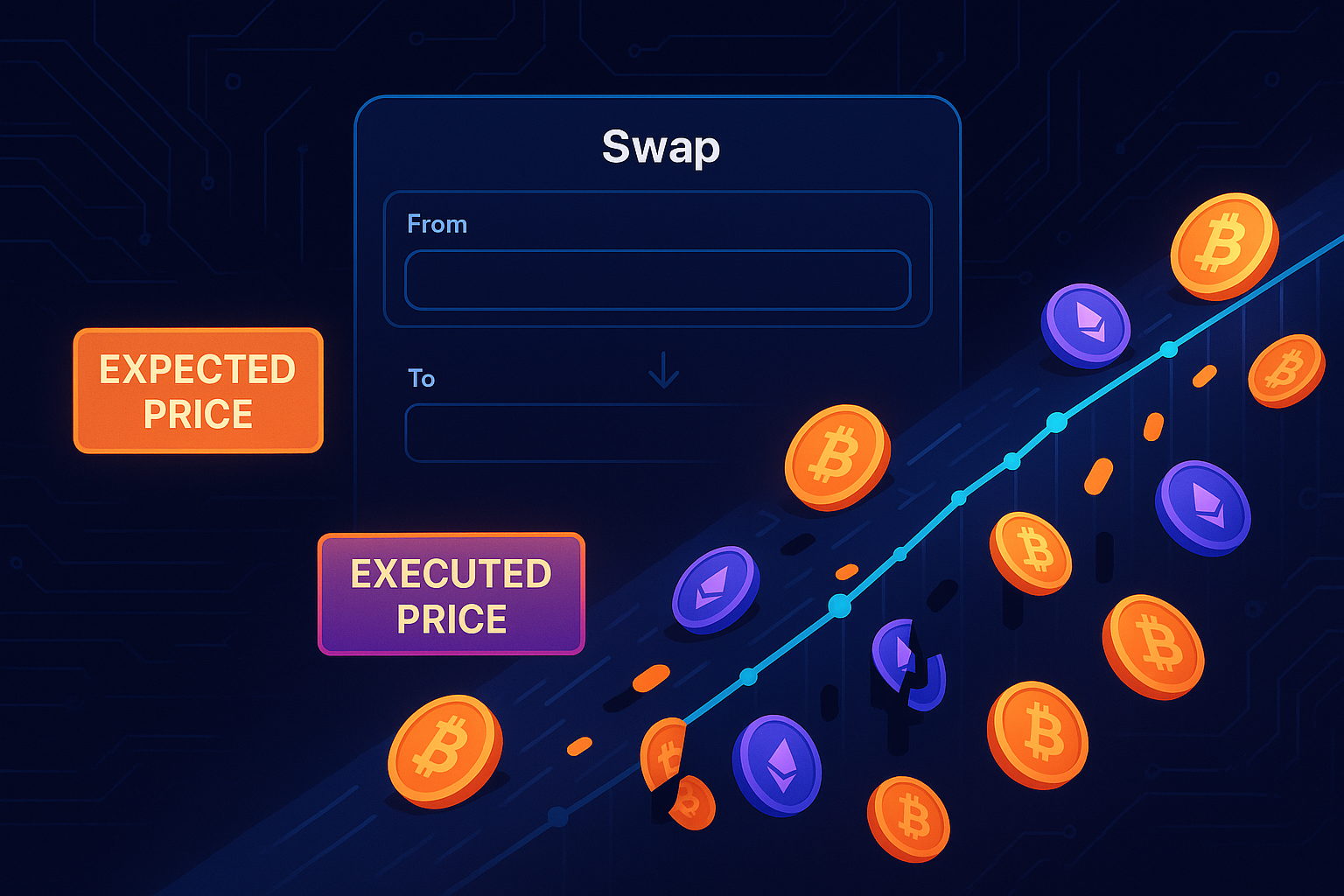
- The exchange rate can move between quote and execution.
- Slippage may occur if liquidity is low or volume is high.
- You can receive less ETH than expected if you do not set a slippage tolerance.
2. Smart Contract and Bridge Risk
If your swap uses smart contracts, aggregators, or bridges, you face:
- Contract bugs that could lead to fund loss.
- Bridge exploits if the underlying cross chain infrastructure is compromised.
- Third party routing risk where some part of the route fails or behaves unexpectedly.
3. Custodial and Regulatory Risk on CEXs
Using centralized exchanges (CEXs) for a SOL to ETH swap introduces:
- Custodial risk if the exchange is hacked or becomes insolvent.
- KYC and privacy loss since you must provide identity documents.
- Withdrawal delays or limits that can trap your funds during market stress.
4. Network Congestion and Fees
If Solana or Ethereum is congested:
- Your swap can take much longer than expected.
- Gas fees on Ethereum in particular can spike significantly.
- You might need to resend or speed up transactions, adding complexity and cost.
How to Do a SOL to ETH Swap: Step by Step
There are two broad paths:
- Use a centralized exchange.
- Use a non custodial, cross chain swap service.
Below is a general non custodial workflow that many users prefer due to control and privacy.
Step 1: Prepare Your Wallets
You will need:
- A Solana wallet holding SOL (for example, Phantom, Solflare).
- An Ethereum compatible wallet for receiving ETH (for example, MetaMask, Rabby, hardware wallet interfaces).
Tips:
- Back up your seed phrases securely and offline.
- Test that you can send a small transaction on each chain before moving larger amounts.
Step 2: Choose a Swap Method
Compare your options:
- Centralized exchanges like Binance or Coinbase
- Pros: deep liquidity, familiar interfaces.
- Cons: KYC, custodial risk, withdrawal times, lower privacy.
- Non custodial aggregators or cross chain swap platforms
- Pros: better privacy, no account needed, route optimization.
- Cons: smart contract and routing risk, you must verify the service is legitimate.
If you prefer to swap crypto instantly without opening an exchange account, look for platforms that support direct SOL to ETH swaps from your wallet.
Step 3: Enter the Swap Details
On your chosen platform:
- Select SOL as the token you are sending.
- Select ETH as the token you want to receive.
- Input the amount of SOL you wish to swap.
- Paste or connect your destination Ethereum address if required.
Verify:
- The quoted exchange rate.
- Estimated network fees and any platform fee.
- Your slippage tolerance and minimum received amount.
Step 4: Confirm and Send SOL
After reviewing:
- Confirm the transaction in your Solana wallet.
- Pay attention to the network fee and check that the recipient address matches what is shown on the platform.
- Wait for your Solana transaction to be finalized.
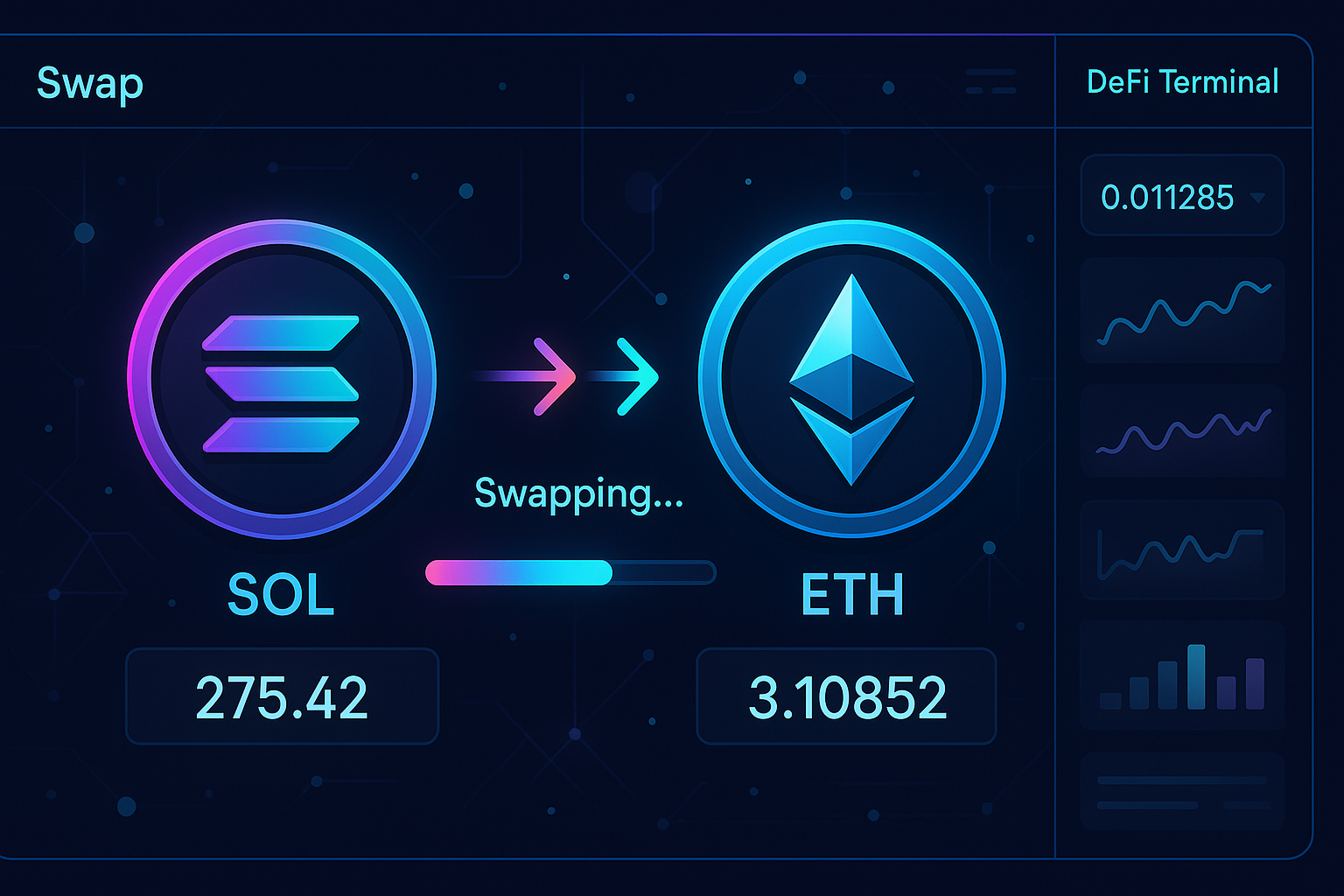
Many services show a progress indicator as the swap moves from Solana to Ethereum.
Step 5: Wait for the ETH to Arrive
Depending on routing and network conditions:
- The ETH may arrive within minutes in normal conditions.
- You can track your transaction on Etherscan using the transaction hash if provided.
- Double check your ETH balance in your wallet once the transaction confirms.
Alternative: Swapping Via a Centralized Exchange
If you go via a CEX, the steps are:
- Deposit SOL to your exchange SOL address.
- Sell SOL for either ETH directly or for a stablecoin and then buy ETH.
- Withdraw ETH to your external Ethereum wallet.
Watch for:
- Deposit and withdrawal fees.
- Minimum withdrawal amounts that might affect smaller swaps.
- Compliance or KYC requirements that might limit your account.
Practical Tips for a Safe and Efficient SOL to ETH Swap
1. Start With a Small Test Transaction
Before swapping a large amount:
- Send a small amount of SOL to test the process.
- Confirm that ETH arrives at the correct wallet address.
- Verify that the platform’s routing and timing meet your expectations.
2. Double Check Addresses and Networks
Many mistakes involve sending to the wrong network or address. Always:
- Copy and paste addresses, then compare the first and last characters.
- Ensure you are entering an Ethereum address for ETH and a Solana address for SOL.
- Avoid typing addresses manually whenever possible.
3. Monitor Market Conditions
Swap outcomes depend heavily on market dynamics:
- Check current SOL / ETH price and volatility.
- Avoid swapping during extreme volatility if you are sensitive to slippage.
- Use limit like protections when available to set a minimum received amount.
4. Evaluate Fee Structure Holistically
Look beyond just the quoted rate:
- Total your network fees on both Solana and Ethereum.
- Consider any platform or service fees.
- Compare the effective rate with alternative methods, including CEX routes.
5. Prefer Reputable, Transparent Platforms
When using a private exchange or cross chain aggregator:
- Check for documentation, audits, and community reviews.
- Look for clear explanations of how routing and pricing work.
- Verify you are on the official website, not a phishing clone.
6. Keep Security a Priority
Basic security practices include:
- Use hardware wallets when holding significant value.
- Never share your seed phrase or private keys with any website or support agent.
- Enable 2FA on any centralized exchange accounts you use.
- Bookmark official URLs rather than following random links.
Conclusion
A SOL to ETH swap is a powerful tool for moving capital between two of the most important smart contract ecosystems. Whether you are diversifying your holdings, seizing a DeFi opportunity, or repositioning your NFT strategy, understanding how to execute this swap safely can save you time, money, and stress.
You can use centralized exchanges for liquidity and familiarity or opt for a more privacy oriented, non custodial approach that lets you retain full control over your keys. By following a clear step by step process, testing with small amounts, verifying addresses, and paying attention to fees and market conditions, you can make your SOL to ETH conversions far more efficient and secure.
If you value fast settlement, minimized KYC exposure, and end to end control of your funds, consider using a trusted sol to eth swap service that focuses on routing efficiency and user privacy. As cross chain infrastructure continues to mature, moving value between Solana and Ethereum is becoming smoother, opening the door to more flexible and sophisticated multi chain strategies.