How to Do a PYTH to SOL Swap Safely and Efficiently
Introduction
If you hold PYTH and want to move into SOL, understanding how to execute a secure, low-fee pyth to sol swap is essential. Whether you are rebalancing your portfolio, preparing to stake SOL, or just taking profit from PYTH, choosing the right method has a big impact on both cost and risk.
In this guide, we will walk through how PYTH to SOL swaps work, what to watch out for, and how to complete a direct, non-custodial swap using a pyth to sol swap interface that preserves your control over your funds.
We will also examine the key tradeoffs between centralized exchanges and on-chain swapping, touch on privacy considerations, and share practical tips that can help you avoid slippage, failed transactions, or unexpected fees.
Why PYTH to SOL Swaps Matter
PYTH is a prominent oracle-related token in the Solana ecosystem, while SOL is the native asset that powers transactions, staking, and many DeFi protocols on the network. Moving from PYTH to SOL is a common action for:
- Traders taking profit from PYTH price spikes
- Investors reallocating into SOL for long-term holding
- Users needing SOL to pay gas for on-chain activity
- DeFi participants seeking SOL liquidity or collateral
Rather than selling PYTH into a stablecoin and then buying SOL on a centralized exchange, a direct pyth to sol swap on Solana can be faster, cheaper, and more secure when done correctly. It also reduces friction if you are already active on-chain.
How PYTH to SOL Swaps Work at a High Level
On Solana, most token swaps use automated market makers (AMMs) or routing aggregators. In basic terms:
- You approve a smart contract to spend a certain amount of your PYTH.
- The swap protocol finds the best route to trade PYTH for SOL across available liquidity pools.
- You receive SOL back to your wallet, minus any fees and slippage.
The process can feel almost instantaneous, especially compared to other chains, but under the hood there is still routing logic, market depth, and pricing that you should understand to get the best results.
Benefits of Using a Direct PYTH to SOL Swap
1. Non-custodial control
The biggest advantage of swapping PYTH to SOL through a dedicated non-custodial swap interface is that you never hand over your private keys or deposit coins to a centralized wallet. You always retain control of your funds until the transaction is finalized on-chain.
2. Lower friction and faster settlement
Compared to centralized exchanges, a direct on-chain pyth to sol swap can:
- Complete within seconds, thanks to Solana’s high throughput
- Avoid withdrawal queues and delays
- Skip identity verification steps that can slow you down
This is especially valuable for traders reacting to fast market moves and for users who simply want a quick token conversion without the overhead of managing exchange accounts.
3. Better privacy
Centralized platforms often require extensive KYC and link your activity to your real identity. By contrast, an on-chain private exchange keeps your swap activity associated only with your wallet addresses and the public blockchain data, without tying it directly to your personal details.
4. Reduced counterparty risk
With a non-custodial swap, your exposure to centralized entities is minimized. While you still rely on smart contracts and liquidity providers, you do not depend on a single exchange’s solvency or withdrawal policies. This reduces the chance that your funds get locked in a failing platform.
Risks and Drawbacks to Consider
1. Smart contract risk
Any on-chain PYTH to SOL swap depends on smart contracts. Bugs or vulnerabilities can lead to loss of funds. To mitigate this:
- Use reputable protocols with a track record of uptime and usage
- Favor audited contracts and transparent documentation
- Start with smaller test swaps before moving large amounts
2. Slippage and price impact
If liquidity for the PYTH/SOL pair is thin or your order is large, your effective price can move during the swap. This is called slippage. Excessive slippage means you receive less SOL than expected.
Carefully checking your slippage tolerance and expected output before confirming is crucial if you want to execute an efficient pyth to sol swap.
3. Network congestion or outages
Although Solana is built for high throughput, periods of congestion or partial outages can occur. In such windows:
- Transactions might fail or be delayed
- Price movements can be volatile while your swap is pending
Always verify the network conditions and avoid mission-critical swaps during unstable periods.
4. User errors and wallet safety
Common user mistakes include:
- Sending tokens to the wrong address
- Accidentally approving excessive token allowances
- Interacting with phishing sites that imitate real exchanges
Double-check URLs, bookmark trusted platforms, and confirm all details in your wallet before signing any transaction.
Step-by-Step Guide: How to Swap PYTH to SOL
Below is a general workflow for executing a secure PYTH to SOL swap using a non-custodial Solana wallet and a dedicated swap interface. The exact screens may vary slightly depending on your wallet and device.
Step 1: Set up or access your Solana wallet
You will need a Solana-compatible wallet that supports both PYTH and SOL. Popular examples include Phantom, Solflare, Backpack, and other non-custodial wallets. Make sure:
- Your wallet is installed as a browser extension or mobile app
- You have securely backed up your seed phrase offline
- You have a small amount of SOL to cover transaction fees
Step 2: Confirm your PYTH and SOL balances
Open your wallet and verify:
- Your current PYTH token balance (this is what you will swap)
- Your SOL balance (for both fees and as the asset you will receive)
If PYTH is not visible, add it using the token’s correct mint address from a trusted source and ensure you are not interacting with a fake or spoofed token.
Step 3: Navigate to a trusted PYTH to SOL swap interface
Visit a reputable on-chain swap interface that supports a direct PYTH/SOL route. For example, you can use a platform designed to swap crypto instantly between PYTH and SOL in a non-custodial way.
Always type the URL directly or use a bookmark to avoid phishing sites. Check for SSL (https) and verify that the domain name is correct character by character.
Step 4: Connect your wallet
Once on the swap page:
- Click the “Connect Wallet” or equivalent button.
- Select your wallet provider (for example, Phantom).
- Approve the connection request in your wallet.
Connecting your wallet allows the interface to read your balances and prepare transactions, but it does not hand over control of your assets.
Step 5: Select PYTH as the token to swap and SOL as the output
On the swap form:
- Set “From” or “You Pay” to PYTH
- Set “To” or “You Receive” to SOL
- Enter the amount of PYTH you want to swap, or use a percentage of your balance
The interface should automatically calculate an estimated amount of SOL based on current market rates and liquidity.
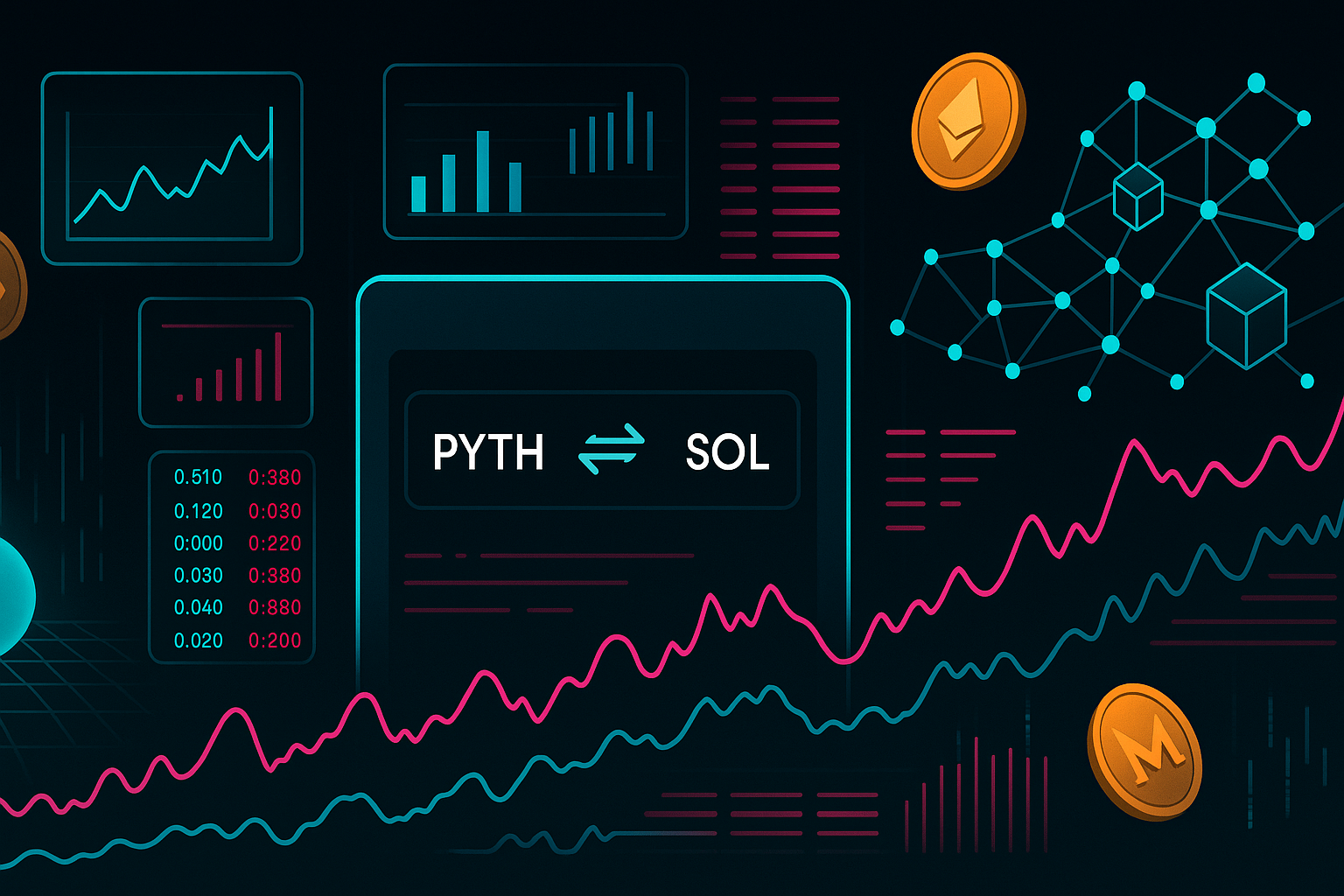
Step 6: Review price, fees, and slippage
Before confirming, carefully check:
- Exchange rate: How many SOL you receive per PYTH
- Estimated output: Total SOL you are expected to receive
- Network fee: The Solana gas cost, usually very low
- Slippage tolerance: Maximum acceptable price movement during the swap
Set a reasonable slippage tolerance. Too low and your transaction might fail, too high and you risk getting a worse price than intended.
Step 7: Approve token spending (first time only)
For your first PYTH to SOL swap on a particular protocol, you may need to approve the contract to spend your PYTH:
- Click “Approve” or “Enable” PYTH.
- Confirm the transaction in your wallet.
- Wait for the approval transaction to finalize.
Later swaps typically skip this step unless you change allowances or use a new protocol.
Step 8: Confirm and execute the swap
After approval:
- Click “Swap” or “Confirm Swap.”
- Review the transaction details once more in your wallet.
- Confirm the transaction and wait a few seconds.
The interface will display a success notification when the transaction is finalized on-chain. You can view the transaction on a Solana block explorer if you want to verify all details.
Step 9: Verify your new SOL balance
Return to your wallet and confirm:
- Your PYTH balance decreased by the expected amount
- Your SOL balance increased by the expected amount (minus fees)
If the new balances are not visible, try refreshing your wallet interface or reconnecting. On-chain settlements should be reflected quickly.
Practical Tips for a Better PYTH to SOL Swap Experience
1. Always test with a small amount first
When using any new protocol, interface, or wallet, send a small test amount of PYTH through the swap. This reduces the risk of losing a significant portion of your funds to a misconfiguration or error.
2. Monitor market conditions
If PYTH is experiencing high volatility or if overall market conditions are unstable, spreads and slippage may widen. Consider:
- Waiting for calmer conditions
- Using limit orders if available
- Splitting one large swap into several smaller ones
3. Keep enough SOL for fees
Since Solana fees are paid in SOL, ensure you maintain a small SOL buffer. If you attempt a PYTH to SOL swap with zero SOL, you may be unable to broadcast the transaction. Top up your SOL balance beforehand if needed.
4. Watch out for fake tokens and phishing links
Attackers sometimes create malicious token copies and spoofed websites. To stay safe:
- Verify token mint addresses via trusted sources
- Bookmark official swap URLs instead of relying on search results
- Never enter your seed phrase into any website
5. Consider privacy and tracking
Even if you use a non-custodial swap, blockchain activity is public. If you are concerned about address clustering or transaction analysis, consider using different wallets for different purposes and avoid reusing addresses unnecessarily.
6. Document your trades for taxes and accounting
In many jurisdictions, swapping one crypto asset for another can be a taxable event. Keep:
- Transaction hashes and timestamps
- USD (or local currency) value at the time of the swap
- Any fees paid in SOL
Using portfolio and tax tracking tools can simplify reporting and prevent headaches later.
Conclusion
A PYTH to SOL swap is a straightforward but important operation for anyone active in the Solana ecosystem. By choosing a reliable non-custodial swap platform, double-checking slippage and fees, and following basic security practices, you can convert PYTH to SOL quickly while maintaining control of your assets.
Approach each swap with the same discipline you would bring to any other financial decision. Verify URLs, start small, and make sure you understand the tradeoffs between convenience, privacy, and risk. With the right process and tools, your PYTH to SOL swaps can become a seamless part of your broader crypto strategy.
Ready to Swap?
Convert your crypto instantly on GhostSwap — no KYC, no sign-up required.
Popular swaps: BTC to XMR | BTC to ETH | XMR to BTC | ETH to XMR | BTC to SOL