Monero Mixers vs Non KYC Swaps: What’s the Better Privacy Tool in 2025?
Introduction
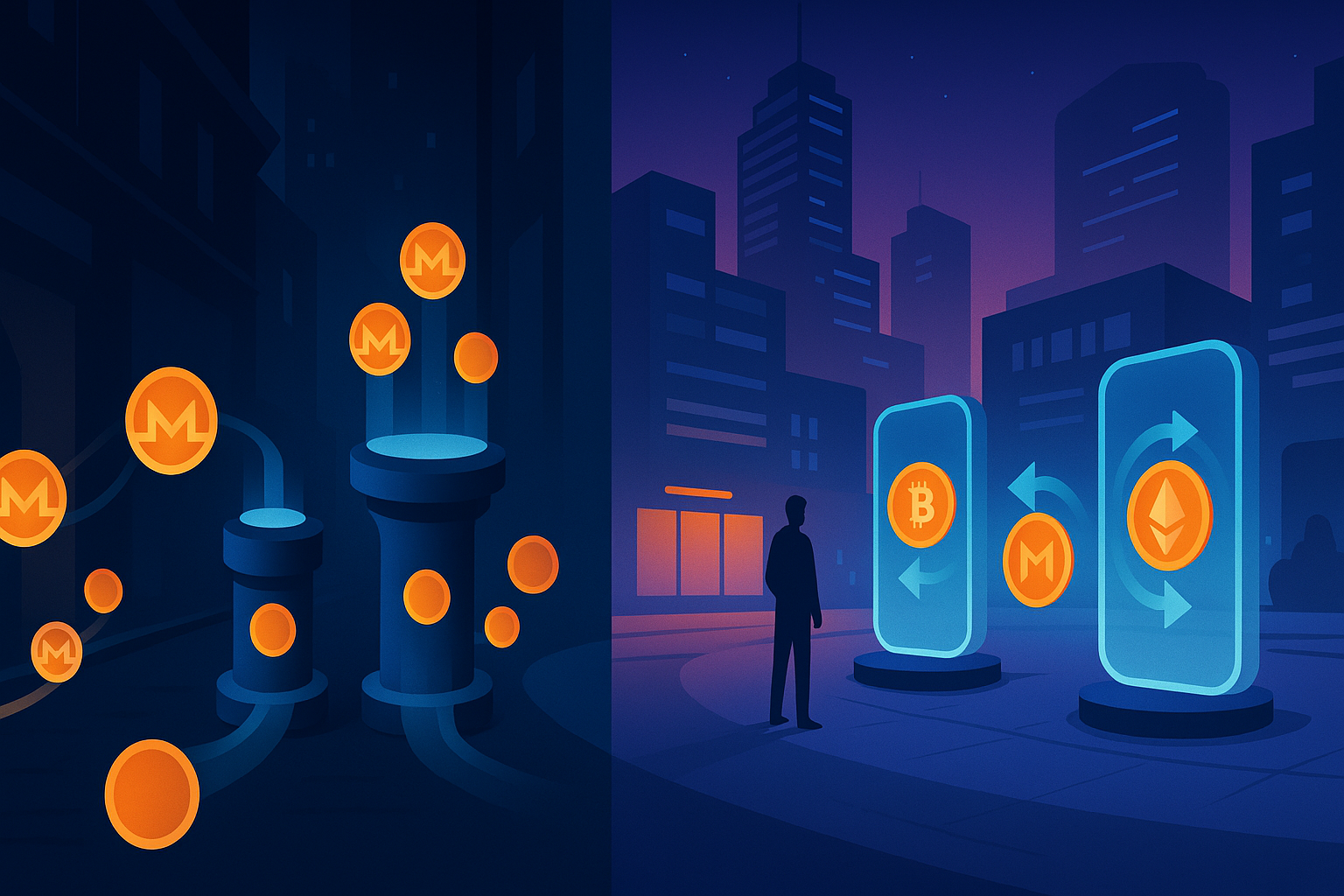
Monero has become the go-to cryptocurrency for users who care deeply about financial privacy. But even with Monero’s built-in privacy features, many people still ask how to best acquire, move, or exit XMR without exposing their identities. That is where the debate of Monero mixers vs non KYC swaps becomes crucial.
Both approaches aim to break the link between your real-world identity and your crypto transactions, but they work in very different ways, come with different risks, and are treated differently by regulators and exchanges. If you are trying to decide which path fits your threat model and risk tolerance, you need a clear, practical comparison instead of hype.
For a detailed breakdown of how these tools compare in 2025, you can also review this in-depth guide on monero mixers vs non kyc swaps, then come back here for a more narrative walkthrough and actionable tips.
Why Monero Privacy Tools Matter
The growing visibility of on-chain data
Most blockchains are permanently transparent. Bitcoin, Ethereum, and similar networks let anyone inspect every transaction ever made. Chain analysis companies use that data, combined with KYC info from exchanges, to build rich profiles of user activity.
That is a serious problem if you:
- Value basic financial privacy and do not want the world to see your spending habits
- Live in a country with capital controls, sanctions, or aggressive financial surveillance
- Operate a business or donation campaign that needs to protect counterparties
- Want to avoid becoming a target because of your wealth or transaction history
Privacy is not just about hiding wrongdoing. It is about controlling who knows what about your finances.
Why Monero by itself may not be enough
Monero uses ring signatures, stealth addresses, and confidential transactions to hide sender, receiver, and amounts on-chain. That is a massive improvement over transparent chains.
However, there are still important privacy gaps:
- On and off ramps: Buying or selling XMR on a KYC exchange ties your coins to your identity.
- Network metadata: Your IP and network behavior can be logged by nodes or service providers.
- Behavioral patterns: Repeated, predictable activity can still leak information, even on a private chain.
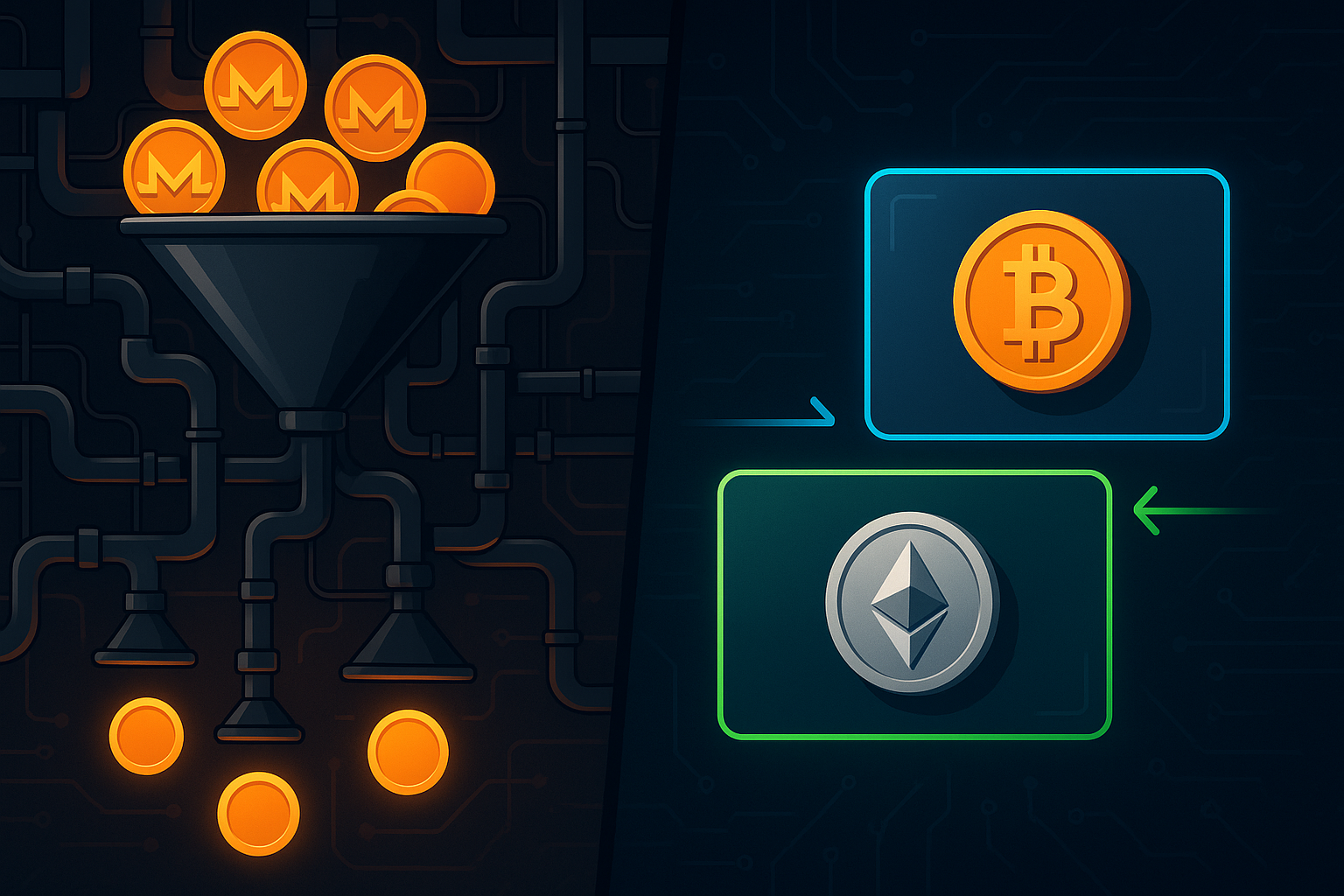
That is where the conversation about Monero mixers vs non KYC swaps really starts. These tools are not about fixing Monero’s cryptography. They are about how you get into and out of Monero, and how you connect it to other assets, without leaving an obvious identity trail.
Monero Mixers vs Non KYC Swaps: Core Concepts
What is a Monero mixer?
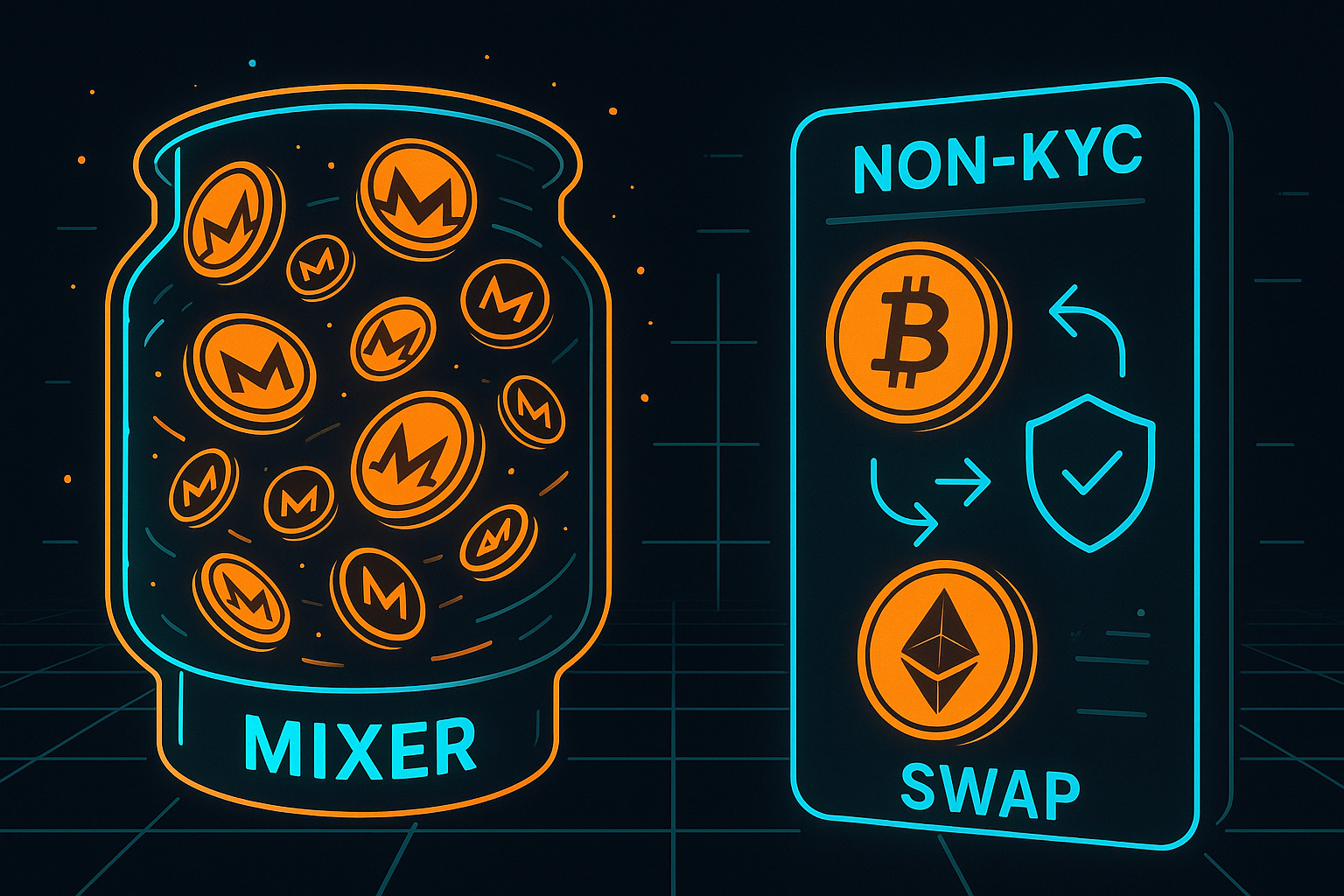
A “Monero mixer” is any service or protocol that takes in XMR and sends you out different XMR, with the goal of breaking the on-chain link between your old coins and your new coins.
Common mixer characteristics:
- Centralized custody: You usually send XMR to a controlled address, and the service returns different XMR later.
- Delays and batching: To obscure flows, mixers may delay payouts and batch many users’ withdrawals together.
- Fee-based service: Mixers typically charge a fee, sometimes variable to further obscure patterns.
- Single-asset focus: Many mixers work only within one currency (for example XMR in, XMR out).
Because Monero is already privacy focused, the incremental value of mixing XMR is debated. For some users it acts as an additional “wash” between different identities or operational contexts.
What is a non KYC swap?
A non KYC swap is a way to exchange one cryptocurrency for another without providing identity documents, selfies, or personal data. In the context of Monero, you might:
- Swap BTC to XMR
- Swap XMR to BTC, ETH, stablecoins, or other assets
- Route between multiple coins with XMR in the middle as a privacy layer
Key traits of non KYC swaps:
- No identity verification: You interact using wallet addresses only.
- Non-custodial or minimal custody: Many services use atomic swaps or secure escrow flows that reduce custody risk.
- Short-lived interaction: You create a swap order, send coins, and receive the other asset, typically within minutes.
- Cross-asset privacy: Swaps can turn traceable coins into private XMR, then later back into fresh UTXOs on another chain.
If you want a deeper theoretical comparison of Monero mixers vs non KYC swaps, especially in a cross-chain context, the analysis at this private exchange and privacy comparison resource is worth bookmarking.
Why the Difference Matters
Regulatory and legal perception
Mixers have been a clear target of regulators in recent years. High-profile mixer operators on transparent chains have faced:
- Service seizures
- Sanctions listings
- Criminal charges for money laundering facilitation
Although Monero’s on-chain privacy changes the technical picture, “mixer” as a term is increasingly associated with regulatory risk. Using or operating a mixer might attract unwanted attention, especially if you live in a tightly regulated jurisdiction.
Non KYC swaps, by contrast, often present themselves as non-custodial swap platforms, cross-chain liquidity tools, or simple DEX-style services. They still carry regulatory exposure, but they are usually framed as infrastructure rather than obfuscation services, which can influence how they are treated by partners and regulators.
Threat models
Choosing between Monero mixers vs non KYC swaps is very much about your threat model:
- Are you mainly trying to break the link from a KYC exchange to your Monero stack?
Then non KYC swaps, especially BTC → XMR or stablecoin → XMR, may be more effective. - Are you compartmentalizing identities within Monero itself?
For example separating “public donor” funds from “personal holdings.” In that case a mixer or carefully planned internal moves might help. - Are you exiting Monero into transparent assets without linking them back to a previous identity?
Here, XMR → BTC or XMR → stablecoins via non KYC swap is powerful, ideally into fresh, non-KYC wallets.
Different tools solve different parts of the privacy puzzle. There is no one-size-fits-all choice.
Benefits of Monero Mixers
Additional obfuscation within Monero
Monero already hides amounts and uses ring signatures, but:
- A mixer may help separate funds tied to different activities or personas.
- If your operational security was weak in the past, a mixer can serve as a “reset” between old and new practices.
- Delays and randomized outputs can make network or timing analysis harder for a passive observer.
Simple mental model
From a user’s perspective, a mixer can be conceptually simple:
- You send XMR to an address provided by the service.
- You wait for a period.
- You receive different XMR at one or more fresh addresses.
This model can feel more intuitive than dealing with multi-chain swaps and liquidity routes, especially for users who only care about XMR-to-XMR obfuscation.
Benefits of Non KYC Swaps
Breaking the link from KYC coins
Perhaps the biggest advantage of non KYC swaps is their ability to cut ties between your KYC identity and your on-chain activity:
- You withdraw BTC or another asset from a KYC exchange to your own wallet.
- You then swap crypto instantly from that wallet into XMR using a no-KYC service.
- The service only sees wallet addresses and network traffic, not your passport or bank details.
Any later transaction you do with that XMR is no longer trivially tied to the original exchange account.
Exit liquidity with improved privacy
Non KYC swaps also work in reverse:
- Swap XMR → BTC or XMR → stablecoins without KYC.
- Withdraw those assets to self-custody or spend via non-KYC services.
- Reduce direct exposure to fully surveillance-based platforms.
This makes non KYC swaps powerful for both entry and exit around the Monero ecosystem.
Reduced custodial risk vs traditional mixers
Many modern non KYC swap services emphasize:
- Non-custodial flows: You keep control of your wallet keys the entire time.
- Atomic or trust-minimized swaps: Either the swap completes correctly or funds are returned.
- Short timeframes: Funds are usually in motion for minutes rather than hours or days.
In contrast, centralized mixers typically take full custody of your coins during the mixing period, which raises counterparty and exit-scam risks.
Risks and Drawbacks
Risks of using Monero mixers
- Custodial risk: If the mixer is centralized, you must trust the operator not to steal or freeze your funds.
- Regulatory exposure: Mixers may be on law-enforcement radar, especially if many users are from regulated jurisdictions.
- Service reliability: Mixers can suddenly shut down, get seized, or disappear with customer funds.
- Red flags on outputs: Some future services or exchanges might treat coins believed to be from mixers as high risk.
Risks of using non KYC swaps
- Imposter or phishing sites: Fake swap websites can steal deposits. Verifying URLs and using bookmarks is critical.
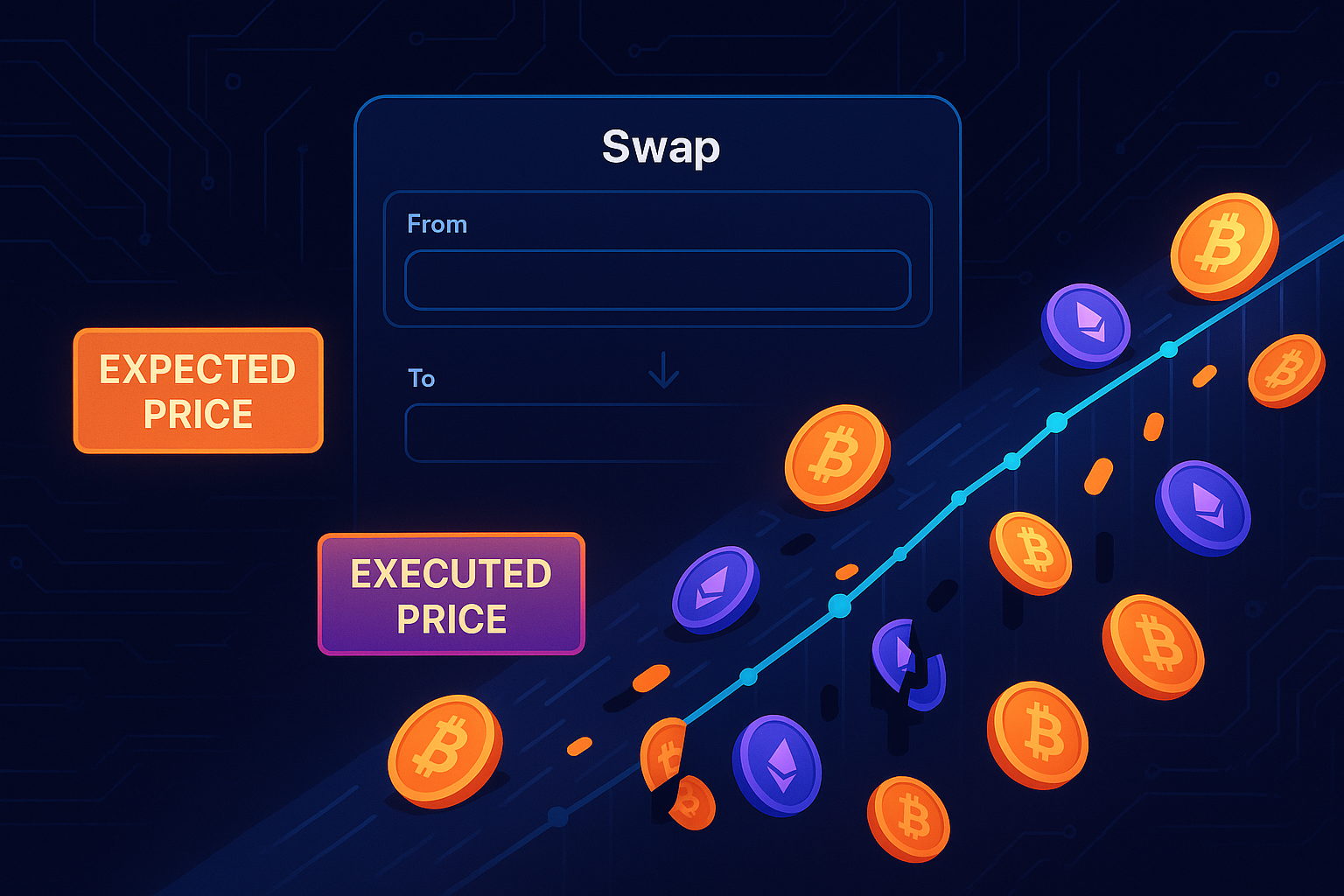
- Slippage and rate risk: If the market moves quickly, your final output amount can differ from what you expected.
- Liquidity constraints: Very large swaps may be illiquid or require splitting across multiple transactions.
- Metadata leaks: Even without KYC, IP addresses, timing patterns, and browser fingerprints can still be logged.
Shared privacy pitfalls
Regardless of whether you are using Monero mixers or non KYC swaps, common mistakes can undermine your privacy:
- Reusing addresses across different identities or purposes
- Connecting from a personal IP without VPN or Tor
- Sending swapped or mixed funds straight back to a KYC account
- Boasting about your setups online or revealing patterns inadvertently
Technical tools cannot fix poor operational security.
Step-by-Step Guide: Using Non KYC Swaps Around Monero
Below is a general, educational outline of how privacy-minded users often think about using non KYC swaps with Monero. This is not legal or financial advice, and specific tools and laws vary by jurisdiction.
1. Plan your flow and threat model
Before touching any tool, ask:
- What am I trying to achieve? (Acquire XMR, exit XMR, anonymize holdings, etc.)
- What do I need to protect against? (Exchange surveillance, chain analytics, state actors, thieves, etc.)
- What size of funds am I moving, and how often?
Your answers will shape which services and networks you should use.
2. Acquire a clean wallet setup
- Use a reputable Monero wallet (desktop, mobile, or hardware) that you control.
- Generate and record your seed phrase securely and offline.
- Create separate wallets for distinct personas or purposes if needed.
3. Move funds from KYC into your control (if applicable)
If you are starting from a KYC exchange:
- Withdraw BTC, stablecoins, or another liquid asset to a self-custodial wallet.
- Avoid withdrawing directly to a swap deposit address. Use your own wallet as an intermediate step.
- Wait for confirmations before initiating a swap.
4. Choose and verify a non KYC swap service
- Use community-reviewed platforms with a good track record.
- Type in the URL yourself or use a bookmark. Beware of search-engine ads and lookalike domains.
- Check for clear documentation, terms, and supported pairs.
Some non KYC platforms focus on speed and simplicity, letting you swap crypto instantly via a non-custodial interface while still protecting privacy.
5. Configure the swap
On the swap interface:
- Select your input asset (e.g., BTC) and output asset (XMR).
- Enter the XMR address of your private Monero wallet.
- Review the estimated rate, fees, and minimum/maximum limits.
- Confirm and generate the deposit address or QR code.
6. Send funds and monitor progress
- From your self-custodial wallet, send the exact amount to the provided deposit address.
- Wait for the required number of confirmations on the source chain.
- Monitor status on the swap page or via a transaction ID.
- Confirm receipt of XMR in your Monero wallet once the swap completes.
7. Optional: further compartmentalize within Monero
After receiving XMR:
- Consider moving funds to new Monero subaddresses or wallets for different purposes.
- If you use additional tools like mixers, carefully separate timelines and identities.
- Record your flows (privately) so you can audit your own privacy practices later.
Practical Tips for Better Privacy and Security
Use network-layer protections
- Connect through Tor or a reputable VPN when using privacy services.
- Avoid logging into personal accounts on the same browser session.
- Consider using separate devices or browser profiles for privacy-critical tasks.
Break large transfers into smaller parts
- Very large single swaps or mixing operations can stand out.
- Splitting movements over time and across amounts can reduce pattern visibility.
- Balance this against extra on-chain fees and operational complexity.
Avoid direct loops back to KYC
- Sending swapped or mixed coins straight back to your verified exchange account can reconnect the dots.
- If you must use KYC platforms, treat them as endpoints, not as part of your regular circulation.
Stay updated on policies and law
- Privacy tools live in a changing regulatory landscape.
- Some mixers or services may become sanctioned or restricted over time.
- Regularly review how your preferred tools are being perceived or treated in your jurisdiction.
Monero Mixers vs Non KYC Swaps: Which Should You Use?
When Monero mixers might make sense
You might lean toward a Monero mixer if:
- Your funds are already inside Monero and you want additional separation between identities.
- You have a strong reason to add time-delayed, batched obfuscation on top of Monero’s base privacy.
- You fully understand and accept the custodial and regulatory risks.
When non KYC swaps may be the better tool
Non KYC swaps are often more practical if:
- You are entering Monero from BTC, ETH, or stablecoins and want to break the KYC link.
- You are exiting Monero into other assets while preserving as much privacy as possible.
- You prefer non-custodial or trust-minimized architectures.
- You want a more flexible, cross-chain approach rather than just XMR-to-XMR obfuscation.
Combining strategies carefully
Some advanced users mix and match tools:
- First swap KYC assets into XMR via a non KYC platform.
- Then distribute XMR into multiple wallets or selective mixers.
- Finally, exit part of their holdings back into other chains through separate swaps when needed.
This can strengthen privacy, but it also increases operational complexity and room for mistakes.
Conclusion
In the debate of Monero mixers vs non KYC swaps, the “best” solution depends less on ideology and more on your concrete goals, legal environment, and personal risk tolerance. Mixers primarily try to add another layer of obfuscation on top of Monero itself, often at the cost of trusting a custodian and attracting potential regulatory scrutiny.
Non KYC swaps, on the other hand, specialize in breaking links between different chains and identities, letting you enter and exit Monero without handing over your personal information. When used with good operational security, they can provide a more flexible, scalable privacy strategy that fits real-world use cases like moving between BTC, stablecoins, and XMR.
If you want to dive deeper into specific scenarios, trade-offs, and 2025 trends around these tools, the comparative guide at this Monero mixer and non-KYC swap resource is a solid next step. From there, you can design a privacy approach that matches your own threat model, instead of relying on one-size-fits-all answers.