Matic to ETH Swap: Complete Guide to Exchanging Polygon for Ethereum
Introduction
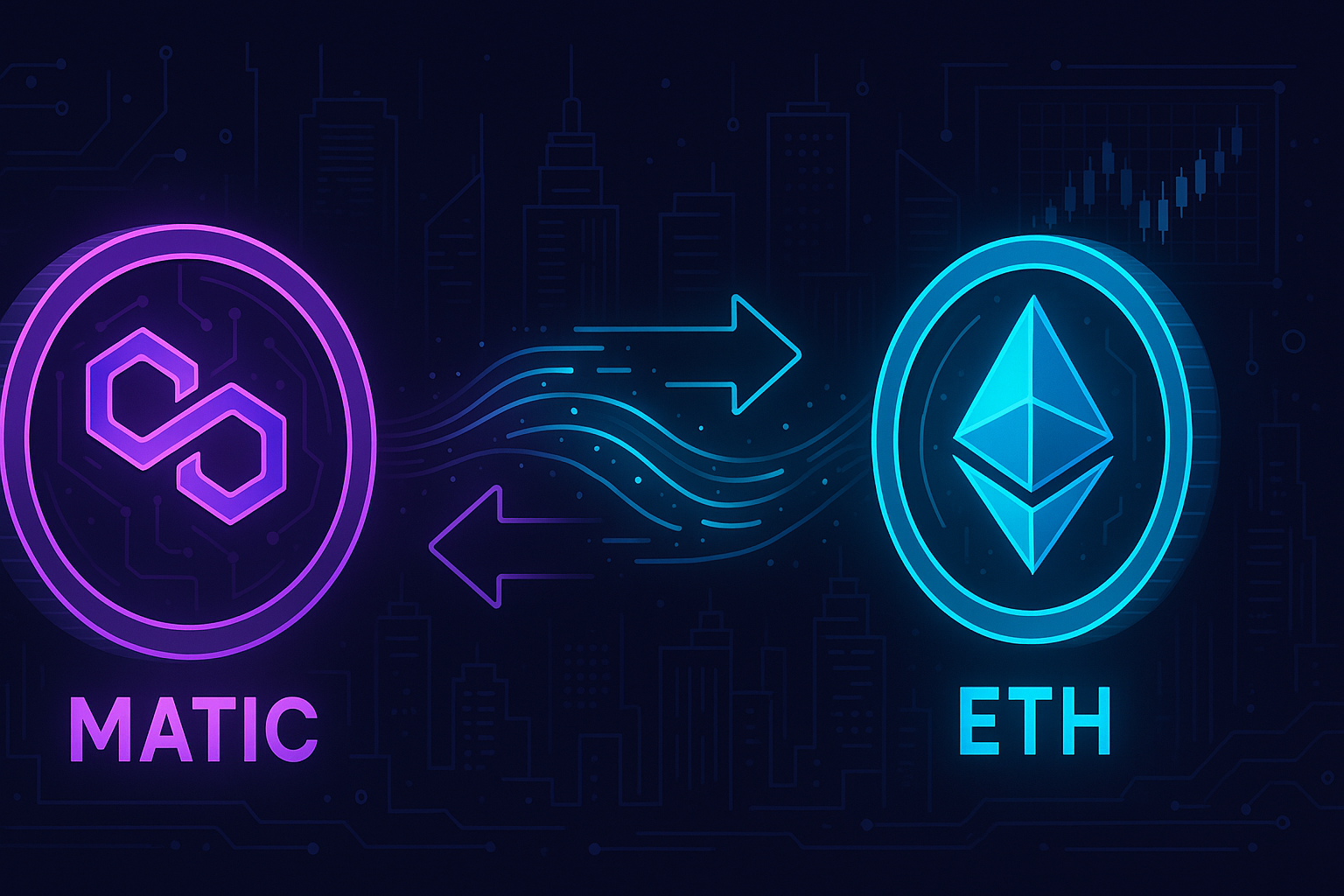
If you hold Polygon (MATIC) and want to move value back into Ethereum (ETH), understanding how a matic to eth swap works is essential. Whether you are rebalancing your portfolio, exiting a Layer 2 strategy, or preparing for a specific DeFi opportunity, the path from MATIC to ETH can be simple and low cost when approached correctly.
In this guide, we will walk through why you might want to convert MATIC to ETH, the benefits and risks, and a practical step-by-step process. We will also compare centralized exchanges with non-custodial options like private matic to eth swap platforms that prioritize security and privacy.
By the end, you should feel confident choosing the most suitable method to swap MATIC for ETH while minimizing fees, delays, and common mistakes that cost traders real money.
Why MATIC to ETH Swaps Matter
MATIC powers the Polygon network, a popular Layer 2 scaling solution for Ethereum that offers low fees and fast transactions. ETH, on the other hand, is the native asset on the Ethereum mainnet and a base asset for thousands of DeFi protocols, NFTs, and smart contracts.
Because Polygon and Ethereum serve different roles, many investors and DeFi users regularly move value between them. A reliable matic to eth swap matters for several reasons:
- Access to Ethereum-only opportunities: Some DeFi protocols, NFT mints, and on-chain investments are available only on Ethereum mainnet and require ETH.
- Portfolio rebalancing: If MATIC grows significantly relative to ETH (or vice versa), you may want to adjust your exposure.
- Risk management: Holding a larger portion of your crypto in ETH can be seen as less risky than concentrating in a single ecosystem token like MATIC.
- On/off-ramp flexibility: Many fiat on-ramps and off-ramps are optimized for ETH, which makes converting MATIC to ETH a useful intermediate step to cash out or diversify.
Key Benefits of Swapping MATIC to ETH
Before diving into the mechanics, it helps to be clear on the advantages you get from converting MATIC to ETH.
1. Higher Liquidity and Market Depth
ETH is one of the deepest and most liquid assets in crypto. Converting MATIC to ETH often results in:
- Tighter spreads on exchanges
- Less slippage on large orders
- Easier exit into fiat via major exchanges and payment providers
2. Broader DeFi and NFT Access
While Polygon has a vibrant ecosystem, Ethereum mainnet still hosts many of the highest-value applications:
- Flagship DeFi protocols (e.g., major DEXs, lending platforms, derivatives)
- Blue-chip NFT collections and marketplaces
- Advanced yield and staking strategies that require native ETH
If you want to participate in these opportunities, converting MATIC to ETH is often the first step.
3. Stronger Long-Term Asset Profile
ETH is widely viewed as a core Layer 1 asset with:
- A large developer community
- Significant institutional interest
- An evolving economic model with fee burns and staking yields
Many long-term investors prefer to accumulate ETH as a base position, using MATIC and other tokens for more tactical strategies.
4. Flexibility Across Chains and Bridges
ETH acts like a “universal key” in multi-chain strategies. Once your MATIC is converted to ETH, you can:
- Bridge ETH to other networks that support wrapped ETH
- Use it as collateral in cross-chain lending markets
- Access on-chain derivatives and structured products
Risks and Drawbacks of MATIC to ETH Swaps
Despite the benefits, any matic to eth swap carries risks you should understand beforehand.
1. Price Volatility
MATIC and ETH both experience significant price swings. Between the time you decide to swap and when the transaction settles, the exchange rate may move against you. This is especially relevant if:
- You execute a large swap relative to market liquidity
- The overall market is volatile around major news events
2. Slippage and Poor Execution
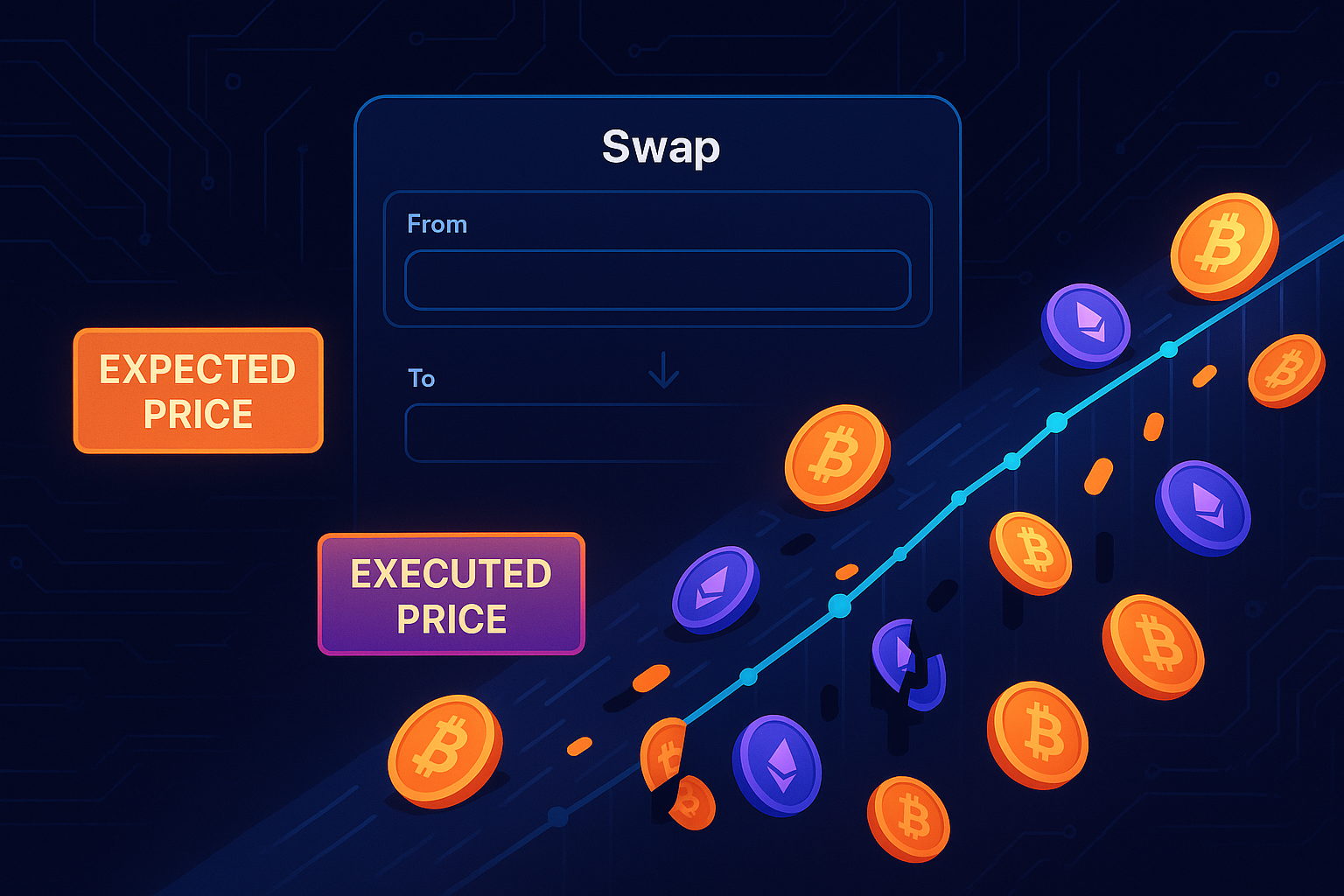
If you use a DEX or low-liquidity venue, your final execution price might be worse than the quote:
- High slippage in illiquid pools
- Front-running or sandwich attacks on poorly protected transactions
- Hidden fees on some swap aggregators
3. Network Fees and Bridge Costs
Moving between Polygon and Ethereum can involve multiple transactions:
- Swapping MATIC for a bridged version of ETH on Polygon
- Bridging assets to Ethereum mainnet
- Possibly swapping again on Ethereum
Each step can incur gas fees, bridge fees, and DEX fees. When ETH gas is high, a small mistake can become expensive.
4. Custodial and Counterparty Risk
If you use centralized exchanges, you temporarily hand over control of your assets. Risks include:
- Exchange insolvency or withdrawal freezes
- Account lockouts and KYC/AML reviews
- Data leaks affecting your privacy
Non-custodial services and private exchange tools for matic to eth can reduce these risks, although you still need to verify that any service you use is reputable and secure.
5. Operational Errors
Common user mistakes include:
- Sending tokens to the wrong network or address
- Using unsupported deposit addresses on exchanges
- Misunderstanding which form of ETH (wrapped vs native) you are receiving
These errors can be irreversible, so it is essential to follow a precise process.
How to Swap MATIC to ETH: Methods Overview
There are three main pathways for a matic to eth swap:
- Centralized exchange (CEX) like Binance, Coinbase, or Kraken
- Decentralized exchanges (DEX) and bridges using your own wallet
- Non-custodial swap services that handle routing for you
Your choice depends on your priorities: privacy, control, convenience, or fees.
Step-by-Step Guide: MATIC to ETH Swap Using Different Approaches
Method 1: Using a Centralized Exchange
This method suits users comfortable with KYC and centralized custodians.
- Choose a reputable exchange
Select a major CEX that supports both MATIC deposits and ETH withdrawals. - Create and verify your account
Complete registration and any required identity verification. - Deposit MATIC
- Go to the deposit page and select MATIC.
- Choose the correct network (e.g., Polygon or Ethereum) as instructed by the exchange.
- Send MATIC from your wallet to the provided deposit address.
- Swap MATIC for ETH
Once the deposit arrives:- Navigate to the trading pair (e.g., MATIC/ETH or MATIC/USDT then USDT/ETH).
- Place a market or limit order to convert MATIC to ETH.
- Withdraw ETH to your own wallet
- Go to the withdrawal page and choose ETH.
- Enter your Ethereum address and double-check it.
- Confirm the withdrawal and wait for on-chain confirmation.
Pros: High liquidity, familiar interface, fiat ramps.
Cons: Custodial risk, KYC, less privacy, withdrawal limits.
Method 2: Using DEXs and Bridges (Self-Custody)
This method keeps you in control of your keys and is ideal if you value decentralization.
- Prepare your wallet
Use a wallet that supports both Ethereum and Polygon (e.g., MetaMask). Ensure you:- Have MATIC on Polygon for gas
- Have enough balance to cover bridge and swap fees
- Swap MATIC to bridged ETH on Polygon (if necessary)
On a Polygon DEX:- Connect your wallet and select MATIC as the “from” token.
- Select a Polygon-based ETH or wrapped ETH token as the “to” token.
- Review the rate, slippage, and fees, then execute the swap.
- Bridge ETH to Ethereum mainnet
Use a reputable cross-chain bridge:- Connect your wallet and choose Polygon as the source chain, Ethereum as the destination.
- Select the ETH token to bridge.
- Confirm the transaction and wait for it to finalize on both chains.
- Use ETH on Ethereum
Once bridged, your ETH is available on Ethereum mainnet for DeFi, NFTs, or any other use case.
Pros: Self-custody, no centralized account, global access.
Cons: More steps, potential for user error, variable bridge fees and times.

Method 3: Using a Non-Custodial Swap Service
Non-custodial swap services simplify the route from MATIC to ETH without forcing you to leave your wallet exposed to centralized custody. A service like GhostSwap for instant, non-custodial swaps can:
- Automatically find a route for your MATIC to ETH conversion
- Handle protocol-level complexity in the background
- Improve privacy by avoiding centralized accounts
Typical steps:
- Choose the trading pair
Select MATIC as the asset you are sending and ETH as the asset you want to receive. - Enter the amount and destination address
- Specify how much MATIC you want to convert.
- Provide your Ethereum address where the ETH should be delivered.
- Review the quote
Check:- Estimated ETH you will receive
- Fees or spreads included in the quote
- Time estimate for completion
- Send MATIC to the provided address
From your wallet:- Send the exact amount of MATIC specified.
- Wait for network confirmations and for the service to process the swap.
- Receive ETH at your address
Once the service completes the route, ETH will appear at your specified Ethereum address.
Pros: No exchange accounts, no direct custody, relatively simple.
Cons: You must trust the service’s routing logic and execution quality, and always verify that you are on the authentic website.
Practical Tips for a Safe and Efficient MATIC to ETH Swap
1. Verify Networks and Token Standards
Double-check the network before sending funds:
- MATIC can exist on Polygon, Ethereum, and other chains. Make sure your wallet and destination support the same network.
- ETH can appear as wrapped ETH (WETH) or bridged tokens on various chains. Confirm which version you will receive.
2. Start with a Small Test Transaction
When using a new service or bridge:
- Send a small amount of MATIC first.
- Confirm it arrives correctly as ETH at the destination.
- Only then proceed with your full position.
3. Watch Gas Fees and Market Conditions
Timing matters for a matic to eth swap:
- Monitor Ethereum gas prices and avoid peak congestion if possible.
- Avoid executing large swaps during major market events where volatility spikes.
- Use limit orders on CEXs or tight slippage settings on DEXs when feasible.
4. Use Reputable Bridges and Services
Always do basic due diligence:
- Check documentation, audits, and community reputation for any bridge or DEX you use.
- Bookmark official URLs to avoid phishing sites.
- Be cautious of unsolicited links and social media promotions.
5. Maintain Privacy and Security
If privacy matters, consider:
- Using non-custodial tools that do not store your personal data.
- Avoiding centralized accounts for sensitive or high-value swaps.
- Spreading large conversions across multiple transactions.
6. Keep Records for Taxes and Reporting
A matic to eth swap is typically a taxable event in many jurisdictions, as it involves disposing of one crypto asset for another. Keep:
- Transaction hashes and timestamps
- USD or local currency values at the time of the swap
- Exchange or service receipts where applicable
This simplifies tax reporting and helps you track performance over time.
Conclusion
Converting MATIC to ETH is a routine yet important operation for many crypto users. Whether you are moving funds back to Ethereum mainnet for DeFi, rebalancing your portfolio, or preparing to cash out, a well planned matic to eth swap helps you avoid unnecessary fees, delays, and security risks.
You can use centralized exchanges for convenience, DEXs and bridges for full self-custody, or a non-custodial swap solution that lets you swap crypto instantly while maintaining privacy and control. The best option depends on your priorities, risk tolerance, and technical comfort level.
By verifying networks, testing with small amounts, monitoring costs, and using reputable tools, you can execute your MATIC to ETH conversions smoothly and position your portfolio where it can best serve your long-term strategy.