LINK to BTC Swap: How to Exchange Chainlink for Bitcoin Quickly and Safely
Introduction
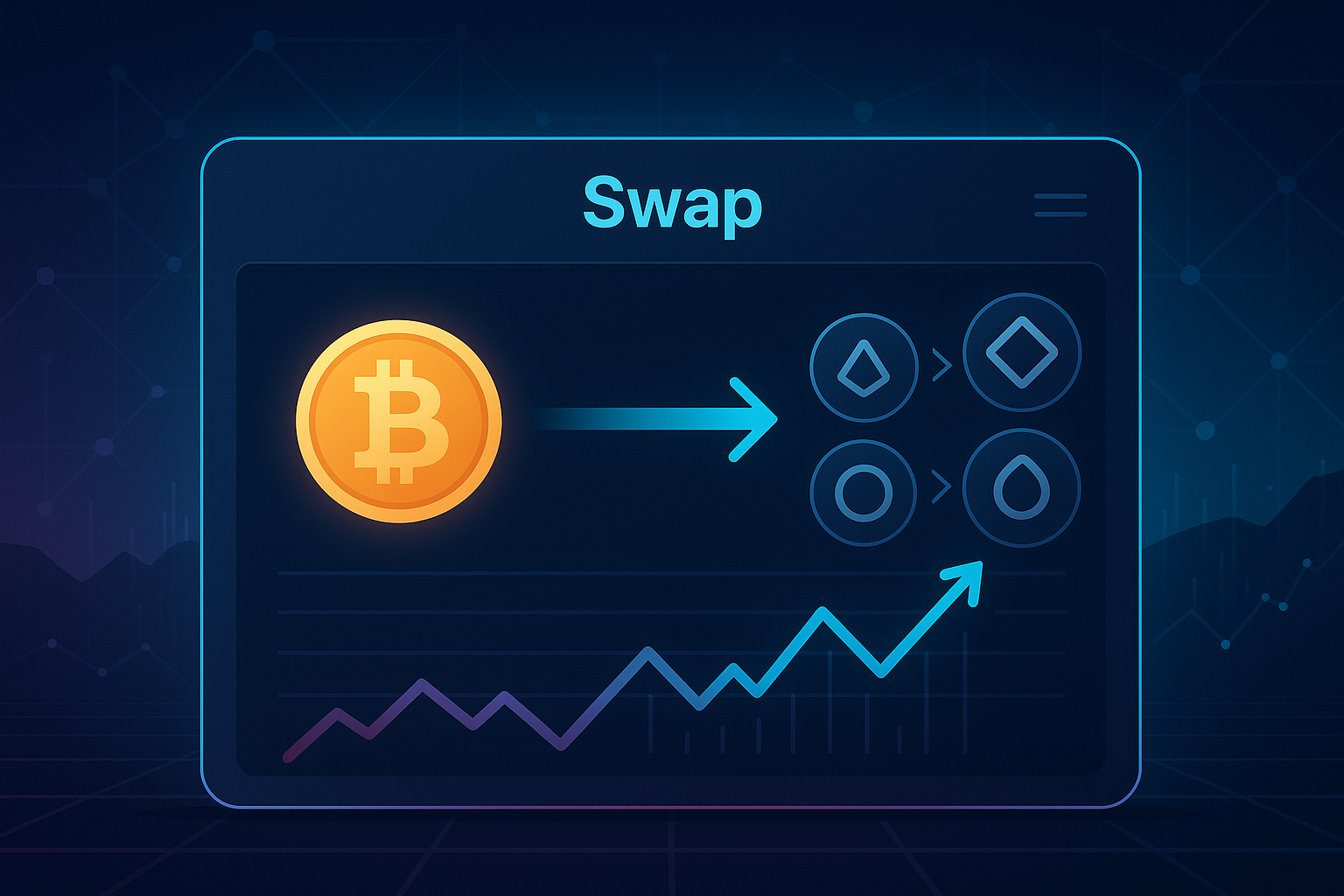
Chainlink (LINK) and Bitcoin (BTC) are two of the most widely recognized cryptocurrencies, each playing a very different role in the crypto ecosystem. As markets move, many traders and long term holders want a simple and efficient way to perform a LINK to BTC swap without going through complex order books or lengthy KYC procedures.
In this guide, we will walk through what a LINK to BTC swap is, why it matters, and how to do it step by step using a non custodial, privacy friendly service. If you are looking to swap crypto instantly between LINK and BTC, this article will help you understand the process and the key trade offs.
We will also cover the main benefits, risks, and practical tips so you can convert your LINK to Bitcoin with better fees, less friction, and a clear understanding of what is happening behind the scenes.
Why LINK to BTC Swaps Matter
Different roles in your crypto portfolio
Bitcoin is widely seen as a store of value and the reserve asset of the crypto world. Chainlink, on the other hand, powers decentralized oracle networks that feed real world data into smart contracts. This difference makes swaps between LINK and BTC an important tool for portfolio management.
Common reasons for doing a LINK to BTC swap include:
- Taking profits after LINK price increases and moving into a more established asset like BTC
- Rebalancing a portfolio if you hold too much LINK compared to BTC
- Preparing for long term holding by consolidating into Bitcoin
- Rotating between altcoins and BTC based on market conditions
Access to liquidity and price stability
Bitcoin typically has deeper liquidity and narrower spreads than most altcoins. Swapping LINK to BTC can give you:
- Better execution when exiting or entering large positions
- Lower slippage on future trades if you intend to trade BTC pairs
- A relatively more stable asset in highly volatile markets
Regulatory and platform considerations
In some jurisdictions and on some platforms, Bitcoin has wider support than LINK. By converting LINK to BTC you may:
- Gain access to more exchanges and trading pairs
- Find more options for custody, borrowing, or earning yield (where available)
- Improve withdrawal or payment options that are BTC only
Key Benefits of a Direct LINK to BTC Swap
1. Simplicity compared with order book trading
Traditional exchanges often require you to:
- Create an account and pass KYC
- Deposit LINK, wait for confirmations
- Sell LINK for USDT or another stablecoin
- Then buy BTC with that stablecoin
- Finally withdraw BTC to your wallet
A direct LINK to BTC swap can combine those steps into a single process with a fixed or floating rate quote, reducing complexity and the number of transactions you must manage.
2. Non custodial flow
Using a non-custodial swap service for LINK to BTC means you never hand over ongoing control of your funds to a centralized exchange account balance. Instead:
- You send LINK directly from your wallet to a swap address
- You receive BTC directly into your own BTC wallet
- There is no long term deposit held on the platform
This significantly reduces counterparty risk compared with leaving assets on an exchange.
3. Speed and convenience
Most LINK to BTC swaps complete within a time frame that roughly matches the confirmation times of the underlying networks. Compared with opening an account on a centralized exchange, setting up 2FA, and navigating multiple markets, a dedicated swap interface can be faster and less error prone.
4. Privacy benefits
Privacy centric swap platforms often:
- Do not require account creation for modest size trades
- Avoid linking your identity to each swap
- Reduce the data footprint associated with your trades
While this does not make you anonymous on chain, it can be a meaningful improvement over fully KYC based centralized exchanges.
Risks and Drawbacks of LINK to BTC Swaps
No method of swapping crypto is risk free. Understanding the main drawbacks will help you choose the right approach and avoid common mistakes.
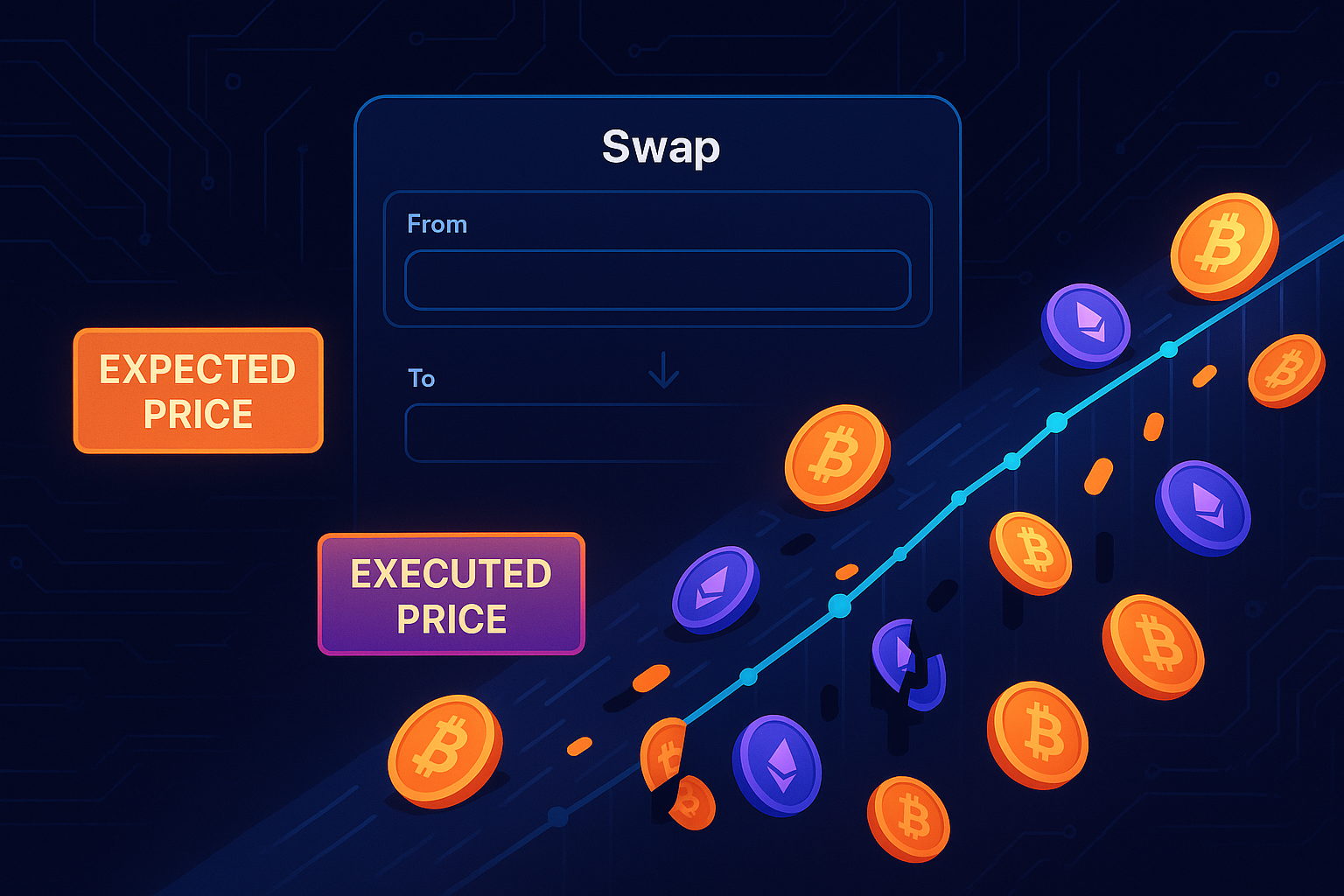
1. Price slippage and exchange rate risk
Even if you get a quote at the start of the swap:
- Rates can change before your transaction is fully confirmed
- Floating rate swaps may give you more or less BTC than expected
- Fixed rate swaps may include a wider spread to cover volatility risk
Sending the exact quoted amount quickly and during periods of lower volatility can help reduce these risks.
2. Network fees and confirmation times
Both LINK and BTC run on their own networks. You must consider:
- Gas fees for sending LINK (typically on Ethereum or other supported networks)
- Bitcoin miner fees for the outgoing transaction from the swap service to you
- Network congestion that may delay confirmations
During high traffic periods, fees can spike and confirmations can slow down which may affect how much BTC you receive or how long the swap takes.
3. Counterparty and smart contract risk
When you use a third party service or smart contract:
- There is always a level of counterparty risk
- Smart contract bugs, if any, could result in loss of funds
- Operational failures or downtime can interrupt swaps in progress
To mitigate this, use established platforms, verify domain names carefully, test with a small amount first, and never rely on any one service for large, mission critical transactions.
4. Irreversible transactions
Blockchain transactions are irreversible. Mistakes such as:
- Sending LINK to the wrong network
- Entering an incorrect or incompatible BTC address
- Sending a different amount than quoted
can lead to lost funds. Always double check addresses, amounts, and networks before confirming.
Step by Step Guide: How to Swap LINK to BTC
Below is a general step by step flow that applies to many non custodial swap platforms. The exact interface may differ, but the main concepts are similar.
Step 1: Prepare your wallets
Before starting your LINK to BTC swap, ensure you have:
- A wallet that holds your LINK (for example, MetaMask or a hardware wallet that supports the relevant network)
- A Bitcoin wallet address where you want to receive BTC
- Enough network fees (ETH or relevant gas token) available to send your LINK
Verify that you fully control the BTC address and that it is a standard, supported format (for example, a bech32 address starting with “bc1” is widely compatible, but always check the platform’s requirements).
Step 2: Choose your LINK to BTC swap platform
Select a reliable non custodial service that supports direct LINK to BTC swaps. For example, a private exchange interface for LINK to BTC typically offers:
- No mandatory account registration for moderate trade sizes
- Clear display of the estimated BTC amount you will receive
- Transparent information on network fees and limits
Always access the platform via the correct, verified URL. Bookmark it rather than following random search engine ads or links from social media.
Step 3: Enter the swap details
In the swap interface:
- Select LINK as the coin you want to send.
- Select BTC as the coin you want to receive.
- Enter the amount of LINK you want to swap or the target amount of BTC you want to receive (depending on what the interface allows).
- Paste your destination Bitcoin address carefully and double check it.
- Confirm whether you are using a fixed rate or floating rate option, if offered.
Review the estimated BTC output and the minimum and maximum amounts supported for the swap.
Step 4: Confirm the quote and get the deposit address
Once you are satisfied with the quote:
- Click to proceed and you will receive a unique deposit address for your LINK.
- Some platforms provide a countdown timer for how long the quote is valid.
- Copy the deposit address or scan the QR code directly from your wallet.
If a timer is shown, it is important to send your LINK transaction before it expires to avoid rate changes or cancellation.
Step 5: Send LINK from your wallet
In your personal wallet:
- Initiate a send or transfer of LINK to the provided deposit address.
- Send exactly the amount that was quoted, unless the platform clearly supports variable amounts.
- Select an appropriate gas fee level based on current network conditions so your transaction confirms in time.
After broadcasting, you can follow the transaction hash in your wallet or a blockchain explorer.
Step 6: Wait for confirmations and receive BTC
The platform will monitor the blockchain for incoming LINK. Once your transaction is confirmed:
- The swap service will execute the conversion according to the agreed parameters.
- Bitcoin will be sent to the destination address you provided.
- Depending on the platform, you may receive a transaction hash or on screen confirmation.
You can then verify the BTC transaction on a Bitcoin block explorer and check your wallet balance.
Practical Tips for Safer LINK to BTC Swaps
1. Start with a test transaction
If you are using a platform for the first time or swapping a significant amount:
- Send a small test amount of LINK first.
- Verify that you receive BTC at the expected address.
- Then proceed with the larger swap once you are confident in the process.
This approach can help you catch any address or configuration errors before they become costly.
2. Watch market volatility
During sharp price swings:
- Rates can move quickly against you between quote and confirmation.
- Slippage may be higher, especially on floating rate swaps.
- Order books and liquidity behind the scenes can thin out, impacting the final rate.
If possible, initiate swaps during more stable periods, or use fixed rate options with clearly stated limits.
3. Double check chain and token details
LINK exists on multiple networks. Make sure:
- You are sending LINK on the exact network the swap platform expects (for example, Ethereum mainnet or another supported chain).
- The contract address of LINK in your wallet matches the standard token used by the platform.
- You do not confuse wrapped tokens (like wLINK or tokenized BTC) with native assets, unless explicitly supported.
Sending assets on the wrong network can permanently lock or lose your funds.
4. Use secure devices and connections
Basic operational security is essential:
- Keep your private keys and seed phrases offline and never type them into a website.
- Use hardware wallets when possible for signing transactions.
- Avoid public Wi Fi or shared devices for managing large transactions.
Your security practices are as important as choosing a reliable platform.
5. Keep records for tracking and taxes
For accounting and tax purposes:
- Save transaction hashes and on screen confirmations.
- Note the date, time, and amount of LINK and BTC involved.
- Export logs or receipts from the swap platform if available.
Many jurisdictions treat crypto to crypto swaps as taxable events, so organized records can simplify future reporting.
Conclusion: Making LINK to BTC Swaps Work for You
Swapping LINK to BTC is a powerful tool for portfolio management, profit taking, and adjusting your exposure to different parts of the crypto market. By choosing a reliable link to btc swap service that is non custodial and privacy focused, you can streamline the process while keeping control of your funds.
To recap, when performing a LINK to BTC swap you should:
- Understand why you are rebalancing from LINK to Bitcoin.
- Use a trusted, non custodial platform with clear rates and limits.
- Double check addresses, networks, and amounts before sending.
- Account for fees, volatility, and confirmation times.
- Test with small amounts and keep good records of your swaps.
With these best practices, you can move between Chainlink and Bitcoin more confidently, reduce operational risk, and align your holdings with your long term crypto strategy.