Kas to BTC Swap: The Complete Guide to Exchanging Kaspa for Bitcoin
Introduction
Kaspa (KAS) has grown rapidly in popularity thanks to its high throughput, blockDAG design, and active community. At the same time, Bitcoin (BTC) remains the most recognized and widely used cryptocurrency. For many traders and long-term holders, learning how to execute a smooth and secure kas to btc swap is an important part of portfolio management.
Whether you are taking profits from Kaspa, rebalancing into Bitcoin, or simply experimenting with different networks, knowing how to convert KAS to BTC efficiently can save you both money and time. Today, you do not have to rely solely on traditional centralized exchanges to make this swap. There are privacy-focused, non-custodial tools that allow you to swap crypto instantly without giving up control of your funds.
This guide walks through why the Kaspa to Bitcoin pair matters, how to complete a kas to btc swap, what benefits and risks to consider, and practical tips to keep your transactions safe and cost-efficient.
Why a Kas to BTC Swap Matters
Balancing Growth Potential and Stability
Kaspa is a relatively newer project compared with Bitcoin, but it has attracted attention for its technological approach and active development. Investors often see KAS as a higher risk, higher reward asset, while BTC is seen as a more established digital store of value.
Converting a portion of your KAS into BTC allows you to:
- Lock in gains after a strong Kaspa price rally
- Shift some exposure into a more mature, liquid market
- Diversify within the crypto asset class
- Create a more balanced long-term portfolio
Improving Liquidity and Spending Options
Bitcoin has deeper global liquidity than most altcoins, including Kaspa. It is also supported by more payment gateways, custodial services, and on-ramps/off-ramps into fiat currencies.
Executing a kas to btc swap can therefore be useful if you:
- Plan to move funds to a centralized exchange that only supports BTC pairs
- Want to cash out into fiat via services that prefer Bitcoin
- Need a widely accepted asset to move value across different platforms
Managing Network and Security Risks
While Kaspa has a strong community and promising technology, many users prefer to park a meaningful share of their holdings in Bitcoin, which has the longest track record and broadest network security in the crypto space.
Swapping part of your KAS to BTC can be part of a risk management strategy, particularly if you are exposed to many smaller-cap altcoins and want a more conservative core holding.
Key Benefits of a Kas to BTC Swap
1. Access to Deeper Markets
Bitcoin pairs dominate trading volume on both centralized and decentralized platforms. Once you hold BTC instead of KAS, you can more easily:
- Enter other altcoin positions using BTC trading pairs
- Access derivatives products like futures or options that are BTC settled
- Use Bitcoin as collateral on lending or margin platforms
2. More Wallet and Custody Choices
Bitcoin support is nearly universal among crypto wallets, hardware devices, and custody solutions. While Kaspa support is growing, some users may feel more comfortable holding larger amounts as BTC due to:
- Broader hardware wallet support
- Audited custody providers
- Battle-tested security tooling and best practices
3. Non-Custodial and Private Swaps
In the past, converting KAS to BTC typically required sending funds to a centralized exchange, completing KYC, and trusting the exchange to hold your coins temporarily. Today, it is possible to use a private exchange that allows you to swap directly from your own wallet.
These non-custodial swap services can provide:
- No account registration or lengthy onboarding
- Direct wallet-to-wallet exchanges
- Reduced exposure to exchange hacks or insolvency events
4. Faster Execution with Less Friction
For many users, especially those not actively trading daily, it is more convenient to perform a one-off kas to btc swap using a dedicated swap interface rather than navigating order books, deposit delays, and withdrawal queues on exchanges. This can result in:
- Less time spent on the transaction
- Fewer steps where errors can occur
- More predictable settlement times
Risks and Drawbacks of Swapping KAS to BTC
Every crypto transaction involves trade-offs. Before converting your Kaspa to Bitcoin, it is important to understand the key risks.
1. Market Volatility and Timing Risk
Both KAS and BTC are volatile assets. When you swap one for the other, you are not exiting volatility altogether, you are simply changing which asset you are exposed to.
Main timing risks include:
- Opportunity cost: Kaspa might outperform Bitcoin after you swap.
- Short-term price spikes: Sudden moves in either asset can reduce the value you receive if your swap coincides with a rapid price change.
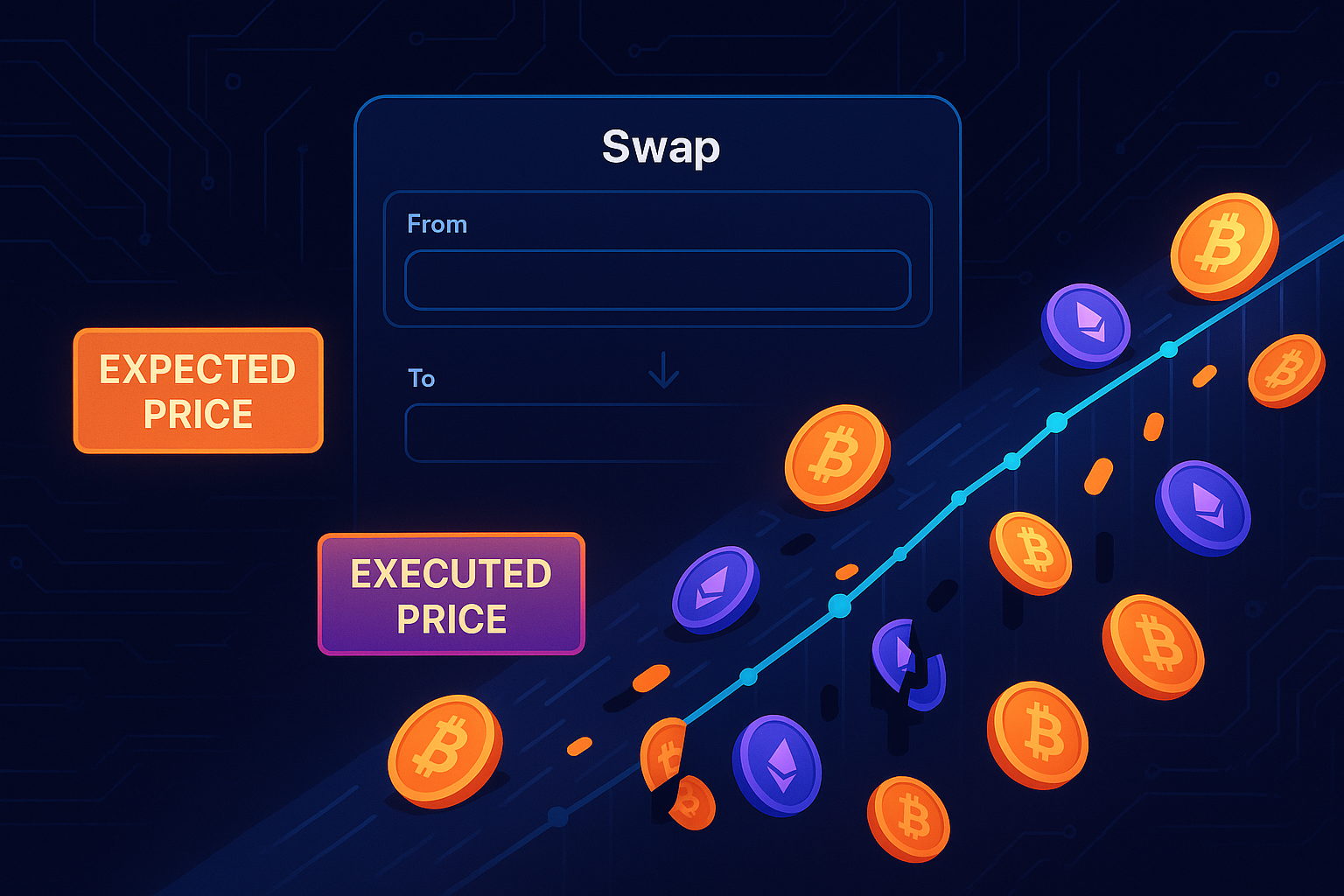
- Slippage: On some services, large swaps relative to available liquidity can cause you to receive a worse rate than the quoted price.
2. Counterparty and Protocol Risk
Even with non-custodial services, there is some reliance on the performance and integrity of the protocol or platform handling the swap. Potential issues can include:
- Misconfigured or malicious smart contracts
- Service downtime or temporary maintenance
- Incorrect addresses entered by the user
To reduce these risks, always double-check addresses, verify you are on the correct website, and start with smaller test amounts if you are using a new service.
3. Network Fees and Confirmation Delays
Kaspa and Bitcoin each have their own network fee structures and confirmation rules. During periods of heavy network use:
- Bitcoin fees can spike, increasing the total cost of your swap
- Confirmation times may be longer than usual
- You might need to choose among different fee levels to balance speed and cost
Planning your kas to btc swap when network conditions are less congested can save money and avoid frustration.
4. Regulatory and Tax Considerations
In many jurisdictions, swapping one cryptocurrency for another is considered a taxable event. The rules vary widely, but common factors to watch include:
- Capital gains or losses realized when you dispose of KAS for BTC
- Record keeping requirements for transaction details and prices at the time of the swap
- Reporting thresholds and tax filing obligations
Consult a qualified tax professional who understands cryptocurrency in your country before making large swaps.
Step-by-Step Guide: How to Perform a Kas to BTC Swap
This section outlines a typical workflow for converting KAS to BTC using a non-custodial swap service. Specific interfaces can differ slightly, but the general steps remain similar.
Step 1: Prepare Your Wallets
You will need:
- A wallet that holds your Kaspa (KAS) and can send transactions
- A Bitcoin wallet address where you want to receive BTC
Before starting, make sure:
- Your wallets are backed up with a secure seed phrase
- You have access to your private keys or recovery phrase
- You know how to copy and paste addresses without errors
Step 2: Choose a Non-Custodial Swap Service
Select a reliable service that supports direct KAS to BTC swapping. On a platform like GhostSwap’s kas to btc swap interface, for example, you can typically convert without creating an account or giving up custody of your coins.
When comparing platforms, consider:
- Supported pairs and minimum/maximum swap amounts
- Displayed exchange rate and total fees
- Reputation, uptime, and user reviews
Step 3: Enter the Swap Details
On the swap interface, you usually need to:

- Select KAS as the asset you are sending.
- Select BTC as the asset you want to receive.
- Enter the amount of Kaspa you want to swap or the amount of Bitcoin you wish to receive.
- Paste your Bitcoin receiving address.
Carefully verify the BTC address, as transactions are irreversible.
Step 4: Review the Quote and Fees
Before confirming, the service should display:
- The estimated amount of BTC you will receive
- Any included service fee or spread
- Estimated processing time or number of confirmations needed
Some services lock in a fixed rate for a short window, while others quote a floating rate that may adjust based on real-time market movements. Make sure you understand which model is being used.
Step 5: Send Your Kaspa
Once you confirm the details, the service will show you a unique KAS deposit address. From your Kaspa wallet:
- Copy the provided KAS address.
- Paste it into your wallet’s “Send” field.
- Double-check the amount and address.
- Broadcast the transaction.
Keep the swap page open or save any reference ID provided so you can track the status of your exchange.
Step 6: Wait for Confirmations and Receive BTC
The service will wait for a required number of KAS confirmations, then initiate the Bitcoin payout to your specified BTC address. The exact timing depends on:
- Kaspa network confirmation speed
- Bitcoin network conditions
- The service’s internal processing policies
After completion, verify that the expected amount of BTC has arrived in your wallet, and consider labeling the transaction for your records.
Practical Tips for a Smooth Kas to BTC Swap
1. Start Small, Then Scale Up
If it is your first time using a particular swap service, start with a small test amount of KAS. Confirm that the process works as expected and that you receive the correct amount of BTC before moving larger sums.
2. Verify URLs and Avoid Phishing
Always type the service address manually or use a trusted bookmark. Attackers often create fake websites that look identical to the real interface. Check for:
- Correct domain spelling
- Valid SSL certificate (https in the address bar)
- Official links from the project’s verified social channels or documentation
3. Monitor Network Fees
Bitcoin fees can fluctuate significantly during periods of market activity. Before executing a kas to btc swap:
- Check current average and priority BTC fee rates on a reputable fee estimator.
- Consider waiting for a quieter period if fees are unusually high.
- Factor fees into your effective exchange rate.
4. Use Non-Custodial Wallets When Possible
Holding your KAS and BTC in non-custodial wallets keeps you in control of your keys. When you combine this with a non-custodial swap service, you reduce counterparty risk and avoid leaving funds on centralized exchanges longer than necessary.
5. Keep Detailed Records
For personal tracking and potential tax reporting, record:
- Date and time of the swap
- Amount of KAS sent and BTC received
- Transaction IDs on both Kaspa and Bitcoin networks
- Fiat value estimates at the time of the transaction (if required in your jurisdiction)
6. Reassess Your Allocation Regularly
A kas to btc swap is not a one-time decision forever. Markets evolve, projects ship new features, and your financial goals may change. Periodically review:
- Your percentage allocation to Kaspa vs Bitcoin
- Your time horizon and risk tolerance
- Any new tools or services that might lower swap costs or improve security
Conclusion
Swapping Kaspa to Bitcoin is a practical move for users who want to combine the growth potential of KAS with the liquidity, infrastructure, and track record of BTC. By understanding the benefits, risks, and step-by-step process of a kas to btc swap, you can execute conversions more confidently and with greater control over your funds.
Use reputable, non-custodial services that let you swap crypto instantly from your own wallet, pay close attention to addresses and fees, and keep good records for your personal and tax needs. With a thoughtful approach, converting KAS to BTC can be an effective part of your broader crypto strategy, whether you are locking in gains, diversifying risk, or preparing to access new opportunities across the Bitcoin ecosystem.