How to Make a JUP to SOL Swap Safely and Efficiently
Introduction
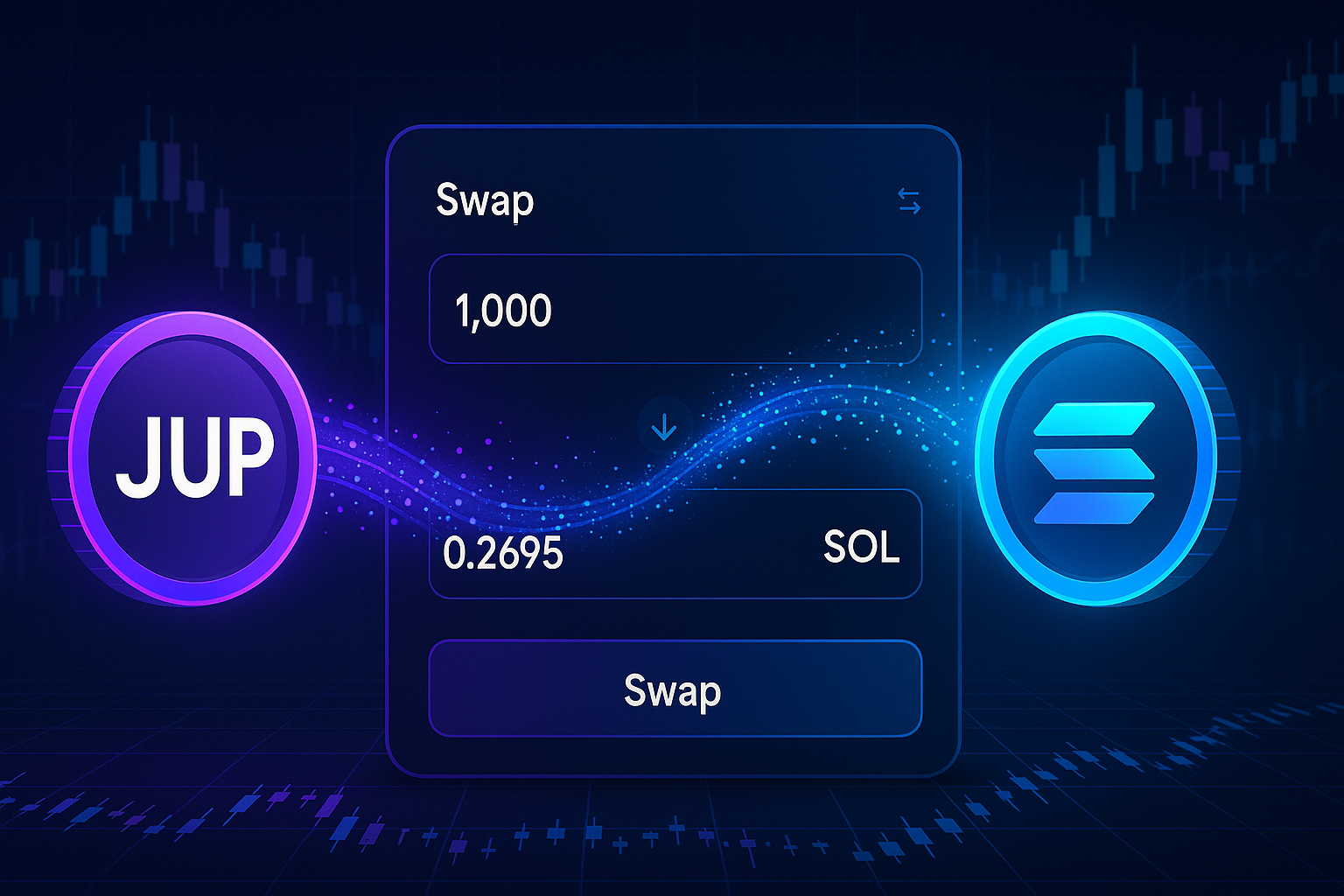
The Solana ecosystem is moving fast, and knowing how to execute a smooth, low-cost jup to sol swap can save you time, fees, and frustration. Whether you are taking profits from a Jupiter (JUP) position, reallocating into Solana (SOL), or just testing out a new DEX, having a clear process is essential.
Today, you do not need to sign up on a centralized exchange, complete lengthy KYC checks, and wait for withdrawals. With the right tools, you can swap crypto instantly from JUP to SOL directly from your wallet using non-custodial platforms on Solana.
This guide walks through why JUP to SOL swaps matter, the main benefits and risks, and a practical step-by-step process you can follow. You will also find actionable tips to help you avoid common pitfalls such as slippage, fake tokens, and poor liquidity.
Why JUP to SOL Swaps Matter
At first glance, converting JUP to SOL might seem like a simple token trade. In practice, it plays an important role in:
- Portfolio management – Rotating between JUP and SOL lets you rebalance your exposure between a protocol token and the base asset of the Solana network.
- Accessing opportunities – Many Solana DeFi protocols, NFTs, and new launches are denominated in SOL. Swapping JUP to SOL gives you direct access to these opportunities.
- Managing risk – If your portfolio is overly concentrated in JUP, swapping part of it to SOL can reduce volatility and protocol-specific risks.
- On-chain flexibility – SOL is needed to pay network fees. Holding some SOL after your swap ensures you can continue to transact on Solana without friction.
Because JUP is tied closely to the Solana ecosystem, the ability to convert between JUP and SOL quickly lets traders and long-term holders react to market movements without leaving the chain.
Key Benefits of a Smooth JUP to SOL Swap
When you use a reliable non-custodial tool for your JUP to SOL swaps, you gain several advantages.
1. Speed and Convenience
On Solana, transactions typically confirm in seconds. That means your JUP to SOL swap can complete much faster than similar swaps on slower blockchains, which is valuable during volatile market conditions.
2. Lower Fees
Solana is known for extremely low transaction costs. When you swap directly on-chain, you typically pay:
- A small Solana network fee
- A trading fee set by the liquidity provider or DEX
Compared with high-fee environments, this often results in a more capital-efficient swap, especially for frequent traders.
3. Non-custodial Control
Non-custodial swaps let you stay in control of your private keys at all times. Platforms that support a non-custodial swap from JUP to SOL interact directly with your wallet, so you never deposit funds into a centralized service account.
4. Privacy and Fewer Barriers
On-chain swaps typically do not require traditional sign-up or KYC procedures, particularly when you use a private exchange interface dedicated to JUP/SOL trading. You can connect your wallet and trade, which simplifies access for users in many regions and preserves more privacy than centralized alternatives.
Risks and Drawbacks to Consider
Even though a JUP to SOL swap is straightforward, there are still risks you should be aware of.
1. Price Volatility
Both JUP and SOL are volatile assets. The price you see at the start of the transaction may differ from the final execution price if markets move quickly, especially for large orders or low liquidity environments.
2. Slippage
Slippage is the difference between the expected price of a trade and the price at which it actually executes. High slippage can occur when:

- Your order size is large relative to available liquidity
- The market is moving quickly
- You accept a very high maximum slippage setting
To control this, always review the quoted price, slippage settings, and minimum amount received before confirming your JUP to SOL swap.
3. Smart Contract and Platform Risk
On-chain swaps use smart contracts and third-party interfaces. Risks include:
- Bugs in smart contracts
- Malicious front-ends that redirect funds
- Phishing sites imitating real platforms
Always double-check URLs, verify official links from trusted sources, and keep your wallet’s permissions clean by revoking old approvals you no longer use.
4. Human Error
The most common issues come from user mistakes:
- Selecting the wrong token (a fake JUP or SOL contract)
- Confirming a transaction with obviously wrong rates
- Using the wrong network or wallet address
Take a few extra seconds to verify token symbols, contract addresses, and order details before clicking “Swap” or “Confirm.”
Step-by-Step Guide: How to Do a JUP to SOL Swap
This step-by-step walkthrough focuses on a typical on-chain, non-custodial process. Interface layouts differ slightly, but the core pattern is similar across most Solana-based exchanges.
Step 1: Prepare Your Wallet
- Install or open a Solana wallet such as Phantom, Solflare, or another reputable wallet.
- Back up your seed phrase securely. Never share it with anyone; no legitimate platform will ask for it.
- Ensure you have SOL for fees. Even though fees are cheap, you still need a small amount of SOL to pay network costs and approve transactions.
Step 2: Choose a Reliable Swap Interface
Navigate to a trusted on-chain DEX or aggregator that supports the JUP/SOL pair. For example, the dedicated jup to sol swap interface on GhostSwap is designed for this exact trading pair, which removes guesswork about token selection.
Before connecting:
- Verify the URL is correct and uses HTTPS
- Cross-check it with official documentation or social channels if possible
- Make sure you are on the genuine platform, not an imitation
Step 3: Connect Your Wallet
- Click the Connect Wallet button in the interface.
- Select your wallet provider (e.g., Phantom).
- Approve the connection request in your wallet popup.
This grants the DEX interface permission to read your wallet balances and propose transactions. It does not give the site access to move your funds without your explicit transaction approval.
Step 4: Select “JUP” as the Token You Are Paying With
Now configure the swap details:
- In the “From” or “Pay” field, select JUP.
- In the “To” or “Receive” field, select SOL.
Double-check that you have chosen the correct JUP token contract (if the interface shows multiple options, use the verified one). Then enter the amount of JUP you want to swap.
Step 5: Review the Quote and Slippage
The interface will show:

- The estimated amount of SOL you will receive
- The price impact or slippage
- Any trading fee or routing details
Before confirming, pay attention to:
- Slippage tolerance – For most moderate-size trades in normal market conditions, a low single-digit percentage is often enough. Extremely high slippage exposes you to bad fills.
- Minimum received – Many interfaces show a “minimum received” amount. If the final trade outcome falls below this, the transaction will fail instead of executing at a worse price.
Step 6: Confirm the Swap in Your Wallet
- Click the Swap or Confirm button on the interface.
- Your wallet will open a confirmation window with transaction details.
- Review the token amounts, estimated fees, and receiving token.
- Approve the transaction if everything looks correct.
The transaction will broadcast to the Solana network and typically confirm in a few seconds.
Step 7: Verify Your New SOL Balance
After confirmation:
- Check your wallet’s asset list to ensure your JUP balance has decreased and your SOL balance has increased by the expected amount.
- Optionally, view the transaction in a Solana block explorer by clicking the transaction link provided in the wallet or DEX interface.
If the swap fails or you see an error, read the message carefully. It may be due to slippage limits, insufficient liquidity, or a network hiccup. Adjust your parameters and try again, or wait for a more favorable market moment.
Practical Tips for Better JUP to SOL Swaps
1. Start With a Small Test Swap
Especially if you are using a new platform for the first time, it is wise to start with a small JUP to SOL swap. This lets you:
- Verify that the interface works as expected
- Confirm that your wallet is configured correctly
- See how quickly transactions complete
2. Watch Market Conditions
Timing can significantly impact your results, particularly if you are swapping a large amount of JUP:
- Avoid thin liquidity and extreme volatility when possible.
- Check the order book and price charts on aggregators or analytics tools to understand current market depth.
- Use limit-like controls where available, such as tight slippage settings.
3. Confirm Token Details
On-chain tokens can be duplicated or spoofed. To avoid fake assets:
- Only use verified token lists from reputable wallets and DEXs.
- If in doubt, compare token contract addresses with official documentation.
4. Keep Some Extra SOL for Fees
After your swap, avoid converting all of your SOL away in future trades. Maintain a small SOL buffer to:
- Pay for transaction fees in later swaps
- Interact with other Solana dApps and NFTs
- Ensure you do not get “stuck” unable to move your funds due to no gas
5. Use Reputable, Non-custodial Platforms
The quality of your JUP to SOL swap experience depends heavily on the platform you choose. Prefer interfaces that:
- Have a clear, audited codebase or integrate with battle-tested Solana infrastructure
- Offer transparent fee and price information
- Do not require you to deposit funds into a custodial account
6. Manage Wallet Security
Good trading habits mean little if your wallet is compromised. Follow basic security practices:
- Store your seed phrase offline and never type it on unknown websites.
- Use hardware wallets for larger portfolios when supported.
- Regularly review and revoke token approvals you no longer use.
- Be cautious with browser extensions, downloads, and links shared in chats.
Conclusion
Executing a jup to sol swap on Solana is quick and cost-efficient when you have a structured process. By choosing a trusted non-custodial, private JUP/SOL exchange interface, verifying token details, and carefully reviewing each transaction, you keep control of your funds while adjusting your portfolio in real time.
As the Solana ecosystem evolves, JUP and SOL will likely remain core assets for many traders and DeFi users. Learning how to swap between them safely is a fundamental skill that supports better risk management, access to on-chain opportunities, and smoother day-to-day activity across the network.
Always remember: double-check URLs, confirm token contracts, watch your slippage, and never rush when approving transactions. A few extra seconds of care can save you from costly mistakes.
Ready to Swap?
Convert your crypto instantly on GhostSwap — no KYC, no sign-up required.
Popular swaps: BTC to XMR | BTC to ETH | XMR to BTC | ETH to XMR | BTC to SOL