How to Make an ICP to BTC Swap Safely and Efficiently
Introduction
Internet Computer (ICP) and Bitcoin (BTC) serve very different roles in the crypto ecosystem. ICP powers a decentralized computing platform, while BTC remains the benchmark store of value and most widely recognized cryptocurrency. As these ecosystems grow, more traders and long‑term holders want a fast and secure ICP to BTC swap without unnecessary friction or custodial risk.
In the past, moving value between ICP and BTC often meant going through centralized exchanges, creating multiple accounts, or waiting a long time for deposits and withdrawals to clear. Today, non‑custodial tools allow you to swap crypto instantly between ICP and BTC while retaining control of your keys.
This guide explains why ICP to BTC conversion matters, how it works in practice, what to watch out for, and a step‑by‑step walkthrough you can follow even if you are relatively new to crypto swaps.
Why ICP to BTC Swap Matters
1. Portfolio diversification
ICP and BTC have different risk profiles and use cases:
- BTC is widely viewed as digital gold, a long‑term store of value and hedge against inflation.
- ICP is a smart contract and decentralized compute platform token, more aligned with Web3 infrastructure growth.
Being able to rotate between them quickly lets you adjust your risk exposure as market conditions change. During high volatility in altcoins, some investors rotate profits from ICP into BTC. In other periods, they might convert BTC into ICP to gain exposure to application growth on the Internet Computer.
2. Access to different ecosystems
Swapping ICP to BTC is also about unlocking access:
- ICP gives you access to dapps, DAOs, and on‑chain services built on the Internet Computer.
- BTC gives you access to Bitcoin‑centric tools, payment channels, and a vast array of trading pairs across exchanges.
A smooth ICP to BTC swap lets you move value seamlessly between application‑centric and settlement‑centric ecosystems.
3. Risk management and liquidity
Bitcoin generally has deeper liquidity and narrower spreads than ICP. In times of market stress, traders often prefer to park capital in BTC because:
- Order books are usually deeper on BTC pairs.
- Price discovery is more stable relative to smaller‑cap coins.
- BTC pairs often have higher volume, making it easier to enter or exit positions.
The easier it is to convert ICP to BTC, the easier it is to respond to market changes without being locked into one ecosystem.
Key Benefits of Swapping ICP to BTC
1. Non‑custodial control
Many modern swap services let you keep control over your private keys. Instead of depositing funds into a centralized exchange account and trusting their internal ledger, you:
- Connect your own wallet.
- Authorize a one‑time transaction.
- Receive BTC directly into a chosen address.
This significantly reduces custodial risk such as exchange insolvency, account freezes, or withdrawal delays.
2. Speed and convenience
Compared with traditional exchange workflows, a non‑custodial ICP to BTC swap usually:
- Requires no lengthy KYC onboarding for moderate amounts.
- Avoids multiple transfers between hot and cold wallets.
- Finishes in a single flow without manual order placement.
You do not need to navigate order books, set limit orders, or worry about partial fills. The system typically gives you a rate quote and handles routing in the background.
3. Privacy considerations
Some users prefer to reduce the amount of personal information tied to day‑to‑day crypto swaps. While no tool can guarantee complete anonymity, a private exchange that supports non‑custodial swap flows can help you:
- Avoid linking every transaction to centralized KYC profiles.
- Minimize the data stored about your trading patterns.
- Transact directly from self‑custody wallets.
As always, review the compliance and jurisdictional rules that apply to you.
4. Fewer intermediaries
A direct ICP to BTC swap can sometimes be routed internally across multiple assets or chains, but from the user perspective it removes the need to:
- Create multiple exchange accounts.
- Bridge assets across several networks manually.
- Wait for multiple transaction confirmations between steps.
This can simplify your operational overhead and reduce the chance of sending funds to the wrong address or network.
Risks and Drawbacks You Should Consider
No crypto transaction is risk‑free. Before executing an ICP to BTC swap, keep these points in mind.
1. Price volatility and slippage
ICP and BTC both experience volatility, and the rate you see quoted can move quickly.
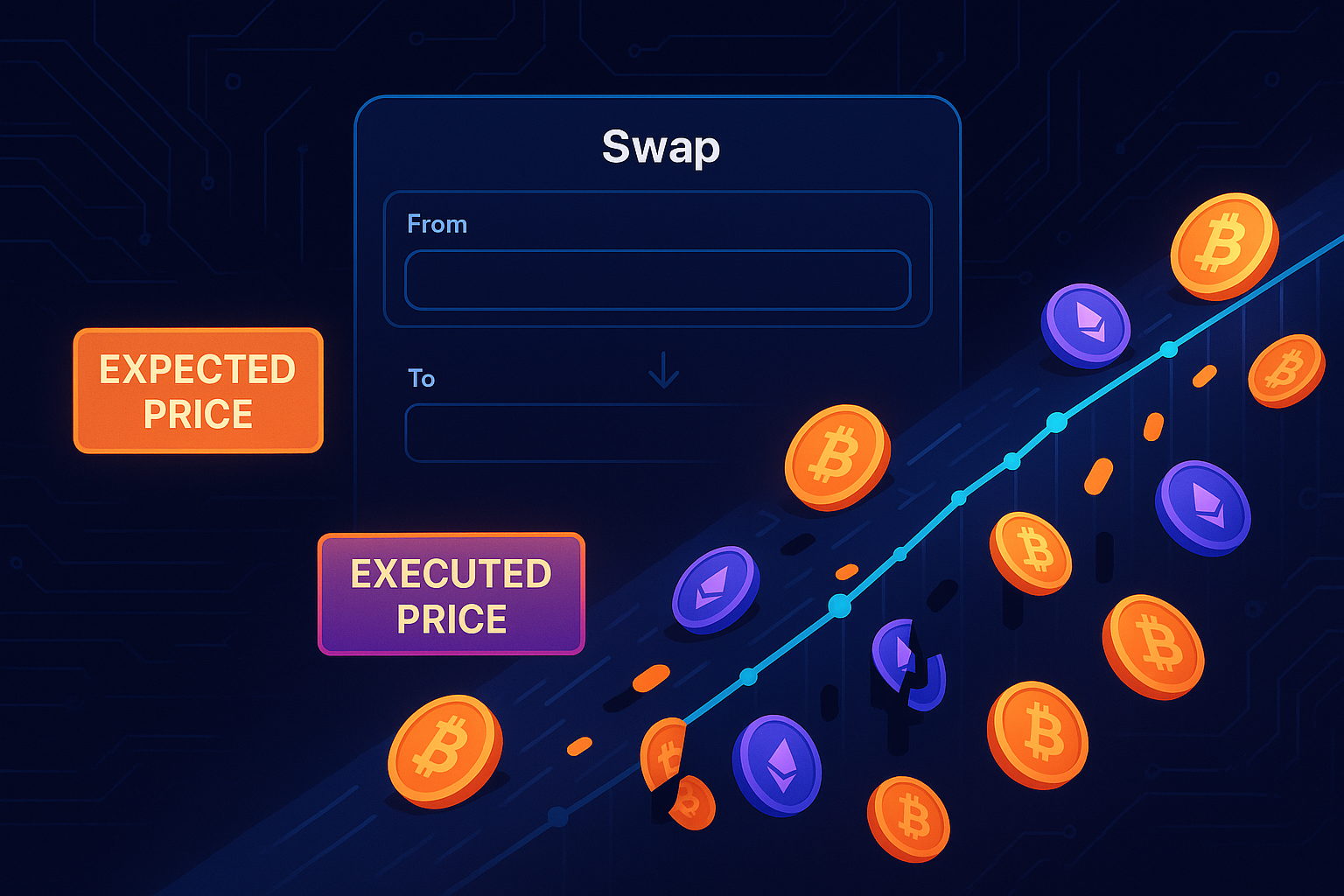
- Slippage is the difference between the price you expect and the price you receive when the transaction executes.
- Large swaps relative to available liquidity can cause more slippage.
- Fast markets (for example around major news) increase the risk that your final rate will be worse than your initial quote.
Some services offer fixed‑rate quotes for a short window, while others use floating rates that can change right up until execution.
2. Network fees and confirmation times
Every blockchain has fees and varying confirmation speeds:
- ICP network typically has fast finality and low fees, but you still pay a small cost to move tokens.
- Bitcoin fees can rise significantly during periods of high demand, which may slow your transaction if you opt for lower fee tiers.
This affects both how long your swap takes and your net amount of BTC received.
3. Counterparty and smart contract risk
With non‑custodial swaps, you shift away from centralized exchange risk but still rely on:
- The security of smart contracts or swap engines.
- The reliability of any liquidity providers behind the scenes.
- The operational resilience of the interface you are using.
Audit reports, transparent documentation, and a history of secure operation are helpful signals, but cannot remove risk entirely.
4. Regulatory and tax considerations
In many jurisdictions, converting ICP to BTC is treated as a taxable event. You may need to:
- Record the fair market value of ICP at the time of disposal.
- Track the cost basis and resulting capital gain or loss.
- Report all swaps in your annual tax filings if required.
Always consult a qualified tax professional for advice tailored to your country and situation.
Step‑by‑Step Guide: How to Perform an ICP to BTC Swap
Below is a generic workflow that applies to most non‑custodial swap interfaces. Specific buttons and labels will vary slightly between platforms, but the core steps remain similar.
Step 1: Prepare your wallets
You will need:
- An ICP wallet holding the amount you want to swap.
- A BTC wallet address to receive your Bitcoin.
Common ICP wallets include browser extensions or native Internet Computer wallets, while BTC can be held on hardware wallets, mobile apps, or desktop wallets. Always verify that you control the private keys for the destination BTC address.
Step 2: Choose a non‑custodial swap service
Select a platform that supports direct ICP to BTC conversion and emphasizes non‑custodial, privacy‑aware operation. For example, a service like GhostSwap’s dedicated ICP to BTC swap page is designed to handle this pair specifically, routing your trade in the background while you interact through a simple interface.
Key criteria to evaluate:
- Support for ICP and BTC on the networks you use.
- Clear information about fees and minimum amounts.
- Transparent rate quotes, including whether they are fixed or floating.
- A history of uptime and secure operation.
Step 3: Select “ICP” as the asset you send
On the swap interface:
- Choose ICP as the token you are converting from.
- Choose BTC as the token you are converting to.
- Enter the amount of ICP you want to swap.
The interface should display the estimated BTC you will receive, including any fees the service charges.
Step 4: Connect or input your wallets
Depending on the platform, you will either:
- Connect an ICP wallet via browser extension, mobile link, or QR code, and authorize an outgoing transaction.
- Manually send ICP to a unique deposit address provided by the swap service, then specify a BTC address where the output should be sent.
Always double‑check:
- The ICP address you are sending from or to.
- The BTC destination address. This is critical because Bitcoin transactions are irreversible.
Step 5: Review the quote and fees
Before you confirm, carefully review:
- The exchange rate (ICP/BTC) being applied.
- Estimated network fees for both ICP and BTC sides.
- Whether the rate is fixed or may fluctuate until completion.
- Any minimum or maximum trade size limits.
If something looks inconsistent, cancel and re‑enter the details. Do not rush, especially with larger amounts.
Step 6: Confirm and send ICP
Once satisfied with the details:
- Approve the transaction in your ICP wallet or send ICP to the provided swap address.
- Wait for the ICP transaction to be confirmed on its network.
The swap service usually monitors the blockchain for incoming funds automatically and then initiates the corresponding BTC transfer to your specified address.
Step 7: Wait for BTC confirmation
After your ICP is received:
- The service executes the conversion and broadcasts a BTC transaction.
- You will see a transaction ID (TXID) that you can track on a Bitcoin block explorer.
- BTC will appear in your wallet once the required number of confirmations is reached.
The total time varies based on both networks’ congestion and the fee level used on the Bitcoin side.
Practical Tips for a Safer ICP to BTC Swap
1. Start with a small test amount
If it is your first time using a particular platform or wallet:
- Send a small ICP amount first.
- Verify that BTC arrives correctly at your wallet.
- Confirm that fees and timing match your expectations.
Once everything checks out, proceed with larger swaps if needed.
2. Carefully verify addresses
Address mistakes are one of the most common causes of lost funds:
- Use copy‑paste or QR scanning whenever possible.
- Check the first and last several characters of both ICP and BTC addresses.
- Beware of clipboard‑hijacking malware that swaps addresses.
Never reuse screenshots or random addresses from the internet; always generate addresses from within your own trusted wallet.
3. Monitor network conditions
Before initiating your ICP to BTC swap:
- Check Bitcoin’s current fee environment via a reputable fee estimator.
- Avoid times of extreme congestion if speed or costs are critical.
- Be prepared for longer confirmation times if you or the service choose lower fees.
On the ICP side, while fees are low, network upgrades or temporary issues can also affect timing, so keep an eye on any official announcements.
4. Understand the fee structure
Fees around a swap typically include:
- Network fees on the ICP side.
- Network fees on the BTC side.
- Service fees or spread built into the swap rate.
A rate that seems too good to be true might hide costs elsewhere, while a transparent service should show you the effective rate and any explicit fees upfront.
5. Keep records for accounting and taxes
Maintain a simple log of each ICP to BTC swap:
- Date and time of the transaction.
- Amount of ICP sent and BTC received.
- Transaction IDs and the swap platform used.
- USD, EUR, or local currency values at the time of the swap.
Good records make life easier if you ever need to reconcile balances, prove ownership, or prepare tax filings.
6. Use reputable wallets and secure devices
Security practices matter just as much as platform choice:
- Store significant BTC balances on hardware wallets where possible.
- Keep your seed phrases offline and never share them with anyone.
- Run anti‑malware software and keep your operating system up to date.
- Enable two‑factor authentication where applicable.
Remember that even a perfectly executed swap cannot save funds stored on compromised devices or wallets.
Conclusion
An ICP to BTC swap is more than a simple trade between two tickers. It is a way to rebalance risk, move capital between ecosystems, and align your portfolio with your long‑term strategy. Thanks to non‑custodial tools, you no longer have to rely exclusively on centralized exchanges or surrender full control of your assets to make this conversion.
By choosing a reliable service, double‑checking wallet addresses, understanding fees, and keeping proper records, you can convert ICP to BTC with confidence. When you are ready to act, a dedicated interface for fast, non‑custodial ICP to BTC swaps can streamline the process and help you focus on your broader investment decisions rather than operational friction.
As with all crypto activity, proceed thoughtfully, stay informed, and scale up only after you are comfortable with the tools and risks involved.