How to Swap ETH to BTC in 2026: Fast, Private & No-KYC Guide
To swap ETH to BTC quickly in 2026, the fastest method is using a non-custodial instant swap service such as GhostSwap. You connect your wallet, choose Ethereum and Bitcoin, enter your BTC address, send ETH, and receive BTC directly in your wallet, all without creating an account or completing KYC.
- Prepare your ETH wallet and a BTC receiving address.
- Go to a non-custodial swap service and select ETH → BTC.
- Enter the BTC address, confirm the rate, and send your ETH.
- Wait for confirmations, then check your wallet for the received BTC.
For example, you can swap ETH to BTC on GhostSwap in just a few minutes, without signing up or sharing any personal information.
What You Need Before You Start
Before you swap ETH to BTC, make sure you have the right tools and information ready. This avoids failed transactions, extra fees, or sending crypto to the wrong address.
1. A funded Ethereum wallet
You need a self-custody wallet holding ETH on the Ethereum mainnet. Popular options include:
- MetaMask (browser extension and mobile)
- Trust Wallet (mobile)
- Ledger or Trezor hardware wallets
- Rabby, Frame, or similar Web3 wallets
Check that:
- You have enough ETH to swap.
- You have a bit of extra ETH for gas fees.
- You are on the Ethereum mainnet, not a testnet or L2 unless the platform explicitly supports it.
2. A Bitcoin receiving address
You also need a BTC wallet where the Bitcoin will be delivered. Common choices are:
- Non-custodial wallets like Sparrow, BlueWallet, Electrum, or Phoenix
- Hardware wallets like Ledger or Trezor
- Custodial exchange wallets (if you are comfortable with that risk)
Be sure the address format is supported by the service you use. Many modern wallets create native SegWit addresses starting with “bc1”. These are usually supported, but double-check the platform’s documentation.
3. Minimum amounts and network fees
Most instant swap platforms have a minimum amount for ETH to BTC conversions. If you try to swap too little, network fees could eat most of your value, or the platform may reject the transaction.
To plan properly, check:
- The minimum ETH amount for an ETH → BTC swap on the platform.
- Estimated Ethereum gas fees, which vary with network congestion.
- BTC network fees, which influence how quickly your Bitcoin is confirmed.
You can monitor typical network fees and block times on trackers like Etherscan Gas Tracker for ETH and mempool.space for Bitcoin.
4. Time required
In most cases, an ETH to BTC swap using a non-custodial swap service takes 5–30 minutes, depending on:
- How fast your ETH transaction is mined
- The required number of Ethereum confirmations
- Bitcoin network congestion and required confirmations
Centralized exchanges can take much longer, because they may require KYC, manual approvals, or internal security reviews before you can withdraw BTC.
Method 1: Using GhostSwap (No KYC — Recommended)
GhostSwap is a non-custodial instant swap platform focused on privacy and speed. It supports 1,500+ trading pairs and does not require accounts or identity verification for crypto-to-crypto swaps, making it an efficient way to swap ETH to BTC in 2026.
Step 1: Go to GhostSwap.io
Open your browser and visit GhostSwap’s ETH to BTC exchange page. This loads an instant swap widget that lets you choose the assets and amount to swap.
Because GhostSwap is non-custodial, you never deposit funds to an account or leave balances on the platform. You simply send ETH to a one-time address generated for your swap and receive BTC directly to your wallet.
Step 2: Select ETH in the exchange widget
In the “You send” field, select Ethereum (ETH), and in the “You receive” field, select Bitcoin (BTC). Then enter the amount of ETH you want to convert.
The widget will show you:
- The estimated amount of BTC you will receive
- The type of rate (floating or, when available, fixed)
- The minimum and maximum amounts for the swap
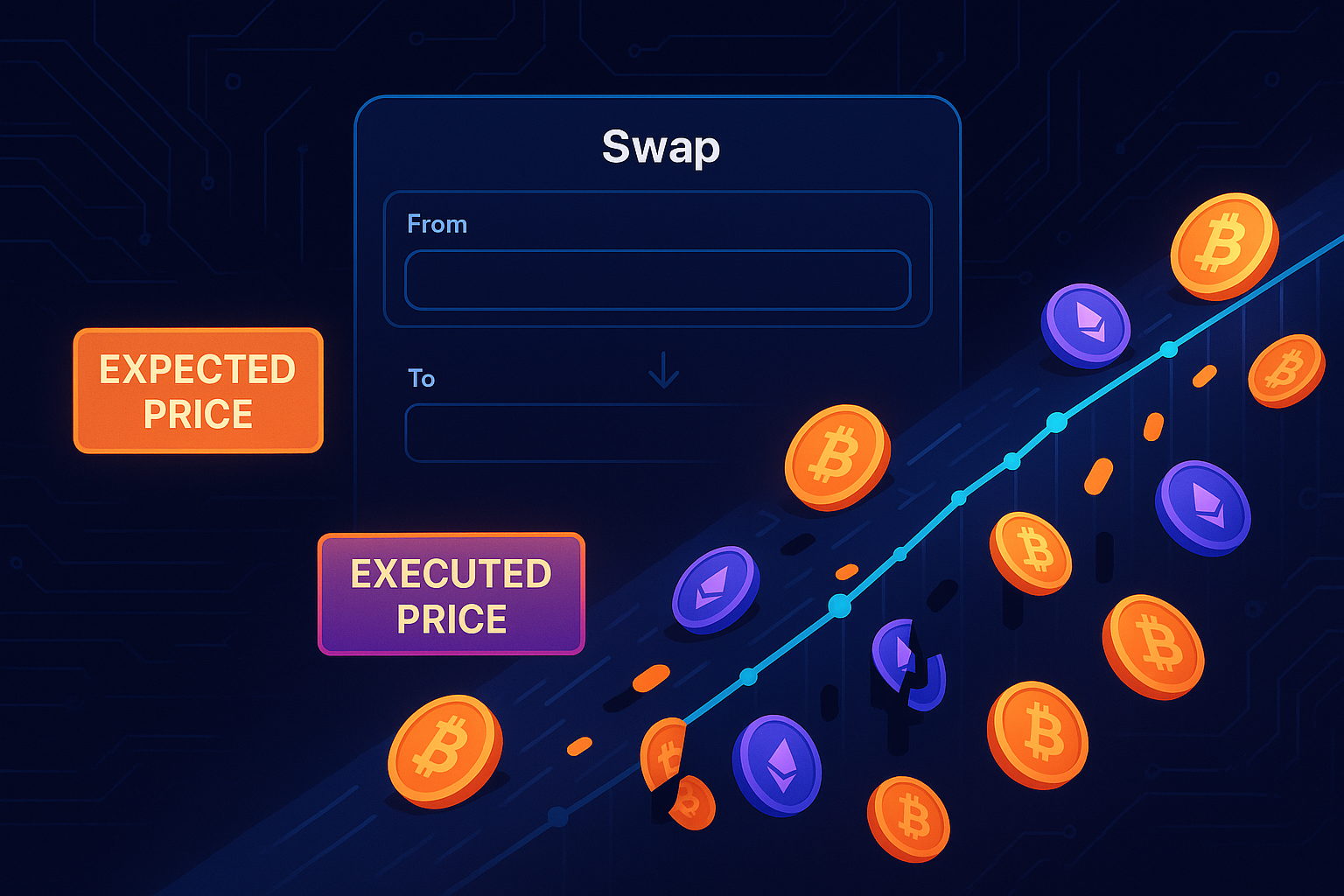
Review the conversion estimate carefully. Crypto prices are volatile, so the final amount of BTC may vary slightly depending on market conditions and the chosen rate type.
Step 3: Enter your Bitcoin wallet address
Copy your BTC receiving address from your Bitcoin wallet and paste it into the “Recipient address” or “Your BTC address” field. Double-check for typos.
Best practices when entering your BTC address:
- Use your wallet’s built-in “copy address” button instead of typing manually.
- Verify the first and last 4–6 characters match what your wallet shows.
- If possible, test with a small amount the first time you use a new wallet or platform.
After entering your BTC address, confirm that all information is correct: input coin (ETH), output coin (BTC), amounts, and address.
Step 4: Send your ETH and receive BTC
GhostSwap will generate a unique deposit address for the swap along with a time limit. This is the one-time Ethereum address where you must send your ETH.
- Copy the provided ETH deposit address.
- Open your ETH wallet and start a new send/transfer transaction.
- Paste the deposit address as the recipient and enter the exact ETH amount you specified.
- Set an appropriate gas fee (your wallet will usually suggest one).
- Confirm and broadcast the transaction.
After your ETH transaction gets enough confirmations on Ethereum, GhostSwap automatically executes the trade on the backend and sends BTC to your specified Bitcoin address.
You can monitor the status of the swap using the transaction status page provided by GhostSwap. Once completed, check your BTC wallet to confirm the funds have arrived.
Pros and cons of using GhostSwap
Pros
- No KYC: Swap ETH to BTC without ID checks or account creation.
- Non-custodial: You keep control of your private keys; funds are never stored in an account.
- Fast settlement: Most swaps complete within minutes after confirmations.
- 1,500+ trading pairs: Easily pivot from ETH to BTC, USDT, stablecoins, and many altcoins.
- Simple UX: Clean interface suitable for beginners and advanced users.
Cons
- Crypto-to-crypto only: No direct bank or fiat withdrawals on swaps (though you can use a separate “buy crypto” feature to on-ramp).
- Network dependency: Swap speed depends on Ethereum and Bitcoin network congestion.
You can swap ETH for BTC, ETH, USDT and 1,500+ other coins on GhostSwap without KYC.
Method 2: Using a Centralized Exchange
Another common way to swap ETH to BTC is through a centralized exchange (CEX), such as major global trading platforms. While this method provides high liquidity and advanced order types, it typically requires full KYC and may be slower overall.
How a CEX swap works
- Create an account: Sign up with an email address and password.
- Complete KYC: Submit ID documents, selfies, and sometimes proof of address. Approval can range from minutes to several days, depending on demand and your jurisdiction.
- Deposit ETH: Generate an ETH deposit address from the exchange and send your ETH from your wallet.
- Trade ETH/BTC: Use the spot market to sell ETH for BTC at either market or limit orders.
- Withdraw BTC: Once you have BTC, withdraw it to your self-custody Bitcoin wallet.
Advantages of centralized exchanges
- High liquidity: Large order books typically result in tight spreads and competitive pricing.
- Advanced tools: Charting, limit orders, stop losses, and more for active traders.
- Fiat on-ramps: Many CEXs support bank transfers, cards, or local payment methods.
Drawbacks of centralized exchanges
- KYC and surveillance: You must provide your identity and often source-of-funds information.
- Custodial risk: Your crypto sits in the exchange’s wallets until you withdraw, adding counterparty risk.
- Longer timelines: KYC reviews, withdrawal processing times, and possible holds can increase how long it takes to get your BTC.
- Regional restrictions: Some users are blocked based on their country or required to follow stricter limits.
Because of these trade-offs, many privacy-focused users prefer a non-custodial service like GhostSwap to convert ETH to BTC without creating an account.
Method 3: P2P or DEX-Based Swaps
If you want alternatives beyond instant swap platforms and centralized exchanges, you can also use peer-to-peer (P2P) marketplaces or decentralized exchanges (DEXs) combined with cross-chain bridges to swap ETH to BTC.
P2P marketplaces
P2P platforms directly connect buyers and sellers. You could, for example, find someone who wants ETH and is offering BTC, then agree on a swap.
How it typically works
- You create or respond to an offer specifying how much ETH and BTC you want to trade.
- The platform may hold one side of the trade in escrow while the other party sends funds.
- Once both parties confirm, the escrowed funds are released.
Pros
- Can sometimes get better rates when negotiating directly.
- Some P2P platforms have partial or no KYC, depending on volume and region.
Cons
- Higher counterparty risk if the platform’s escrow or enforcement is weak.
- More manual steps and communication.
- Scam risk when dealing with unknown individuals.
DEX + bridge workflows
On the decentralized finance side, DEXs like Uniswap let you trade ERC-20 tokens on Ethereum, but Bitcoin is on a different chain. To reach real BTC, you usually need wrapped tokens and a bridge.
A general workflow:
- Swap ETH for a wrapped Bitcoin token (like WBTC or renBTC) on an Ethereum DEX.
- Use a bridge or custodial service that allows you to redeem wrapped BTC for native BTC.
However, this approach is more complex and introduces smart contract and bridge risk. For most users who simply want to swap ETH to BTC securely and quickly, using a purpose-built non-custodial swap service like GhostSwap is more straightforward.
Tips for Staying Safe
Whenever you convert Ethereum to Bitcoin, security should be your top priority. Crypto transactions are irreversible, and mistakes can be expensive.
Double-check all addresses
- Always copy and paste addresses; never type them from memory.
- Verify the first and last few characters match what your wallet shows.
- Watch out for clipboard malware that can replace a copied address with an attacker’s address.
Use reputable wallets and platforms
- Download wallets only from official websites or verified app stores. Ethereum’s official ecosystem reference is Ethereum.org’s wallet list.
- Check community reviews and documentation for any service you use to swap ETH to BTC.
- Avoid clicking swap or exchange links from unsolicited DMs, emails, or ads.
Start with a small test swap
When using a new platform or new wallet for the first time, consider doing a small test transaction:
- Send a minimal amount of ETH to confirm the deposit address is correct.
- Verify that you receive BTC in your wallet without issues.
- Only after a successful test swap should you increase the amount.
Protect your keys and seed phrase
- Never share your seed phrase or private keys with any platform, including GhostSwap. No legitimate service needs them to process a swap.
- Store your seed phrase offline, written clearly and backed up in more than one secure location.
- Consider a hardware wallet for holding larger long-term BTC and ETH balances.
Beware of fake support and phishing
- Support agents will never ask for your seed phrase or remote access to your device.
- Make sure the URL is correct before connecting your wallet or sending funds.
- Bookmark trusted services like GhostSwap to avoid typo-squatting domains.
For live price and market data while planning your swap, you can also consult trackers like CoinGecko’s Ethereum page or CoinMarketCap’s Bitcoin overview.
Ready to Trade Ethereum (ETH)?
If you are ready to convert Ethereum to Bitcoin without accounts or ID checks, you can use GhostSwap’s dedicated route to swap crypto instantly. Just connect your wallet, specify ETH and BTC, and let the non-custodial swap engine handle the rest.
Ready to Get Started?
Swapping ETH to BTC in 2026 does not have to be complicated. With a secure wallet, a valid BTC address, and a few minutes of your time, you can move value from Ethereum to Bitcoin quickly and privately.
For most users, a non-custodial swap platform strikes the right balance between simplicity, privacy, and speed. If you value holding your own keys and avoiding lengthy verification processes, GhostSwap is designed exactly for that use case.
Head over to the ETH–BTC page on GhostSwap and start your private exchange flow now.
Frequently Asked Questions
Can I do this without ID?
Yes. You can swap ETH to BTC without providing ID by using a non-custodial instant swap service like GhostSwap. These platforms do not require account registration or KYC for typical crypto-to-crypto swaps.
However, if you use a centralized exchange, you will almost always need to pass KYC and submit identity documents before you can trade and withdraw BTC.
What is the best method?
The “best” method depends on your priorities:
- Privacy & speed: A non-custodial platform like GhostSwap is usually best.
- Advanced trading tools & fiat access: A centralized exchange may be more suitable, but requires KYC.
- Custom deals or local payments: P2P marketplaces might work, but come with more complexity and counterparty risk.
For most everyday users who simply want to convert ETH to BTC and hold or spend it, using a non-custodial swap is generally the most convenient approach.
How long does it take?
When using GhostSwap or similar instant swap services, an ETH to BTC conversion typically takes between 5 and 30 minutes under normal network conditions. The main factors are:
- How quickly your ETH transaction is confirmed on Ethereum
- How many confirmations the service requires
- Bitcoin network congestion for the outgoing BTC transfer
On centralized exchanges, the total time can extend to hours or even days if KYC is pending, withdrawals are delayed, or internal reviews are triggered.
Is it safe to use GhostSwap?
GhostSwap is designed as a non-custodial swap platform, which means it does not hold long-term balances on behalf of users. You send ETH to a dedicated address for a single swap and receive BTC directly into your own wallet, keeping control of your private keys throughout.
As with any crypto transaction, safety also depends on your own practices: using reputable wallets, verifying URLs, double-checking addresses, and safeguarding your seed phrase. When those basics are followed, using GhostSwap for ETH to BTC swaps can be a secure and efficient option.