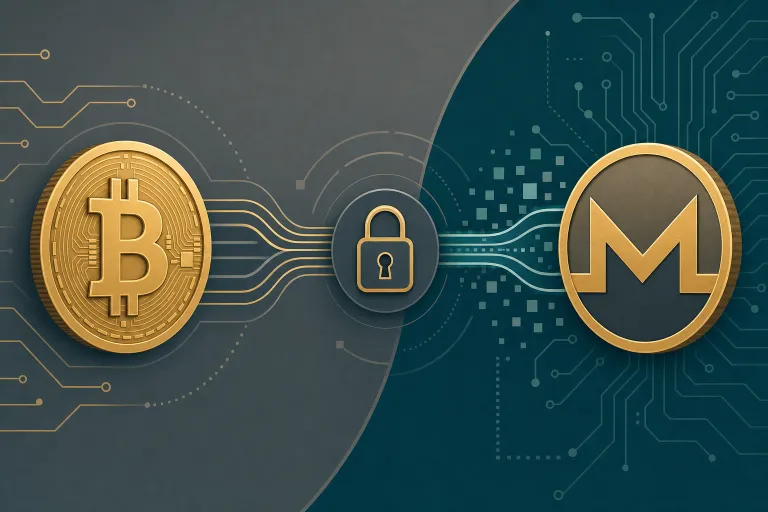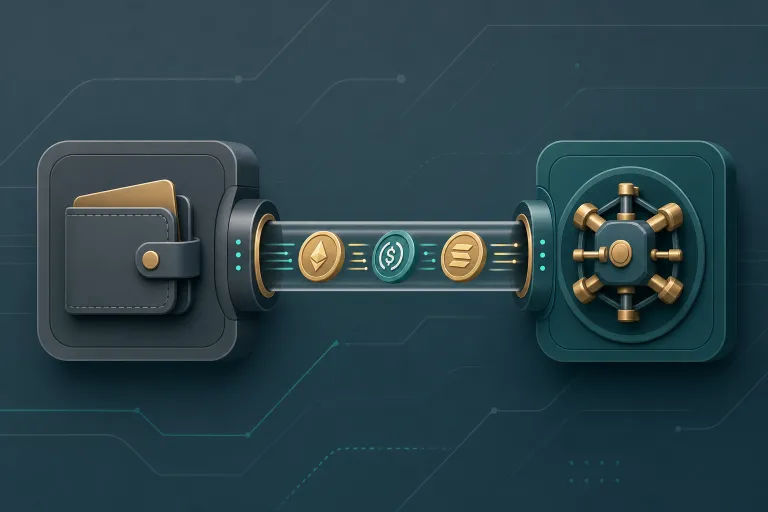
To send crypto anonymously, don’t pay from your main wallet straight to the person you are paying. A public blockchain records that link forever, and anyone who has the transaction can look up your balance and history. Route the payment through a swap instead: you pay into a one-time deposit address, and the recipient is paid from a separate payout address. If you pay with Monero, your side of the payment leaves no public trail at all. GhostSwap’s Private Send does this in one step, with no account.
Key takeaways
- A normal transfer shows the recipient your wallet address, your balance and your full history.
- A private send removes the direct on-chain link between your wallet and theirs.
- Paying with Monero (XMR) gives the strongest privacy, and the recipient can still get BTC, ETH or USDT.
- On transparent chains like Bitcoin and Ethereum, the amount and time of the payout stay public.
Why a normal crypto transfer is not private
Bitcoin, Ethereum, Tron and most other blockchains are public ledgers. When you send 500 USDT from your wallet to a freelancer, the transaction records your address as the sender. The freelancer, or anyone they share the transaction with, can paste your address into a block explorer such as Etherscan or Tronscan and see:
- your current balance of every token in that wallet
- every payment you have received, including salary or trading income
- every other person or service you have paid, and when
Addresses don’t carry your name, but they rarely stay anonymous for long. The first time an address touches an exchange account, a shop that has your shipping address or a public post, it can be tied to you. Analytics companies link addresses this way at scale.
A large visible balance also makes you a target for phishing and scams. Sending privately is about choosing who learns what about your money.
What “anonymous” can and cannot mean
It helps to be precise about who you are keeping information from. This is what each kind of payment reveals:
| What is visible | Normal transfer | Private Send, paid with BTC or ETH | Private Send, paid with XMR |
|---|---|---|---|
| Your wallet, to the person you pay | Yes | No | No |
| A direct link between your wallet and theirs | Yes | No | No |
| Your side of the payment, on a public chain | Yes | Yes, a deposit to a one-time address | No, Monero hides it |
| The amount and time they received | Public | Public on their chain | Public on their chain |
No method makes the recipient forget they were paid. The goal is to stop the payment from exposing your wallet.
How to send crypto privately with GhostSwap Private Send
Private Send uses the same swap engine as the GhostSwap exchange. You pay with one coin, and the recipient receives the coin they asked for at their own address. No account, email or ID is needed for standard swaps.
- Pick a route. Open Private Send and choose what you pay with and what they receive, for example XMR to USDT (TRC20) or BTC to ETH.
- Enter the amount. The estimate shows what the recipient will get after fees.
- Paste their wallet address in Recipient Wallet. Check the network: a USDT TRC20 address starts with T, and an Ethereum address starts with 0x.
- Enter your sender address, the wallet you are paying from. If the swap cannot be completed, the coins are refunded there.
- Send the exact amount to the one-time deposit address shown. The payment usually arrives in 5 to 30 minutes, and you can follow every step on the status page.
The recipient sees a payment from a payout address. That address has never transacted with your wallet, so there is nothing to click through to your balance.
Pay someone privately now
Pick a route, paste their address and send. No account needed.
The most private setup: pay with Monero
Monero (XMR) hides the details that other chains publish. Ring signatures mix your payment with decoys so the sender can’t be singled out, stealth addresses give the receiver a new one-time address for each payment, and RingCT hides the amount.
When you pay with XMR and the recipient receives BTC, ETH or USDT, the only public record is the payout on their chain. There is no public trail back to your wallet.
If you don’t hold Monero yet, swap into it first: BTC to XMR, ETH to XMR or USDT to XMR. The guide on how to buy Monero covers every option. Keep the XMR in a wallet you control, such as Cake Wallet, Feather or the official Monero GUI wallet, before you pay.
If the person you are paying accepts Monero, you don’t need a swap at all. Send XMR from your wallet to theirs. It is private by default and costs only the network fee.
Other ways people send crypto privately, compared
| Method | Hides your wallet from the recipient | Works for any coin | Effort |
|---|---|---|---|
| A new wallet funded from your main wallet | No, the funding transaction links them | Yes | Low |
| CoinJoin wallets | Partly | Bitcoin only | High, takes coordination and time |
| Monero, wallet to wallet | Yes | Only if they accept XMR | Low |
| Private Send through a swap | Yes | Yes, 1,600+ coins | Low |
The fresh-wallet approach is the most common mistake. If you fund the new wallet from your main one, anyone can follow the link one step back.
Habits that keep a private payment private
- Pay from a wallet you control, not from an exchange account. Exchange withdrawals are tied to your identity, and a refund can only go to an address you own.
- Ask for a fresh receiving address if the recipient’s wallet supports it.
- Keep transaction IDs and addresses off public posts and screenshots.
- Keep your own records of what you paid and why. You may need them for taxes.
When people use private crypto payments
- Freelancers and contractors: pay in USDT or BTC without showing them your whole wallet.
- Family: send a gift or support without exposing your savings.
- Invoices: settle a BTC or USDT invoice while paying from a Monero wallet.
- Donations: support a project or creator without tying it to your main wallet.
- Businesses: pay suppliers without revealing your treasury balance.
Is it legal to send crypto privately?
In most countries, keeping your financial details private is legal. A bank transfer doesn’t show the recipient your account balance either. You are still responsible for following the laws where you live, including tax reporting on crypto you spend or swap. GhostSwap doesn’t give legal or tax advice.
FAQ
Can crypto be sent anonymously?
On public chains like Bitcoin and Ethereum, every transfer is recorded. You can stop a payment from exposing your wallet by routing it through a swap such as GhostSwap Private Send. For the strongest privacy, pay with Monero, which hides the sender, receiver and amount on its own chain.
Is sending crypto traceable?
A direct transfer on Bitcoin, Ethereum or Tron links the two addresses permanently. A private send removes the direct link between your wallet and the recipient’s. The amount and time of the payout stay public on transparent chains.
Can someone track my crypto wallet?
Yes, if they know your address. Every transaction to and from it is public on chains like Bitcoin, Ethereum and Tron, and block explorers make it easy to follow. Monero is the exception: its transactions don’t reveal balances or who paid whom.
How do I send Bitcoin anonymously?
Pay with XMR and choose BTC as the coin the recipient gets, or pay with BTC and let them receive another coin. Either way they are paid from a payout address that has never transacted with your wallet.
Can I send crypto without ID?
Yes. GhostSwap needs no account, email or ID for standard swaps. You only enter the recipient’s address and your sender address.
Does the recipient know who sent the payment?
Only if you tell them. They see the payment arrive from a payout address, not from your wallet.
What is the cheapest way to send crypto privately?
Paying in Monero wallet to wallet costs only the network fee, but it works only if they accept XMR. A Private Send adds the swap fee, and the estimate shows exactly what they will receive before you pay.