How to Buy Monero (XMR) in 2026: Step‑by‑Step Guide to Private Crypto
If you want the fastest way to buy Monero in 2026, use a non-custodial instant swap: send Bitcoin or another coin, receive XMR directly to your own wallet, and skip KYC. With GhostSwap, you can swap BTC to XMR privately in minutes without creating an account.
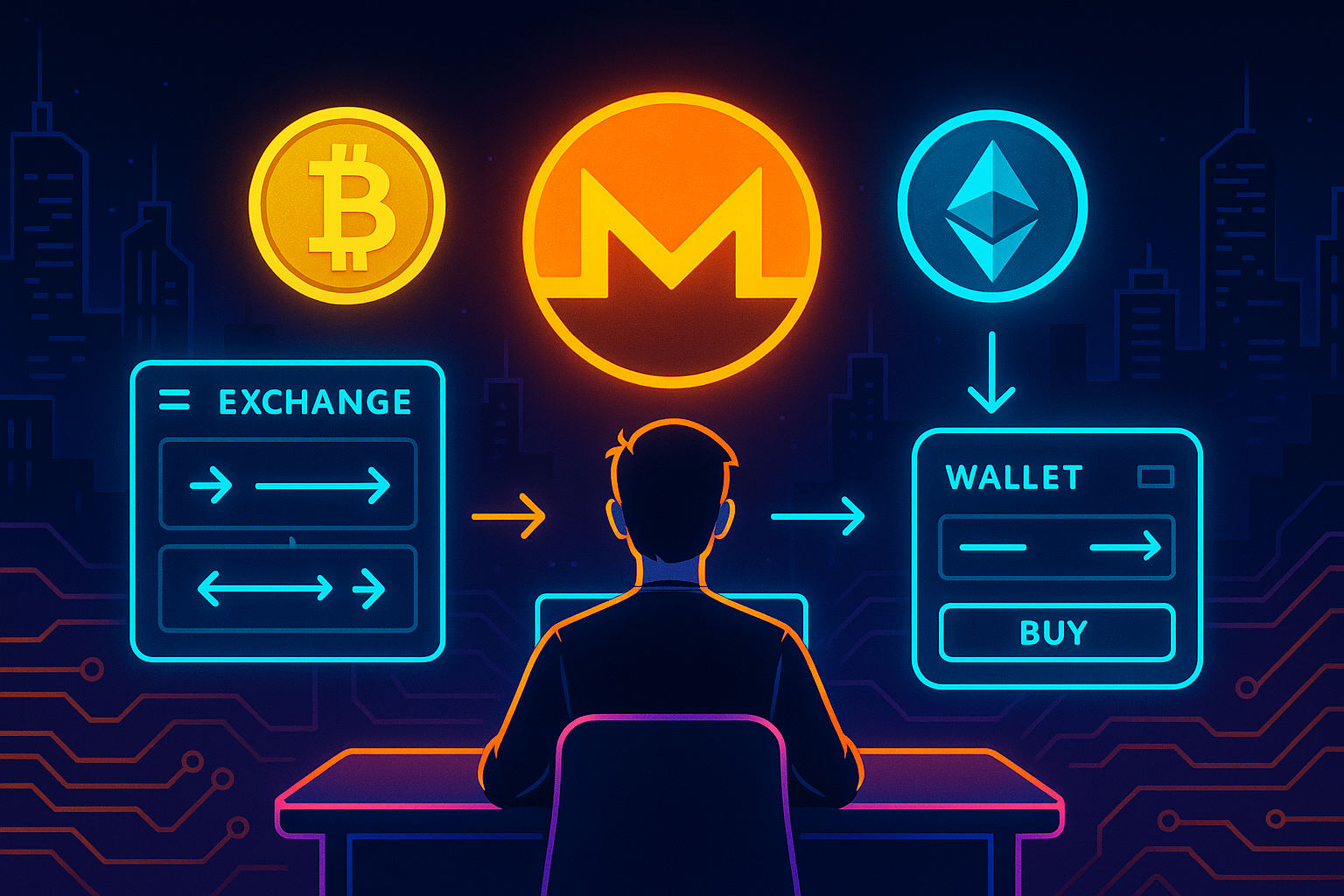
Here is a quick 4‑step summary of how to buy Monero:
- Create or install a Monero wallet and back up your seed phrase.
- Get some crypto like BTC, ETH, or USDT on any platform you prefer.
- Use a non-custodial swap service such as GhostSwap to exchange it for XMR.
- Send the XMR directly to your own wallet and confirm it arrived.
Below is a complete, detailed guide covering multiple methods, safety tips, and FAQs so you can choose the Monero buying method that fits your privacy, speed, and compliance needs.
What You Need Before You Start
Before learning how to buy Monero, it is important to set up the basics. That means having a secure wallet ready, a funding source, and a realistic idea of the time and minimum amounts involved.
1. A Monero (XMR) Wallet
Monero is a privacy-focused coin with its own wallet ecosystem. You should always receive XMR into a wallet you control, not an exchange deposit address, if you care about long-term privacy and self-custody.
Popular options include:
- Official Monero GUI & CLI wallets from the Monero Project (getmonero.org)
- Feather Wallet (lightweight desktop wallet)
- Ledger hardware wallet (via Monero apps and compatible software)
- Reputable mobile wallets that support XMR and view keys
When you create your wallet:
- Write down your recovery seed phrase on paper (not on your phone or cloud).
- Store backup copies offline in separate locations.
- Set a strong password for local wallet encryption.
2. Some Crypto or Fiat to Spend
There are two main funding paths when buying Monero:
- Crypto-to-crypto: You already hold BTC, ETH, USDT, USDC, etc. This is ideal for using instant, non-custodial swaps like GhostSwap.
- Fiat-to-crypto: You only have bank transfer, card, or cash. You will typically use a centralized exchange, P2P marketplace, or crypto ATM first.
Most instant swap services require a minimum amount per trade, often equivalent to 20–50 USD in crypto, to cover network fees and liquidity. Always check the minimum displayed in the quote before sending any funds.
3. Time Needed to Buy Monero
Your total time will vary based on method:
- GhostSwap / instant swap: 5–20 minutes in most cases, depending on network confirmations.
- Centralized exchanges (CEXs): From 30 minutes to several days, depending on KYC review and deposit method.
- P2P or ATMs: 20–60 minutes, plus any travel time or escrow release delays.
If your goal is to get XMR in your wallet today with minimal friction, a non-custodial swap like the BTC to XMR exchange on GhostSwap is typically the fastest path.
Method 1: Using GhostSwap (No KYC — Recommended)
GhostSwap is a non-custodial, instant crypto swap platform with more than 1,500 trading pairs and no registration or KYC. You keep control of your coins the entire time and receive Monero directly to your personal wallet.
Step 1: Go to GhostSwap.io
Open your browser and go to GhostSwap.io.
On the homepage, you will see the swap widget where you can choose which crypto to send and which one to receive. You do not need to create an account or log in.
Step 2: Select XMR in the Exchange Widget
In the “You send” field, choose the coin you already own, such as BTC, ETH, or USDT.
In the “You get” field, select Monero (XMR). You can go directly to the BTC to Monero swap page if you are funding from Bitcoin.
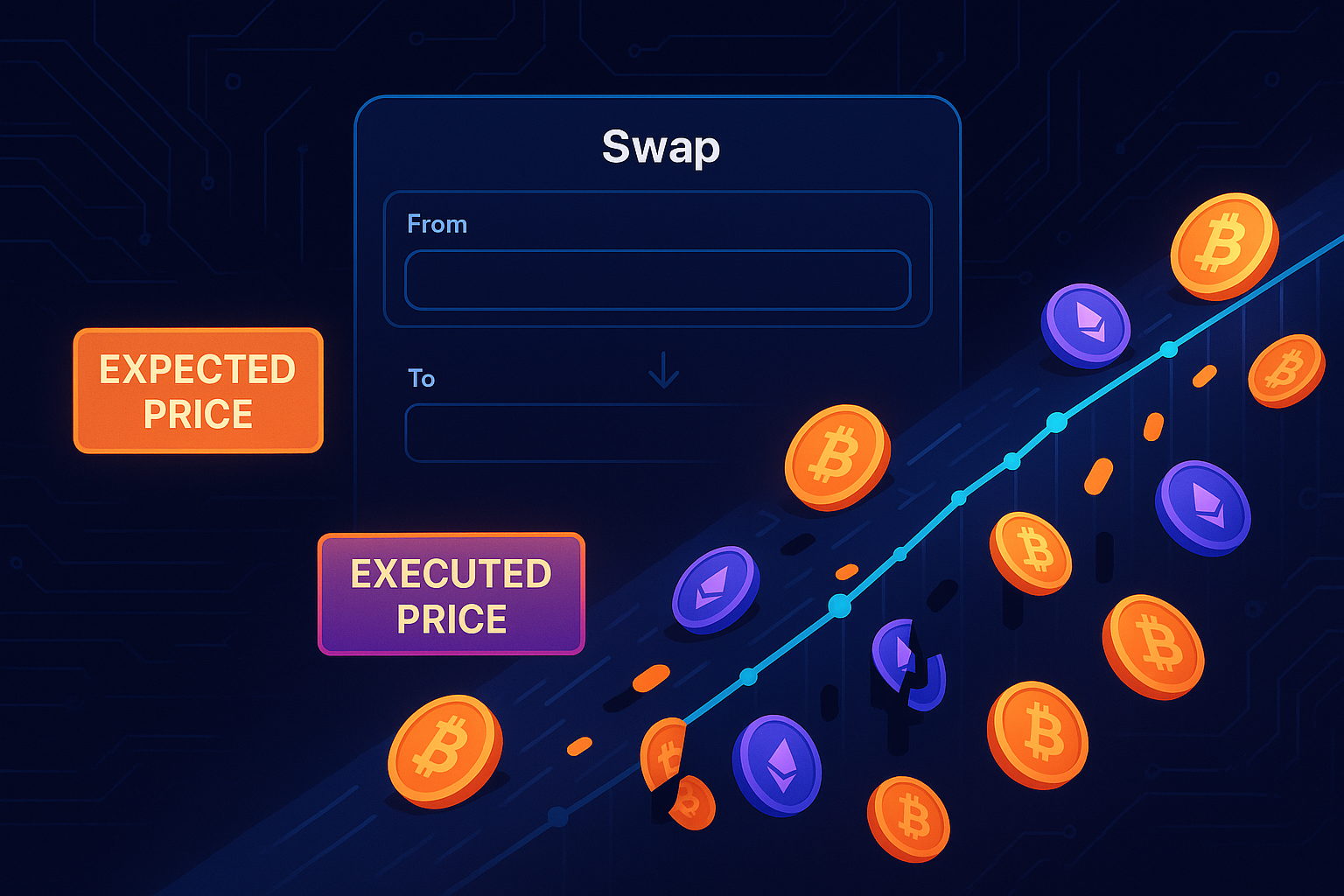
Enter the amount of crypto you want to swap. The widget will show you an estimated amount of XMR you will receive, including fees.
Step 3: Enter Your Monero Wallet Address
Open your XMR wallet and copy your primary Monero address. It usually starts with 4 and is longer than typical BTC/ETH addresses because of Monero’s privacy design.
Paste this address into the “Recipient address” field on GhostSwap. Double-check the first and last characters to avoid errors. If your wallet uses integrated or subaddresses, make sure you copy the correct one for receiving deposits.
Confirm the terms, then proceed to the next step. GhostSwap will display a deposit address where you should send your input crypto.
Step 4: Send Your Crypto and Receive XMR
From your sending wallet or exchange account, transfer the exact amount of BTC (or chosen coin) to the deposit address provided by GhostSwap.
Important best practices:

- Send the exact amount requested, not “about” that amount.
- Send within the time window displayed so the rate does not expire.
- Use a network fee high enough to confirm reasonably quickly.
Once your transaction is confirmed on the network, GhostSwap automatically executes the swap and sends the corresponding XMR to your recipient address. You can monitor the progress on the status page linked after you create the swap.
When the XMR transaction is broadcast, it will appear in your wallet after enough confirmations on the Monero blockchain. This usually takes a few minutes.
Pros and Cons of Buying Monero with GhostSwap
Pros
- No KYC: You do not submit identity documents or pass verification.
- Non-custodial: Your coins move directly between wallets; GhostSwap does not hold your funds.
- Fast swaps: Typically minutes once your input transaction confirms.
- 1,500+ trading pairs: Swap between many coins without going through a centralized exchange order book.
- Private by design: Ideal pairing with Monero’s own privacy features.
Cons
- Crypto-to-crypto only by default: You must already own some crypto, unless you use a third-party buy-crypto on-ramp first.
- Network fees apply: You pay blockchain fees to send your initial coin, plus the built-in spread/fee in the swap.
You can swap XMR for BTC, ETH, USDT and 1,500+ other coins on GhostSwap without KYC.
Method 2: Using a Centralized Exchange
Centralized exchanges (CEXs) are platforms where you create an account, deposit funds, and trade on an internal order book. Many people first learn how to buy Monero through exchanges because they accept bank transfers and cards.
How Buying Monero on a CEX Works
The typical process looks like this:
- Sign up on a major exchange that lists XMR.
- Complete KYC by submitting ID, a selfie, and sometimes proof of address.
- Deposit fiat (bank transfer or card) or deposit another cryptocurrency.
- Buy XMR on the XMR/USDT, XMR/BTC, or XMR/USD trading pair.
- Withdraw XMR to your personal Monero wallet.
Many exchanges treat Monero as a higher-risk asset because of its privacy features, so listed pairs, withdrawal limits, or regional availability can change. Always check current support in your jurisdiction.
Pros of Centralized Exchanges
- Fiat on-ramps: You can deposit with bank transfers or cards.
- High liquidity: On larger exchanges, XMR pairs may have tighter spreads.
- Extra features: Spot, margin, and sometimes derivatives markets.
Cons of Centralized Exchanges
- KYC required: Your identity is linked to your purchases and withdrawals.
- Longer onboarding: Verification can take hours or days.
- Custodial risk: Exchanges hold your funds until you withdraw, exposing you to hacks or account freezes.
- Regulatory uncertainty: Some exchanges have delisted XMR in certain regions.
If you use a CEX to buy Monero, consider withdrawing your XMR to your self-custodial wallet as soon as practical, to minimize centralized risk and improve your privacy profile.
Method 3: Buying Monero via P2P & Crypto ATMs
Another path for people who prioritize privacy or want to use cash is to buy Monero using peer-to-peer (P2P) trades or cryptocurrency ATMs that support XMR indirectly.
Option A: P2P Marketplaces
P2P platforms connect buyers and sellers directly, allowing you to trade fiat for crypto without an order book. Some marketplaces list XMR directly; others let you buy BTC or USDT first, then swap that to Monero using a service like GhostSwap.
General P2P process:
- Sign up on a P2P platform (levels of KYC vary by platform and region).
- Browse offers to buy crypto using your preferred payment method (bank, mobile money, cash).
- Open a trade and follow the instructions to pay the seller.
- Receive BTC/USDT/etc. in escrow and then to your wallet.
- Swap that crypto to XMR using a non-custodial swap for added privacy.
Pros:
- Flexible local payment methods.
- Potentially less surveillance than fully KYC exchanges (depending on platform and limits).
Cons:
- Higher risk of chargebacks or scams if not using escrow correctly.
- Slower trades, as you wait for counterparties to respond.
- Often requires at least basic account registration.
Option B: Crypto ATMs
Some crypto ATMs let you buy BTC or other coins with cash. Even if the ATM does not have a direct XMR option, you can:
- Use cash at the ATM to buy BTC or USDT to your wallet address.
- Once funds are confirmed in your wallet, use a private exchange such as GhostSwap to convert them to XMR.
Pros:
- Use physical cash, which can be preferable for some privacy-conscious users.
- Instant in-person experience without bank intermediaries.
Cons:
- Fees can be significantly higher vs online methods.
- Not all ATMs are available or support non-KYC tier limits.
- You still must safeguard your on-chain privacy after purchase.
To locate ATMs, you can use directories like Coin ATM Radar (coinatmradar.com). Just remember that even if the machine supports BTC only, you can later convert that BTC to XMR through a non-custodial swap.
Tips for Staying Safe When Buying Monero
Monero’s privacy features do not replace basic security hygiene. You still have to protect your keys, devices, and transaction patterns.
1. Choose a Secure Wallet
Stick with well-known Monero wallets that have community support and open-source code. The official Monero documentation at getmonero.org is a good starting point.

For higher amounts, consider a hardware wallet like Ledger combined with a Monero-compatible client. Always verify you are downloading wallets from legitimate sources and check signatures when possible.
2. Protect Your Seed Phrase and Keys
- Never share your seed phrase or private keys with anyone.
- Do not store them in screenshots, email, cloud storage, or password managers.
- Use metal backups or multiple paper copies stored in safe locations.
If someone gains access to your seed phrase, they can take your XMR without leaving a reversible trail.
3. Watch Out for Phishing and Fake Apps
Phishing remains one of the most common attack vectors. Always:
- Check URLs carefully before entering any address or connecting a wallet.
- Avoid clicking on sponsored ads claiming to be Monero wallets or swap services.
- Bookmark critical sites like GhostSwap and the official Monero website.
4. Validate Transaction Details
When swapping or sending:
- Compare the first and last characters of destination addresses.
- Confirm the amount and network fee before clicking send.
- Start with a small test transaction if you are using a new service or wallet.
5. Use Privacy Best Practices
Monero transactions are private by default, but your broader digital footprint may still reveal patterns. Consider:
- Avoiding reusing addresses more than necessary.
- Not sharing screenshots of your wallet balance or transactions.
- Keeping your XMR purchases separate from identifiable exchange accounts when possible.
For deeper research on Monero’s privacy model and best practices, see the Monero Project’s own resources and community guides, as well as analytics from data sites like CoinGecko’s Monero page or Monero on CoinMarketCap.
Ready to Get Started?
If you already have BTC or another cryptocurrency, you can move straight to acquiring XMR. Use the non-custodial swap on GhostSwap to convert your coins to Monero and have it land directly in your wallet, without logins or ID checks.
Set up your wallet, copy your XMR address, and create your first swap in a few clicks. Once it is complete, your Monero is fully in your control.
Ready to Trade Monero?
You can privately exchange BTC or other coins for XMR in minutes using GhostSwap’s instant swap interface. Visit this BTC to Monero exchange page to start your first non-custodial swap today.
Frequently Asked Questions
Can I do this without ID?
Yes, you can buy Monero without ID if you use crypto-to-crypto methods.
Non-custodial swap services like GhostSwap do not require KYC for standard usage. You just send cryptocurrency from your own wallet and receive XMR back, without creating an account or uploading documents.
If you only have fiat, you might need to use a KYC on-ramp (a centralized exchange or regulated broker) at least once to get your first crypto. After that, you can use private swaps going forward.
What is the best method?
The best way to buy Monero depends on your priorities:
- If you value privacy and speed, using GhostSwap or another non-custodial instant swap is usually the best choice, assuming you already hold BTC, ETH, or stablecoins.
- If you need to spend fiat directly (bank transfer or card), a reputable centralized exchange may be more straightforward at the start.
- If you want to use cash, P2P trades or crypto ATMs plus a follow-up XMR swap can work.
Many users start with a CEX to acquire their first crypto, then migrate to non-custodial swaps like GhostSwap for all subsequent Monero purchases.
How long does it take?
Timeframes vary by method:
- GhostSwap / instant swaps: Generally 5–20 minutes once your input transaction confirms on its blockchain.
- Centralized exchanges: Account creation and KYC can take from 30 minutes to a few days. Actual trading and on-chain withdrawals add more time.
- P2P and ATMs: About 20–60 minutes for a typical transaction, depending on counterparties, queues, and network congestion.
If you already own crypto and want Monero quickly, a non-custodial swap is usually the fastest path from start to finish.
Is it safe to use GhostSwap?
GhostSwap is designed as a non-custodial swap service. That means it does not hold long-term balances or user accounts; it simply facilitates on-the-fly exchanges between your sending and receiving wallets.
To use it safely:
- Access GhostSwap from the correct URL and consider bookmarking it.
- Double-check your sending and receiving addresses before confirming.
- Start with a small test swap if it is your first time, especially when sending from a new wallet.
No online service is entirely risk-free, but non-custodial swaps inherently reduce custodial risks compared to leaving funds on centralized exchanges for extended periods.