How To Buy Crypto Without KYC In 2026: Complete Step‑By‑Step Guide
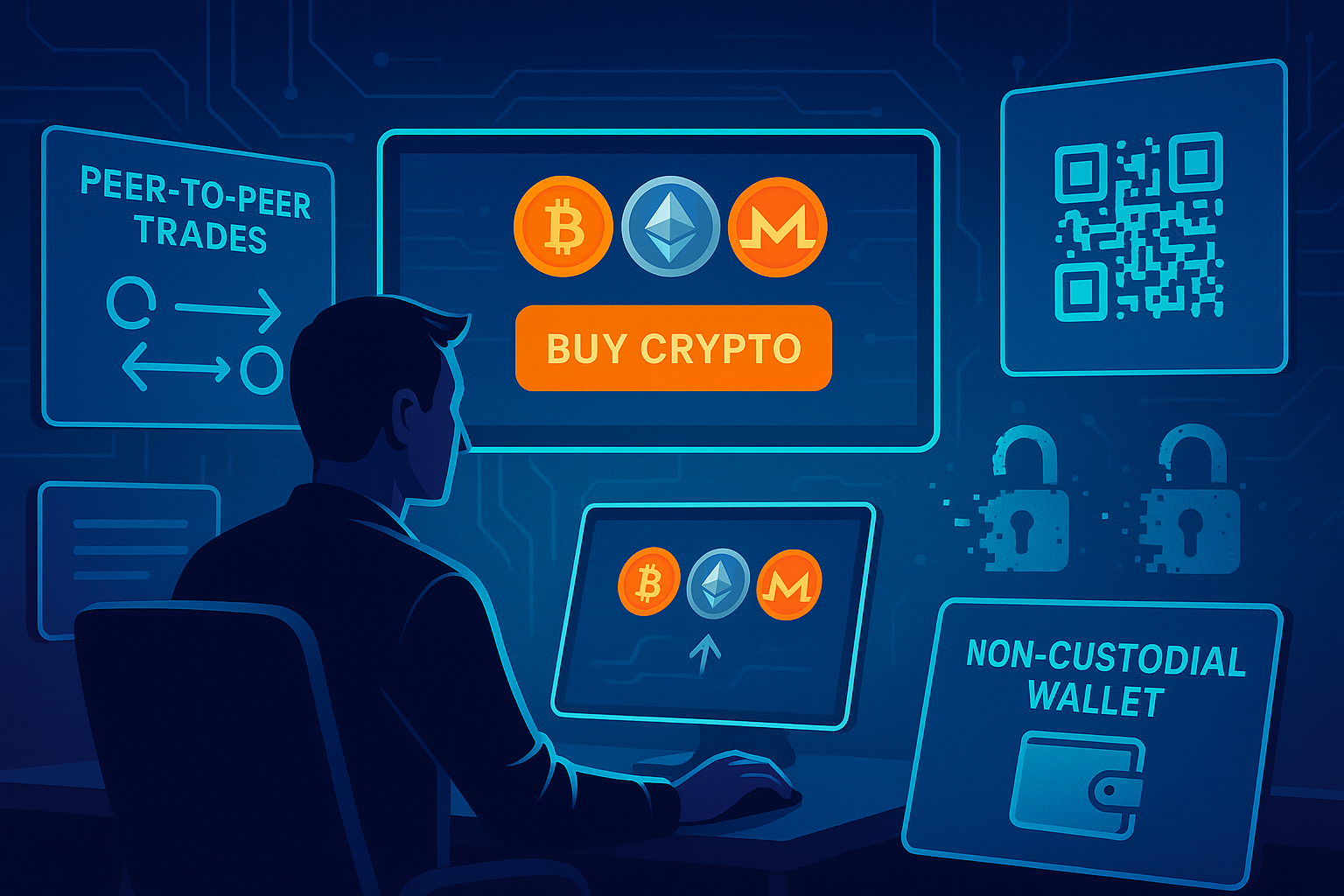
If you want to buy crypto without KYC in 2026, the fastest way is to use a non‑custodial swap like GhostSwap: send one cryptocurrency from your own wallet and instantly receive another, with no account, no ID, and no registration required.
- Set up a non‑custodial wallet (e.g., MetaMask, Trust Wallet, Ledger).
- Acquire a starter coin (BTC, ETH, USDT, etc.) via cash, P2P, or ATM.
- Use a no‑KYC swap service to exchange into your desired cryptocurrency.
- Confirm the transaction and keep your coins secure in your own wallet.
What You Need Before You Start
Before learning how to buy crypto without KYC, make sure you have the basics in place. Unlike traditional exchanges, you are responsible for your own wallet and security.
1. A Non‑Custodial Crypto Wallet
You need a wallet where you control the private keys. This is critical for any private, no‑KYC setup.
Popular non‑custodial wallets include:
- MetaMask (browser & mobile) for Ethereum and EVM chains
- Trust Wallet (mobile) with support for many blockchains
- Ledger or Trezor hardware wallets for maximum security
When you create a wallet, you will receive a seed phrase (usually 12 or 24 words). Write it down on paper and store it offline. Anyone with that phrase can access your funds.
2. A Starter Cryptocurrency To Swap From
Most no‑KYC methods in 2026 are crypto‑to‑crypto. That means you typically:
- Get some BTC, ETH, USDT or another liquid coin via cash, P2P, or ATM
- Then swap that into the crypto you really want
Stablecoins (like USDT or USDC) and large caps (like BTC, ETH) usually have the best liquidity and lowest slippage when swapping.
3. Minimum Amounts & Network Fees
Every method has limits and fees:
- Swap minimums: Non‑custodial swap services often have a minimum trade size, which can vary by coin.
- Network (gas) fees: Blockchains charge fees to process your transaction.
On chains like Ethereum, gas can be high during congestion, while networks like Tron, Polygon, or BNB Chain are usually cheaper. You can check live fee estimates on data sites like Etherscan.
4. Time Needed
If you are prepared, the whole flow can be very quick:
- Wallet setup: 5–10 minutes
- Buying starter crypto (P2P, ATM, etc.): 10–60 minutes
- Swapping to your desired coin: 5–20 minutes, depending on network speed
In total, you can usually buy crypto without KYC in under one hour once you know the steps.
Method 1: Using GhostSwap (No KYC — Recommended)
Non‑custodial swap platforms are the most convenient way to buy crypto without verification in 2026. GhostSwap is built for exactly this use case: instant swaps, no accounts, and no control over user funds.
Step 1: Go To GhostSwap.io
Open your browser and go directly to GhostSwap.io. You do not need to sign up, log in, or pass any KYC checks.
The home page shows an exchange widget where you choose which coin you want to send and which coin you want to receive.
Step 2: Select Crypto In The Exchange Widget
In the “You send” field, choose the coin you already have (for example, USDT on Tron or BTC on Bitcoin). In the “You get” field, choose the coin you want to buy without KYC (for example, ETH, BNB, or a DeFi token).
Enter the amount you want to swap. The widget will show you the estimated amount you will receive, including all fees.
Because GhostSwap aggregates liquidity across many markets and supports 1,500+ trading pairs, you will usually find a direct pair for the coins you need.
Step 3: Enter Your Wallet Address
Next, paste the recipient wallet address for the coin you are buying. This must be a wallet you control, not a centralized exchange deposit address if you want to stay fully no‑KYC.
Check carefully:
- Blockchain (e.g., sending USDT on Tron to a Tron address, not Ethereum)
- Address spelling (double‑check the first and last 4 characters)
Once you confirm, GhostSwap will generate a unique deposit address or QR code for the coin you are sending.
Step 4: Send Your Crypto And Receive Crypto
Now go to your wallet and send the exact amount to the deposit address shown in the widget:
- Open your non‑custodial wallet
- Choose the coin you are sending
- Paste the deposit address from GhostSwap
- Confirm the network and fee, then send
GhostSwap automatically detects your payment, performs the swap, and sends the output coin to the recipient address you entered.
Timing depends on the networks involved, but swaps often complete within minutes once the input transaction is confirmed on‑chain.
Pros & Cons Of Buying Crypto This Way
Pros
- No KYC: No ID, selfies, or documents required
- Instant: No account creation or withdrawal delays
- Non‑custodial: You stay in control of your funds; GhostSwap never holds your keys
- Wide selection: 1,500+ trading pairs let you access many altcoins and stablecoins
Cons
- Crypto‑to‑crypto only: You need some crypto first; you cannot deposit a bank card or wire directly, except when using integrated “buy crypto” features
- One‑way swaps: Each trade is independent; you do not get advanced order types like on professional exchanges
You can swap BTC, ETH, USDT and many other assets for 1,500+ coins on GhostSwap without KYC, directly from your own wallet.
Method 2: Using A Centralized Exchange (With KYC)
Centralized exchanges are the most familiar way to buy crypto, but they almost always require KYC in 2026, especially if you want fiat on‑ramps.
How Centralized Exchanges Work
Centralized exchanges (CEXs) act as custodians and order‑book venues. You deposit funds into your account, then trade against other users.
Typical process:
- Register with your email and password
- Complete KYC: upload your ID document, selfie, and sometimes proof of address
- Wait for approval, which can take anywhere from minutes to a few days
- Deposit fiat via bank transfer, card, or third‑party processor
- Buy your chosen crypto and withdraw it to your own wallet
Because of regulatory pressure, unverified accounts are usually very limited in deposits, trading volume, and withdrawals. In some regions you cannot trade at all without full verification.
Why This Method Is Not No‑KYC
If your goal is to buy crypto without KYC, centralized exchanges are generally unsuitable:
- Your identity is linked to your trades and withdrawals
- Your documents are stored on centralized servers
- Your account and withdrawals can be frozen at the platform’s discretion
CEXs can still be useful if you do not mind verification, but they do not match the privacy or self‑custody benefits of services like GhostSwap and other non‑custodial solutions.
Method 3: Other No‑KYC Options (P2P, DEXs & ATMs)
Beyond non‑custodial swap platforms, there are three major ways to buy crypto without KYC in 2026: peer‑to‑peer (P2P) marketplaces, decentralized exchanges (DEXs), and crypto ATMs. Each has its own trade‑offs.
Option A: Peer‑To‑Peer (P2P) Marketplaces
P2P platforms connect buyers and sellers directly. You can pay with bank transfer, cash, digital wallets, or other methods, then receive crypto in your personal wallet.
How P2P Trading Works
- Register on a P2P marketplace (some require minimal KYC; others are more relaxed)
- Browse offers for the coin and payment method you want
- Start a trade, follow the platform instructions, and pay the seller
- The platform holds coins in escrow until the seller confirms payment
- Once confirmed, crypto is released to your wallet address
Some P2P platforms are integrated into major exchanges but still insist on full KYC. Others are more independent and may allow limited trading without ID, depending on jurisdiction.
Pros & Cons Of P2P
- Pros:
- Flexible payment methods (cash, local banks, gift cards, etc.)
- Can sometimes trade with minimal verification on certain platforms
- Cons:
- Counterparty risk if the platform’s escrow is weak
- Higher spreads and fees than liquid markets
- Slower trades, manual communication with sellers
Option B: Decentralized Exchanges (DEXs)
DEXs like Uniswap, SushiSwap, or PancakeSwap allow users to swap tokens directly from their wallets via smart contracts. There is typically no registration and no identity check because trades happen on‑chain.
How DEX Trading Works
- Connect your non‑custodial wallet to the DEX interface
- Select the token pair you want to trade (e.g., ETH to DAI)
- Approve token spending from your wallet (for ERC‑20s)
- Execute the swap and confirm the transaction in your wallet
Prices on DEXs are determined by automated market makers (AMMs), not order books. Liquidity pools with more capital usually offer better prices and lower slippage.
To research available tokens and liquidity, you can use data aggregators like CoinGecko or CoinMarketCap.
DEX Pros & Cons
- Pros:
- No registration, no KYC, trades directly from your wallet
- Huge variety of tokens, including many new DeFi projects
- Cons:
- You still need starter crypto on that chain first
- Risk of scam tokens and low‑liquidity pairs
- Gas fees on networks like Ethereum can be expensive
Option C: Crypto ATMs
Crypto ATMs let you insert cash and receive crypto to your wallet address. In many regions, small amounts can still be purchased with minimal or no KYC, though regulations are tightening.
How Crypto ATMs Work
- Find a nearby ATM using a locator site
- Select “Buy” and choose your cryptocurrency
- Enter or scan your wallet address QR code
- Insert cash and confirm the amount
- Receive the crypto to your address once the transaction is processed
Some machines require phone verification or ID scanning above certain limits to comply with local law. Always read the on‑screen instructions carefully.
ATM Pros & Cons
- Pros:
- Use physical cash; straightforward process
- Can be fast for small, local purchases
- Cons:
- High fees compared to online services
- Limited coin selection at many ATMs
- Not available in all countries or cities
In practice, many users start with cash or P2P to get BTC or USDT, then use a private exchange such as GhostSwap’s non‑custodial swap to move into other coins without additional verification steps.
Tips For Staying Safe When Buying Crypto Without KYC
Privacy is only useful if your funds are secure. When you skip KYC, you lose some centralized protections, so good security habits are essential.
Use Strong Wallet Security
- Protect your seed phrase: Store it offline. Never type it into websites, web forms, or screenshots.
- Enable hardware wallets: For larger amounts, sign transactions on a device like Ledger or Trezor.
- Backups: Keep written backups in separate secure locations in case of fire or loss.
Verify Every Address And Network
Sending crypto to the wrong address or chain is usually irreversible.
- Copy/paste carefully, and check the first and last characters
- Confirm you are using the right network (ERC‑20 vs BEP‑20 vs TRC‑20, etc.)
- Send a small test transaction when using a new platform for the first time
Beware Of Phishing And Fake Websites
- Type URLs directly or bookmark official sites yourself
- Check for SSL (https) and correct domain spelling before connecting wallets
- Do not click on unsolicited links in email, Telegram, or social media
Understand Volatility & Fees
Crypto prices are highly volatile. Before you buy, understand:
- Current price levels (check live charts on sites like CoinGecko or CoinMarketCap)
- Network fees: gas on Ethereum, miner fees on Bitcoin, etc.
- Spread and slippage on the pair you are trading
Knowing these costs helps you avoid overpaying when you buy crypto without KYC.
Ready To Trade [Coin]?
If you already hold crypto in your wallet, you can use GhostSwap to swap crypto instantly and privately. Choose your input coin, select the coin you want, enter your wallet address, and complete a non‑custodial swap with no KYC and no account.
Ready To Get Started?
Buying crypto without KYC in 2026 is still very possible when you combine the right tools: a secure wallet, a source of starter crypto, and a reliable non‑custodial exchange.
Once you have BTC, ETH, USDT or another major coin, a private exchange like GhostSwap.io lets you move into 1,500+ other assets while keeping control of your keys and avoiding identity checks.
Stick to small test transactions at first, double‑check addresses, and upgrade your wallet security as your holdings grow. With those precautions, you can build and manage a crypto portfolio without tying it to your government ID.
Frequently Asked Questions
Can I do this without ID?
Yes, it is still possible to buy crypto without ID in 2026, but not usually directly from your bank card or account. The most common path is:
- Get starter crypto via P2P, cash, or a low‑KYC ATM
- Use a non‑custodial swap service to convert it into other coins
Platforms like GhostSwap do not request identification because they only perform crypto‑to‑crypto swaps and never hold user funds.
What is the best method?
The “best” method depends on your priorities, but for most people who value both privacy and convenience, the combination looks like this:
- Use P2P or a local ATM to get BTC, ETH, or USDT
- Use a non‑custodial platform such as GhostSwap for fast, no‑KYC swaps into the coins you want
DEXs are excellent for DeFi tokens once you already have funds on the right chain, while P2P is useful to get from fiat cash to crypto.
How long does it take?
The time required varies by method:
- Non‑custodial swaps: usually minutes after network confirmation of your input
- DEX trades: a few seconds to several minutes depending on network congestion
- P2P trades: 10–60 minutes on average, depending on the seller and payment method
- Crypto ATMs: typically 5–15 minutes including confirmations
Overall, once you have crypto in your wallet, swapping into other coins without KYC is typically very fast.
Is it safe to use GhostSwap?
GhostSwap is designed as a non‑custodial swap platform, which means it does not store your funds or private keys. You send crypto from your wallet, the service performs the swap, and the output coin is sent directly back to the address you specify.
No accounts, no ID uploads, and no long‑term custody reduce many of the risks associated with centralized exchanges. That said, crypto is inherently risky, so you should always:
- Start with small test transactions
- Verify URLs carefully
- Use secure, well‑backed‑up wallets
Used correctly, non‑custodial tools like GhostSwap can be a safe and efficient way to buy crypto without KYC while maintaining control over your own assets.