
How to Hedge Crypto Volatility with Stablecoins: A Practical Guide
Introduction
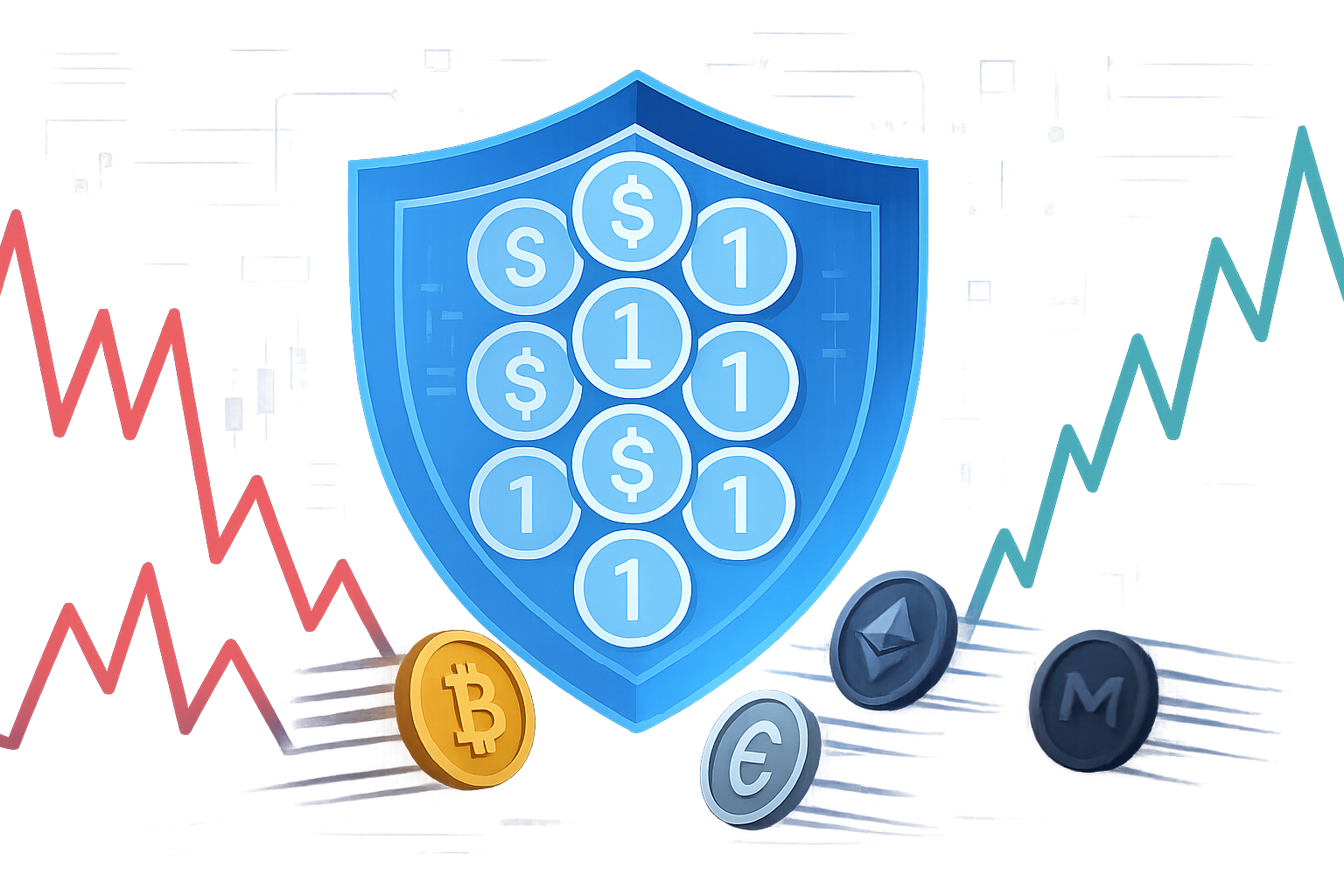
Volatility is both the biggest attraction and the biggest risk in cryptocurrency. Prices can surge by double digits in a single day, but they can also crash just as fast. For traders, investors, and even DeFi users, learning how to hedge crypto volatility with stablecoins is one of the most practical skills you can develop.
Stablecoins give you a way to move in and out of volatile assets like Bitcoin or Ethereum without leaving the crypto ecosystem. With a few clicks on a non-custodial swap, you can rotate a portion of your holdings into a stable asset, protect gains, and manage risk more intelligently.
This article explains what it really means to hedge crypto volatility with stablecoins, why it matters, the benefits and drawbacks, and a simple step-by-step process you can follow today.
Why Hedging Crypto Volatility with Stablecoins Matters
Crypto markets are notoriously volatile. While volatility can be profitable, unmanaged exposure often leads to emotional decision-making and avoidable losses.
The nature of crypto volatility
Crypto assets:
- Regularly experience 5–20% daily price swings
- Can lose 50% or more in a single market cycle
- Are influenced by macro events, regulations, hacks, and sentiment
If your entire portfolio is in high-volatility coins, your net worth can fluctuate wildly, which makes it difficult to:
- Plan entries and exits rationally
- Secure profits after strong rallies
- Sleep comfortably during market drawdowns
Hedging vs. exiting the market
Hedging with stablecoins is not the same as selling everything and going to cash in a bank account. Instead, you:
- Reduce price risk by holding stable, dollar-pegged assets
- Stay within the crypto ecosystem so you can re-enter quickly
- Maintain access to DeFi protocols, yield opportunities, and on-chain tools
In other words, you are managing volatility, not abandoning crypto.
What Are Stablecoins?
Stablecoins are cryptocurrencies designed to maintain a relatively stable value, typically pegged to a fiat currency like the US dollar.
Main types of stablecoins
- Fiat-collateralized stablecoins
Backed by reserves such as cash and short-term government securities held by a central issuer.- Examples: USDT, USDC, BUSD (legacy), TUSD
- Pros: Simple to understand, widely used, high liquidity
- Cons: Centralized issuer risk, reliance on audits and regulators
- Crypto-collateralized stablecoins
Backed by overcollateralized crypto assets locked in smart contracts.- Examples: DAI, LUSD, MIM (historically)
- Pros: On-chain transparency, more decentralized design
- Cons: Subject to underlying crypto volatility, liquidation risk
- Algorithmic or hybrid stablecoins
Use algorithms, incentives, and sometimes partial collateral to maintain the peg.- Examples: FRAX (hybrid), other experimental models
- Pros: Capital-efficient, often more decentralized intent
- Cons: Higher risk of de-pegging, complex mechanisms
When your goal is to hedge crypto volatility with stablecoins, the quality and track record of the stablecoin you choose is critical.
Key Benefits of Using Stablecoins as a Hedge
1. Reduced portfolio volatility
By converting a portion of your holdings into stablecoins during periods of uncertainty or after a large rally, you can:
- Lock in profits from price appreciation
- Limit downside during potential corrections
- Smooth out your portfolio’s day-to-day value swings
2. Faster, frictionless re-entry into markets
Unlike cash in a bank, stablecoins sit on-chain and can be deployed instantly:
- Buy dips as soon as attractive prices appear
- Avoid banking delays and off-ramp / on-ramp bottlenecks
- Participate in DeFi strategies without converting back from fiat
3. Access to DeFi yields and strategies
While you are hedged, your stablecoins can still be productive:
- Lend stablecoins on reputable platforms to earn yield
- Provide liquidity in well-designed, lower-risk pools
- Use conservative farming strategies backed by stable assets
You are not forced to choose between safety and utility; you can hold stablecoins and still engage with the on-chain economy.
4. Operational convenience
Stablecoins make it easy to:
- Pay collaborators or contractors in crypto without volatility risk
- Keep trading collateral in a stable unit of account
- Manage taxes more efficiently by clearly tracking realized gains
Risks and Drawbacks of Hedging with Stablecoins
Hedging crypto volatility with stablecoins is useful, but not risk-free. Understanding the trade-offs helps you design a more robust strategy.
1. Counterparty and regulatory risk
Fiat-backed stablecoins depend on an issuing company and its banking partners:
- Bank account freezes or regulatory actions could impact redemption
- Blacklisting or forced freezes of addresses are possible
- Transparency of reserves varies across issuers
Always review:
- Audit or attestation reports
- Jurisdiction and regulatory posture of the issuer
- Historical behavior during stress events
2. De-pegging and market risk
Stablecoins are designed to track a peg but are not guaranteed:
- Some stablecoins have temporarily lost their peg under stress
- Algorithmic and undercollateralized models are higher risk
- Liquidity crises can cause short-term price dislocations
Mitigation:
- Diversify among multiple reputable stablecoins
- Avoid concentrating in experimental or thinly traded assets
- Monitor market depth and peg stability on major exchanges
3. Inflation and opportunity cost
If your stablecoin is pegged to a fiat currency like the US dollar:
- You are exposed to fiat inflation over time
- You may miss part of a strong crypto bull run if hedged too heavily
This is the core trade-off: less volatility today versus potentially lower upside tomorrow.
4. Smart contract and platform risk
If you deploy stablecoins into DeFi:
- Smart contract bugs can lead to loss of funds
- Protocol governance exploits or rug pulls can occur
- Bridges and wrapped tokens add further risk layers
Only use battle-tested protocols, read audits where available, and avoid chasing unsustainably high yields.
Step-by-Step Guide: How to Hedge Crypto Volatility with Stablecoins
This practical framework will help you implement a simple, disciplined hedging approach.
Step 1: Define your risk tolerance and goals
Before executing any trades, get clear on:
- Time horizon: Are you a short-term trader or long-term holder?
- Drawdown tolerance: How much of a portfolio drop can you stomach without panic?
- Target allocation: What percentage of your portfolio should be in stablecoins in different market conditions?
Example frameworks:
- Conservative: 40–60% in stablecoins during high volatility, 20–30% in calmer markets
- Moderate: 20–40% in stablecoins as a core buffer
- Aggressive: 5–15% in stablecoins, used mainly for tactical entries
Step 2: Choose your stablecoins
Consider a diversified basket instead of relying on a single asset. For instance:
- 50% in a major fiat-backed stablecoin like USDT or USDC
- 30% in a reputable crypto-collateralized stablecoin like DAI (if aligned with your risk profile)
- 20% in an additional established stablecoin for diversification
Check for:
- Liquidity on the chains and exchanges you use
- Track record of maintaining the peg during stress events
- Transparency of collateral and audits
Step 3: Convert a portion of your volatile crypto into stablecoins
Once you know your target allocation, execute the hedge:
- Decide how much of each asset to rotate into stablecoins (for example, 25% of BTC and 25% of ETH holdings).
- Use a trusted platform where you can swap crypto instantly into USDT or other stablecoins without surrendering custody of your keys.
- Confirm received amounts and verify on-chain (or in your exchange wallet) that your stablecoins arrived.
Where possible, prefer low-fee chains or exchanges and be mindful of network congestion.
Step 4: Store your stablecoins securely
Your hedge is only effective if your assets are safe.
Options include:
- Hardware wallet: Highest security for long-term holdings
- Non-custodial software wallet: Good balance of access and control
- Exchange wallet: More convenient for frequent traders, but higher custodial risk
Best practices:
- Back up seed phrases offline
- Use hardware wallets for substantial balances
- Enable 2FA and security features wherever possible
Step 5: Set rules for rebalancing and redeploying
To prevent emotional decisions:
- Define clear conditions for when you will increase your stablecoin allocation (for example, after a 50% price run-up or when sentiment gets euphoric).
- Define conditions for when you will gradually rotate stablecoins back into volatile assets (for example, during deep corrections or when on-chain indicators turn favorable).
- Rebalance on a schedule such as monthly or quarterly, in addition to market triggers.
Use limit orders or staged entries to avoid catching sharp short-term moves.
Practical Tips for Hedging with Stablecoins
1. Start small and iterate
If hedging is new to you:
- Begin by moving a small portion (for example, 10%) of your portfolio into stablecoins
- Live with the experience through a few market cycles
- Adjust your target allocation based on how you feel during volatility
2. Avoid all-or-nothing moves
Trying to time the exact top or bottom of a market is very difficult. Instead of selling 100% to stablecoins or being 100% in volatile assets:
- Use gradual scaling: increase or decrease stablecoin allocation in steps
- Combine fixed schedules (like monthly adjustments) with price-based rules
This reduces regret and helps you stay disciplined.
3. Keep transaction costs in mind
Frequent hedging on high-fee networks can eat into returns. To optimize:
- Batch trades when possible
- Use chains or bridges with lower fees if they are secure and liquid
- Compare effective spreads and fees across platforms before executing
4. Separate trading capital from long-term holdings
For long-term believers in Bitcoin or other majors:
- Consider a “never sell” core allocation you keep unhedged
- Use stablecoins mainly to manage the trading or speculative portion of your portfolio
This can help you stay aligned with your long-term thesis while still managing risk.
5. Monitor issuer news and on-chain metrics
Because stablecoin risk is not zero, ongoing monitoring is important:
- Follow official announcements from stablecoin issuers
- Watch for unusual on-chain behavior, like massive redemptions or sudden peg instability
- Diversify into alternatives if one stablecoin shows signs of stress
6. Combine hedging with privacy and security best practices
If privacy is a concern while hedging:
- Use non-custodial tools that do not require extensive personal data
- Prefer platforms where a private exchange is possible without giving up control of your keys
- Rotate addresses periodically and avoid unnecessary exposure of wallet information
Use Cases: When Hedging with Stablecoins Makes Sense
1. After a strong price rally
If your holdings have significantly appreciated:
- Lock in a portion of gains by converting some profit into stablecoins
- Protect against sharp corrections that often follow parabolic moves
- Stay ready to buy back in if a healthier price level emerges
2. Before known high-risk events
Examples:
- Major regulatory announcements
- Protocol upgrades or hard forks
- Macro events like key interest rate decisions
Temporarily increasing your stablecoin allocation can act as insurance against surprise volatility.
3. When you need predictable liquidity
If you expect to need funds within a specific timeframe:
- Tuition, business expenses, or large purchases
- Loan repayments or tax obligations
Holding the necessary portion in stablecoins reduces the chance that a market crash will force you to sell at a loss.
Conclusion
Learning how to hedge crypto volatility with stablecoins is one of the most practical risk management techniques in the digital asset space. By rotating part of your portfolio into well-chosen stablecoins, you can:
- Reduce day-to-day portfolio swings
- Protect profits after strong rallies
- Stay fully within the crypto ecosystem and ready to act
The key is to understand the benefits and risks, diversify across reputable stablecoins, use secure storage, and follow rules-based rebalancing instead of emotional impulses. Whether you are a trader or a long-term investor, carefully structured hedging can help you navigate crypto cycles with more confidence and less stress.
When you are ready to act, a non-custodial platform where you can hedge crypto volatility with stablecoins in a single swap, such as moving BTC into USDT, makes it far easier to execute your strategy efficiently and securely. By combining the right tools with a disciplined plan, you can make volatility work for you rather than against you.

Ready to Swap?
Convert your crypto instantly on GhostSwap — no KYC, no sign-up required.
Popular swaps: BTC to XMR | BTC to ETH | XMR to BTC | ETH to XMR | BTC to SOL