Fastest Crypto Swap Service: How to Swap Coins Instantly and Safely
Introduction
In a market where prices can move in seconds, using the fastest crypto swap service is often the difference between catching a great opportunity and missing it completely. Traders, investors, and even casual crypto users increasingly need instant, low-friction ways to swap one coin for another without navigating complex order books or waiting for slow confirmations.
Modern crypto swap platforms allow you to move between assets in minutes or even seconds, sometimes with a single transaction and no account registration. Services like fast, non-custodial crypto swaps aim to make this process simple while preserving privacy and security. Choosing the right platform, however, requires understanding what “fastest” really means and what you may sacrifice to get that speed.
This guide explains how instant swap services work, what affects transaction speed, the benefits and risks, and how to perform a fast, secure swap step by step. By the end, you will know how to evaluate any “instant” or “fastest” crypto swap service and use it without unnecessary risk.
Why Speed Matters in Crypto Swaps
Speed is not just a convenience in crypto; it is often a core part of your strategy. Market conditions change rapidly, liquidity moves across chains, and arbitrage windows open and close in minutes. Using a slow service can directly impact your bottom line.
Key reasons speed is critical
- Price volatility: Crypto assets can move several percent in a few minutes. A slow swap might execute at a significantly worse rate than what you initially saw.
- Arbitrage and trading strategies: High-frequency traders and active arbitrageurs depend on executing swaps quickly to capture small pricing inefficiencies.
- Time-sensitive opportunities: Token launches, farming opportunities, and short-lived promotions often demand fast switching between tokens.
- Risk management: When markets drop sharply, the ability to quickly move into stablecoins or hedge using another asset can reduce losses.
Because of these factors, the “fastest crypto swap service” is not a luxury product. For active users, it is a key piece of infrastructure that supports both offensive (profit-seeking) and defensive (risk-reducing) strategies.
What Makes a Crypto Swap Service “Fast”?
Many platforms advertise themselves as “instant” or “fast,” but true speed depends on several technical and operational variables. When comparing services, look at what each one does in the background rather than relying on marketing claims alone.
Core factors that affect swap speed
- Blockchain confirmation times
Every swap ultimately depends on one or more blockchains. Bitcoin, Ethereum, and various L2s or altchains each have different block times and congestion profiles. Faster chains and layer 2 networks usually enable faster settlement. - Liquidity routing
Aggregator platforms route your trade across multiple decentralized exchanges (DEXs) or liquidity pools. Efficient routing can reduce slippage and avoid queues, which contributes to faster execution. - Off-chain vs on-chain mechanics
Some services pre-hedge or maintain internal liquidity so they can confirm your swap instantly off-chain, then settle later on-chain. Others rely entirely on live on-chain interactions, which may be slower but more transparent. - Infrastructure and optimization
Well-optimized nodes, low-latency APIs, and geographically distributed infrastructure can reduce delays caused by network propagation or server bottlenecks. - Automated quoting and pre-authorization
A good instant swap service quickly generates a quote and address or transaction path, rather than making you wait for manual reviews or multiple signature steps.
When evaluating which platform is truly the fastest crypto swap service, ask yourself: how many blockchains are involved, how complex is the routing, and does the provider introduce any extra off-chain delays?
Benefits of Using the Fastest Crypto Swap Service
Choosing a highly optimized swap platform offers several advantages that go beyond simply saving a few minutes. The right service can improve both your trading performance and your overall user experience.
1. Better execution and reduced slippage
Swaps that execute quickly are more likely to fill at the rate you were shown. During volatile conditions, even a short delay can increase slippage and result in fewer tokens received. Faster execution helps protect you from adverse price movements occurring between quote and settlement.
2. Fewer missed opportunities
With a near-instant service, you can rotate into trending tokens or exit high-risk positions more reliably. This agility is especially useful when:
- Moving into a token that is rapidly gaining liquidity and attention
- Reacting to unexpected news or protocol changes
- Switching between yield opportunities on different chains or platforms
3. Convenience and simplicity
The best swap platforms minimize friction. Many are web-based, connect directly to your wallet, and do not require you to create an account, manage API keys, or understand order book mechanics. A streamlined interface combined with quick processing creates a more pleasant and accessible experience.
4. Security and custody advantages
Speed is often paired with a non-custodial design, meaning you retain control of your private keys throughout the swap. When you use a non-custodial swap service, the platform typically never holds your funds long-term, which reduces the risk of centralized exchange hacks or account freezes.
5. Privacy and discretion
Many instant swap services require less personal information than full centralized exchanges. This can be beneficial for users who prefer additional privacy, as long as it aligns with local regulations and compliance requirements in their jurisdiction.
Risks and Drawbacks of Fast Crypto Swap Services
Speed always comes with trade-offs. To use the fastest crypto swap service safely, you need to understand what you might be giving up in exchange for faster execution.
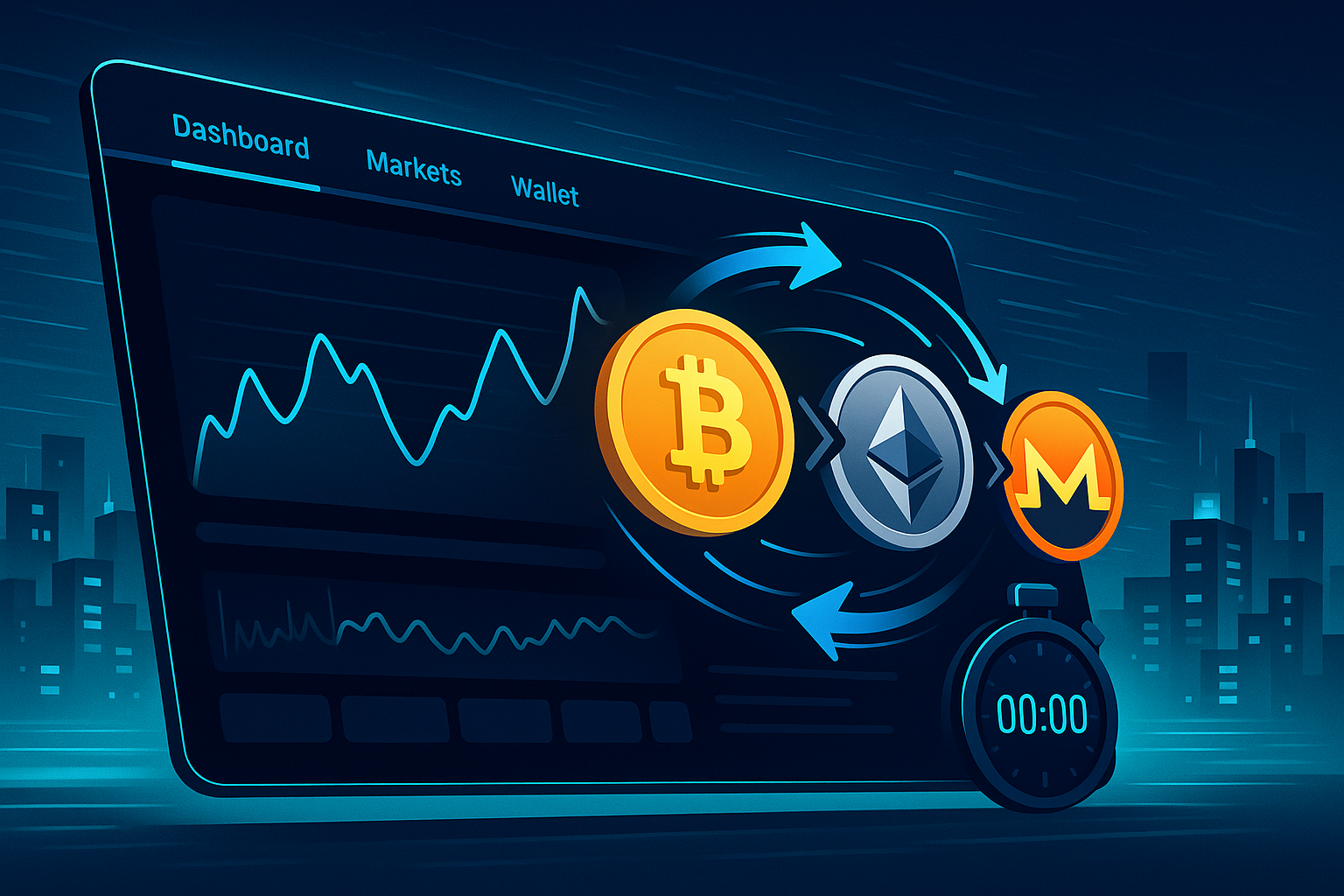
1. Less control over execution details
On some instant swap platforms, you do not directly place limit orders or choose your exact route. The service decides how best to execute within predefined slippage and time constraints. While convenient, this can occasionally result in worse pricing than a carefully managed manual trade on a centralized exchange or DEX.
2. Possible higher fees
Speed and convenience can come at a premium. Some platforms embed service fees or spread into the quoted rate. On top of that, you still pay network gas fees. Always compare the total cost of a swap, including:
- Quoted exchange rate
- Service fee or commission
- Gas fees on source and destination chains
- Any bridging or wrapping costs for cross-chain swaps
3. Smart contract and protocol risks
If the service uses smart contracts or cross-chain bridges, there is smart contract risk. Bugs, misconfigurations, or exploits can lead to loss of funds. Reputable platforms undergo audits and security reviews, but no system is entirely without risk.
4. Liquidity limitations
For very large trades or illiquid tokens, even the fastest platform might not be able to execute instantly without substantial slippage. In such cases, splitting trades or using multiple venues might be necessary.
5. Regulatory and compliance considerations
Depending on where you live, using a fast, privacy-friendly private exchange style swap service may involve regulatory considerations. It is your responsibility to understand and comply with local laws, tax obligations, and reporting requirements.
How to Use a Fast Crypto Swap Service: Step-by-Step Guide
While interfaces vary from platform to platform, most instant swap services follow a similar flow. The example below outlines the typical process to swap crypto instantly while minimizing risk.
Step 1: Choose a reputable instant swap provider
Before connecting your wallet or sending funds, evaluate providers based on:
- Security: Audits, open-source contracts where possible, and a solid security track record
- Reputation: User reviews, community feedback, and transparency from the team
- Supported assets and chains: Ensure your desired tokens and networks are supported
- Fee structure: Clear information about spreads, platform fees, and gas costs
- User experience: Intuitive interface and simple workflow
Step 2: Connect your wallet or prepare deposit address
Most non-custodial swap services let you connect wallets like MetaMask, Trust Wallet, or hardware wallets. If the platform uses deposit addresses instead of direct wallet connections, double check that the address is correct and belongs to the platform.
Step 3: Select the assets and amount
- Choose the token you want to sell (source asset) and the one you want to receive (destination asset).
- Enter the amount to swap, or choose “max” if you want to trade your full balance.
- Review the estimated rate, network fees, and any minimum or maximum limits.
On a well-optimized platform advertising itself as the fastest crypto swap service, the quote should appear quickly and update in real time as market conditions change.
Step 4: Review slippage tolerance and timing
Some services let you configure a slippage tolerance, which is the maximum acceptable deviation from the quoted price. To balance speed and safety:
- Use a lower slippage setting when trading less volatile, highly liquid tokens.
- Use a slightly higher slippage setting when trading volatile or low-liquidity assets, but avoid overly large values.
Also pay attention to any time limits on your quote. Many swap quotes are only valid for a short window. If you wait too long to approve the transaction, the service may recalculate the price.
Step 5: Confirm the transaction in your wallet
Once you are satisfied with the quote and settings:
- Click the swap or continue button on the platform.
- Approve the transaction in your wallet, checking the destination address and gas fees.
- Wait for the blockchain to confirm your transaction.
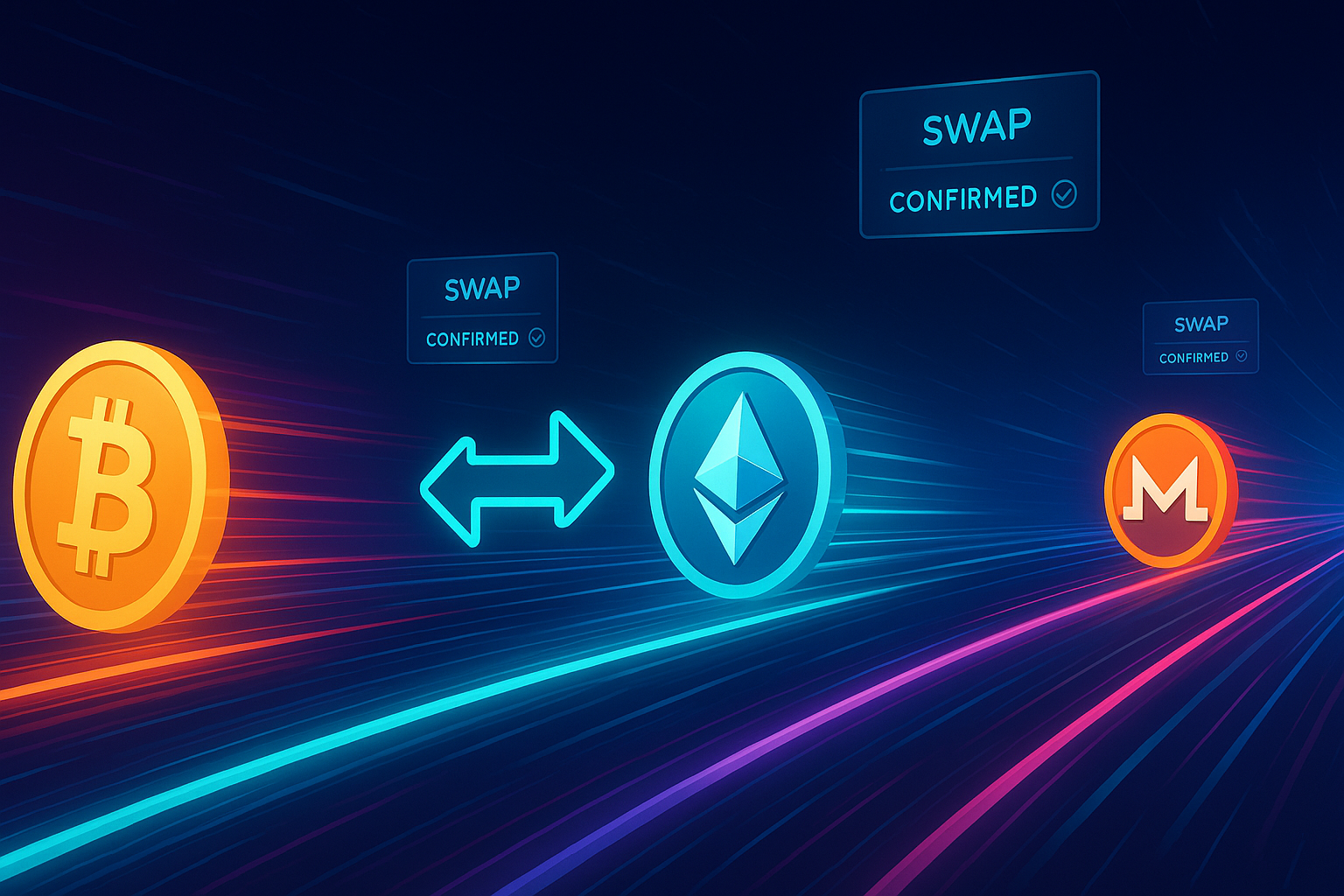
Faster services often provide clear progress indicators so you know which stages are complete, such as “waiting for deposit,” “executing swap,” and “sending output.” For a fast, private option, you can btc to eth exchange on a non-custodial platform with no account required.
Step 6: Verify receipt of funds
After the service marks the swap as complete:
- Check your wallet for the new asset balance.
- If the tokens do not appear, add the contract address manually if needed.
- Optionally confirm on a blockchain explorer that the transaction hash matches your expectations.
If you experience delays, consult the platform’s FAQ or support channels to see if network congestion or maintenance is affecting completion times.
Practical Tips to Get the Fastest, Safest Swaps
Even on a very fast platform, your own settings and habits influence how quickly and reliably swaps settle. Here are practical ways to optimize for both speed and safety.
1. Choose the right network
- Prefer layer 2 networks (such as Arbitrum, Optimism, Base, etc.) or high-throughput chains when possible, as they typically have faster finality and lower fees than mainnet Ethereum.
- Avoid using heavily congested networks for time-critical swaps, or be prepared to pay higher gas for priority inclusion.
2. Monitor gas conditions
On networks like Ethereum, gas prices fluctuate throughout the day. To speed up your swap:
- Check gas trackers and consider performing swaps during lower-traffic periods.
- Increase gas fees slightly above the base to improve confirmation times when speed matters.
3. Start with small test transactions
Whenever you try a new platform or a new chain:
- Perform a small test swap first to confirm that everything works as expected.
- Only increase trade size after you have validated that quotes, timing, and final amounts are correct.
4. Keep your wallet organized and secure
- Use a dedicated wallet for frequent trading and keep long-term holdings in a separate, more secure wallet.
- Verify that you are interacting with the legitimate site using bookmarked URLs or QR codes from trusted sources.
- Regularly update wallet software and firmware for hardware wallets.
5. Compare total cost, not just speed
A marginally slower swap that provides a better rate might be preferable to the absolute fastest option, especially for large sums. Compare:
- Received tokens after all fees and slippage
- Completion time under normal and congested conditions
- Security guarantees and transparency
6. Use platforms that prioritize privacy and non-custodial design
If you value privacy and control over your keys, look for services that highlight non-custodial swap mechanics. Platforms in this category typically interact only with your wallet and avoid holding your funds or requiring intrusive personal information, as long as they comply with relevant regulations.
Conclusion: Choosing the Fastest Crypto Swap Service the Smart Way
In the rapidly evolving digital asset landscape, having access to the fastest crypto swap service can significantly enhance your trading outcomes and overall flexibility. Speed helps you react to volatility, capture fleeting opportunities, and manage risk more effectively. Yet, speed alone is not enough. You must balance it with security, transparency, fair pricing, and regulatory awareness.
To choose and use the right platform:
- Evaluate security, audits, and reputation
- Compare real execution times, not just marketing claims
- Account for all fees and slippage, especially on large trades
- Prefer non-custodial, privacy-respecting services when appropriate
- Test with small amounts before scaling up
By following the steps and best practices outlined in this guide, you can confidently swap crypto instantly with a fast, non-custodial service while keeping your risks and costs under control. The right balance of speed, security, and usability will help you stay agile in the crypto markets and make the most of every opportunity that comes your way.
Ready to Swap?
Convert your crypto instantly on GhostSwap — no KYC, no sign-up required.
Popular swaps: BTC to XMR | BTC to ETH | XMR to BTC | ETH to XMR | BTC to SOL