ENS to ETH Swap: How to Exchange ENS Tokens for Ether Safely and Efficiently
Introduction
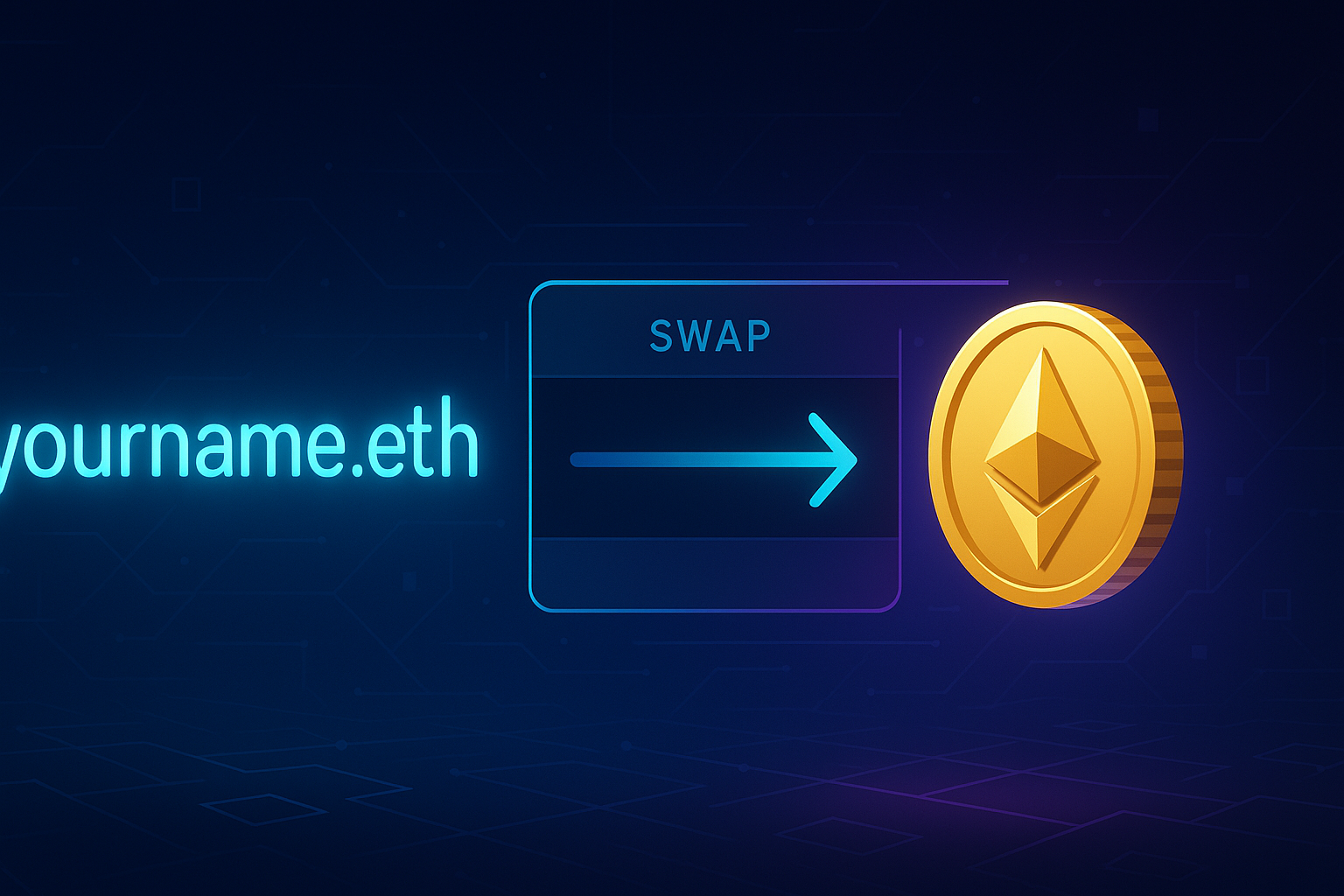
Ethereum Name Service (ENS) has become a core piece of Ethereum infrastructure, turning long wallet addresses into readable names like yourname.eth. Alongside the naming system, ENS also has its own governance and utility token, ENS. At some point, many holders want to convert their ENS into ETH to use in DeFi, pay gas fees, or simply take profits. That is where an ENS to ETH swap comes in.
If you are holding ENS from the airdrop, from staking rewards, or from secondary market trading, knowing how to quickly and safely swap ENS to ETH is crucial. Today, you can use a non-custodial ENS to ETH swap service that lets you exchange directly from your wallet without going through a centralized exchange.
This guide explains why ENS to ETH swaps matter, the benefits and risks, and a clear step-by-step process you can follow. Whether you are a long-term ENS believer rebalancing your portfolio or a short-term trader, you will find practical tips here to make your swap smoother and safer.
Why ENS to ETH Swaps Matter
1. Unlocking Liquidity from Your ENS Holdings
ENS tokens often sit idle in wallets, especially for early recipients of the ENS airdrop. Converting ENS to ETH lets you:
- Use ETH as gas to interact with DeFi, NFTs and dApps
- Provide liquidity on decentralized exchanges
- Stake or lend ETH in yield-generating protocols
- Rebalance your crypto portfolio between governance tokens and base assets
By performing an ENS to ETH swap, you transform a governance-focused token into a highly liquid asset that underpins the entire Ethereum ecosystem.
2. Managing Volatility and Portfolio Risk
ENS is a governance and ecosystem token. Its price can be more volatile than ETH, which is widely used as collateral, gas and a store of value in DeFi. Swapping ENS to ETH can be part of a broader risk management strategy:
- Diversification: If your holdings are heavily concentrated in ENS, moving some value into ETH can reduce token-specific risk.
- Realizing profits: After price increases, an ENS to ETH swap lets you lock in gains while still staying within the Ethereum ecosystem.
- Access to DeFi strategies: Many DeFi protocols primarily support ETH and ETH-correlated assets, so having ETH increases your flexibility.
3. Using ETH for Everyday On-Chain Activity
ETH is the fuel of the Ethereum network. Without ETH, you cannot:
- Register or renew ENS names
- Send tokens or interact with contracts
- Trade on most decentralized exchanges
- Bridge assets to other networks
If your wallet balance is heavy in ENS but light in ETH, a quick ENS to ETH swap solves a practical problem: you get the ETH you need for gas and transactions without going off-chain or using a centralized exchange.
Key Benefits of an ENS to ETH Swap
1. Convenience and Speed
Modern swap interfaces allow you to go from ENS to ETH in a single transaction:
- No need to create accounts or share personal data
- No lengthy deposit and withdrawal delays
- Execution often completes within minutes, depending on network load
Using a streamlined ENS to ETH swap interface helps you move value quickly while staying in control of your own wallet.
2. Non-Custodial Control
A non-custodial swap means:
- You retain control of your private keys throughout the process
- Funds are not stored on a centralized platform
- There is no custodial counterparty risk from an exchange going offline or freezing accounts
This aligns with the core ethos of Ethereum and DeFi: “not your keys, not your coins” no longer needs to be a concern when performing an ENS to ETH swap.
3. Privacy Advantages
Many decentralized swapping solutions prioritize privacy:
- No KYC or identity uploads required
- No centralized account history linking multiple wallets
- Fewer off-chain traces than centralized exchanges that log every action
If you value discretion, choosing a private exchange for ENS to ETH can help keep your trading activity more confidential while staying fully on-chain.
4. Lower Friction Compared to Centralized Exchanges
Using a centralized exchange to swap ENS to ETH usually means:
- Sending ENS from your wallet to the exchange deposit address
- Waiting for confirmations and possible manual checks
- Trading on the order book
- Withdrawing ETH back to your wallet and paying withdrawal fees
By contrast, a direct wallet-to-wallet swap removes multiple steps, reduces counterparty risk and often simplifies the overall user experience.
Risks and Drawbacks of Swapping ENS to ETH
No crypto transaction is completely risk free. Before initiating an ENS to ETH swap, carefully consider the following drawbacks and trade-offs.
1. Market Volatility and Slippage
Prices on decentralized exchanges and aggregators can change quickly. Two common issues to look out for:
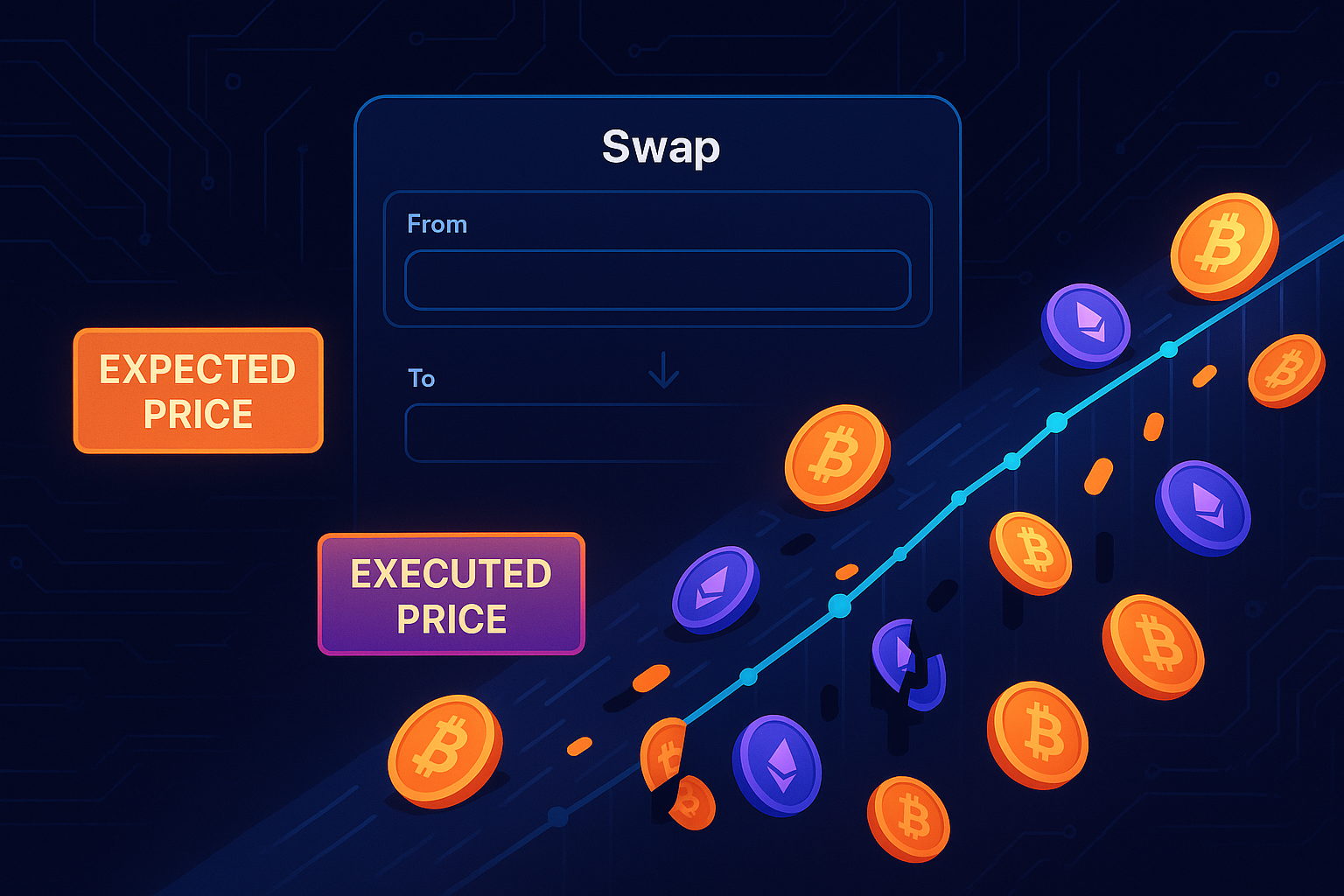
- Price impact: Large orders relative to available liquidity can move the price against you, giving you fewer ETH per ENS than quoted.
- Slippage: Between the quote and the transaction confirmation, market moves can reduce the final output you receive.
Mitigation strategies:
- Check liquidity depth for the ENS/ETH pair before swapping
- Use reasonable slippage settings to avoid failed or unfair trades
- Consider splitting very large swaps into smaller chunks
2. Smart Contract and Platform Risk
When you connect your wallet and interact with a swap interface, you are trusting its smart contracts and routing logic. Risks include:
- Bugs or vulnerabilities in smart contracts
- Malicious front-ends that redirect approvals to attacker contracts
- Incorrect routing that results in poor execution or unexpected tokens
Protect yourself by:
- Using reputable platforms with visible track records
- Double-checking contract addresses and approvals in your wallet
- Testing with small amounts before swapping large sums
3. Gas Fees and Network Congestion
Ethereum gas fees fluctuate based on network activity. During heavy usage:
- Swap costs can spike significantly
- Transactions may take longer to confirm or may fail if gas is set too low
To manage gas:
- Check current gas prices before initiating a swap
- Use fee estimation tools in your wallet
- Consider executing transactions during off-peak hours if timing is flexible
4. Opportunity Cost of Selling ENS
Swapping ENS to ETH reduces your exposure to the ENS ecosystem. Potential opportunity costs include:
- Losing governance power for protocol decisions
- Missing future token incentives or rewards tied to ENS holdings
- Exiting potential long-term appreciation in ENS value
A balanced approach might involve swapping only a portion of your ENS to ETH, keeping some ENS exposure while gaining ETH liquidity.
Step-by-Step Guide: How to Swap ENS to ETH
Below is a general workflow for a safe and effective ENS to ETH swap. Interface details vary by platform, but the structure stays similar across non-custodial swaps.
Step 1: Prepare Your Wallet
Before anything else, make sure you:
- Have a supported Ethereum wallet such as MetaMask, Rabby, Coinbase Wallet or a hardware wallet interface
- Hold enough ENS in the wallet you plan to use
- Have a small amount of ETH for gas fees (you cannot swap without it)
If your ENS is on an exchange, withdraw it to your own wallet first.
Step 2: Choose a Reliable ENS to ETH Swap Platform
Select a trusted interface that allows you to swap crypto instantly between ENS and ETH without giving up custody. When evaluating a platform, look for:
- Clear, transparent rates and fees
- Non-custodial design that connects directly to your wallet
- Support for ENS and ETH as native assets
- Good documentation, UI clarity and community feedback
Open the chosen platform, for example the dedicated ENS to ETH swap page, in a secure browser session.
Step 3: Connect Your Wallet
On the swap interface:
- Click “Connect wallet” or similar button
- Select your wallet provider (MetaMask, WalletConnect, etc.)
- Confirm the connection in your wallet, verifying you are on the correct site URL
Only approve connection requests to sites you fully trust. Always check the browser address bar and security indicators.
Step 4: Select ENS and ETH as Tokens
In the swap form:
- Set the “From” token to ENS
- Set the “To” token to ETH
- Enter the amount of ENS you want to convert
The interface should automatically calculate an estimated ETH output, considering current market rates and liquidity.
Step 5: Review Rates, Fees and Slippage
Before continuing, carefully review:
- Estimated ETH received for your ENS amount
- Price impact or any indication of low liquidity
- Service fees or protocol fees, if any
- Slippage tolerance, which you may be able to adjust
Ensure the trade looks reasonable compared to external price references such as major exchanges or price aggregators.
Step 6: Approve ENS Spending (If Required)
For most ERC-20 tokens, the first swap from a given wallet requires an “approval” transaction:
- Click “Approve ENS” or equivalent button
- Confirm the approval in your wallet, verifying contract addresses
- Wait for the approval transaction to be mined
After approval, the smart contract is allowed to move your ENS solely for executing swaps, up to the approved limit. You can later revoke approvals using token allowance tools if desired.
Step 7: Execute the ENS to ETH Swap
Once approval is complete:
- Click “Swap” or “Confirm swap” on the interface
- Review transaction details in your wallet:
- Input token and amount: ENS
- Output token and estimated amount: ETH
- Gas fee and total cost
- Confirm the transaction in your wallet
Your transaction will be broadcast to the Ethereum network and will confirm once it is included in a block.
Step 8: Verify ETH Receipt
After confirmation:
- Check your wallet balance to ensure the ENS decreased and ETH increased as expected
- View the transaction in a block explorer such as Etherscan to confirm:
- Token amounts in and out
- Recipient addresses
- Contract interactions
If your ETH does not appear immediately, ensure your wallet is connected to the correct network (Ethereum mainnet) and refresh its interface.
Practical Tips for a Better ENS to ETH Swap Experience
1. Start with a Small Test Swap
When using any platform for the first time:
- Try a small ENS to ETH swap before committing a large amount
- Confirm that everything works as expected, from approval to final balances
- Use this opportunity to get familiar with the user interface
A test run can help you avoid costly mistakes with larger sums.
2. Pay Attention to Gas and Timing
To optimize for cost and speed:
- Monitor current gas prices via common gas tracking tools
- Set gas fees that balance transaction speed with affordability
- Schedule swaps during historically quieter times if your timing is flexible
Paying excessively high gas for a small swap can significantly reduce your effective exchange rate.
3. Use Hardware Wallets for Larger Amounts
If you plan to swap a substantial amount of ENS:
- Consider connecting a hardware wallet for enhanced security
- Verify transaction details on the device’s screen before confirming
- Avoid performing large swaps from hot wallets on shared or insecure devices
This extra layer of protection is worthwhile whenever you handle valuable assets.
4. Regularly Review Token Approvals
Over time, your wallet may accumulate many token approvals for different protocols. Good hygiene includes:
- Periodically checking existing allowances for ENS and other ERC-20 tokens
- Revoking approvals that you no longer need
- Limiting approval amounts when feasible rather than granting unlimited spending
This helps limit the potential impact if any approved contract is compromised.
5. Keep a Portion of ENS if You Value the Ecosystem
Instead of swapping all ENS to ETH, some users:
- Swap only enough to cover gas and specific DeFi strategies
- Retain a core ENS position for governance and long-term exposure
- Reassess allocations periodically based on ENS and ETH market conditions
This balanced approach lets you enjoy the liquidity benefits of ETH while staying invested in the ENS ecosystem.
Conclusion
An ENS to ETH swap is a straightforward yet important operation for anyone active in the Ethereum ecosystem. It unlocks liquidity from your ENS holdings, gives you the ETH needed for gas and DeFi, and helps you manage risk between a governance token and a base asset.
By using a non-custodial swap platform, you can handle this exchange directly from your wallet while maintaining control of your keys and benefiting from fast, on-chain settlement. At the same time, it is essential to be aware of volatility, gas costs and smart contract risks.
If you prepare your wallet, verify platform details, start with small tests and monitor execution parameters like slippage and gas, swapping ENS to ETH can become a smooth part of your regular portfolio management. As ENS and Ethereum continue to grow in relevance, knowing how to efficiently move between ENS and ETH will remain a practical skill for every informed crypto user.