EGLD to BTC Swap: How to Exchange Elrond for Bitcoin Quickly and Safely
Introduction
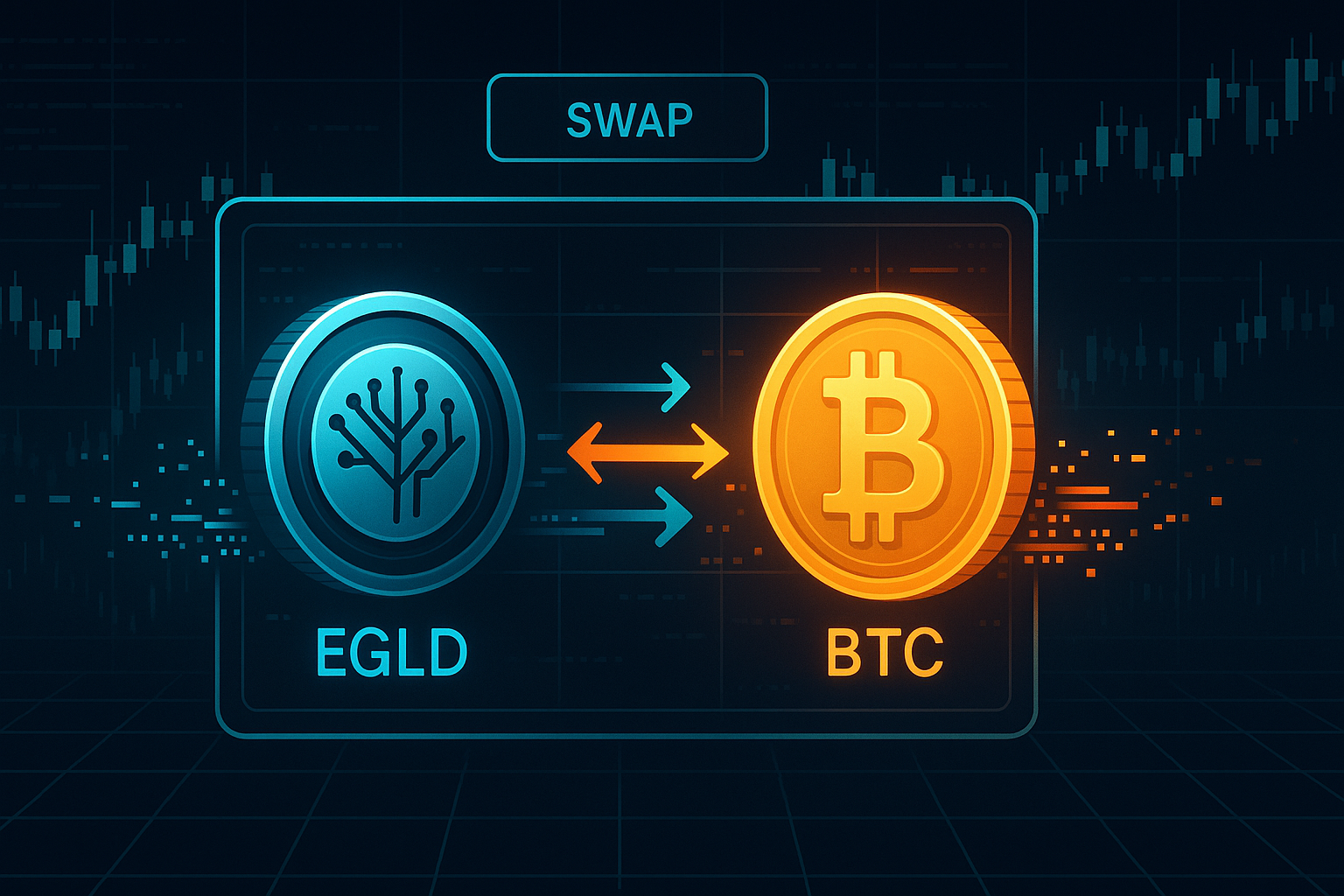
If you hold EGLD (MultiversX, formerly Elrond) and want to move into Bitcoin, learning how to perform an efficient egld to btc swap is essential. Whether you are rebalancing your portfolio, taking profits, or looking for more liquidity in BTC, the method you choose to swap has a direct impact on your fees, privacy, and risk exposure.
Today you no longer have to send funds to a centralized exchange, complete KYC, and wait for confirmations just to make a simple swap. With modern cross-chain protocols and aggregators, you can perform an egld to btc swap in a few clicks, often without creating an account.
This guide walks through why EGLD to BTC conversion matters, the core benefits and risks, and a practical, step-by-step process to execute the swap as safely and efficiently as possible.
Why EGLD to BTC Swaps Matter
Rebalancing between growth and reserve assets
EGLD is a high-performance smart contract platform token. BTC functions more as a digital reserve asset and long-term store of value. Many investors use BTC as a portfolio “anchor” while allocating a smaller portion to high-upside networks like MultiversX.
An egld to btc swap lets you:
- Lock in profits from EGLD after big price moves
- Reduce volatility by rotating some exposure into BTC
- Adjust risk as market conditions change without leaving crypto
Improved liquidity and on/off-ramp flexibility
Bitcoin has the deepest liquidity and the widest exchange and payment support in the crypto market. Swapping part of your EGLD into BTC can:
- Make it easier to move into stablecoins or fiat later
- Reduce slippage when making very large trades
- Give you more options for payments, custody, or DeFi routing
Reducing dependency on centralized exchanges
Historically, most people converted EGLD to BTC via centralized exchanges (CEXs). While still useful, CEXs introduce:
- Custodial risk (the platform holds your private keys)
- KYC and data collection requirements
- Withdrawal limits and potential delays
Today, you can use a non-custodial route for an egld to btc swap, where you retain control over your keys. This is especially valuable for privacy-focused or security-conscious users.
Key Benefits of a Non-Custodial EGLD to BTC Swap
1. You keep control of your funds
Non-custodial swapping means:
- You always send from a wallet you control
- You receive BTC directly into your own wallet
- You do not need to deposit funds into an exchange balance first
This significantly reduces counterparty risk. If a platform is simply routing swaps rather than holding your assets, there is much less surface for catastrophic loss.
2. Better privacy with no mandatory account signup
Many instant swap services let you:
- Swap without creating an account
- Avoid providing personal information or full KYC for moderate amounts
- Limit the linkage between your real-world identity and on-chain activity
If privacy is a priority, look for a private exchange that supports non-custodial swaps so you are not forced to link everything to a centralized user profile.
3. Simpler process than using centralized exchanges
With an instant aggregator or swap service, the process is often:
- Choose trading pair: EGLD to BTC
- Enter your destination BTC address
- Send EGLD to a provided deposit address
- Receive BTC after the transaction confirms
No order books, no complex interfaces, and no separate “deposit” and “withdrawal” phases.
4. Competitive rates and transparent fees
A good swap provider will:
- Source rates from multiple liquidity venues
- Show estimated amounts and network fees upfront
- Sometimes offer fixed-rate options during a short time window
This lets you compare the effective rate with what you would get on a CEX, but without sacrificing privacy or custody.
Risks and Drawbacks to Consider
No method is risk-free. Before you perform an egld to btc swap, be aware of the following:
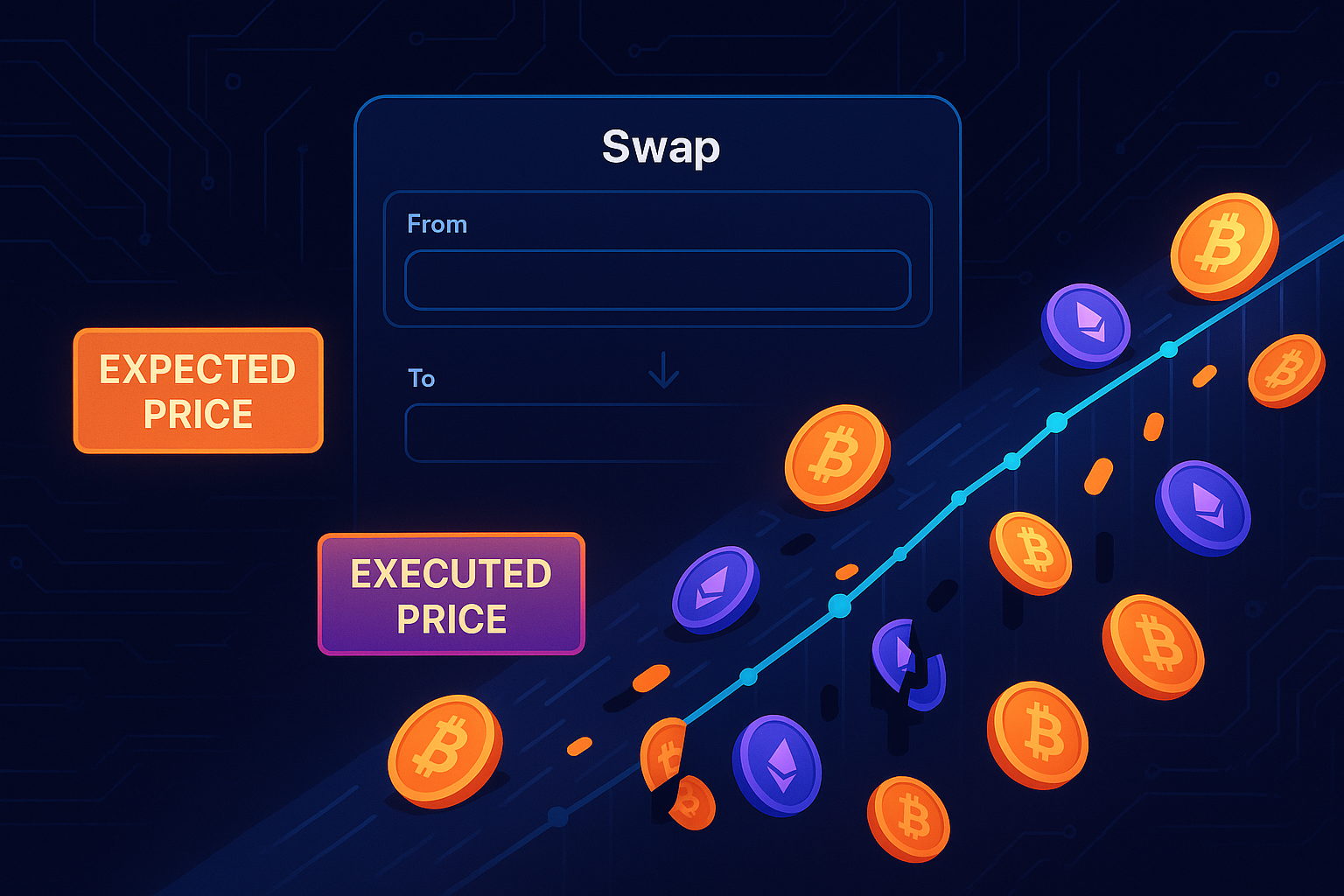
1. Market volatility and price slippage
Crypto prices can move quickly. During your swap:
- EGLD or BTC may change price while your transaction is pending
- You might receive slightly less or more BTC than the initial estimate
- On-chain congestion can increase confirmation times
Mitigation tips:
- Use services that offer “fixed rate” swaps when possible
- Avoid swapping during highly volatile news or events
- Check the final rate and minimum received amount before sending
2. Smart contract or routing risk
If the service uses smart contracts or complex routing under the hood:
- Bugs in contracts could lead to frozen or lost funds
- Misconfigured routes could fail and require manual support
Mitigation:
- Use well-known, audited, or widely reviewed services
- Start with a small test swap when using a platform for the first time
3. Custodial or operational risk (if misused)
Some platforms look “instant” but still temporarily custody your funds.
- Read how the service works before using it
- Confirm that you are performing a direct non-custodial swap and not leaving funds on a long-lived internal balance
4. Address errors are irreversible
Both EGLD and BTC transfers are irreversible. If you:
- Send EGLD from the wrong network
- Paste an incorrect BTC address
- Send less or more than the required amount
You may lose funds or need manual support, with no guarantee of recovery. Double-check all details before confirming.
Step-by-Step Guide: How to Perform an EGLD to BTC Swap
Below is a generic walkthrough of how to convert EGLD to BTC using a modern instant swap interface that respects privacy and self-custody. The exact interface can vary, but the main steps are similar.
Step 1: Prepare your wallets
You need:
- An EGLD wallet with the amount you want to swap
- A BTC wallet where you will receive your Bitcoin
Make sure:
- You can send EGLD from your wallet (have access to the private key or signing device)
- Your BTC receiving address is correct and corresponds to the correct format (legacy, SegWit, or Taproot) supported by your wallet
Step 2: Choose a non-custodial swap platform
Select a service that:
- Supports the EGLD to BTC trading pair directly
- Does not require you to deposit funds into a custodial account
- Lets you swap crypto instantly from EGLD to BTC with transparent pricing
Look for clear documentation, public reviews, and a straightforward interface.
Step 3: Set the direction and amount
On the swap interface:
- Select “EGLD” as the asset you are sending
- Select “BTC” as the asset you are receiving
- Enter the amount of EGLD you want to swap, or the target amount of BTC you want to receive (if supported)
The platform should show you:
- The estimated amount of BTC you will receive
- Any service or network fees included in the rate
- Whether the rate is floating or fixed during a time window
Step 4: Enter your BTC receiving address
Paste your BTC wallet address in the destination field. Then:
- Verify the first and last several characters match your wallet
- If possible, use your wallet’s “verify address” functionality or QR scanning
Some interfaces also ask for a refund address for EGLD, which is used in case the swap cannot be completed. Provide this carefully if requested.
Step 5: Review details and confirm the quote
Before sending anything, double-check:
- Swap direction: from EGLD to BTC
- Estimated BTC amount and the effective rate
- Any minimum or maximum limits
- Time window for a fixed-rate quote, if applicable
Once everything looks correct, confirm to generate the EGLD deposit address.
Step 6: Send EGLD to the provided deposit address
The service will display an EGLD address and, often, a time limit. In your wallet:
- Click “Send” or “Transfer”
- Paste the EGLD deposit address shown on the swap page
- Enter the exact amount specified in the quote (or within the accepted range)
- Confirm the transaction and broadcast it
Important:
- Use the exact network specified (EGLD on the correct chain, not wrapped versions on other networks)
- Do not reuse addresses from previous swaps unless the service explicitly supports that
Step 7: Wait for confirmations and receive BTC
Once your EGLD transfer is detected:
- The platform waits for the required EGLD confirmations
- Then it executes the swap internally or via its routing
- Finally, it sends BTC to your provided wallet address
You can:
- Monitor the status on the platform’s tracking page
- Check your BTC wallet for the incoming transaction
- Use a Bitcoin block explorer to see on-chain confirmation progress
When the transaction confirms on the Bitcoin network, your egld to btc swap is complete.
Practical Tips for a Safe and Efficient EGLD to BTC Swap
1. Always start with a small test amount
If it is your first time using a platform or you are unfamiliar with cross-chain swaps:
- Send a small EGLD amount first
- Confirm you receive BTC correctly
- Then repeat with the full amount
This protects you from large losses due to a simple copy-paste error or misunderstanding of the interface.
2. Verify you are on the correct website
To avoid phishing:
- Type the URL manually or use a trusted bookmark
- Check for HTTPS and correct domain spelling
- Avoid links from unsolicited DMs, emails, or ads that look suspicious
3. Account for network fees and minimum amounts
Both the EGLD and BTC networks can have variable fees. When swapping:
- Ensure your EGLD amount is above the platform’s minimum threshold
- Remember that BTC network fees are taken from the output, affecting very small swaps proportionally more
- If you are on a tight budget, compare the real final amount across services
4. Time your swaps to avoid peak congestion
Network congestion can:
- Slow down confirmations
- Increase recommended gas or mining fees
- Raise the risk of rate changes on floating swaps
If possible, perform large swaps outside of obvious rush periods or high-volatility events.
5. Use appropriate BTC address formats
Some services support different Bitcoin address types:
- Legacy (1…) traditional addresses
- SegWit (3… or bc1q…) more efficient and often lower fees
- Taproot (bc1p…) newer format not yet supported everywhere
Check which types your wallet and the swap platform support, and match them correctly.
When Does an EGLD to BTC Swap Make Strategic Sense?
You might consider shifting EGLD to BTC in these situations:
- After strong EGLD rallies to lock in gains and accumulate more BTC
- During periods of macro uncertainty where BTC is viewed as a relatively “safer” crypto asset
- When you plan to exit to fiat later and find better off-ramp options for BTC
- If you are simplifying your portfolio and consolidating into a smaller number of assets
On the other hand, you might hold EGLD instead of swapping if you:
- Actively participate in the MultiversX ecosystem or staking
- Believe EGLD is undervalued relative to BTC
- Have a long-term thesis that favors smart contract platforms
Conclusion
A well-executed egld to btc swap lets you move smoothly between a high-performance smart contract ecosystem and the most established digital reserve asset in crypto. By using a non-custodial, privacy-friendly service, you can keep control over your keys, reduce reliance on centralized exchanges, and streamline the entire process into just a few steps.
Focus on three core principles:
- Retain self-custody and avoid unnecessary custodial risk
- Double-check all addresses, amounts, and network details
- Compare rates and fees so you know what you are effectively paying
If you want a straightforward way to try this in practice, you can use a non-custodial egld to btc swap interface that prioritizes privacy and simplicity. With the right tools and precautions, swapping EGLD to BTC can be fast, efficient, and aligned with your broader investment strategy.