DOGE to BTC Swap: How to Exchange Dogecoin for Bitcoin Safely and Efficiently
Introduction
Dogecoin and Bitcoin serve very different purposes in the crypto ecosystem, but traders frequently move value between them. Whether you are realizing profits from a DOGE rally or reallocating into a long-term BTC position, knowing how to complete a DOGE to BTC swap efficiently can save you time, fees, and frustration.
In 2025, you no longer need a centralized exchange account, KYC paperwork, or lengthy withdrawal queues just to swap DOGE for BTC. Modern non-custodial tools let you perform a fast, private doge to btc swap directly from your own wallet, which can be a major advantage for both privacy-conscious users and active traders.
This guide explains why DOGE to BTC swaps matter, the main benefits and risks, and a practical, step-by-step walkthrough for converting your Dogecoin to Bitcoin. You will also find actionable tips to help you minimize costs and avoid common mistakes that often catch new users off guard.
Why DOGE to BTC Swaps Matter
At first glance, swapping Dogecoin for Bitcoin might look like a simple trading decision. Under the surface, though, it reflects several important trends in the crypto market.
Portfolio Rebalancing and Risk Management
Dogecoin is known for its volatility and community-driven price moves. Bitcoin, on the other hand, is commonly viewed as a macro asset and a long-term store of value. Many traders accumulate DOGE during high-volatility periods, then convert part of their holdings into BTC to:
- Lock in profits after rapid DOGE price spikes
- Reduce exposure to short-term meme coin volatility
- Increase long-term holdings in a more established asset
Access to Broader Crypto Opportunities
Although DOGE has wide exchange support, Bitcoin is still the base asset on many platforms. By holding BTC instead of DOGE, you may:
- Access a wider range of trading pairs and derivatives
- Participate in BTC-denominated services or products
- Use Bitcoin on platforms that do not support Dogecoin
Privacy, Control, and Self-Custody
Historically, most DOGE to BTC swaps required centralized exchanges with deposit addresses, order books, and withdrawal limits. Today, non-custodial swapping services allow you to retain control of your keys while exchanging assets. If privacy and sovereignty matter to you, a private exchange experience can be a major reason to avoid traditional custodial platforms.
Key Benefits of a Modern DOGE to BTC Swap
How you perform the swap matters just as much as the decision to swap. Using a dedicated tool for an instant DOGE to BTC exchange has several advantages over the old approach of using centralized exchanges.
1. Non-Custodial Control of Your Funds
Non-custodial swap services do not hold your assets in user accounts. Instead, swaps happen directly between your wallet and the service’s controlled addresses, with the output sent to a BTC address you specify. This reduces the risk associated with:
- Exchange hacks or insolvency events
- Frozen or blocked accounts
- Unilateral KYC changes after you have deposited
It also aligns with the core crypto principle of “not your keys, not your coins.”
2. Speed and Convenience
Traditional exchanges require you to:
- Sign up and verify your identity (KYC)
- Deposit DOGE
- Wait for confirmations
- Place a market or limit order
- Withdraw BTC and pay withdrawal fees
With an instant swap crypto instantly flow, you simply input how much DOGE you want to exchange, paste a BTC address, and send the DOGE. The platform handles the rest, often in a single smooth flow.
3. Fewer Account-Based Restrictions
Non-custodial DOGE to BTC swaps typically:
- Do not require an account or login
- Do not require identity verification for standard-size swaps
- Apply fewer geographic restrictions than large centralized exchanges
This reduces friction and makes cross-border value transfer much easier.
4. Privacy Enhancements
Although no online transaction is completely invisible, performing a DOGE to BTC swap without creating a centralized exchange account can significantly reduce the data you expose. When you use a privacy-focused, non-custodial swap solution, you avoid linking your personal identity to exchange trading histories, which can be a key advantage for users focused on digital privacy.
5. No Order Book Slippage for Smaller Swaps
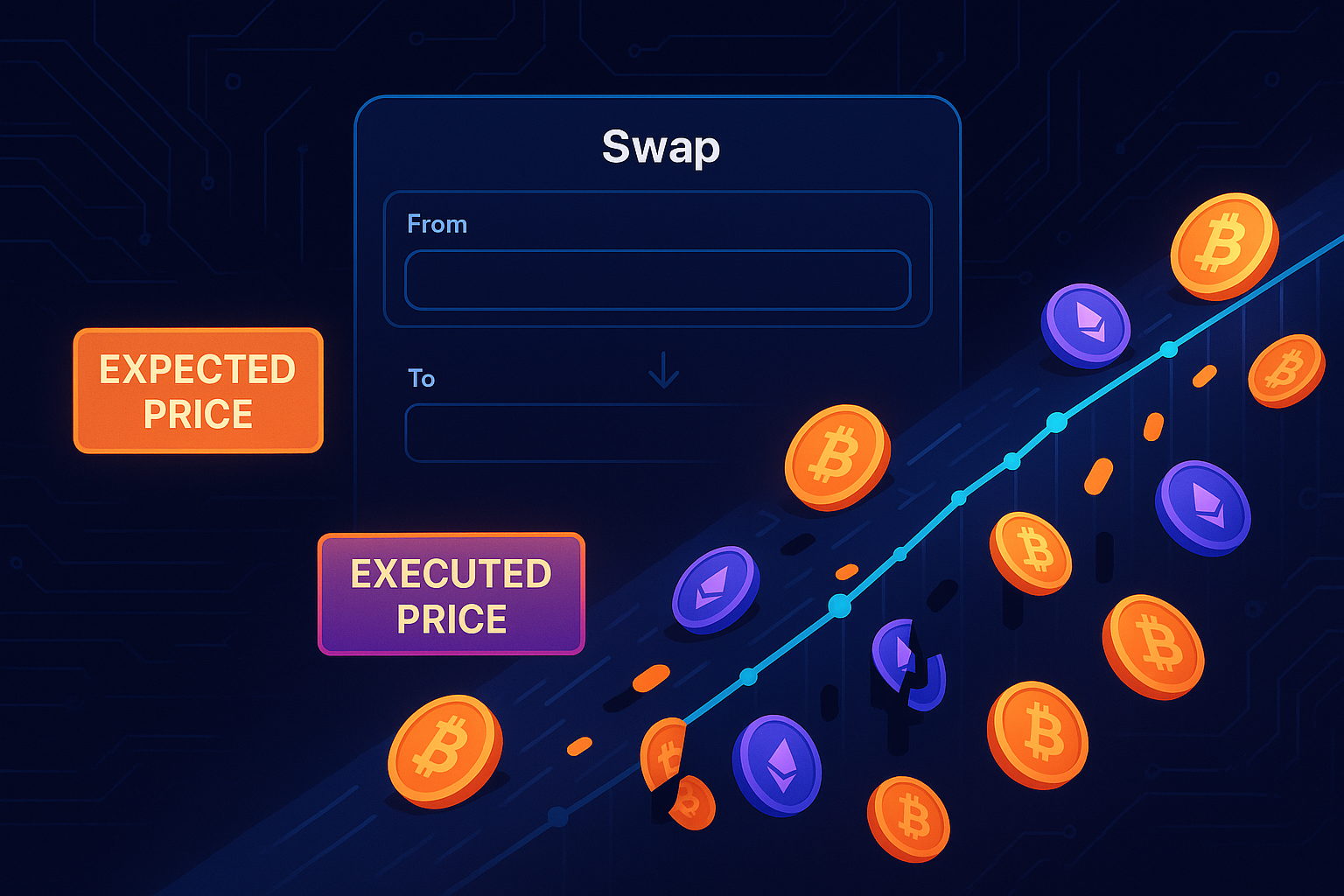
For typical retail-size swaps, using a fixed-rate or dynamic-rate swapping service can reduce concerns about order book depth and slippage that you might encounter on thinly traded DOGE/BTC pairs on some exchanges.
Risks and Drawbacks of DOGE to BTC Swaps
Every crypto transaction involves trade-offs. Before doing a DOGE to BTC swap, it is important to understand the main risks and limitations.
1. Price Volatility and Rate Changes
DOGE and BTC are both volatile assets. Between the moment you initiate a swap and the time the platform finalizes it, the rate can move. Depending on the service:
- You may get a “floating” rate that updates during the swap
- Or a “fixed” rate locked in briefly, which may include a premium to cover risk
Always check whether the rate is fixed or floating before confirming your DOGE to BTC swap, and understand the final amount of BTC you are expected to receive.
2. Network Fees and Minimum Amounts
Both Dogecoin and Bitcoin have network fees. You may encounter:
- DOGE network fee when sending your deposit
- BTC network fee when the service sends you BTC
- Service fee or spread in the quoted exchange rate
Some services also impose minimum swap amounts to make the process economically viable. If you try to swap a very small DOGE balance, fees may eat most of the value.
3. Irreversible Errors
Crypto transactions are irreversible. If you:
- Send DOGE to the wrong address
- Paste a wrong or incompatible BTC address
- Ignore the deposit time window or required memo/tag (for other coins)
you may permanently lose funds. Double-checking all details before sending is essential.
4. Platform Reliability and Trust
Non-custodial swapping services still require trust in the platform’s code, infrastructure, and operational security. Before using any site for a DOGE to BTC swap, you should:
- Verify that you are on the correct domain
- Check for clear documentation on fees and process
- Look for community feedback and independent reviews
Step-by-Step Guide: How to Do a DOGE to BTC Swap
The exact interface will vary between platforms, but the core steps are similar. Below is a general walkthrough you can adapt to your chosen service.
Step 1: Prepare Your Wallets
You will need:
- A Dogecoin wallet with the amount of DOGE you want to swap
- A Bitcoin wallet address where you will receive the BTC
Make sure you have full access to both wallets and that your DOGE wallet is ready to send transactions.
Step 2: Choose a Non-Custodial Swapping Service
Pick a reliable platform that supports direct DOGE to BTC swaps. Many users prefer a doge to btc swap interface that is simple, privacy-focused, and non-custodial, so their funds are never held in long-term exchange accounts.
Step 3: Select the Currency Pair
On the swap page:
- Set the “from” currency to Dogecoin (DOGE)
- Set the “to” currency to Bitcoin (BTC)
- Enter the amount of DOGE you want to convert
The interface should show an estimated amount of BTC you will receive, along with information on whether the rate is fixed or floating.
Step 4: Enter Your BTC Receiving Address
Paste your Bitcoin wallet address carefully. Make sure:
- You copied the address from your BTC wallet, not another chain
- There are no extra spaces or hidden characters
- You check a few characters at the beginning and end to confirm it matches
Some wallets support multiple formats like SegWit or native SegWit (bech32). Ensure the swap platform supports the format you are using.
Step 5: Review the Details
Before committing, review:
- The DOGE amount you will send
- The estimated BTC you will receive
- Any service or network fees displayed
- The type of rate (fixed or floating) and any time limit for fixed rates
- Your BTC receiving address
If everything looks correct, confirm to proceed. The system will generate a Dogecoin deposit address (and sometimes a QR code).
Step 6: Send DOGE to the Provided Address
Open your Dogecoin wallet and send the exact DOGE amount to the deposit address given by the platform. Tips:
- Carefully copy or scan the deposit address
- Do not include extra DOGE unless the platform explicitly allows it
- Consider using a slightly higher fee if your wallet allows, to ensure faster confirmation
Step 7: Wait for Confirmations and Swap Completion
Once your DOGE transaction is broadcast to the network, the platform will wait for a certain number of confirmations before executing the BTC side of the swap. The status page usually shows:
- Deposit received / pending confirmations
- Swap in progress
- BTC sent to your address
When the swap completes, you should see a Bitcoin transaction in your BTC wallet after network propagation and confirmations.
Practical Tips for a Smooth DOGE to BTC Swap
1. Check Network Conditions First
Before you swap, glance at:
- Current Dogecoin network congestion and typical confirmation times
- Bitcoin network fees and recommended sats per vByte (for your outgoing BTC transactions later)
This helps you avoid surprises with slower-than-expected confirmations or unusually high BTC fees.
2. Start with a Small Test Amount
If it is your first time using a particular platform or wallet combination, consider:
- Performing a small test swap to verify everything works as expected
- Confirming that your BTC address receives funds correctly
Once you are confident, you can proceed with larger amounts.
3. Compare Effective Rates, Not Just Headlines
Look beyond the displayed exchange rate. To compare platforms, calculate:
- Net BTC received after all service and network fees
- Time to complete the DOGE to BTC swap under typical conditions
Sometimes a platform with a slightly worse headline rate but lower hidden costs can still leave you with more BTC overall.
4. Save Transaction IDs and Swap Receipts
Always keep a record of:
- Your DOGE transaction ID (TXID)
- Your BTC transaction ID
- Any swap ID or reference number the platform provides
If something looks delayed, this information is essential for support or for your own troubleshooting.
5. Double-Check You Are on the Correct Domain
Phishing sites are a risk in crypto. Before entering any addresses or sending DOGE:
- Manually type or bookmark the correct domain
- Verify the SSL certificate (HTTPS) and spelling of the URL
- Avoid clicking random ads or suspicious links claiming to offer better rates
6. Understand Tax and Reporting Implications
In many jurisdictions, swapping DOGE for BTC can be a taxable event, similar to selling DOGE for fiat. The rules vary widely, so:
- Track your cost basis and the value of DOGE at the time of the swap
- Export records from your wallets and swap services when possible
- Consult local guidance or a tax professional if you are unsure
Conclusion: Making Your DOGE to BTC Swap Safe, Simple, and Efficient
Swapping DOGE to BTC is no longer a complex, multi-step process bound to centralized exchanges. With modern, non-custodial tools, you can move from Dogecoin’s high-volatility meme coin profile into Bitcoin’s more established asset category while keeping control of your keys and minimizing friction.
By understanding the benefits, recognizing the risks, and following a clear step-by-step process, you can perform a DOGE to BTC swap with confidence. Use a reliable non-custodial swap platform, verify all addresses carefully, consider a small test transaction, and always factor in fees and rate types when comparing services.
As the crypto ecosystem continues to mature, the ability to swap assets like DOGE to BTC quickly and privately will remain a core tool for traders, long-term investors, and privacy-focused users alike. With the right approach, you can turn Dogecoin gains into a more balanced Bitcoin position while preserving security, convenience, and control over your funds.