How to Make a Secure and Efficient DAI to USDT Swap
Introduction
In the world of stablecoins, Dai (DAI) and Tether (USDT) are two of the most widely used assets. Whether you are managing risk, rebalancing your portfolio, or hunting for better yields, knowing how to perform a DAI to USDT swap efficiently can save you time, money, and headaches.
You might be looking for a direct dai to usdt swap without going through a centralized exchange, or you may want more privacy and control than KYC-heavy platforms offer. In both cases, understanding your options and the tradeoffs involved is crucial.
This guide walks through why people convert DAI to USDT, the benefits and risks, how to actually perform the swap, and practical tips to avoid common pitfalls. Whether you are a DeFi beginner or an experienced user, you will find step-by-step instructions and best practices to keep your trades smooth and secure.
Why DAI to USDT Swaps Matter
Stablecoin diversification and risk management
Although both DAI and USDT are stablecoins targeting a 1:1 peg with the US dollar, they are very different under the hood:
- DAI is a decentralized, collateral backed stablecoin issued by the Maker protocol.
- USDT is a centrally issued stablecoin by Tether Limited, backed by a mix of reserves.
These differences matter because:
- They respond differently to market stress, depegs, and regulatory shocks.
- Exchanges, DeFi protocols, and yield platforms may prefer one over the other.
- Fees, liquidity, and on/off ramps can vary dramatically between them.
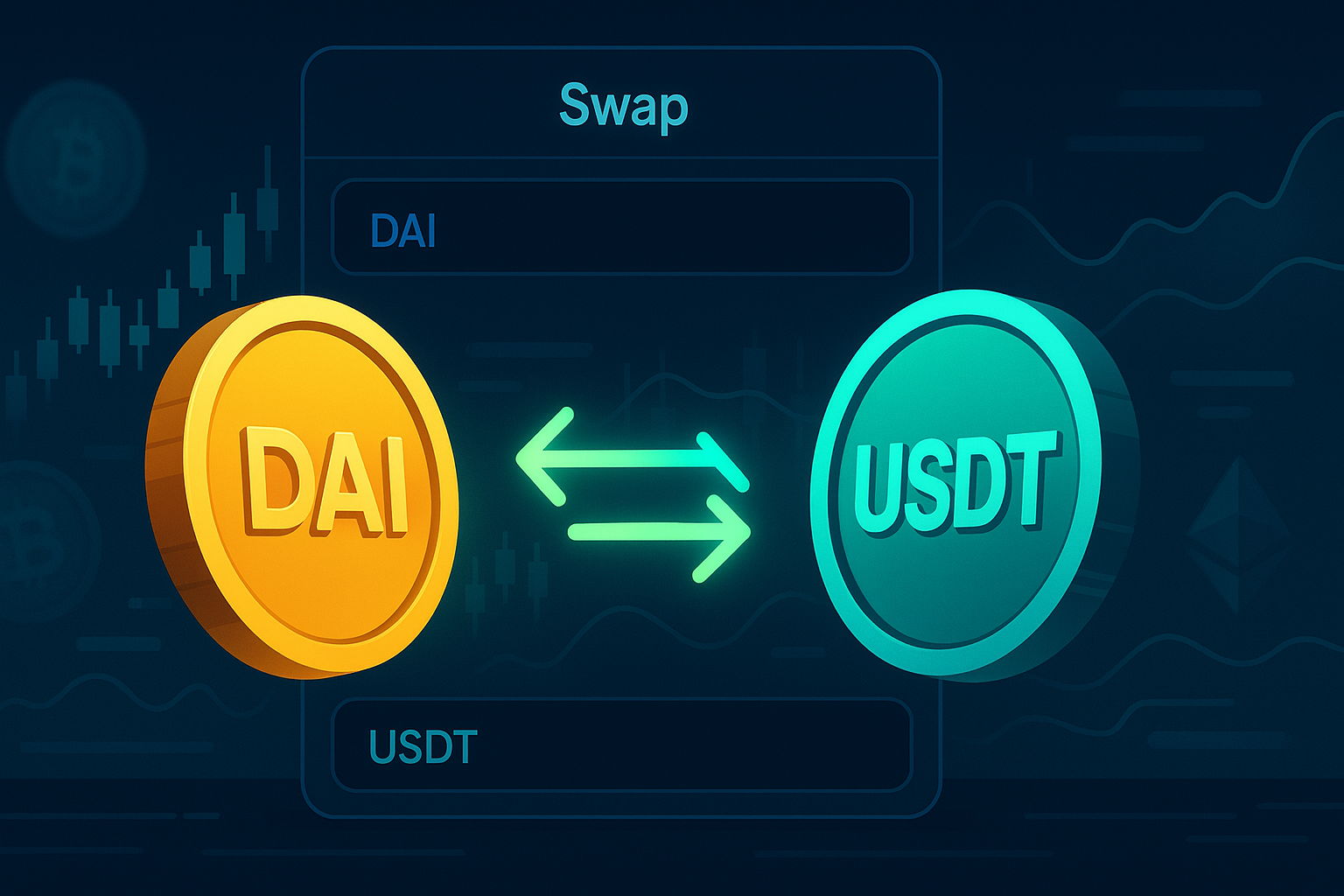
A DAI to USDT swap lets you quickly shift between two of the most liquid stablecoins, which is useful for managing risk or accessing specific markets that only support one of them.
Access to liquidity and trading opportunities
Many centralized and decentralized exchanges quote pairs against USDT as the default base asset. If you hold DAI but want to trade an altcoin that only has a USDT pair, you will first need to convert DAI to USDT.
Similarly, some lending and yield protocols require USDT deposits for better interest rates or incentives. In such cases, being able to swap DAI for USDT efficiently becomes a key step in your strategy.
On-chain versus off-chain considerations
You can do a DAI to USDT swap:
- On centralized exchanges (CEXs), by depositing funds, trading, and then withdrawing.
- On-chain, using decentralized exchanges (DEXs) or non-custodial swap interfaces.
On-chain swaps reduce reliance on custodial intermediaries and often do not require KYC, but they demand more attention to:
- Gas fees
- Slippage
- Smart contract risk
- Correct chain and token contracts
Finding tools that streamline this process and let you swap crypto instantly without giving up control of your keys is increasingly important to many users.
Benefits of Swapping DAI to USDT
1. Flexibility in DeFi and trading
Holding both DAI and USDT gives you more flexibility:
- Some protocols or farms only take USDT deposits.
- Many launchpads, futures platforms, and derivatives venues use USDT as collateral.
- USDT pairs often have higher liquidity and lower spreads on major exchanges.
By performing a DAI to USDT swap, you unlock access to a broader set of products and markets without changing your overall exposure to USD.
2. Hedging stablecoin-specific risks
No stablecoin is risk free. Risks can include:
- Smart contract bugs or governance risks in DAI.
- Reserve transparency and regulatory pressure in USDT.
- Temporary depegs during extreme market conditions.
If concerns rise around one specific stablecoin, you can hedge by promptly swapping some of it into another. A frictionless DAI to USDT swap is useful in stress scenarios where speed and execution quality matter.
3. Harnessing arbitrage and yield differences
There are often yield differentials between DAI and USDT lending markets:
- Money markets might pay higher APY on one stablecoin over the other.
- Liquidity mining programs might reward deposits in a specific stable.
- Exchanges can show small price discrepancies between DAI and USDT pairs.
Efficiently swapping DAI for USDT lets you chase better yields or arbitrage opportunities while staying in a dollar-pegged asset.
4. Staying within stable value
Instead of going from DAI to a volatile asset then to USDT, a direct DAI to USDT swap keeps you in stablecoins the whole time. That minimizes market risk and keeps your accounting clearer for tax and portfolio tracking purposes.
Risks and Drawbacks to Consider
1. Smart contract and protocol risk
If you are swapping via a DEX or aggregator, you are interacting with smart contracts. Potential issues include:
- Undiscovered vulnerabilities that could result in loss of funds.
- Front-end hacks or malicious contract upgrades on poorly governed projects.
To mitigate this, use reputable protocols, verify that contract addresses are correct, and avoid signing transactions from unfamiliar or suspicious websites.
2. Slippage and execution risk
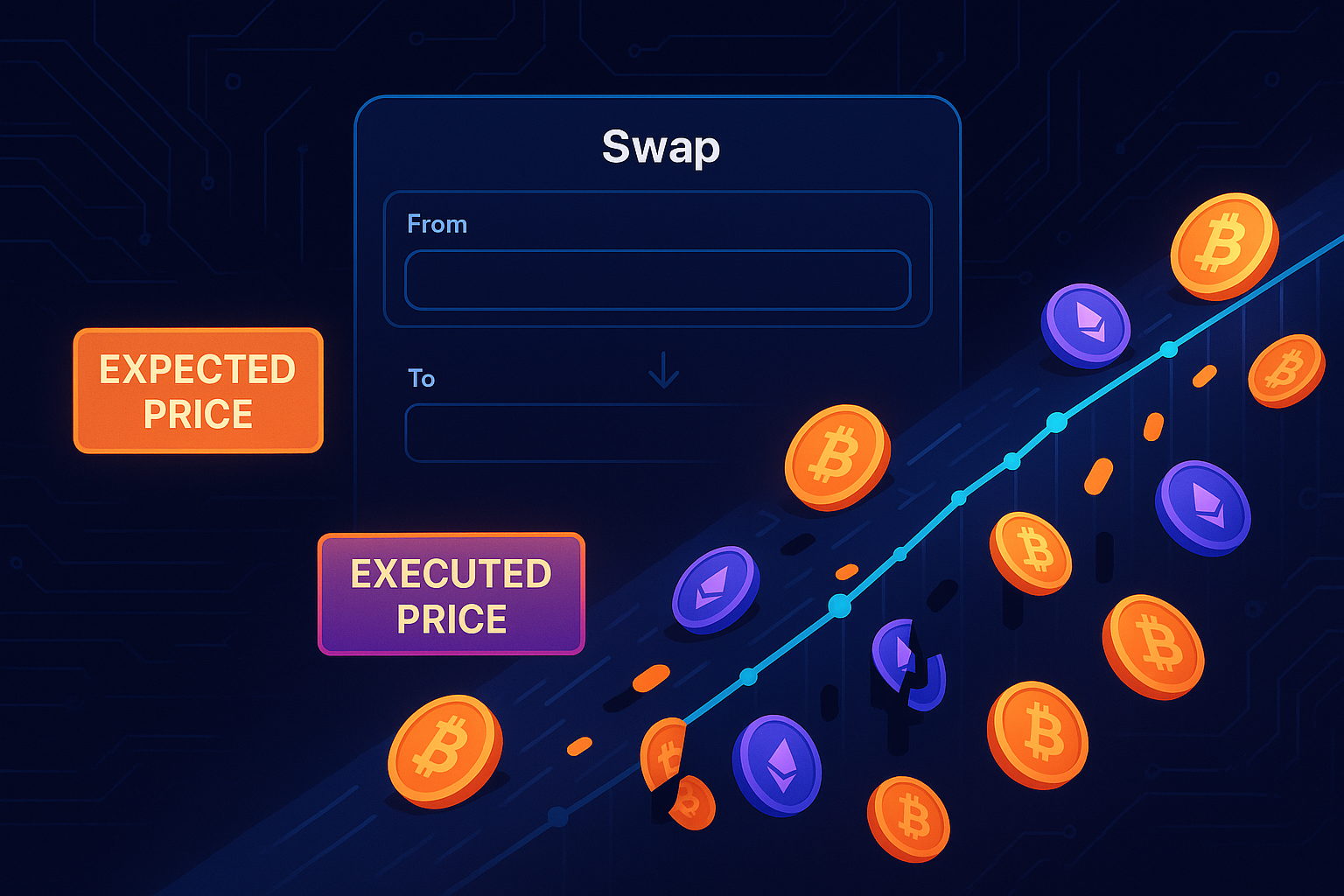
Slippage is the difference between the expected price and the actual execution price. It can occur due to:
- Low liquidity in the swapping pool you are routed through.
- Sudden price movements during transaction confirmation.
High slippage might cause you to receive fewer USDT than anticipated. Always:
- Check the quoted rate and minimum received amount.
- Set a reasonable slippage tolerance.
- Consider splitting very large trades into smaller chunks.
3. Network fees and congestion
On chains like Ethereum mainnet, gas fees can spike during periods of high activity. This can make small DAI to USDT swaps uneconomical. You might:
- Wait for quieter periods with lower gas fees.
- Use alternative networks if supported, like Arbitrum, Optimism, or other EVM-compatible chains.
Always factor in network costs when deciding where and when to perform your swap.
4. Custodial risks on centralized exchanges
If you swap on a centralized platform, you face:
- Counterparty risk if the exchange has solvency issues.
- Withdrawal delays or limits.
- Mandatory KYC and potential account freezes.
This is why many users increasingly prefer a non-custodial swap that lets them retain control of their keys at all times.
Step-by-Step Guide: How to Do a DAI to USDT Swap
Below is a general, non-custodial workflow you can adapt to your preferred tools and networks. Always confirm details on the specific service you use.
Step 1: Choose your swapping method
You have three main categories of options:
- Direct smart contract DEX
Examples include Uniswap-like interfaces where you connect your wallet and trade DAI for USDT directly from a pool. - Aggregator or route optimizer
These tools search multiple DEXs to find the best price and lowest slippage. - Non-custodial swap frontends
Interfaces that simplify routing and network selection and aim to give you a smooth, private exchange flow with minimal setup.
For most users, a clean, simplified interface that hides routing complexity while preserving self-custody is the most convenient.
Step 2: Prepare your wallet
Before starting a DAI to USDT swap:
- Make sure you have a compatible wallet (e.g., MetaMask, WalletConnect-compatible mobile wallet, hardware wallet with Web3 support).
- Ensure your wallet is connected to the correct network where your DAI resides.
- Check that you have enough native token (e.g., ETH on Ethereum) to cover gas fees.
If your DAI is on a different chain than you intend to receive USDT, you may also need to use a bridge, which introduces separate fees and risks.
Step 3: Connect your wallet to the swap interface
On your chosen platform:
- Open the DAI to USDT swap page or general swap section.
- Click on the “Connect Wallet” or similar button.
- Select your wallet type and approve the connection from within your wallet app.
Always double-check the domain in your browser to ensure you are on the genuine site and not a phishing clone.
Step 4: Select DAI and USDT as the tokens
Once connected:
- Set DAI as the token you are sending.
- Set USDT as the token you want to receive.
- Enter the amount of DAI you wish to swap.
The interface should show you:
- The estimated amount of USDT you will receive.
- The exchange rate between DAI and USDT.
- Fees and any route details, depending on the platform.
Step 5: Review price, slippage, and fees
Before approving anything:
- Check the estimated output in USDT.
- Look at the slippage tolerance setting and adjust if necessary.
- Confirm the network fee estimate shown in your wallet.
If the numbers look unreasonable compared to other services or recent market data, cancel and compare rates elsewhere.
Step 6: Approve DAI spending (if required)
On most ERC 20 style tokens, you must first approve the smart contract to spend your DAI:
- Click “Approve” or similar when prompted.
- Confirm the approval transaction in your wallet.
- Wait for it to be mined.
Only then can you execute the swap itself. Some interfaces combine approval and swap for a smoother user experience, but under the hood, the logic remains similar.
Step 7: Execute the swap
After the approval is confirmed:
- Click the main “Swap” or “Confirm Swap” button.
- Review the final details in your wallet and confirm the transaction.
- Wait for network confirmation.
In your wallet or on the explorer, you should see a successful transaction resulting in a decrease in DAI balance and an increase in USDT balance.
Step 8: Verify your USDT receipt
When the swap is complete:
- Check your wallet balance to ensure the USDT has arrived.
- If USDT does not show up, import the token by using the correct contract address for that chain.
- Confirm on a block explorer (like Etherscan) that your wallet address received the tokens.
Keep transaction hashes logged if you need to troubleshoot issues later or for your own record keeping.
Practical Tips for Better DAI to USDT Swaps
1. Compare rates and total costs
Do not just look at the quoted exchange rate. Consider:
- On-chain transaction fees.
- Any platform or routing fees.
- Slippage under realistic market conditions.
Sometimes a slightly worse rate on a low-fee network can still result in a better net outcome compared to a tight rate with high gas.
2. Use reputable, privacy-respecting tools
If you care about privacy, prefer solutions that:
- Do not require KYC for simple token to token swaps.
- Do not custody your funds at any point.
- Route trades on-chain in a transparent way.
A private exchange interface that lets you connect your wallet, execute the trade on-chain, and then disconnect without leaving an account history locked behind a centralized provider can be valuable if privacy is a concern.
3. Stay aware of stablecoin specific news
Because DAI and USDT are fundamentally different:
- Follow updates from the MakerDAO community and governance for DAI.
- Track attestations, regulatory developments, and reserve reports related to USDT.
Major news events can affect liquidity, peg stability, and usage across platforms. During turbulent periods, spreads might widen and slippage may increase, so be extra cautious with large swaps.
4. Test with a small amount first
If you are using a new interface, network, or wallet:
- Start with a small DAI to USDT swap to confirm that everything works as expected.
- Verify the destination address and token contracts.
- Once confident, proceed with your full intended amount.
This simple habit can prevent costly mistakes, especially when exploring new DeFi tools.
5. Secure your wallet and signing habits
Even the best swapping protocol cannot protect you from:
- Malware or keyloggers on your device.
- Phishing websites that imitate popular services.
- Blindly signing malicious transactions.
Best practices include:
- Use hardware wallets when possible.
- Bookmark official URLs and access platforms from those bookmarks.
- Read transaction prompts in your wallet carefully before approving.
Conclusion
A DAI to USDT swap is a simple but powerful tool for managing your stablecoin exposure, accessing more trading pairs, and navigating opportunities across DeFi and centralized exchanges. By understanding the differences between DAI and USDT, you can make more informed decisions about when and why to convert one into the other.
Focus on three main pillars:
- Safety by using reputable, audited protocols and securing your wallet.
- Cost efficiency by comparing rates, gas fees, and slippage across platforms.
- Control by choosing non-custodial flows that keep you in charge of your funds.
If you value privacy and self-custody, a streamlined, on-chain interface that supports direct DAI to USDT conversions can make all the difference. Using a reliable dai to usdt swap tool that prioritizes user control, clear pricing, and a smooth experience will help you move between these two major stablecoins confidently and efficiently.