How to Buy Crypto With Credit Card No KYC: A Practical Guide to Private, Fast Purchases
Introduction
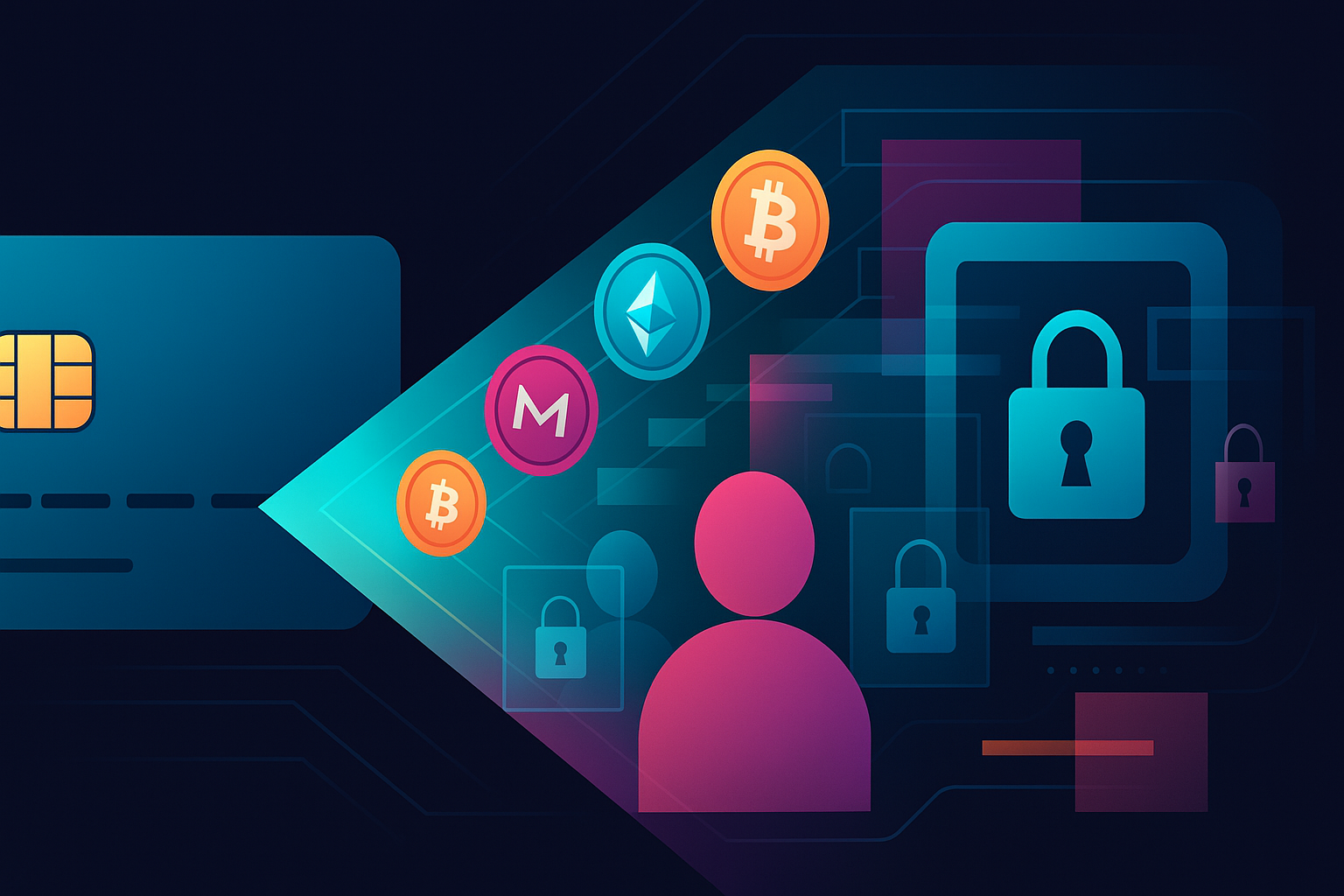
Buying cryptocurrency with a credit card used to mean signing up to a big exchange, handing over your ID, and waiting hours or days for verification. Many users now actively look for ways to buy crypto with credit card no KYC, valuing privacy, speed, and convenience over everything else.
Thanks to non-custodial, fiat on-ramp services, it is now possible to buy crypto with credit card no KYC for modest amounts, especially if you already have a self-custody wallet. However, you need to understand both the benefits and the real risks before you start.
This guide explains how these services work, what to watch out for, and walks you through a step-by-step process to purchase crypto privately with a credit or debit card, while staying as safe and compliant as possible.
Why “Buy Crypto With Credit Card No KYC” Matters
1. Growing demand for privacy
Many crypto users are increasingly uncomfortable sharing sensitive identity documents with centralized exchanges. Data breaches and leaks have made it clear that once your information is stored in a centralized database, you cannot fully control what happens to it.
Searching for ways to buy crypto with credit card no KYC is often less about hiding criminal activity and more about basic digital privacy and minimizing your exposure to unnecessary data collection.
2. Faster access to crypto
Traditional exchanges can take hours or days to verify your KYC profile, especially during bull markets when user signups surge. If you are trying to catch an opportunity, this delay can be costly.
Low-KYC or KYC-free credit card on-ramps typically:
- Start the transaction in minutes
- Require fewer steps to complete a purchase
- Send crypto directly to your personal wallet
For small or medium purchases, this can dramatically improve your user experience.
3. Control and self-custody
Many no-KYC routes are integrated with non-custodial services. You do not leave your funds on a centralized platform, but instead:
- Pay by card through a partner processor
- Receive crypto directly into a wallet you control
This aligns with a core crypto principle: “Not your keys, not your coins.”
Key Benefits of Buying Crypto With a Credit Card Without KYC
1. Enhanced privacy for small amounts
Most card processors and aggregators that allow low-KYC or no-KYC flows do so under strict volume limits. Within those limits, you typically do not need to upload scans of your passport or driver’s license. Benefits include:
- Reduced exposure of personal data to third parties
- Less risk from exchange data breaches
- Fewer platforms holding copies of your documents
Note that your card issuer still sees that you paid a service. Privacy in this context mainly concerns the exchange or on-ramp, not complete anonymity.
2. Speed and convenience
With a traditional exchange, the basic flow usually looks like this:
- Register with email
- Verify email and phone number
- Submit KYC documents
- Wait for approval
- Only then buy crypto with your card or bank transfer
In contrast, many no-KYC on-ramps cut directly to payment and wallet address, drastically shortening the onboarding process.
3. Direct delivery to your wallet
When you use a non-custodial or semi-non-custodial service, the crypto you buy is typically sent directly to the address you control. For example, if you have a self-custody wallet and use a fiat on-ramp that supports non-custodial swaps and instant card purchases, you do not need to keep balances on the platform.
Advantages:
- Lower counterparty risk
- No withdrawal queues
- No surprise “account freezes” after you buy
4. Good for testing and small allocations
If you are new to crypto or trying a new network, you might want to start with small amounts. A low-friction process to buy $50 or $200 of crypto and send it to your own wallet can be the easiest way to get started.
Risks and Drawbacks of Buying Crypto With Credit Card No KYC
Looking for ways to buy crypto with credit card no KYC carries specific risks. Ignoring them can cost you money or even get your card blocked.
1. Higher fees
Convenience often comes at a price. Typical drawbacks:
- Card processing fees are higher than bank transfers
- FX and spread costs can be hidden in the exchange rate
- Network congestion fees may apply on the blockchain side
Always compare the effective rate you are getting with a reputable market price index, not just the percentage fee shown.
2. Limited purchase amounts
To comply with regulations, many services cap how much you can buy without full KYC. Common patterns:
- Small daily or monthly limits for no-KYC purchases
- Automatic prompt to upload ID when you cross a certain threshold
If you plan to invest larger sums, you may ultimately need to pass standard KYC anyway.
3. Regulatory and legal considerations
Regulation varies significantly around the world. Potential issues:
- Some jurisdictions restrict crypto purchases by card
- Banks in certain countries may decline transactions to crypto merchants
- Tax authorities may still expect you to declare gains and losses
No KYC at the exchange does not remove your tax or legal obligations. You remain responsible for compliance where you live.
4. Chargeback and card risk
Because credit cards support chargebacks, crypto merchants face fraud risk and sometimes respond with:
- Stricter risk checks
- Higher fees to offset potential losses
- Occasional manual review or extra verification for suspicious orders
From your side, repeated declined transactions or disputes might lead your bank to flag your card.
5. Platform risk and scams
The search for privacy can push people toward obscure platforms. Common red flags include:
- Unrealistically low fees or “guaranteed profits” promises
- No clear company information, team, or jurisdiction
- No terms of service or privacy policy
- Requests for your wallet seed phrase or private keys (always a scam)
Stick to services that are transparent about partners, fees, and how they handle your data.
How No-KYC Credit Card Crypto Purchases Typically Work
Understanding the flow helps you evaluate any service more critically.
1. Role of fiat on-ramps
Many privacy-conscious platforms integrate with third-party fiat on-ramps. These providers:
- Process your card payment
- Handle anti-fraud checks
- Convert fiat into crypto
- Send the crypto to your specified address
At low tiers, they may rely on basic checks (card verification, fraud scoring) instead of full KYC.
2. Non-custodial and semi-custodial flows
In a non-custodial swap flow, the service is designed so that:
- You retain ownership of your wallet keys
- Crypto is delivered straight to your wallet
- The platform does not hold long-term balances for you
Some solutions, such as integrated swap and on-ramp platforms, help you swap crypto instantly and fund your wallet with a card in a single interface, making the user experience smoother while keeping you in control.
3. Limits and progressive verification
Many providers use tiered verification:
- Tier 0 / basic: Email, card data, wallet address, with tight limits
- Tier 1: Simple personal data or phone, higher limits
- Tier 2+: Full KYC documents, highest limits
When you search for “buy crypto with credit card no KYC,” you are usually operating within those lowest tiers.
Step-by-Step Guide: How to Buy Crypto With Credit Card No KYC
Below is a general process. The exact steps can vary by platform, but the flow is similar across most legitimate services.
Step 1: Set up a secure self-custody wallet
Before you pay for crypto, you need a place to receive it.
- Choose a wallet that supports the blockchain you want (for example, Ethereum, Bitcoin, or a specific L2)
- Write down and securely store your recovery phrase offline
- Enable strong security on your device (PIN, biometrics, updated OS)
Never share your seed phrase with any website or “support agent.” No real exchange or on-ramp will ever ask for it.
Step 2: Select a reputable no-KYC friendly on-ramp
Look for:
- Clear information on supported countries and card types
- Publicly stated limits for non-KYC purchases
- Transparent fee breakdown before you confirm
- Positive, verifiable reviews and active communication channels
If you are using an aggregator or a privacy-focused interface that partners with on-ramps, verify that they are a private exchange or non-custodial service, not a random, unregulated broker with no track record.
Step 3: Choose your coin, network, and amount
On the purchase interface:
- Select the cryptocurrency you want (for example, USDT, USDC, BTC, ETH)
- Pick the correct network (for example, Ethereum mainnet, a specific EVM chain, or Bitcoin)
- Enter the fiat amount you wish to spend, staying under the no-KYC limit
Pay special attention to the selected network. Sending to the wrong network or incompatible address can permanently destroy your funds.
Step 4: Enter your wallet address
Paste your receiving address from your self-custody wallet and double-check:
- Compare the first and last 4–6 characters carefully
- Make sure it is the correct type of address for that chain
- Consider using a QR code scan on mobile to avoid typo errors
Crypto transactions are irreversible, so any mistake here can be costly.
Step 5: Submit payment details
You will typically be asked for:
- Your card number, expiry date, and CVV
- Your billing address and email
- Sometimes a 3D Secure / one-time password from your bank
Even if the crypto service itself does not run a full KYC, your bank and the card processor still apply fraud checks and may decline transactions that look unusual.
Step 6: Confirm fees and finalize the order
Before clicking “Buy” or “Confirm,” always:
- Review the total cost in your local currency
- Check the approximate crypto amount you will receive
- Note any network gas or service fees listed separately
If the final rate is significantly worse than market price, consider reducing the amount or trying a different provider.
Step 7: Wait for processing and blockchain confirmation
Once your payment is accepted:
- The on-ramp converts your fiat to crypto
- They broadcast a transaction to your wallet address
- You can track the status via your wallet or a block explorer
Credit card purchases often take a few minutes, but in some cases can take longer if extra checks are required.
Practical Tips for Buying Crypto With a Credit Card Without KYC
1. Start small and test the flow
Do not jump in with your full intended allocation on your first transaction. Instead:
- Begin with a modest amount to verify everything works
- Check that the crypto arrives in your wallet as expected
- Confirm fees and timing match what the platform promised
Once you are confident in the process, you can scale up within your risk tolerance and the platform limits.
2. Use a dedicated card if possible
For better organization and risk control:
- Consider a separate card for online and crypto-related payments
- Adjust spending limits on that card for extra safety
- Monitor statements regularly for unusual charges
This approach also simplifies tracking expenses for tax reporting.
3. Keep records for tax and compliance
Even if you buy crypto with credit card no KYC on the exchange side, you should still keep:
- Screenshots or PDFs of transaction confirmations
- Card statements showing amounts and dates
- Notes on what assets you bought and when
These records are valuable for tax declarations and personal accounting, especially if you later sell or swap the assets for profit.
4. Combine on-ramps with non-custodial swaps
A common flow used by more advanced users is:
- Use a card on-ramp to buy a liquid asset like USDT or USDC
- Receive it to your wallet
- Use a non-custodial DEX or aggregator to diversify into other tokens
With the right tool, you can buy crypto with card and then swap crypto instantly in a non-custodial way, improving privacy and control without sacrificing usability.
5. Respect local rules and personal risk limits
Finally:
- Research your country’s stance on crypto and card purchases
- Do not use no-KYC flows to bypass clear legal restrictions
- Never invest money you cannot afford to lose
KYC-light solutions are tools for convenience and privacy, not a way to evade the law.
Conclusion
The ability to buy crypto with credit card no KYC offers a compelling mixture of privacy, speed, and convenience, especially for smaller, experimental allocations. By combining self-custody wallets, reputable on-ramp partners, and non-custodial swap interfaces, you can maintain significant control over your funds without storing sensitive identity documents on every platform you use.
At the same time, you must stay aware of the tradeoffs. Higher fees, purchase limits, platform risk, and ongoing legal responsibilities all remain part of the picture. Thoughtful users keep careful records, start small, and select well-known, transparent services when using any no-KYC or low-KYC pathway.
If you value control of your keys and a private, streamlined way to get started, exploring a private exchange and non-custodial buy-and-swap route can be a practical option. Approach it with clear expectations, verify every step from card charge to wallet receipt, and you can integrate no-KYC card purchases into a safer, long-term crypto strategy.