BTC to USDT Instant Exchange: A Complete, Practical Guide
Introduction
Converting BTC to USDT is one of the most common actions in crypto today. Traders, investors, and even long‑term holders frequently move between Bitcoin and Tether to manage volatility, lock in profits, or prepare for new opportunities. Doing this through a btc to usdt instant exchange service can save time, reduce friction, and help you react quickly to market moves.
Modern non‑custodial platforms now allow you to swap crypto instantly without creating an account, depositing funds, or going through a full‑blown centralized exchange workflow. That can be a big advantage when every minute counts in a fast market.
This article explains why instant BTC to USDT swaps matter, what benefits and risks to consider, and provides a clear, step‑by‑step walkthrough you can follow safely and confidently.
Why BTC to USDT Instant Exchange Matters
Volatility management
Bitcoin is highly volatile. That volatility is attractive for upside, but it also exposes you to rapid drawdowns. USDT, a U.S. dollar‑pegged stablecoin, is designed to maintain a 1:1 value relative to USD. Moving from BTC to USDT quickly allows you to:
- Lock in unrealized gains when the market spikes
- Reduce downside exposure during sharp corrections
- Park capital in a “stable” asset while you reassess the market
In short, instant conversion helps you respond in real time, instead of waiting for slow deposits or approvals on centralized exchanges.
Liquidity and trading flexibility
USDT is widely used as a base currency on both centralized exchanges and DeFi protocols. Holding USDT instead of BTC at certain times can offer:
- Faster access to altcoin markets
- Better pairing options on spot and derivatives platforms
- Easier quoting and accounting in dollar terms
A reliable btc to usdt instant exchange solution helps you quickly shift into this “liquidity mode” without tying up funds in a single exchange account.
Custody and control
If you use a centralized exchange, you usually have to deposit BTC into the platform first. That temporarily gives the exchange custody over your assets. By contrast, many modern instant swap services are non‑custodial, meaning:
- You keep control of your private keys
- The service never holds your BTC or USDT long‑term
- Your coins move directly from your wallet to the destination wallet
This aligns with the crypto principle “not your keys, not your coins” and can improve both security and privacy when done correctly.
Key Benefits of BTC to USDT Instant Exchange
1. Speed and simplicity
Instant swap platforms typically remove several slow steps:
- No sign‑up or login required
- No exchange deposit wait times
- No internal transfer delays between wallets and sub‑accounts
You simply specify the amount of BTC you want to swap, provide a USDT address, and send your coins. The service executes the conversion and sends USDT directly to your wallet, often in a single transaction flow.
2. Non‑custodial operation
Many users prefer a non‑custodial swap model. In this setup:
- The service never permanently stores your coins
- You initiate the transfer from your wallet to a one‑time address
- The service completes the swap and sends output funds straight to your recipient address
Non‑custodial design can reduce counterparty risk compared to leaving assets on an exchange for extended periods.
3. Fewer KYC frictions (depending on service)
Some instant exchange platforms allow relatively small swaps without full KYC checks, though they typically monitor activity to comply with AML regulations. For users, that can mean:
- Less personal information shared
- Faster onboarding
- Lower friction for simple portfolio rebalancing
Always confirm the legal and regulatory requirements in your jurisdiction before using such services.
4. Better timing for fast markets
When markets move quickly, each additional step creates slippage risk. Delays like:
- Waiting for exchange deposits to confirm
- Transferring between spot and derivatives accounts
- Processing manual approvals
can all result in a worse BTC/USDT rate. An instant swap can help you secure a price closer to what you see when you start the transaction, though there is always some market risk until the transaction is fully settled.
Risks and Drawbacks to Consider
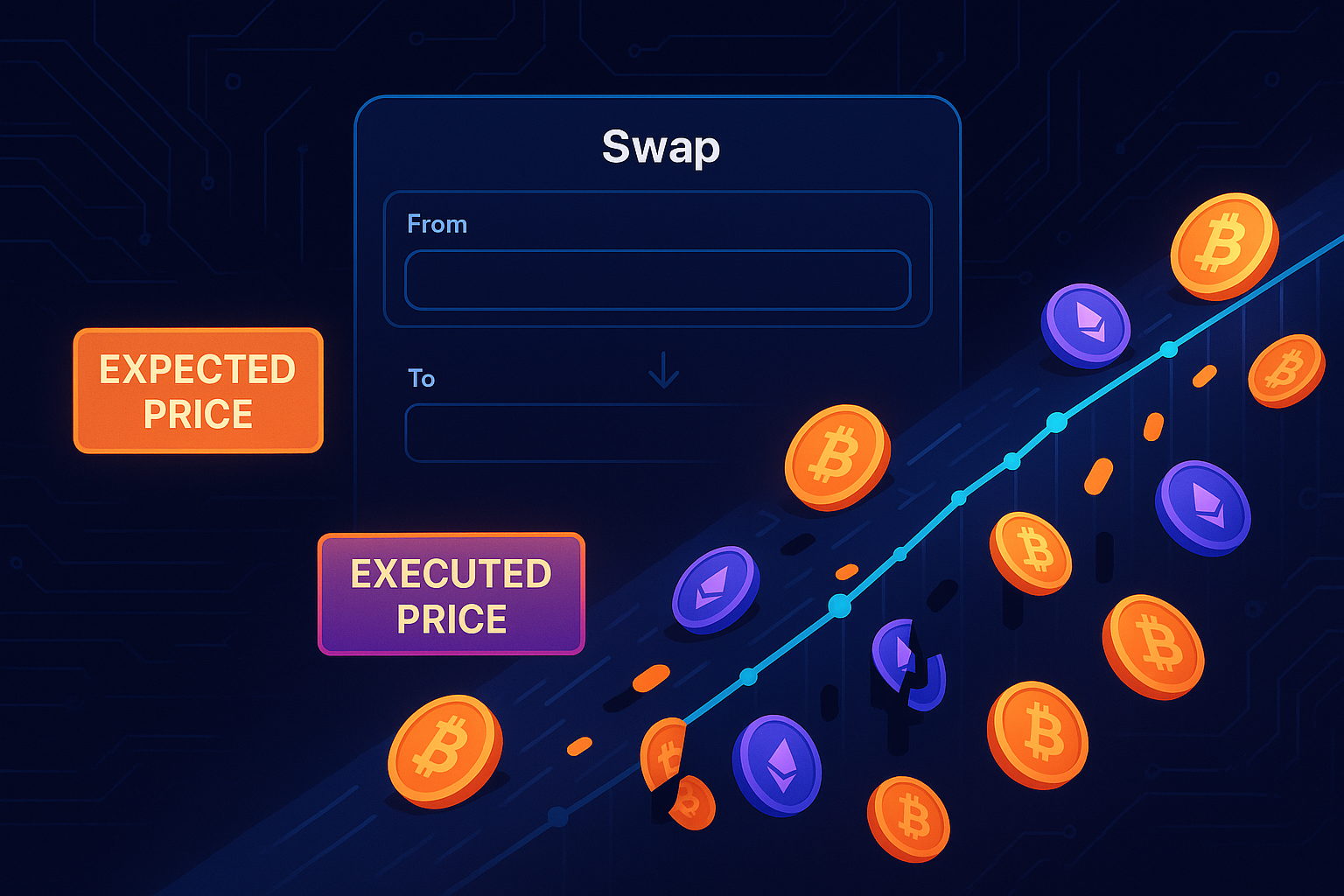
1. Price slippage and volatility
Even on a fast platform, you are still exposed to short‑term price movement while:
- Your BTC transaction confirms on the blockchain
- The service executes the trade on its backend
- Your USDT is sent to your wallet
If Bitcoin’s price changes significantly during this window, you might receive less USDT than expected. Many platforms offer either fixed‑rate (for a limited time window) or floating‑rate swaps. Fixed‑rate can reduce slippage risk but may include a higher margin.
2. Network fees and service fees
Instant exchanges are convenient but not free. Common cost components include:
- Network (miner) fees for Bitcoin and USDT transfers
- Service fee or spread between buy and sell rates
- Potential minimum swap amount that may be uneconomical for very small transactions
Before you proceed, check the estimated output amount and effective rate compared to large centralized exchanges so you know what you are paying for the convenience.
3. Counterparty and technical risk
Even in a non‑custodial model, you still rely on:
- The platform’s backend trading engine
- Smart contract or routing logic if applicable
- Accurate address handling and security practices
If a service has poor security, operational issues, or low liquidity, you could face delays or failed swaps. Stick to platforms with transparent terms, visible uptime, and a solid track record.
4. Stablecoin‑specific risk
USDT is designed to track USD at 1:1, but stablecoins are not risk‑free. Relevant considerations include:
- Issuer reserve transparency and audits
- Regulatory actions that might affect liquidity
- Temporary de‑pegging during stress events
You should understand how USDT operates, how it is backed, and your own risk tolerance before holding large amounts.
Step‑by‑Step Guide: BTC to USDT Instant Exchange
Below is a high‑level process that applies to most non‑custodial instant swap platforms. Specific interfaces vary, but the concepts are similar.
Step 1: Choose a reputable instant exchange
Look for a service that:
- Supports BTC to USDT on the network you prefer (e.g., TRC‑20, ERC‑20)
- Is non‑custodial and clearly documents how swaps work
- Shows transparent rates and fees before you commit
- Offers a history of stable operation and user support
For example, a dedicated btc to usdt instant exchange page can streamline the process with pre‑configured trading pairs and clear parameters.
Step 2: Prepare your wallets
You need:
- A Bitcoin wallet with the BTC you want to convert
- A USDT‑compatible wallet address on your chosen network
Make sure:
- You control the private keys for both wallets, not just an exchange deposit address
- You have copied the correct USDT address (double‑check the network and format)
- Your wallet is updated and capable of sending transactions reliably
Step 3: Enter swap details
On the instant exchange interface:
- Select BTC as the coin you send.
- Select USDT as the coin you receive, and choose the network (e.g., USDT‑TRC20 or USDT‑ERC20).
- Enter the amount of BTC you want to swap or the amount of USDT you want to receive.
- Paste your destination USDT wallet address carefully.
The platform will show you:
- The expected amount of USDT you will receive
- Network fee estimates or inclusions
- Rate type (fixed vs floating, if applicable)
Step 4: Review and confirm
Before sending any funds, review:
- The BTC amount to send
- The quoted USDT amount
- Your recipient USDT address
- Any warnings about rate fluctuation or time limits for fixed rates
Only proceed once everything matches your intent. A small typo in an address can permanently lose funds.
Step 5: Send BTC to the provided address
The instant exchange will generate a one‑time BTC deposit address for your swap. From your Bitcoin wallet:
- Copy the provided BTC address from the platform.
- Paste it into your wallet’s “Send” screen.
- Enter the exact BTC amount requested (do not alter it unless the service explicitly allows that).
- Set a reasonable network fee in your wallet to ensure timely confirmation.
- Broadcast the transaction.
After your transaction is sent, the platform waits for a sufficient number of confirmations before executing the exchange.
Step 6: Wait for confirmation and USDT delivery
Once the required confirmations are reached:
- The platform executes the BTC to USDT trade using its liquidity sources.
- USDT is then sent to your destination wallet address.
- You can monitor progress on the platform’s status page and via blockchain explorers.
When complete, you should see the USDT balance in your wallet. Keep the transaction IDs and any order ID provided for your records.
Practical Tips for Safer and More Efficient Swaps
1. Start with a small test amount
If you are using a new service or wallet, consider:
- Performing a small BTC to USDT test swap first
- Confirming that your USDT arrives correctly and on the right network
- Scaling up only after you are comfortable with the process
This reduces the risk of expensive mistakes due to misconfigured addresses or unfamiliar interfaces.
2. Check current market conditions
Before committing, look at:
- The BTC/USDT price on several major exchanges
- Recent price volatility and trading volume
- Any major news or events that could cause sudden swings
If volatility is extremely high, slippage risk increases. In such cases, a fixed‑rate option (if available) may be worth considering despite a slightly higher margin.
3. Compare effective rates and fees
Do not just look at the “headline” rate. Instead, calculate:
- Effective rate = USDT received / BTC sent
- Compare to rates from at least one large centralized exchange
- Factor in both platform spread and on‑chain fees
A slightly higher cost may be acceptable for speed and privacy, but it should be a conscious decision.
4. Verify networks for USDT
USDT exists on multiple chains. Common pitfalls include:
- Sending USDT‑ERC20 to a TRC‑20‑only address, or vice versa
- Using an exchange deposit address that does not support the network you choose
- Assuming all “USDT” addresses are interchangeable
Always match the network selected on the instant exchange with the network supported by your wallet or exchange account.
5. Preserve privacy and security
For a more private exchange experience:
- Use wallets you control directly rather than exchange custodial wallets
- Maintain good operational security (secure devices, updated software, hardware wallets where possible)
- Avoid reusing addresses when possible, especially for large transactions
Non‑custodial instant swaps can enhance privacy, but only if your own wallet habits are also privacy‑conscious.
6. Keep records for tracking and taxes
Even when you use a quick instant service, record:
- Date and time of the transaction
- BTC amount sent and USDT amount received
- Transaction hashes on both chains
- The service used and any reference IDs
In many jurisdictions, converting BTC to USDT is a taxable event. Having accurate records will simplify reporting and reduce headaches later.
Conclusion
A reliable btc to usdt instant exchange solution gives you speed, flexibility, and better control over your risk exposure. By converting BTC to stablecoins quickly, you can lock in gains, limit downside during turbulent markets, and position capital for new opportunities without getting bogged down in complex exchange workflows.
Used correctly, non‑custodial instant services like those that let you swap crypto instantly can combine convenience with strong user control. The key is to balance that convenience against fees, market conditions, and the operational security of both your wallets and the platform you choose.
Always double‑check addresses and networks, start with small test amounts when trying a new service, and maintain clear records of each swap. With these practices, BTC to USDT conversions can become a fast, routine part of your overall crypto strategy, rather than a stressful, time‑consuming process.