BTC to DOT Swap: How to Exchange Bitcoin for Polkadot Quickly and Securely
Introduction
As crypto ecosystems continue to evolve, more traders are looking for ways to move value between blockchains without friction. One of the most popular pairs in this cross-chain environment is a BTC to DOT swap, converting Bitcoin (BTC) into Polkadot (DOT) to access faster transactions, staking, and the rich app ecosystem in the Polkadot network.
Whether you are diversifying out of Bitcoin, preparing to participate in Polkadot staking, or simply looking to trade market volatility, knowing how to execute a BTC to DOT swap efficiently is crucial. Modern tools now let you swap crypto instantly without giving up control of your keys or going through lengthy registrations.
This guide walks you through why BTC to DOT swaps matter, their benefits and risks, and exactly how to perform the exchange step by step, while keeping security and privacy in mind.
Why BTC to DOT Swaps Matter
Bitcoin remains the market’s benchmark store of value, but it is not optimized for high-throughput, programmable applications. Polkadot, on the other hand, is designed as a multichain network that connects various blockchains and supports advanced use cases.
Switching a portion of your holdings from BTC into DOT can unlock:
- Exposure to a different risk and reward profile than Bitcoin
- Access to Polkadot staking yields and governance
- Participation in parachain ecosystems and DeFi on Polkadot
As more applications move to multichain architectures, the ability to perform a seamless BTC to DOT swap becomes a key skill for any active crypto user.
Key Reasons Traders Convert BTC to DOT
1. Portfolio diversification
Bitcoin is often considered “digital gold” due to its fixed supply and dominant network effects. Polkadot, meanwhile, targets interoperability and scalable infrastructure for web3. A BTC to DOT swap allows you to diversify across different value propositions:
- BTC: store of value, high liquidity, macro asset
- DOT: interoperability token, staking asset, governance coin
For many investors, holding both assets spreads risk while maintaining exposure to the broader crypto market.
2. Access to Polkadot staking and governance
DOT holders can stake their tokens to help secure the network and, in return, may earn staking rewards. In addition, DOT is used for governance, enabling holders to vote on protocol upgrades and key decisions.
Converting BTC to DOT is often the first step for users who want to:
- Earn rewards through staking or nomination
- Participate in on-chain governance proposals
- Support specific parachains or ecosystem projects
3. Participation in Polkadot DeFi and dApps
Polkadot hosts a growing ecosystem of decentralized applications and parachains, including DEXs, lending protocols, and cross-chain bridges. Having DOT on hand is often necessary to:
- Pay transaction fees
- Provide liquidity to DOT-based pools
- Access dApps that require DOT balances
A BTC to DOT swap converts your passive BTC holdings into a utility token with multiple use cases on-chain.
Benefits of a BTC to DOT Swap
1. Non-custodial control
Using modern swapping services, you can execute a BTC to DOT swap while retaining control over your private keys. Instead of depositing funds into a centralized platform, you send from your wallet and receive DOT directly into your destination address.
This non-custodial approach reduces counterparty risk and aligns with the core crypto principle: “not your keys, not your coins.” A private exchange that supports non-custodial swap flows can help you trade without surrendering control to a centralized entity.
2. Speed and efficiency
Traditional exchange flows can involve:
- Account creation and KYC
- Deposit confirmation waiting times
- Manual trading and withdrawal steps
A direct BTC to DOT swap on a streamlined interface cuts out many of these steps. After your BTC transaction confirms, the DOT is usually delivered to your wallet automatically, often in a single integrated process.
3. Better privacy
Many swap services let you trade without full identity verification for reasonable amounts, which is attractive for users who value financial privacy. By avoiding centralized exchange order books tied to personal accounts, you lower the footprint of your on-chain and off-chain activity.
4. Flexible trade sizes
Swaps are often available for both small and moderately large amounts, letting you experiment with a small BTC to DOT conversion before committing more capital. This flexibility is useful for users who want to “test the waters” of the Polkadot ecosystem.
Risks and Drawbacks to Consider
Every crypto transaction involves tradeoffs. Before you finalize a BTC to DOT swap, consider these potential issues:
1. Market volatility and price slippage
- Volatility: Bitcoin and Polkadot are both highly volatile. The BTC value of your DOT can move significantly in a short period.
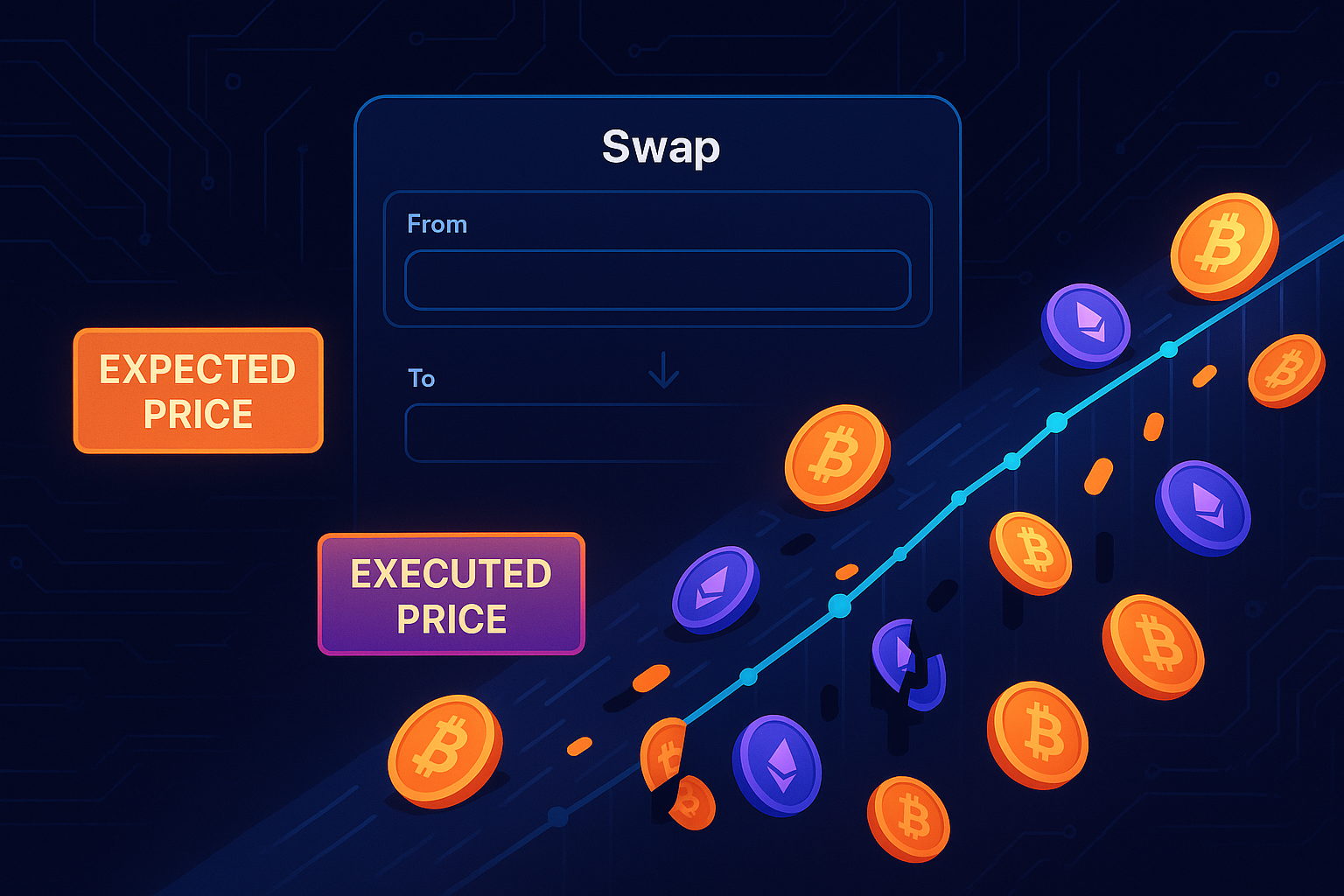
- Slippage: The final DOT amount you receive can differ from the initial quote if the market price moves during your transaction or if liquidity is limited.
2. Network fees and confirmations
BTC network fees and congestion affect how quickly your transaction confirms. If the Bitcoin network is busy, your swap may take longer and cost more in miner fees, which can reduce the net DOT you end up with.
3. Irreversible transactions
Blockchain transfers are final. Mistyping your DOT receiving address, sending BTC on the wrong network, or failing to follow instructions can result in a permanent loss of funds. Always double-check each step before confirming a transaction.
4. Counterparty and technical risk
- Relying on a swap service creates some counterparty risk, even if your funds are never held in long-term custody.
- Smart contract bugs, integration errors, or infrastructure outages can delay or affect a swap.
Using reputable, transparent, and security-conscious platforms reduces these risks, but cannot eliminate them entirely.
Step-by-Step Guide: How to Perform a BTC to DOT Swap
Below is a general workflow for completing a BTC to DOT swap using a non-custodial, instant-exchange style service. Exact steps may vary slightly depending on your chosen platform.
Step 1: Prepare your DOT wallet
-
Choose a compatible wallet that supports Polkadot. Popular options include:
- Polkadot{.js} browser extension
- SubWallet
- Hardware wallets that support DOT (e.g., via integrated apps)
- Create or access your DOT address and securely back up your seed phrase or recovery method.
- Copy your DOT receiving address. You will paste this into the swap interface later, so ensure there are no extra characters or spaces.
Step 2: Select a BTC to DOT swap service
Look for a platform that is:
- Non-custodial: you retain control of your funds at all times
- Transparent: clear fee and rate information
- Reputable: positive track record and community feedback
- Simple to use: intuitive interface and clear instructions
A dedicated btc to dot swap page that directly supports this pair can simplify the process and avoid accidental pair selection mistakes.
Step 3: Enter swap details
- Choose BTC as the asset you are sending.
- Choose DOT as the asset you want to receive.
- Specify the amount of BTC you want to convert. The interface should show an estimated DOT amount you will receive, along with the applicable rate and any service fees.
- Paste your DOT address into the “destination” or “receive” field and verify it character by character.
Step 4: Review the quote
Before continuing, carefully check:
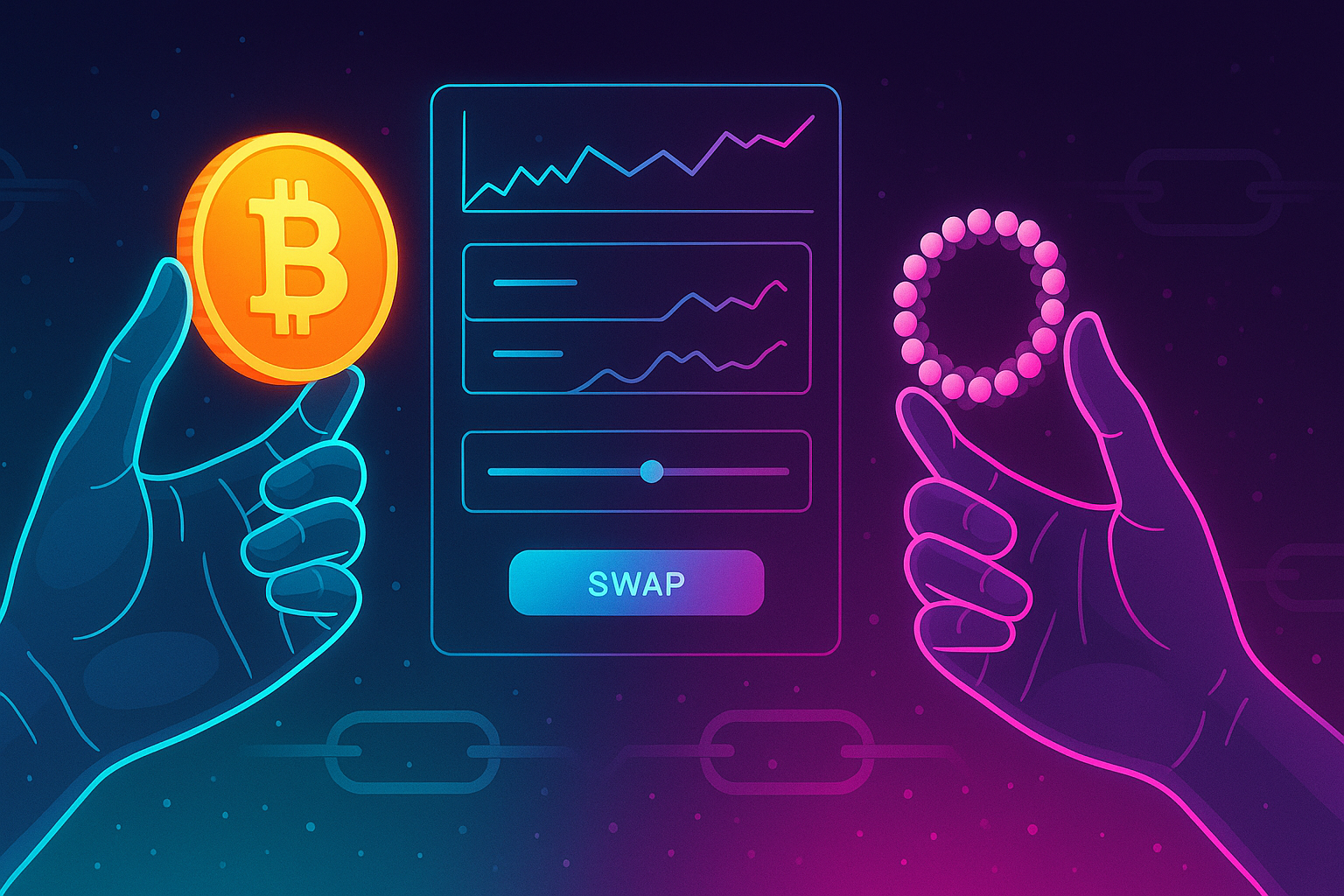
- The exchange rate and estimated DOT output
- The fees included in the quote
- Your receiving DOT address
- Any time limits for the quote (fixed rate vs floating rate)
If you are satisfied with the details, confirm to generate the BTC deposit address.
Step 5: Send BTC to the provided address
- Copy the BTC deposit address generated by the swap service.
- In your Bitcoin wallet, start a new send transaction to that address for the exact BTC amount specified in the quote.
- Set an appropriate network fee so that your transaction confirms within the expected timeframe.
- Double-check the address and amount, then confirm the transaction.
Step 6: Wait for confirmations and DOT delivery
After you send BTC:
- The Bitcoin network must confirm your transaction. The required number of confirmations is usually shown on the swap interface.
- Once confirmed, the service executes the conversion and sends DOT to your receiving address.
- You can monitor both the BTC and DOT sides using blockchain explorers and the tracking link provided by the platform.
Step 7: Verify DOT receipt in your wallet
When the swap completes:
- Open your DOT wallet and confirm that the expected DOT amount has arrived.
- If the balance does not appear automatically, ensure you have added DOT as a visible asset in your wallet UI, or use a Polkadot explorer to verify on-chain.
- Once verified, consider moving some funds to cold storage if you plan to hold long term.
Practical Tips for a Safe and Efficient BTC to DOT Swap
1. Start with a small test amount
If you are using a service for the first time, consider doing a small BTC to DOT swap to verify that the process, addresses, and timing all work as expected. After a successful test, you can scale up to larger swaps more confidently.
2. Double-check addresses and networks
- Always confirm that you are on the official website and not a phishing clone.
- Ensure the destination is a valid DOT address, not another network’s format.
- Use copy-paste carefully and compare the first and last few characters of the address.
3. Monitor network conditions
Bitcoin network congestion can drastically affect confirmation times and fees. Before initiating your BTC to DOT swap, check:
- Current average BTC fees
- Expected confirmation time for your chosen fee level
Planning your swap during calmer periods can lower costs and reduce delays.
4. Understand rate types: fixed vs floating
Some services offer:
- Fixed rates for a short time window, locking in the DOT output if you send BTC within the deadline.
- Floating rates that adjust based on real-time market prices up to the moment your swap executes.
Choose the option that best matches your risk tolerance. If markets are especially volatile, consider fixed-rate options to avoid surprises.
5. Keep records of your transactions
For accounting, tax reporting, and personal tracking:
- Save transaction IDs (TXIDs) for both BTC and DOT legs of the swap.
- Export or screenshot the rate and timestamp when you initiated the trade.
- Maintain a simple spreadsheet of your swaps to track performance over time.
6. Prioritize security and privacy
Security practices to follow:
- Use hardware wallets where possible for larger holdings.
- Enable strong authentication methods on any associated accounts or devices.
- Avoid conducting high-value swaps on public or unsecured Wi-Fi.
If privacy is important to you, favor services that do not require full KYC for modest swap sizes and that minimize data collection.
Conclusion: Making the Most of Your BTC to DOT Swap
Executing a BTC to DOT swap is a straightforward way to move value from Bitcoin’s store-of-value ecosystem into Polkadot’s interoperable, application-focused world. By understanding the benefits, risks, and step-by-step process, you can convert BTC to DOT with greater confidence and control.
Whether your goal is to diversify your portfolio, earn staking rewards, or explore the Polkadot DeFi landscape, the tools to swap crypto instantly in a non-custodial environment are widely accessible. Take your time, verify each detail, start with manageable amounts, and prioritize security. With a careful approach, moving from BTC to DOT can become a valuable part of your long-term crypto strategy.