How to Make an AVAX to BTC Swap Safely and Efficiently
Introduction
As the crypto market matures, more traders and long-term holders are looking for fast, low-fee ways to move between ecosystems. One of the most common conversions today is an AVAX to BTC swap, bridging value from Avalanche’s high-speed DeFi world to Bitcoin’s role as a long-term store of value.
Whether you are taking profits, rebalancing your portfolio, or simply diversifying, knowing how to swap AVAX to BTC the right way can save you time, money, and stress. Instead of sending funds through centralized exchanges with lengthy KYC checks and withdrawal limits, many users now prefer to use a non-custodial AVAX to BTC swap that is fast and private.
This guide explains what an AVAX to BTC swap is, why it matters, the benefits and risks, and walks you through a practical, step-by-step process you can follow today.
Why AVAX to BTC Swaps Matter
1. Moving Between Ecosystems
Avalanche and Bitcoin serve very different roles in the crypto landscape:
- Avalanche (AVAX) powers a high-throughput smart contract network, with low fees and a growing DeFi ecosystem.
- Bitcoin (BTC) is primarily used as a store of value and a macro asset, with a focus on security and decentralization over throughput.
When you perform an AVAX to BTC swap, you are effectively moving capital from a high-activity DeFi environment into a more conservative, long-term asset. That shift is often part of a bigger strategy, such as rotating out of altcoins after a run-up into a more stable base asset.
2. Portfolio Rebalancing and Risk Management
Active crypto investors regularly rebalance their portfolios. If AVAX has outperformed your other holdings, you might want to lock in some gains into BTC. An efficient AVAX to BTC swap helps you:
- Realize profits without exiting crypto completely
- Reduce exposure to ecosystem-specific risks on Avalanche
- Increase your share of Bitcoin, which many view as a long-term core holding
3. Bypassing Centralized Exchange Bottlenecks
Centralized exchanges (CEXs) can be slow, intrusive with KYC, and sometimes risky from a custody perspective. If you want to avoid long verification processes or large withdrawal fees, using a private exchange that supports AVAX to BTC can be more convenient. It lets you retain self-custody and move at your own pace.
Key Benefits of a Direct AVAX to BTC Swap
1. Speed and Convenience
A well-implemented AVAX to BTC swap can be completed in minutes rather than hours:
- No waiting for account approval on a CEX
- No need to make multiple trades (for example, AVAX → USDT → BTC)
- Fewer blockchain hops, which means fewer fees and potential errors
2. Non-Custodial Control
A non-custodial swap means you never give an exchange full control of your funds. Instead, you:
- Hold AVAX in your own wallet
- Send directly to a swap address or contract for one specific transaction
- Receive BTC directly into your own Bitcoin wallet
This approach reduces custodial risk because there is no long-term deposit on an exchange that could be hacked, frozen, or mismanaged.
3. Privacy and Reduced KYC Friction
Many cross-chain swap services that focus on privacy do not require extensive identity verification, especially for small to medium trade sizes. For users who value discretion, an AVAX to BTC swap through a private, instant swap service can be significantly more comfortable than going through a centralized, fully KYC-ed exchange.
4. Potentially Lower Fees
When you use a CEX, you often pay:
- Deposit fees or blockchain network fees
- Trading fees for converting AVAX to a stablecoin or BTC
- Withdrawal fees to get BTC out to your own wallet
A direct, single-step AVAX to BTC swap allows you to mostly pay:
- One AVAX network transaction fee
- One swap service fee, often baked into the rate or listed transparently
- One BTC network fee for final delivery
In many cases, that total can be cheaper and much easier to manage.
Risks and Drawbacks to Consider
No crypto transaction is risk-free. Before initiating an AVAX to BTC swap, be aware of the potential downsides.
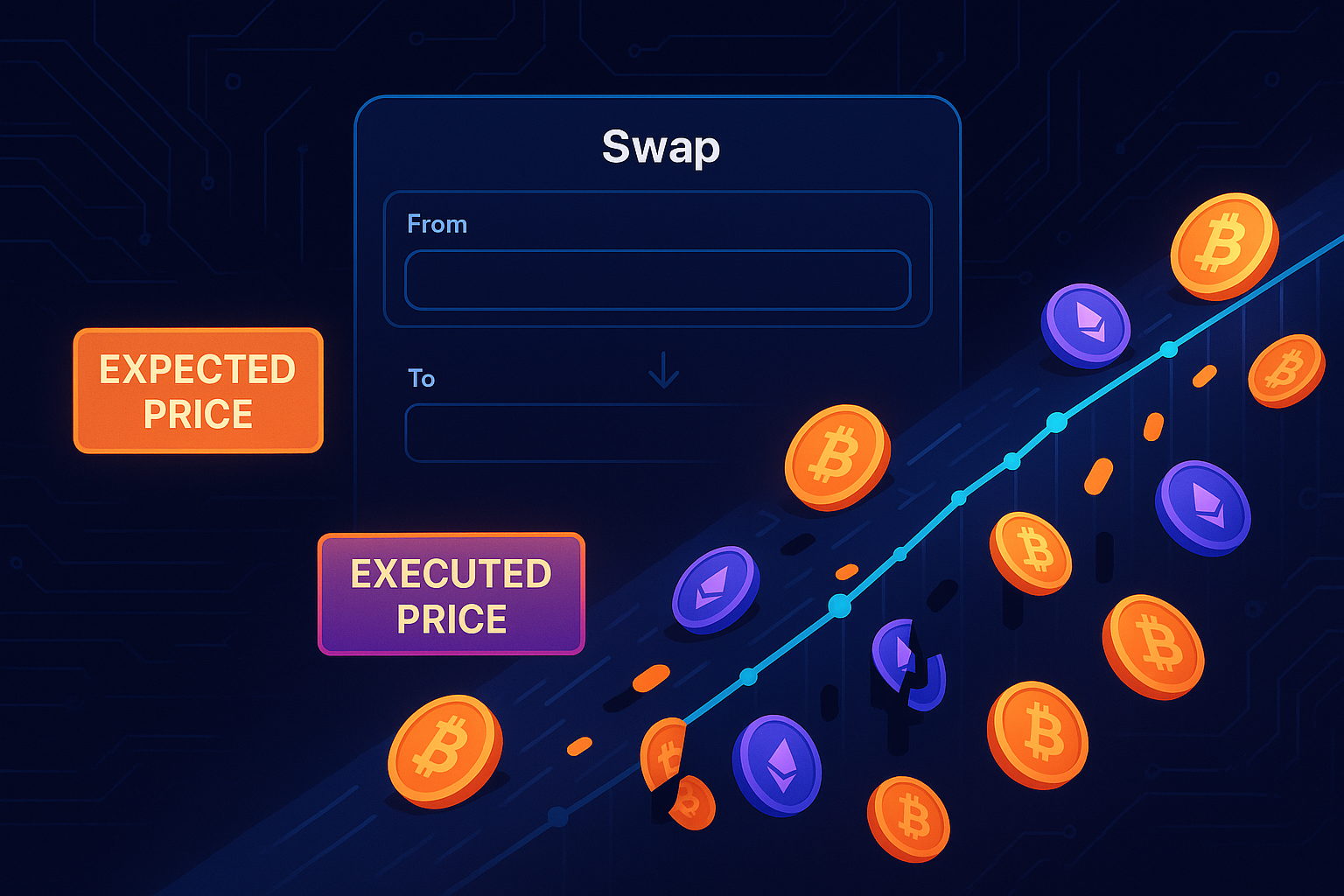
1. Price Volatility and Slippage
AVAX and BTC are both volatile assets. Between the time you create a swap and the time it executes, the exchange rate can change. Some services offer:
- Fixed-rate swaps that lock your rate for a short time, but might include a higher spread
- Floating-rate swaps that follow the market but can result in less BTC than expected during sharp moves
Always check whether the rate is guaranteed and for how long.
2. Network Congestion
If either the Avalanche or Bitcoin network is congested:
- Your AVAX transaction might confirm slowly, delaying the start of the swap
- Your BTC payout might take longer to arrive, especially if network fees are low
This does not necessarily mean the swap failed, but it may require more patience and careful tracking via block explorers or the swap interface.
3. Service Reliability and Trust
When using any third-party swap service, you are relying on their infrastructure and code. Risks include:
- Service downtime or maintenance during your swap
- Technical bugs that delay transactions
- Counterparty risk if the service is not reputable
To minimize issues, research the platform’s track record, check independent reviews, and, if possible, test with a small amount first.
4. Irreversibility of Transactions
Blockchain transactions cannot be reversed. If you:
- Send AVAX to the wrong address
- Enter an incorrect BTC destination address
- Use the wrong network or token variant
There is usually no way to recover funds. Always double-check addresses and networks before confirming a swap.
Step-by-Step Guide to an AVAX to BTC Swap
The exact steps vary depending on your chosen platform, but the general process is similar. Below is a practical flow you can adapt.
Step 1: Prepare Your Wallets
- Avalanche wallet with AVAX
Ensure you have AVAX in a wallet that can send native AVAX on the correct Avalanche chain (C-Chain for most EVM wallets). Also keep a small amount for gas fees. - Bitcoin wallet address
Prepare the BTC address that will receive the swapped coins. This might be a hardware wallet, mobile wallet, or desktop wallet. Confirm it is a valid Bitcoin on-chain address, not a Lightning invoice unless the service explicitly supports Lightning.
Step 2: Choose a Swap Service
Select a platform that advertises a direct avax to btc swap. Key things to check:
- Supported networks and tokens (native AVAX, native BTC)
- Fee structure and spreads
- Reputation, user reviews, and support channels
- Whether it is non-custodial and how it handles privacy
Step 3: Enter Swap Details
- Specify the amount of AVAX you want to swap.
- Review the estimated BTC amount you will receive.
- Paste your Bitcoin wallet address carefully.
- Check whether the rate is fixed or floating and how long it is valid.
- Confirm the swap parameters.
Step 4: Send AVAX to the Provided Address
After you confirm, the service will typically show you a deposit address or QR code for receiving AVAX:
- Copy the AVAX deposit address exactly.
- From your Avalanche wallet, send the specified amount of AVAX to that address.
- Use an appropriate gas fee so the transaction confirms within the platform’s time window.
Some services may also show you a minimum and maximum amount. Do not send less than the minimum or more than the maximum without reading their policy, as this can cause delays or failed swaps.
Step 5: Wait for Confirmations and Swap Execution
Once your AVAX transaction is broadcast, the service will wait for a certain number of confirmations on Avalanche. After that:
- Your AVAX is received and locked for the swap
- The service executes the trade backend logic and prepares your BTC payout
- Your BTC is sent to the address you provided
You should be able to track progress via:
- A transaction status page or order ID
- Block explorers on Avalanche and Bitcoin to verify on-chain activity
Step 6: Confirm BTC Arrival
Once the BTC transaction is sent, check your wallet:
- Look for the incoming BTC transaction hash
- Verify that the amount received is close to the estimate, accounting for network fees and any floating-rate slippage
- Wait for the desired number of Bitcoin confirmations before treating the funds as final
Practical Tips for a Smooth AVAX to BTC Swap
1. Start With a Small Test Amount
If it is your first time using a specific platform or you are moving a large amount of value, consider:
- Sending a small test AVAX transaction first
- Verifying that BTC arrives correctly at your wallet
- Scaling up to the full amount once you are confident everything works as expected
2. Double-Check Network and Addresses
Common user errors include sending AVAX on the wrong chain or using an incompatible address type. To avoid this:
- Confirm whether the platform expects AVAX on Avalanche C-Chain, not a wrapped token on another network
- Ensure your BTC address is a valid on-chain address that the service supports (e.g., legacy, SegWit, or Bech32)
- Compare the first and last few characters of the address every time you paste it
3. Watch the Market Before Swapping
If the AVAX/BTC pair is experiencing extreme volatility, consider:
- Waiting for price swings to calm down
- Using a fixed-rate option if you want certainty over the output amount
- Splitting a large swap into several smaller ones to average out price moves
4. Understand the Fee Breakdown
Before you confirm anything, check:
- The estimated BTC you will receive
- Any explicit swap fee or service charge
- Network fees on both Avalanche and Bitcoin
Transparent platforms will show you this clearly so you can decide whether the trade is worth it at that time.
5. Use Reputable Non-Custodial Services
Where possible, choose services designed for secure, instant swaps instead of complex, custodial setups. Platforms that advertise features such as a non-custodial, instant AVAX to BTC swap and have a track record of completed transactions are often more reliable for regular use.
Conclusion
Performing an AVAX to BTC swap is a straightforward way to move capital from the Avalanche ecosystem into Bitcoin, aligning your holdings with your long-term strategy. By understanding the benefits, such as speed, self-custody, and privacy, as well as the risks like volatility and network congestion, you can make informed decisions and avoid common pitfalls.
The key is to prepare carefully: set up secure wallets, choose a reputable swap platform, verify all addresses, and consider testing with small amounts first. When done correctly, using a service that lets you swap crypto instantly in a private, non-custodial way turns what could be a multi-step headache into a single, streamlined transaction.
As cross-chain activity continues to grow, mastering simple, safe processes like AVAX to BTC swaps will be an essential skill for any serious crypto user or investor.