ARB to BTC Swap: Complete Guide to Exchanging Arbitrum for Bitcoin
Introduction
As more traders move capital across different blockchains, swapping ARB (Arbitrum) to BTC (Bitcoin) has become a common operation for portfolio management, profit taking, and risk hedging. Whether you want to rotate out of an altcoin position into a more established asset like Bitcoin, or simply rebalance your holdings, learning how to make an arb to btc swap safely and efficiently is crucial.
In the past, converting ARB to BTC required centralized exchanges, multiple intermediate swaps, complex fee structures, and repeated KYC checks. Today, non-custodial swap platforms and cross-chain infrastructure allow you to go from ARB on Arbitrum to BTC with fewer steps, greater privacy, and less friction. The key is understanding the tools available and how to minimize both costs and risks.
This guide walks through why ARB to BTC swaps matter, the main benefits and drawbacks, and a practical, step-by-step process you can follow, along with real-world tips that experienced traders use to avoid common mistakes.
Why ARB to BTC Swaps Matter
ARB and BTC sit at very different points in the crypto ecosystem. ARB is the governance and utility token of the Arbitrum ecosystem, a prominent Ethereum Layer 2 focused on scalability and low fees. BTC is the original cryptocurrency and is widely treated as digital gold, a macro asset rather than just a utility token.
Portfolio rotation and risk management
Traders frequently rotate between ARB and BTC to:
- Lock in profits from ARB rallies by moving gains into BTC.
- Reduce volatility exposure by shifting from a smaller-cap token into Bitcoin.
- Rebalance portfolios to maintain target allocations between altcoins and BTC.
- Respond to market cycles, for example moving into BTC during risk-off market conditions.
Capital efficiency across ecosystems
Arbitrum is popular for yield farming, DeFi, and low-cost trading. Bitcoin remains the go-to asset on many centralized exchanges and a base currency for long-term holdings. Efficient ARB to BTC swaps let you:
- Move capital from DeFi strategies on Arbitrum to long-term BTC positions.
- Quickly react to opportunities priced in BTC on other platforms.
- Avoid being “trapped” in a single ecosystem during volatility.
Because liquidity, fees, and infrastructure differ across chains, your swap path directly affects how much value you retain. Optimizing this path is part of serious capital management in crypto.
Key Benefits of an Efficient ARB to BTC Swap
Not all swap paths are created equal. Using a thoughtful ARB to BTC strategy can save you time, money, and headaches. Here are the main benefits to aim for.
1. Lower fees and slippage
Poorly planned swaps can involve:
- Multiple token hops (ARB → ETH → USDT → BTC).
- High gas fees on congested networks.
- Price slippage on illiquid trading pairs.
By using direct routes or optimized routing on DEX aggregators and specialized swap services, you can significantly reduce total costs. That means more BTC at the end of the process for the same amount of ARB.
2. Faster settlement
Speed matters when the market is moving. An efficient arb to btc swap:
- Reduces the number of confirmations and hops required.
- Minimizes the time your funds spend “in transit.”
- Lowers the risk of price moving against you mid-swap.
3. Greater privacy and control
Depending on the route you choose, you can keep more control over your funds and your data. Non-custodial and private exchange solutions let you:
- Avoid depositing funds into centralized exchange wallets.
- Retain control of your private keys throughout the process.
- Limit the amount of personal information you share.
For many users, this tradeoff is worth learning a slightly more advanced process compared to traditional CEX-based swaps.
4. Fewer points of failure
Each additional platform, bridge, and token hop introduces another potential failure point. A streamlined ARB to BTC swap path:
- Lowers counterparty risk by involving fewer intermediaries.
- Simplifies tracking and accounting.
- Makes it easier to troubleshoot if something goes wrong.
Risks and Drawbacks to Consider
No matter which method you use, swapping ARB to BTC carries risks. Being aware of them helps you plan better and size your positions more appropriately.
1. Market volatility and price impact
Crypto markets can move quickly. Between the moment you initiate a swap and the moment it confirms, ARB or BTC prices can change. Main risks include:
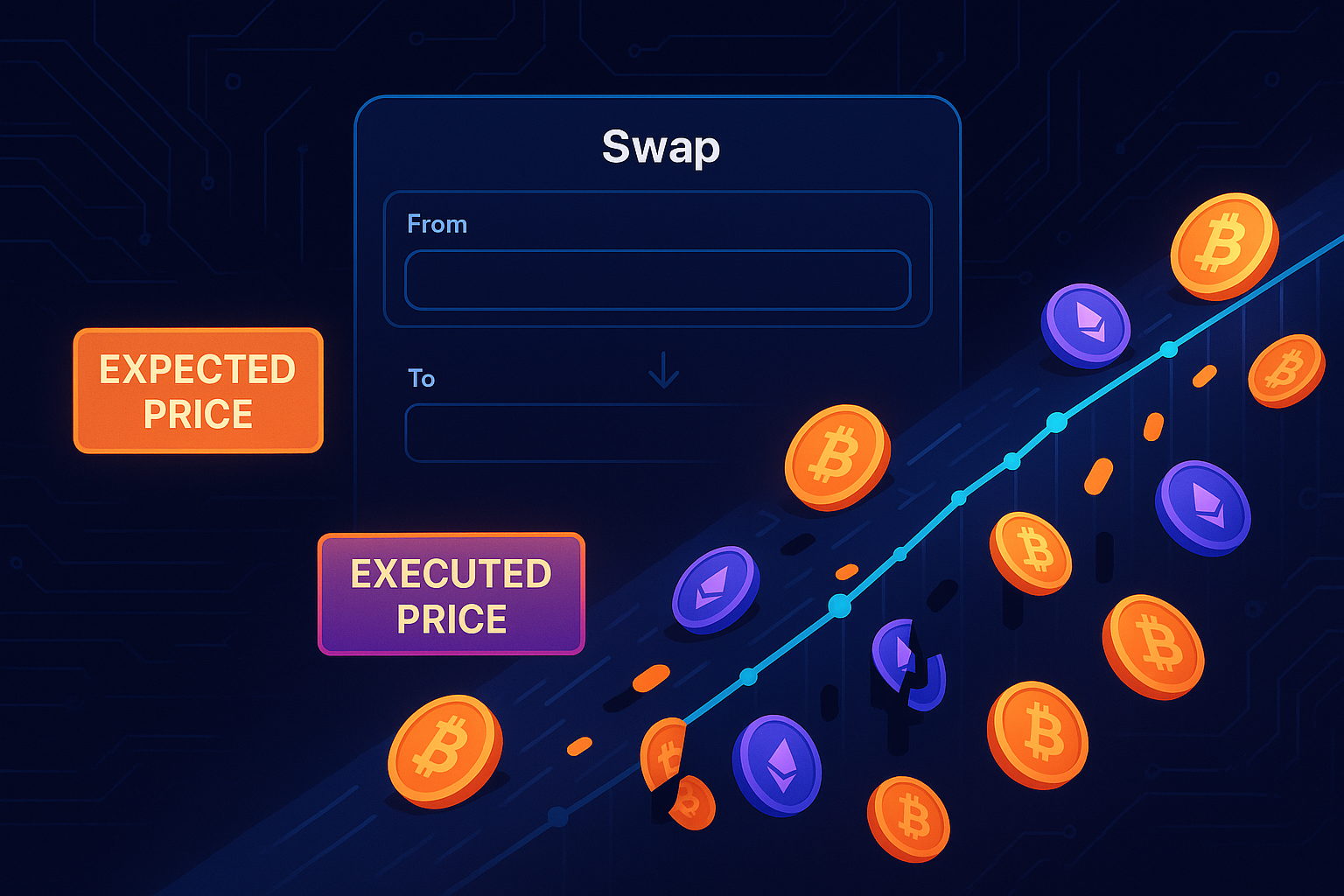
- Slippage: You receive fewer BTC than expected due to thin liquidity or rapid price movement.
- Front-running and MEV on some DEXs, which can worsen your execution price.
- Spread widening on illiquid pairs or during volatile news events.
2. Custodial and counterparty risk
If you use custodial platforms, you assume:
- Platform solvency risk.
- Withdrawal suspension risk during extreme volatility or regulatory pressure.
- Account freeze or KYC/AML issues.
Non-custodial platforms significantly reduce these specific risks, but you still depend on smart contracts and protocols functioning as intended.
3. Smart contract and protocol risk
On-chain swaps rely on smart contracts. Key risks include:
- Bugs or vulnerabilities in swap or bridge contracts.
- Rug pulls or malicious protocols if you use unvetted platforms.
- Unexpected behavior during extreme network congestion.
Always evaluate the reputation, audits, and track record of any platform you use and avoid committing your entire portfolio in a single transaction.
4. Network and fee risk
Gas prices and network conditions can change rapidly, especially on Ethereum mainnet. Even though Arbitrum is cheaper, you may still face:
- Higher-than-expected gas fees at peak times.
- Delayed confirmations that expose you to more price risk.
- Stuck or failed transactions if fees are set too low.
Step-by-Step Guide: How to Swap ARB to BTC
Below is a general process you can adapt to your preferred tools. The focus is on non-custodial methods where you retain control of your keys, while still noting where centralized exchanges might fit for some users.
Step 1: Prepare your wallets and addresses
-
Set up an Arbitrum-compatible wallet
Use a wallet like MetaMask, Rabby, or similar and ensure the Arbitrum network is added. Confirm you can see your ARB balance. -
Set up a BTC receiving address
Use a Bitcoin wallet you control (hardware wallet, mobile wallet, or desktop client). Copy and securely store your BTC address, double-checking it character by character. -
Check small network token balances
Ensure you have a small amount of ETH on Arbitrum for gas. Without it, the swap transaction cannot be sent.
Step 2: Choose your swap path and platform
At a high level, you have three main paths:
- Direct ARB → BTC via a cross-chain swap service
This is often the simplest route if you use a reliable non-custodial swap that supports ARB on Arbitrum and native BTC as the output. - ARB → stablecoin/ETH on Arbitrum → BTC on another chain
Swap to a widely supported asset (like USDT, USDC, or ETH) and then swap that to BTC on a platform that supports BTC withdrawals. - ARB → CEX deposit → BTC → withdraw BTC
Send ARB to a centralized exchange, trade for BTC, and withdraw BTC. This adds more steps and introduces custodial risk but may offer deep liquidity.
For many users who value privacy and custody, a dedicated cross-chain service that lets you swap crypto instantly from ARB on Arbitrum to BTC is often the most straightforward option.

Step 3: Configure the ARB to BTC swap
On your chosen non-custodial swap platform:
- Select ARB (Arbitrum) as the token you are sending.
- Select BTC as the token you are receiving.
- Enter the amount of ARB you wish to swap.
- Paste your destination BTC address.
- Review:
- The quoted BTC amount.
- Estimated fees and any service charges.
- Time estimate for completion.
If the platform offers a fixed-rate option, compare it to the floating rate and consider volatility. Fixed rates protect you from short-term price swings but may include a markup.
Step 4: Confirm and send the ARB transaction
Once you confirm the quote:
- Connect your Arbitrum wallet to the platform.
- Approve the ARB token if prompted (first-time action).
- Sign and send the transaction from your wallet, covering the Arbitrum gas fees.
- Monitor the transaction hash in your wallet or a block explorer to confirm it is included in a block.
The service will detect your incoming ARB and then initiate the BTC output transaction to the address you provided.
Step 5: Wait for BTC confirmation and verify receipt
- Wait for the specified number of confirmations on the Bitcoin network.
- Open your BTC wallet and verify the transaction appears with the correct amount.
- Optionally, cross-check the transaction details on a Bitcoin explorer (e.g., mempool.space, Blockchain.com explorer).
Only once you see confirmed BTC in your wallet should you consider the ARB to BTC swap fully complete.
Practical Tips for a Better ARB to BTC Swap Experience
1. Start with a small test transaction
When using a new platform or process:
- Send a small amount of ARB first to ensure everything works as expected.
- Confirm that BTC arrives at the correct address and that timing matches your expectations.
- Then repeat the process with a larger amount if you are satisfied.
2. Double-check addresses and networks
Address mistakes are usually irreversible. Avoid them by:
- Copy-pasting addresses and comparing the first and last several characters.
- Ensuring you are on the correct network (Arbitrum, not Ethereum mainnet) before sending ARB.
- Verifying that the output is native BTC, not wrapped BTC on another chain unless that is what you intend.
3. Monitor fees and network conditions
Fees impact your net outcome. For best results:
- Check Arbitrum gas prices and Bitcoin network fees before initiating large swaps.
- Avoid periods of extreme congestion or significant market news when possible.
- If you can, use fee estimation tools or your wallet’s suggested fee tiers.
4. Use trusted, audited platforms
Do basic due diligence on any swap service:
- Look for community reputation, user reviews, and active support channels.
- Check whether the platform has been audited and by whom.
- Confirm that it operates as a non-custodial service and does not require giving up control of your keys.
5. Keep records for accounting and tax purposes
ARB to BTC swaps are usually taxable events in many jurisdictions. To simplify accounting:
- Save transaction hashes, timestamps, and amounts in both ARB and BTC.
- Record the approximate fiat value at the time of the swap, if available.
- Use portfolio tracking or tax tools that can import on-chain data to avoid manual errors.
Conclusion
An ARB to BTC swap is more than a simple token trade. It is a strategic move between a high-performance Layer 2 ecosystem and the largest, most established cryptocurrency. By using a reliable arb to btc swap route that is non-custodial, transparent about fees, and optimized for security and privacy, you can retain more of your capital while managing your risk exposure effectively.
Take the time to understand the available paths, test with small amounts, and keep careful records. With a clear process and the right tools, shifting from ARB on Arbitrum into BTC can be fast, efficient, and aligned with both your trading strategy and your long-term investment goals.