How to Make an ALGO to BTC Swap Safely and Efficiently
Introduction
Algorand (ALGO) and Bitcoin (BTC) are two of the most recognized cryptocurrencies in the market, but they serve very different purposes. As portfolios become more dynamic and strategies more active, many traders are looking for a fast, secure, and low-friction way to make an ALGO to BTC swap without jumping through unnecessary hoops.
Whether you are taking profit on a recent ALGO rally, rebalancing into Bitcoin as a long-term store of value, or simply testing cross-chain liquidity, learning how to convert ALGO to BTC efficiently can save you money and time. Using a non-custodial aggregator that lets you swap crypto instantly is often more convenient than traditional centralized exchanges.
This guide explains why ALGO to BTC swaps matter, what benefits and risks you should understand, and gives you a clear, step-by-step walkthrough so you can execute your swap with confidence while keeping control of your funds.
Why ALGO to BTC Swaps Matter
Different roles in a crypto portfolio
ALGO is a smart contract platform asset used for transaction fees, governance, and decentralized applications on the Algorand network. Bitcoin, on the other hand, is widely viewed as a digital store of value and macro hedge. Moving from ALGO into BTC can be part of:
- Risk management by shifting from a higher-volatility asset into a more established one
- Rebalancing your portfolio as price action changes your asset weighting
- Capitalizing on opportunities when you expect ALGO to underperform BTC or vice versa
On-chain mobility and flexibility
As DeFi grows across multiple ecosystems, you may want BTC exposure while still leveraging liquidity or yield opportunities on other chains. An efficient ALGO to BTC swap:
- Lets you react quickly to market changes
- Reduces the need to hold multiple fiat on-ramps
- Keeps you within the crypto ecosystem without repeated bank transfers
Control and self-custody
Swapping through centralized exchanges often means:
- Deposit delays and withdrawal queues
- Custodial risk if the platform faces insolvency or technical problems
- Complex KYC processes depending on your region and limits
In contrast, a non-custodial swap where you keep control of your keys is better aligned with the core principles of crypto: self-sovereignty and trust minimization.
Key Benefits of an ALGO to BTC Swap
1. Portfolio rebalancing and diversification
A direct ALGO to BTC swap lets you rebalance without going through multiple trading pairs. Instead of ALGO → USDT → BTC, a direct path can:
- Minimize trading fees across multiple hops
- Lower slippage if you use a smart routing aggregator
- Reduce execution time and potential price drift
2. Access to a more mature asset
Bitcoin has a longer history, deeper liquidity, and broader institutional adoption than most altcoins. Converting a portion of your ALGO stack into BTC may:
- Stabilize the volatility of your overall portfolio
- Provide a base asset to pivot into other opportunities later
- Serve as a long-term holding with strong market awareness
3. Non-custodial and private execution
If you use a private exchange for ALGO to BTC swaps that is non-custodial, you:
- Retain control of your keys at all times
- Avoid leaving large balances on centralized exchanges
- Reduce the amount of personal data sent to intermediaries
This is particularly important for users who care about minimizing centralized points of failure and enhancing privacy.
4. Speed and convenience
Direct routing and cross-chain swap solutions are increasingly fast. A well-optimized ALGO to BTC swap can:
- Clear in minutes depending on network congestion
- Avoid manual bridging steps across multiple protocols
- Minimize user errors caused by complex workflows
Risks and Drawbacks to Consider
1. Market volatility
Both ALGO and BTC are volatile assets. During an ALGO to BTC swap, you may face:
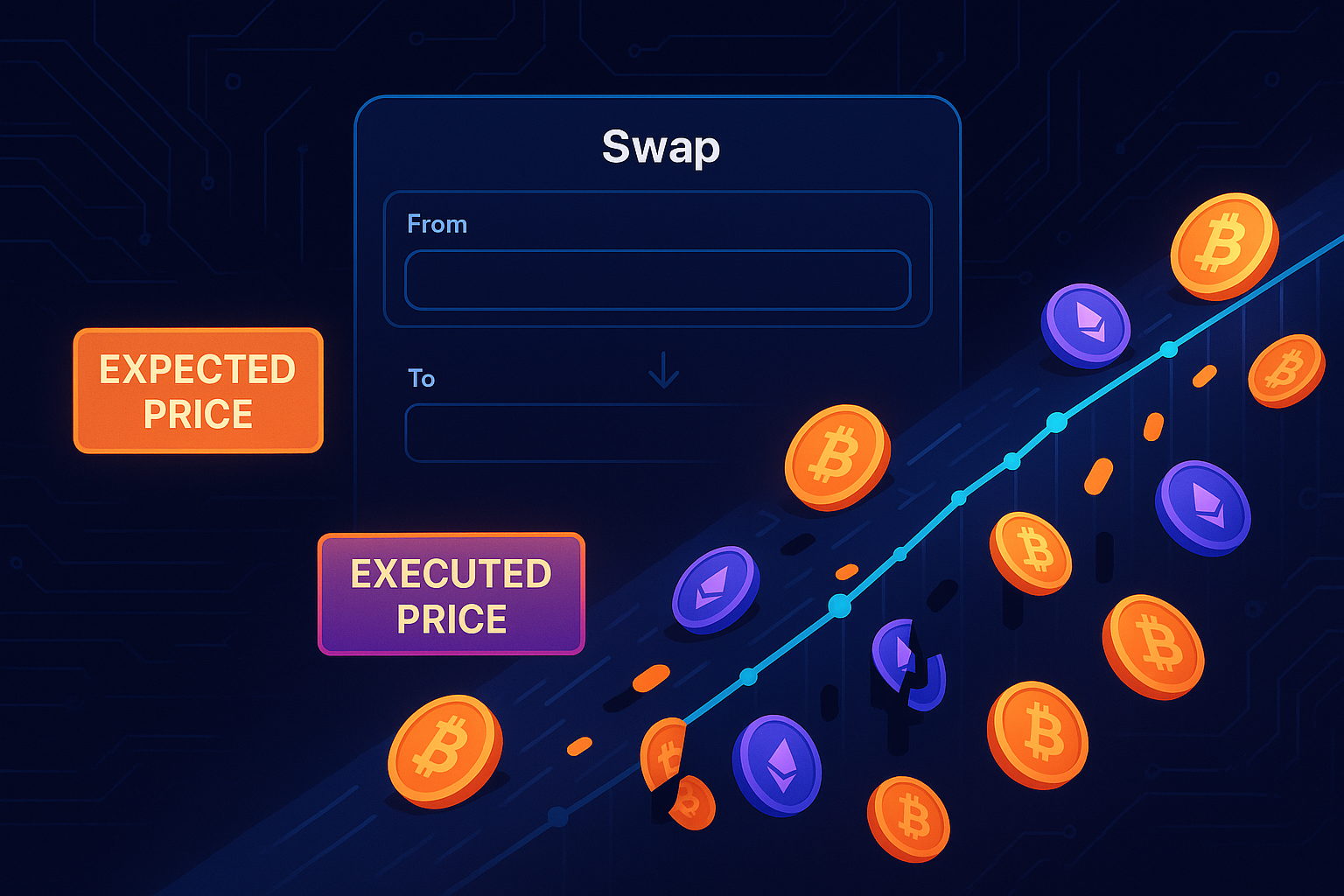
- Price slippage if liquidity is thin or the order is large
- Execution risk if prices move rapidly while the transaction is pending
Mitigate this by checking real-time quotes, using reasonable slippage tolerances, and avoiding highly illiquid routes.
2. Network fees and blockchain congestion
Cross-chain swaps involve at least two networks. While Algorand tends to have low fees, Bitcoin fees can spike during heavy usage. This may:
- Increase the effective cost of your transaction
- Slow down confirmation time on the BTC side
Always confirm estimated fees before committing to the swap and consider timing your transaction for calmer periods.
3. Custodial and counterparty risk
If you route your ALGO to BTC swap through a centralized exchange or custodial service, you expose yourself to:
- Exchange hacks or insolvency
- Account freezes or withdrawal suspensions
- Unexpected KYC requirements or regional blocks
Using a reputation-aware, non-custodial swap solution significantly reduces these risks because you never hand over long-term control of your funds.
4. User error
Common mistakes include:
- Sending funds to the wrong address or network
- Using an incompatible wallet
- Misunderstanding minimum swap amounts
These errors can be avoided by carefully double-checking details and following a structured process like the one below.
Step-by-Step Guide: How to Execute an ALGO to BTC Swap
Step 1: Prepare your wallets
You will need:
- An Algorand-compatible wallet holding the ALGO you want to swap
- A Bitcoin wallet that can receive BTC on the correct network (usually native Bitcoin mainnet)
Verify that:
- You have full access to both wallets and backups of your seed phrases
- Your Algorand wallet is funded with slightly more ALGO than you plan to swap to cover transaction fees
Step 2: Choose a reliable ALGO to BTC swap platform
Look for a platform that:
- Supports direct ALGO to BTC routing
- Is non-custodial so you keep control of your keys
- Provides transparent quotes and fee breakdowns
A specialized aggregator that focuses on privacy and non-custodial design is often preferable to generic custodial exchanges, especially if you value minimal data sharing.
Step 3: Enter the swap pair and amount
On your chosen interface:
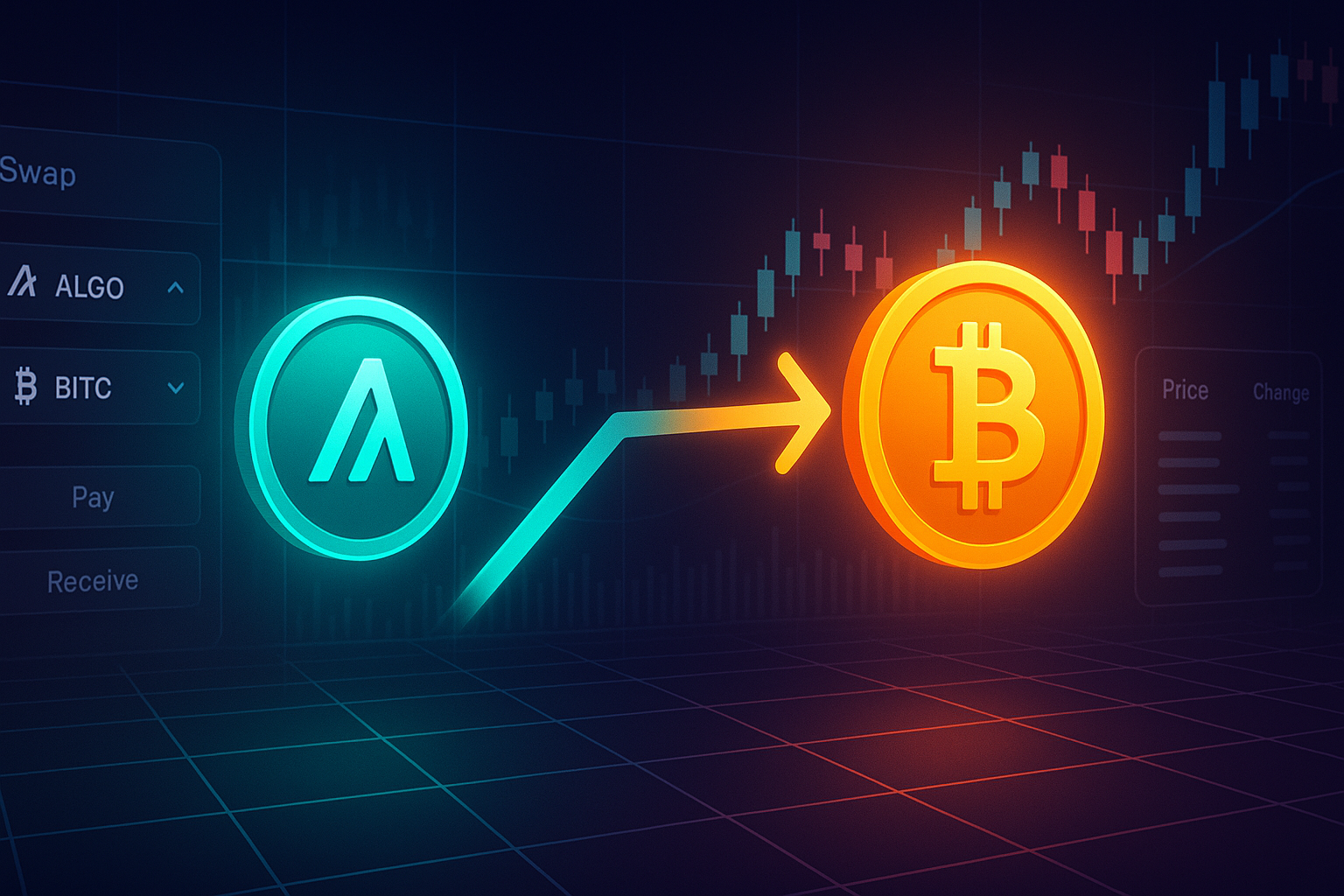
- Select ALGO as the asset you are sending
- Select BTC as the asset you are receiving
- Enter the amount of ALGO you want to convert
The platform should show:
- Estimated BTC you will receive
- Any service fees or minimum swap sizes
- Network fee estimates and slippage ranges
Step 4: Provide your BTC receiving address
From your Bitcoin wallet:
- Generate or copy your BTC receiving address
- Paste it into the ALGO to BTC swap interface
- Double-check the address carefully, character by character
Sending BTC to the wrong address is typically irreversible, so this step deserves extra attention.
Step 5: Confirm the quote and initiate the swap
Before authorizing:
- Review the final ALGO and BTC amounts
- Check the estimated time to completion
- Verify your BTC address again
If everything looks correct, confirm the transaction in your Algorand wallet. The ALGO will leave your wallet and the cross-chain swap process will begin.
Step 6: Wait for network confirmations
The swap service will typically:
- Detect your incoming ALGO transaction on the Algorand network
- Perform the route or liquidity operations required to obtain BTC
- Broadcast a BTC transaction to your specified address
During this time, you can track progress via:
- The status page provided by the swap service
- Blockchain explorers using the transaction IDs (TXIDs)
Step 7: Verify receipt of BTC
Once the swap reports completion:
- Open your Bitcoin wallet and ensure the BTC has arrived
- Check the number of confirmations if your wallet or exchange requires a specific minimum before considering funds spendable
Practical Tips for a Smooth ALGO to BTC Swap
1. Start with a small test amount
If you are using a new platform for the first time, start with a modest amount of ALGO:
- Validate that the flow works with your wallets
- Confirm expected timing and fees
- Build trust before moving larger sums
2. Monitor slippage and fees
An ALGO to BTC swap involves both market and network components. To optimize:
- Compare quotes across a couple of services if possible
- Avoid swapping during extreme volatility where spreads widen
- Use limit-like safeguards when the platform allows slippage configuration
3. Keep software and wallets updated
Up-to-date wallets and browsers reduce the risk of compatibility issues or security bugs. Make sure:
- Your wallet software is on the latest stable release
- You are accessing the platform from a trusted device and secure network
4. Preserve your privacy
If privacy is important to you:
- Avoid reusing Bitcoin addresses unnecessarily
- Consider wallets with coin control features to manage UTXOs over time
- Prefer non-custodial platforms that do not require creating an account to perform a swap
5. Document your trades for accounting
Depending on your jurisdiction, swapping ALGO to BTC can be a taxable event. It is wise to:
- Save TXIDs and timestamps for each swap
- Export transaction history from wallets or the swap service
- Use crypto tax software or consult a professional if needed
Common Questions About ALGO to BTC Swaps
How long does an ALGO to BTC swap usually take?
Timing depends on:
- Algorand block times and network load
- Bitcoin mempool congestion and fee settings
- The internal routing speed of the swap service
In typical conditions, you might see completion in anywhere from a few minutes to under an hour, with most of the variability coming from the Bitcoin side.
Can I reverse an ALGO to BTC swap?
No, blockchain transactions are generally irreversible once confirmed. If you want to move back from BTC to ALGO, you would need to perform a separate BTC to ALGO swap. This is why verifying addresses and amounts carefully is crucial.
Is KYC always required?
KYC requirements depend on the service you use and local regulations. Some non-custodial swap solutions focus on simple, on-chain transactions and may not require traditional account creation for modest amounts, while others may enforce stricter verification rules.
Conclusion
An ALGO to BTC swap is a practical tool for portfolio management, risk adjustment, and increasing exposure to Bitcoin without leaving the crypto ecosystem. By understanding the benefits, recognizing the main risks, and following a clear, step-by-step process, you can move between Algorand and Bitcoin in a way that is efficient, secure, and aligned with your overall strategy.
Focus on non-custodial, privacy-aware solutions that let you keep control of your funds from start to finish. When you are ready to put this into practice, using a dedicated interface for an algo to btc swap can streamline the process and help you avoid unnecessary complexity.
By combining careful planning, secure wallet habits, and a reliable swap platform, you will be well positioned to adjust your ALGO and BTC holdings as market conditions evolve.