A Complete Guide to AAVE to ETH Swap: How to Exchange AAVE for Ethereum Safely and Efficiently
Introduction
Decentralized finance has opened up a wide world of tokens and yield opportunities, and Aave (AAVE) is one of the most recognizable names in that ecosystem. At the same time, Ethereum (ETH) remains the core asset that powers much of DeFi activity. Knowing how to perform an AAVE to ETH swap efficiently is essential if you want to move between governance tokens and base-layer assets, rebalance your portfolio, or exit a position.
Whether you are optimizing yield, adjusting risk, or simply simplifying your holdings, you will frequently need to convert AAVE into ETH. Thanks to non-custodial DeFi tools, you can complete an AAVE to ETH swap directly from your wallet without registering on a centralized exchange or handing over custody of your funds.
This guide explains why swapping AAVE to ETH matters, the main benefits and risks, how to complete the swap step by step, and practical tips to keep your costs and risks under control. By the end, you will know exactly how to approach this swap with confidence.
Why AAVE to ETH Swap Matters
On the surface, converting AAVE to ETH might look like just another token trade. In practice, it plays a strategic role in how you manage your DeFi portfolio.
1. Moving from governance to base asset
AAVE is a governance and utility token for the Aave protocol. ETH, by contrast, is a base asset that you can use for:
- Paying gas fees on the Ethereum network
- Providing liquidity on DeFi platforms
- Collateral in lending protocols
- Long-term holding as a core crypto asset
When you swap AAVE to ETH, you are effectively rotating from a more niche governance token into a foundational asset with broad usage.
2. Managing volatility and risk
Governance tokens like AAVE can be more volatile than ETH. During uncertain market conditions or after a big run-up in AAVE’s price, many users choose to lock in profit by swapping AAVE into ETH. That can:
- Reduce exposure to protocol-specific risk
- Simplify your overall portfolio allocation
- Provide a more liquid base to move into stablecoins or other assets later
3. Accessing broader DeFi opportunities
While AAVE has its own yield opportunities, ETH is often required to interact with a wider range of protocols. Holding ETH after your AAVE to ETH swap can make it easier to:
- Participate in new token launches or presales
- Provide liquidity in ETH-based pools
- Pay for smart contract interactions and bridging
Key Benefits of Swapping AAVE to ETH
There are several advantages to converting AAVE to ETH directly via a DeFi interface rather than using centralized exchanges.
1. Non-custodial control
With a non-custodial swap, you remain in control of your private keys at all times. This removes counterparty risks like exchange insolvency, withdrawal freezes, or account hacks tied to centralized custodians.
2. Privacy and fewer KYC frictions
Many DEX-style interfaces allow you to swap crypto instantly from your wallet without submitting identity documents. While you still interact on a public blockchain, you avoid many of the data collection practices that come with centralized exchanges and traditional financial platforms.
3. Speed and convenience
When you swap AAVE to ETH on-chain, the process is typically:
- Faster than funding and withdrawing from a centralized exchange
- Simpler, since it is a single operation from your wallet
- Accessible directly from browser wallets or mobile wallets
Transactions confirm according to the current Ethereum network conditions, usually within seconds to a few minutes.
4. Direct access to DeFi positions
Once you hold ETH, you can immediately allocate it to lending, liquidity pools, staking (where applicable), or other strategies, all without moving between multiple intermediaries.
Risks and Drawbacks to Consider
Despite the benefits, there are several risks you should evaluate before performing an AAVE to ETH swap.
1. Price volatility and slippage
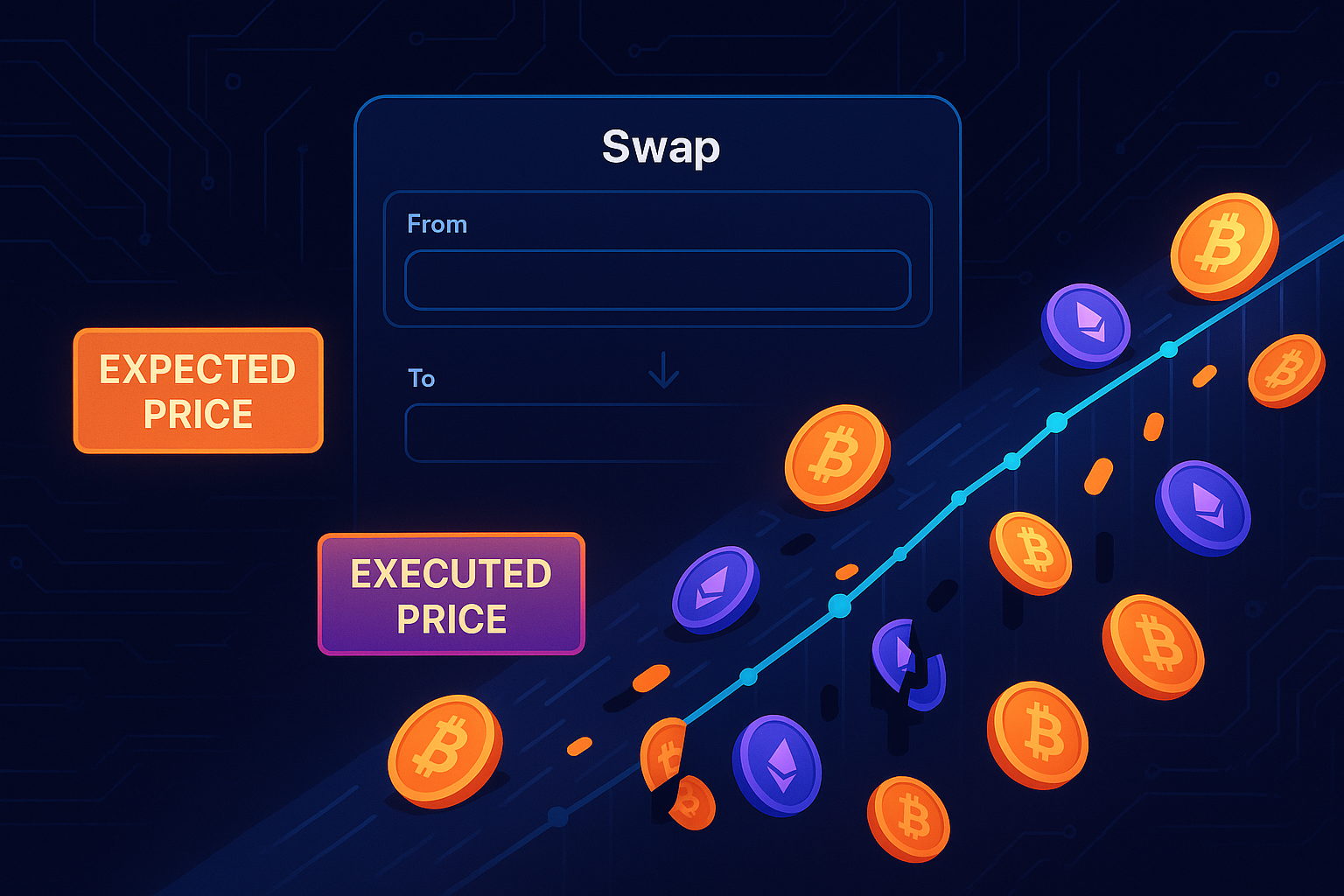
Both AAVE and ETH are volatile assets. The price you see at the time of initiating the transaction may differ slightly from the final execution price due to:
- Rapid market movements during block confirmation
- Slippage based on liquidity in the AAVE/ETH route
Always review the slippage settings offered by your chosen swapping interface and check the minimum amount of ETH you will receive.
2. Gas fees on Ethereum
Swaps on Ethereum require gas. During periods of network congestion, fees can temporarily spike and make smaller swaps uneconomical. You should always:
- Check current gas prices on a tracker
- Estimate whether the swap size justifies the fee
- Consider adjusting the swap time if gas is unusually high
3. Smart contract and interface risk
When you use a DeFi aggregator or swap interface, you are interacting with smart contracts. Potential risks include:
- Bugs or vulnerabilities in the contract code
- Malicious or spoofed front-end interfaces
- Approval permissions that give more control than intended
Mitigation steps include verifying URLs, using reputable services, and periodically revoking unused token approvals.
4. Irreversibility
Blockchain transactions are final once confirmed. If you:
- Send tokens to the wrong address
- Accept an unfavorable rate without double-checking
- Interact with a fake site
there is usually no way to reverse the transaction. Careful verification is critical.
Step-by-Step Guide: How to Swap AAVE to ETH
This generic walkthrough outlines the typical process of completing an AAVE to ETH swap using a non-custodial interface. Exact screens may differ, but the sequence is similar across platforms.
Step 1: Prepare your wallet
- Install and unlock a Web3 wallet such as MetaMask or another compatible wallet.
- Ensure your wallet is on the Ethereum mainnet.
- Confirm you have:
- AAVE tokens in your address on Ethereum
- A small amount of ETH to cover gas fees
Step 2: Connect to a swap interface
Open a reputable non-custodial DEX or aggregator that supports the AAVE/ETH route. For instance, you can use a platform that allows you to swap AAVE to ETH directly from your wallet in a few clicks.
- Navigate to the exchange or swap page in your browser.
- Click “Connect Wallet” and select your wallet provider.
- Approve the connection request from your wallet.
Step 3: Select AAVE and ETH as the tokens
- In the “From” field, choose AAVE and enter the amount you want to swap.
- In the “To” field, select ETH.
- Check the quoted rate, network fees, and the minimum amount of ETH you will receive after slippage.
Step 4: Approve AAVE for spending
For most ERC-20 tokens, the first time you trade them via a new smart contract, you must grant a spending approval.
- Click “Approve” or similar on the interface.
- Confirm the approval transaction in your wallet, which will require a small gas fee.
- Wait for the approval transaction to confirm on-chain.
Some interfaces allow you to specify a custom spending limit for additional security instead of approving unlimited usage.
Step 5: Execute the AAVE to ETH swap
- Once approval is complete, click “Swap” or “Confirm Swap.”
- Review:
- The AAVE amount you are sending
- The estimated and minimum ETH you will receive
- The gas fee and total cost
- Confirm the transaction in your wallet.
- Wait for the transaction to be mined and confirmed.
Step 6: Verify your new ETH balance
- Open your wallet and check your ETH balance.
- Optional: Use a blockchain explorer to view the transaction details and verify the token movement.
- If everything looks correct, your AAVE to ETH swap is complete.
Practical Tips for a Better AAVE to ETH Swap
1. Time your gas fees
Gas costs can significantly affect your net outcome, especially for smaller trades. To optimize:
- Check gas charts to identify lower-fee times of day
- Use wallet tools that suggest economical gas settings
- Avoid executing swaps during major NFT mints or hyped launches if possible
2. Manage slippage carefully
Most interfaces let you set a maximum slippage tolerance. A reasonable range might be:
- 0.1% to 0.5% for highly liquid pairs and normal conditions
- Slightly higher during volatile market periods, but only if necessary
Too tight a slippage setting may cause your transaction to fail. Too loose can result in a worse rate than expected.
3. Double-check token contracts and URLs
Scams often rely on lookalike tokens or spoofed websites. Before you initiate a swap:
- Verify you are using the official AAVE contract address on Ethereum
- Bookmark trusted swap interfaces instead of relying on search results or ads
- Inspect your browser’s address bar for typos or unusual domains
4. Consider the size of your swap
For very small AAVE amounts, gas and slippage can consume a disproportionate percentage of the trade. It can be more efficient to:
- Aggregate several small swaps into one larger transaction
- Monitor price and gas for a better overall execution window
5. Revoke unused approvals periodically
Over time, you may grant spending approvals for AAVE and other tokens to multiple contracts. For better security:
- Use an approval management tool to view all active allowances
- Revoke approvals you no longer need
- Prefer limited-amount approvals where your interface supports them
6. Think about your next move after the swap
ETH is extremely flexible. Prior to executing your AAVE to ETH swap, outline your next steps:
- Will you hold ETH long term?
- Will you deploy it to DeFi strategies or staking?
- Are you using it as a bridge asset to another network or protocol?
Having a plan helps you avoid unnecessary extra swaps and fees.
Conclusion
Swapping AAVE to ETH is a core operation for anyone active in DeFi on Ethereum. It enables you to transition from a protocol-specific governance token into the network’s primary asset, manage volatility, and reposition your portfolio for new opportunities. By using a private exchange for an AAVE to ETH swap, you can retain custody of your funds, avoid centralized bottlenecks, and move quickly when markets change.
Always account for gas fees, slippage, and smart contract risk before confirming any swap. With a secure wallet, a trusted non-custodial interface, and careful review of each transaction, your AAVE to ETH conversions can be both efficient and relatively low-friction, putting you in a stronger position to navigate the broader crypto ecosystem.