Arbitrum (ARB) vs Optimism (OP): Which Is Better in 2026?
Arbitrum (ARB) vs Optimism (OP) is one of the most important layer-2 debates in Ethereum scaling today. In 2026, Arbitrum still leads on TVL and ecosystem size, while Optimism pushes hard on governance and the “Superchain” vision. Both are core infrastructure for DeFi, and you can swap ARB to OP instantly if you want exposure to both without using a centralized exchange.
Below is a quick comparison of Arbitrum vs Optimism on price, market cap, technology and usage. After that, we will dig deep into how they work, how their tokens have performed, and which might be the better choice for your portfolio in 2026.
| Feature | Arbitrum (ARB) (ARB) | Optimism (OP) (OP) |
|---|---|---|
| Current Price (as of 2026-07-24) | $0.0836 | $0.0918 |
| Market Cap | $553.21M (Rank #95) | $209.81M (Rank #158) |
| Purpose / Use Case | Ethereum layer-2 rollup focused on high-throughput DeFi and dApps | Ethereum layer-2 rollup focused on the Optimism “Superchain” and public goods |
| Consensus / Security Model | Optimistic rollup secured by Ethereum, fraud proofs | Optimistic rollup secured by Ethereum, fault proofs |
| Typical Transaction Speed | Seconds to finality on L2; several minutes to withdraw to L1 | Seconds to finality on L2; several minutes to withdraw to L1 |
| Fees | Low fees, usually a fraction of mainnet Ethereum gas | Low fees, usually a fraction of mainnet Ethereum gas |
Quick Overview: Arbitrum (ARB) vs Optimism (OP)
Arbitrum and Optimism are both optimistic rollups: they bundle transactions off-chain, post compressed data to Ethereum, and rely on fraud proofs to keep the system honest. In practice, both provide cheaper and faster transactions than Ethereum mainnet while inheriting its security assumptions.
Where they differ is strategy and ecosystem. Arbitrum has historically led in total value locked (TVL) and DeFi activity, attracting major applications like GMX and more established liquidity. Optimism focuses on the “Superchain” concept, aligning multiple chains and projects under a shared technical and governance framework, and is heavily tied to the OP Stack used by networks like Base.
From a token perspective, ARB currently has a larger market cap and broader circulating supply. OP, meanwhile, has a smaller market but a central role in governance across the Optimism Collective and Superchain. Their prices are relatively close in 2026, but their long-term value depends on adoption, revenue sharing and how fast Ethereum scaling demand grows.
What Is Arbitrum (ARB)?
Arbitrum is a layer-2 scaling solution for Ethereum designed to provide higher throughput and lower fees while retaining Ethereum’s security. Developed by Offchain Labs, Arbitrum uses an optimistic rollup model, where transactions are executed off-chain and only the compressed results are posted to Ethereum. Fraud proofs allow validators to challenge invalid state transitions, which keeps the system secure without every node executing every transaction.
Arbitrum’s main network for DeFi and dApps is Arbitrum One, which is fully EVM-compatible, meaning developers can deploy existing Ethereum smart contracts with minimal changes. There is also Arbitrum Nova, optimized for gaming and social applications that need ultra-low fees. Over time, Arbitrum has become one of the largest Ethereum layer-2s by TVL and user adoption, hosting a deep ecosystem of DEXes, lending markets and derivatives platforms.
The ARB token is used primarily for governance within the Arbitrum DAO, which oversees protocol upgrades, treasury decisions and ecosystem incentives. ARB does not currently act as gas on the network; users still pay fees in ETH, aligning the chain closely with Ethereum’s monetary model.
What Is Optimism (OP)?
Optimism is another major Ethereum layer-2 solution built around optimistic rollups. The project’s goal is not only to scale Ethereum but also to create a sustainable funding model for public goods and open-source infrastructure. Transactions on Optimism are executed off-chain, batched and posted to Ethereum, with fault proofs designed to detect and penalize fraudulent activity.
The key idea behind Optimism is the OP Stack: a modular, open-source technology stack that other projects can use to launch their own rollups. This vision has evolved into the “Superchain” concept, where multiple OP Stack chains share security, governance and upgrades. Coinbase’s Base chain, for example, is built with the OP Stack, giving OP significant strategic influence across multiple networks.
The OP token powers governance through the Optimism Collective, a two-house governance system focused on both tokenholder votes and “citizenship” to guide funding for ecosystem development. Like Arbitrum, gas on Optimism is paid in ETH, not OP, which means OP’s value proposition is largely tied to governance, incentives and the broader role of the Superchain in Ethereum’s scaling roadmap.
Arbitrum (ARB) vs Optimism (OP): Technology
Rollup Design and Security Model
Both Arbitrum and Optimism are optimistic rollups secured by Ethereum. They assume transactions are valid by default, with a challenge period during which participants can submit fraud proofs if they detect invalid state changes. This is in contrast to zero-knowledge (zk) rollups, which rely on cryptographic validity proofs.
Technically, Arbitrum uses its Nitro stack, which offers efficient proof generation and near-1:1 EVM compatibility. Optimism uses the OP Stack, which emphasizes modularity and standardized components that other chains can easily adopt. Each has been iterating on its fault-proof system, aiming to reduce trust in centralized sequencers and improve decentralization over time.
EVM Compatibility and Developer Experience
Arbitrum has prioritized very high EVM equivalence, enabling developers to deploy Solidity contracts with almost no changes. This has helped major Ethereum-native DeFi protocols launch quickly on Arbitrum and maintain similar behavior as on mainnet.
Optimism also offers strong EVM compatibility, but the OP Stack’s modular design is particularly attractive to projects that want to customize their own rollups. That is why chains like Base, Mode and others use it as a foundation. For standard dApps, both ecosystems feel similar from a developer standpoint, with familiar tooling, RPC endpoints and wallets.
Decentralization, Sequencers and Roadmaps
Currently, both Arbitrum and Optimism still rely on centralized sequencers to order transactions, a common stage for rollups. Long-term, both projects have roadmaps for sequencer decentralization, shared sequencing and stronger permissionless participation.
Optimism’s Superchain narrative suggests a future where many OP Stack chains share sequencers and potentially revenue, coordinated through the OP governance framework. Arbitrum’s roadmap focuses more on scaling its own ecosystem, improving fraud proofs and enabling a broader set of Arbitrum-based chains using its technology. In both cases, progress on trust minimization and censorship resistance will be key for serious capital.
Arbitrum (ARB) vs Optimism (OP): Use Cases
DeFi, NFTs and On-chain Activity
Arbitrum is known for deep DeFi liquidity and derivatives. Protocols such as perpetual DEXes, money markets and yield aggregators have built strong user bases on Arbitrum due to its low fees and high throughput. For traders and liquidity providers, this has made Arbitrum a preferred layer-2 for active strategies.
Optimism also hosts a growing DeFi ecosystem, but much of its strategic value comes from being the core of the Superchain. As more OP Stack chains launch, liquidity, users and governance power tend to route back through Optimism and OP. This interconnected design may become more important as cross-rollup activity grows.
Gaming, Social and Consumer Apps
Arbitrum Nova targets gaming and social use cases, with even lower fees and a data-availability strategy tuned for high-volume consumer transactions. This makes it attractive for on-chain games, NFT mints, and social protocols that do not need the same security guarantees as mainnet-level DeFi.
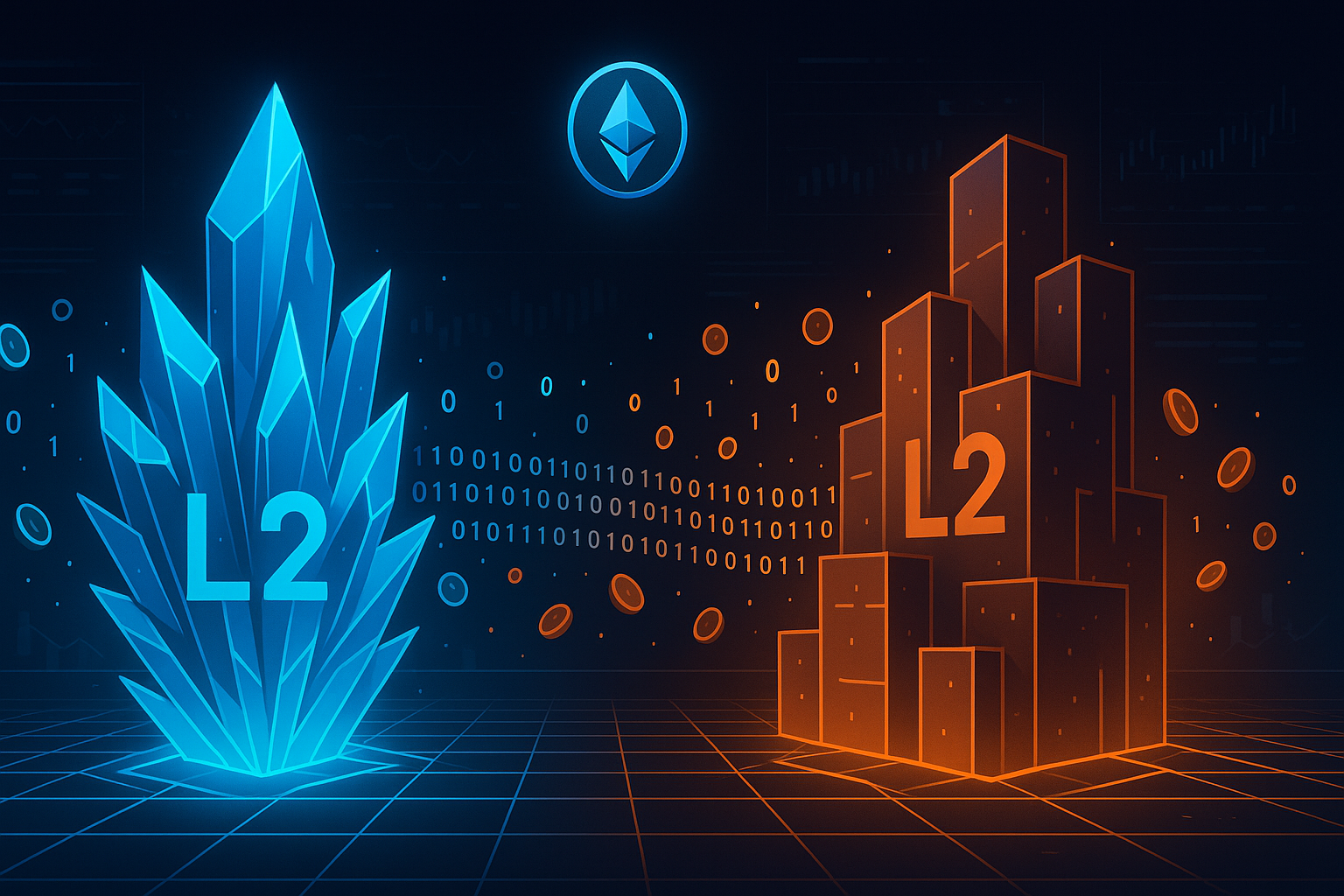
Optimism chains built with the OP Stack can similarly optimize for specific verticals. Projects can tweak parameters and infrastructure while still being part of the Superchain. For developers planning long-term multi-chain expansions, the OP Stack and its shared ecosystem may be especially compelling.
Governance, Public Goods and Ecosystem Incentives
OP is explicitly designed as a governance and public goods token. The Optimism Collective allocates a significant portion of token emissions and treasury funds to open-source software, infrastructure and ecosystem grants. This is a core narrative for Optimism: growth aligned with public goods.
ARB focuses on protocol governance as well, with the Arbitrum DAO managing a large treasury and incentive programs to attract projects. While less explicitly branded around “public goods,” Arbitrum has used its funds for liquidity mining, protocol support and ecosystem bootstrapping that benefit builders and users.
You can swap ARB for BTC, ETH, USDT and 1,500+ other coins on GhostSwap without KYC, making it easy to rotate between ecosystems as incentives and yields change.
Arbitrum (ARB) vs Optimism (OP): Price Performance
Current Market Data (as of 2026-07-24)
According to the latest data, Arbitrum (ARB) and Optimism (OP) are both trading well below their all-time highs, reflecting the broader post-2024 market reset.
- Arbitrum (ARB)
Price: $0.0836
Market Cap: $553.21M (Rank #95)
24h Volume: $36.78M
All-Time High: $2.39 (1/12/2024)
All-Time Low: $0.0705 (6/26/2026)
24h Change: -3.65%
7d Change: -5.56%
30d Change: +8.80%
1y Change: -80.71% - Optimism (OP)
Price: $0.0918
Market Cap: $209.81M (Rank #158)
24h Volume: $30.72M
All-Time High: $4.84 (3/6/2024)
All-Time Low: $0.0888 (6/10/2026)
24h Change: -2.53%
7d Change: -4.52%
30d Change: -7.77%
1y Change: -86.72%
Relative Performance and Volatility
Both tokens are down more than 80% year-on-year, highlighting the high volatility of layer-2 governance tokens. In the last 30 days, however, ARB has shown a positive rebound of +8.80%, while OP is still negative at -7.77%. This suggests Arbitrum has seen relatively stronger short-term demand or accumulation compared to Optimism over the past month.
Historically, both ARB and OP rose strongly during periods of intense interest in Ethereum scaling and then retraced as incentives normalized and broader market conditions worsened. Their all-time highs of $2.39 (ARB) and $4.84 (OP) show the upside those narratives once had, but investors should recognize the downside risk when sentiment turns.
Token Supply and Dilution Risk
ARB has a circulating supply of 6.61 billion tokens, with a total and max supply of 10 billion. OP has a circulating supply of 2.29 billion, and a total/max supply of 4.29 billion. In both cases, there is still a meaningful amount of future token unlocks, which can create selling pressure if not offset by growing real demand and protocol revenue.
Serious investors monitor vesting schedules, treasury allocations and incentive programs to estimate dilution over time. Official project pages and analytics portals such as CoinGecko and CoinMarketCap provide updated supply and market data that can help with this analysis.
Arbitrum (ARB) vs Optimism (OP): Future Potential
Macro Tailwinds: Ethereum Scaling
Both Arbitrum and Optimism are fundamentally leveraged to the success of Ethereum as a settlement layer. As more users, institutions and applications move on-chain, demand for low-fee transaction capacity rises. Even with Ethereum improvements like Danksharding and data availability upgrades, rollups are expected to remain central to the roadmap for years.
That means the long-term addressable market for both ARB and OP is large if they maintain or grow their share of rollup activity. The main questions are about competitive dynamics with other rollups, including zk-based solutions, and whether their tokens can capture a meaningful part of the economic value created on their networks.
Arbitrum’s Growth Drivers
Arbitrum’s potential is closely tied to maintaining its lead in TVL and DeFi usage. If Arbitrum continues to attract major protocols, sustain high on-chain volumes and possibly introduce fee-sharing or value accrual mechanisms to ARB holders via governance decisions, the token could benefit.
Additional growth may come from more chains built using Arbitrum technology, improvements in fraud proofs and a more decentralized sequencer set. The Arbitrum DAO treasury can also be deployed to support new projects, liquidity incentives and cross-chain integrations that drive more users to the ecosystem.
Optimism’s Growth Drivers
Optimism’s big idea is the Superchain: many OP Stack chains, aligned under shared governance and technology, all contributing fees and growth to the broader ecosystem. As chains like Base, Mode and others expand, Optimism can benefit indirectly from their success.
Governance and public goods funding are also central. If the Optimism Collective can successfully nurture critical infrastructure, tooling and open-source development, OP could become the governance hub for a significant slice of Ethereum’s rollup landscape. Future changes that connect OP more directly to network revenues could also impact its long-term value.
Regulation and Competitive Landscape
Both ARB and OP are governance tokens without direct claims on protocol revenues, which may be a conscious decision in the context of securities regulation. How global crypto regulation evolves will affect their design and potential value accrual mechanisms.
Competition from zk-rollups and alternative layer-1s will also shape future market share. If zk technology becomes cheap and mature enough, some activity might migrate, but the network effects, developer ecosystems and governance models of Arbitrum and Optimism remain strong advantages.

Which Should You Invest In?
Risk Profile and Investment Thesis
Both ARB and OP are high-risk, high-volatility assets tied to early-stage infrastructure. Their long-term success depends on sustained developer adoption, robust security and the ability to retain users in a competitive landscape. Neither token guarantees returns, and both have already seen drawdowns above 80% in the last year.
If your thesis is that Arbitrum will remain the dominant DeFi-focused rollup with the deepest liquidity and most active traders, you may favor ARB. If you believe the Superchain model and OP Stack will become the default standard for Ethereum rollups, you may lean toward OP as a governance and coordination asset.
Diversification Between ARB and OP
Because Arbitrum and Optimism are both core components of Ethereum’s layer-2 ecosystem but with different strengths, some investors choose to hold both as a diversified bet on rollup growth. This can reduce project-specific risk, while keeping upside exposure if Ethereum scaling continues to expand.
Rebalancing between ARB and OP over time, based on ecosystem growth, incentives and market conditions, is a common strategy. A non-custodial platform like GhostSwap simplifies this, letting you move between them without relying on a centralized exchange or sharing personal data.
Time Horizon and Due Diligence
For short-term traders, volatility and narrative shifts around incentives, upgrades or governance proposals will matter most. For long-term holders, fundamentals such as TVL, active users, fee revenue and the pace of decentralization are more important.
Always research via primary sources like Arbitrum’s official site and the Optimism project page, along with on-chain analytics, before allocating serious capital. This article is informational, not financial advice.
How to Swap Arbitrum (ARB) for Optimism (OP)
On GhostSwap, you can swap ARB to OP instantly without KYC, custody risk or account creation. The process is simple and suitable for both beginners and advanced DeFi users.
Step-by-Step: Swap ARB to OP
- Connect your wallet (such as MetaMask, Rabby or a hardware wallet) that holds your ARB.
- Visit the dedicated ARB to OP swap page on GhostSwap: non-custodial ARB ⇄ OP exchange.
- Select Arbitrum (ARB) as the coin you are sending and Optimism (OP) as the coin you want to receive.
- Enter the amount of ARB you want to swap. GhostSwap will automatically find a competitive rate across supported liquidity sources.
- Provide your OP receiving address on the Optimism network and double-check it carefully.
- Confirm the quote, then send your ARB to the address shown. GhostSwap handles the rest and sends OP directly to your wallet.
Because GhostSwap is non-custodial, your funds are never held on the platform. Once the transaction confirms, you retain full control of your OP in your own wallet.
Ready to Trade ARB or OP?
If you want to adjust your exposure to Arbitrum and Optimism or simply try another layer-2 ecosystem, GhostSwap makes it fast and private. You can swap crypto instantly between ARB and OP, as well as hundreds of other assets, without registering an account or completing KYC.
Use GhostSwap to rotate between scaling solutions, harvest yields in different ecosystems, or rebalance your portfolio as the layer-2 landscape evolves.
Frequently Asked Questions
Is Arbitrum (ARB) better than Optimism (OP)?
“Better” depends on what you value. Arbitrum currently has a larger market cap at $553.21M versus Optimism’s $209.81M, and it has historically led in DeFi TVL and on-chain liquidity. For traders and DeFi users who prioritize deep markets and established protocols, Arbitrum may feel more attractive.
Optimism, on the other hand, emphasizes governance, the Superchain and public goods funding. If you are more interested in the long-term coordination role of a token across many rollups, OP may align better with your thesis. From a pure technology standpoint, both are robust optimistic rollups secured by Ethereum.
Can Arbitrum (ARB) overtake Optimism (OP)?
In terms of current market cap, Arbitrum already exceeds Optimism. The more relevant question is whether Arbitrum can maintain or expand its lead in usage, revenue and ecosystem importance as new rollups and zk solutions arrive.
Because the layer-2 space is still early, relative positions can change quickly. Governance decisions, incentives, major protocol launches and security incidents can all shift market share. Active investors monitor these fundamentals and adjust allocations over time, often using non-custodial services like GhostSwap to rebalance between ARB and OP.
Should I hold both ARB and OP?
Holding both ARB and OP is a common strategy for investors who want broad exposure to Ethereum scaling but do not want to bet on a single winner. Arbitrum and Optimism share the optimistic rollup approach but pursue different governance models, ecosystems and narratives.
By diversifying into both, you gain potential upside from DeFi growth on Arbitrum and from the Superchain expansion around Optimism. How you split your allocation should reflect your risk tolerance, time horizon and conviction in each project’s roadmap.
Where can I swap ARB to OP?
You can swap ARB to OP on non-custodial platforms that support both tokens. GhostSwap allows you to exchange Arbitrum (ARB) for Optimism (OP) privately, without creating an account or completing KYC, and supports 1,500+ other pairs as well.
Always double-check that you are using the correct token contracts and networks when swapping, and ensure your receiving wallet is compatible with the destination chain.