Solana (SOL) vs Ethereum (ETH): Which Is Better in 2026?
| Feature | Solana (SOL) | Ethereum (ETH) |
|---|---|---|
| Current Price (2026-06-04) | $70.38 | $1,785.74 |
| Market Cap | $40.61B (Rank #7) | $215.29B (Rank #2) |
| Purpose / Use Case | High-performance smart contract platform for DeFi, NFTs, and scalable dApps | General-purpose smart contract platform and foundational Web3 infrastructure |
| Consensus Mechanism | Proof of Stake + Proof of History | Proof of Stake (post-Merge) |
| Transaction Speed | Up to tens of thousands of TPS in practice | 15–30 TPS on L1, scaled via L2 rollups |
| Fees | Very low (typically fractions of a cent) | Higher on L1, lower on L2 (rollups) |
In 2026, the Solana vs Ethereum debate is really about trade-offs between speed, decentralization, ecosystem size, and security track record. Ethereum remains the largest smart contract platform by value and adoption, while Solana offers much faster and cheaper transactions for high-throughput applications. Many investors and builders choose to hold and use both.
If you already hold SOL and want to move into ETH, you can swap SOL to ETH instantly on GhostSwap without KYC, using a non-custodial wallet-to-wallet flow.
Quick Overview: Solana (SOL) vs Ethereum (ETH)
Solana and Ethereum are both smart contract platforms, but they take very different paths to scaling.
Ethereum prioritizes decentralization and security first, then scales using layer-2 networks such as Optimistic and ZK rollups. It is the clear leader in DeFi, NFTs, and overall total value locked (TVL), with the strongest developer base.
Solana focuses on scaling at the base layer with a high-performance architecture that combines Proof of Stake and Proof of History. This design enables extremely fast block times and very low fees, but it has historically faced more outages and higher hardware requirements for validators.
From an investment perspective, Ethereum is generally seen as the more established “blue chip” smart contract asset, while Solana is a higher-risk, higher-upside bet on a vertically scaled, single-shard chain.
What Is Solana (SOL)?
Solana is a high-performance blockchain designed to support scalable, low-cost decentralized applications. Launched in 2020 by Solana Labs, the network introduces a novel concept called Proof of History (PoH), which cryptographically orders events before they enter the consensus process. Combined with Proof of Stake, this allows Solana to process thousands of transactions per second with sub-second block times and fees that are typically a fraction of a cent.
Solana’s architecture is optimized for throughput. It uses parallel transaction processing (Sealevel), a single global state, and high hardware requirements to maximize raw performance on the base layer. This makes Solana particularly attractive for use cases such as order-book DEXes, low-latency DeFi, NFT trading, and high-frequency on-chain gaming.
However, this performance comes with trade-offs. Solana has experienced several network outages and relies on a smaller validator set compared to Ethereum. Still, the ecosystem has grown rapidly, with popular projects in DeFi, NFTs, and Web3 social, and SOL itself acts as the network’s native currency for fees, staking, and governance.
What Is Ethereum (ETH)?
Ethereum is the first and largest general-purpose smart contract platform, launched in 2015 and currently ranked #2 by market cap. It enables developers to deploy decentralized applications using the Ethereum Virtual Machine (EVM) and is the foundation for most DeFi protocols, NFT collections, DAOs, and many layer-2 networks.
Since the Merge, Ethereum has fully transitioned to Proof of Stake, significantly reducing its energy usage while maintaining a strong focus on decentralization and security. Ethereum’s base layer processes relatively fewer transactions per second, but its scaling roadmap relies on rollups and other L2s that bundle many transactions and post them back to Ethereum for settlement.
ETH, the native token, is used to pay gas fees, secure the network via staking, and as a core asset in DeFi. With EIP-1559, part of every transaction fee is burned, which can make ETH issuance net-deflationary during periods of high activity. Thanks to its large developer community, liquidity, and long track record, Ethereum is often considered the most trusted smart contract platform in crypto.
Solana (SOL) vs Ethereum (ETH): Technology
Consensus and Security Model
Ethereum uses a Proof of Stake consensus, where validators stake ETH to propose and attest to blocks. This model is designed for strong decentralization, with low hardware requirements and thousands of validators globally. Security is reinforced by client diversity, formal research, and a conservative upgrade process.
Solana uses a hybrid model: Proof of Stake for validator selection and Proof of History to create a verifiable sequence of time. Validators run more intensive hardware, which helps the chain handle high throughput but raises concerns about centralization and accessibility. While Solana has made progress on stability, it has historically experienced more downtime than Ethereum.
Scalability Approach
Ethereum scales via a modular strategy. The base layer focuses on security and data availability, while layer-2 rollups handle execution and user-facing transactions. This keeps Ethereum more decentralized but requires users and developers to navigate a multi-chain UX across L2s.
Solana takes a monolithic approach. It aims to keep most activity on a single, highly optimized L1 by scaling vertically with better hardware and parallelization. This simplifies the user experience, as everything lives in one state, but it concentrates demands on validator nodes.
Developer Experience and Tooling
Ethereum development largely uses Solidity, the EVM, and mature tooling like Hardhat, Foundry, and Truffle. The EVM standard has become the default across many chains, making Ethereum skills highly portable.
Solana smart contracts (programs) are typically written in Rust or C and compiled to BPF. While this creates a steeper learning curve, it can offer performance advantages and more rigorous memory safety. Solana’s tooling has improved significantly since launch, with anchors such as Anchor Framework, but the Ethereum ecosystem is still broader and more battle-tested.
Solana (SOL) vs Ethereum (ETH): Use Cases
DeFi and On-Chain Trading
Ethereum remains the liquidity hub for decentralized finance. Major protocols like Uniswap, Aave, MakerDAO, and Curve are all Ethereum-native or EVM-based, and much of crypto’s stablecoin liquidity and institutional DeFi infrastructure sits on Ethereum and its rollups.
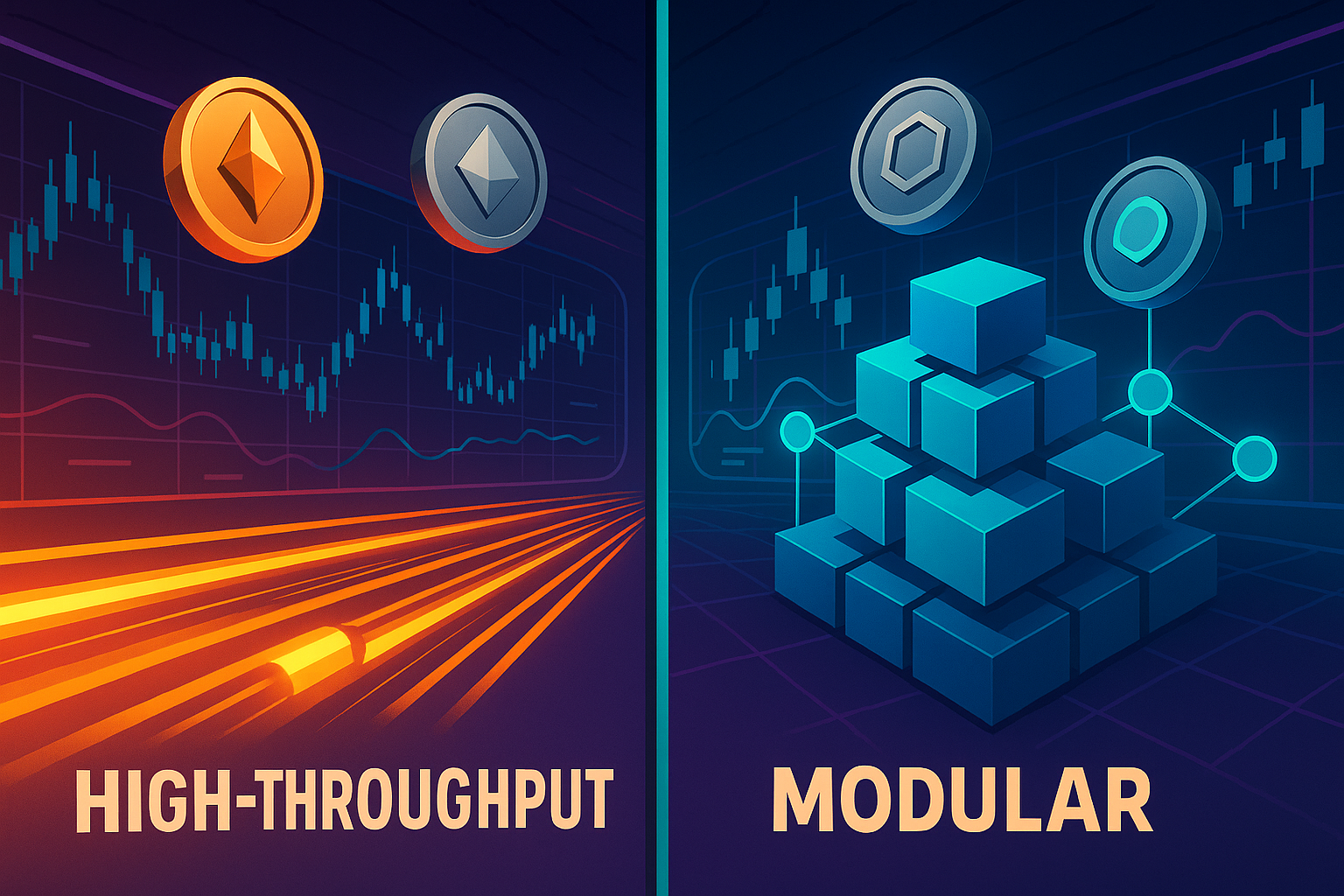
Solana, on the other hand, has carved out a niche in high-speed DeFi, including order-book DEXes, on-chain perps, and low-latency trading strategies. Its low fees make it attractive for frequent traders and smaller portfolios. Bridges and cross-chain messaging now connect DeFi on both networks, and you can easily move between them using a non-custodial swap like the SOL to ETH exchange on GhostSwap.
NFTs, Gaming, and Consumer Apps
Ethereum pioneered NFTs, and many blue-chip collections and marketplaces still reside on Ethereum and its L2s. High-value art, collectibles, and institutional NFT experiments often choose Ethereum for its security and reputation.
Solana’s low fees and speed are better suited for consumer-grade NFTs, gaming assets, and social tokens where users may interact with the chain many times per session. On-chain games, NFT mints with large user counts, and Web3 social apps often favor Solana’s performance profile.
Institutional and Enterprise Adoption
Ethereum has a clear lead in institutional adoption. Many enterprise pilots, permissioned networks, and tokenization projects choose Ethereum or Ethereum-compatible environments, benefiting from its regulatory mindshare and ecosystem depth. Resources like the official Ethereum.org site and the Enterprise Ethereum Alliance support this growth.
Solana is more focused on consumer-scale Web3 use cases, high-throughput trading, and mobile-friendly experiences. While some institutions experiment with Solana, its positioning remains more “performance-first” rather than the default institutional settlement layer.
You can swap SOL for BTC, ETH, USDT and 1,500+ other coins on GhostSwap without KYC.
Solana (SOL) vs Ethereum (ETH): Price Performance
Current Market Data (as of 2026-06-04)
- Solana (SOL)
Price: $70.38
Market Cap: $40.61B (Rank #7)
24h Volume: $5.70B
All-Time High: $293.31 (2025-01-19)
All-Time Low: $0.5008 (2020-05-11)
24h Change: -5.30%
7d Change: -13.10%
30d Change: -17.51%
1y Change: -54.81% - Ethereum (ETH)
Price: $1,785.74
Market Cap: $215.29B (Rank #2)
24h Volume: $29.04B
All-Time High: $4,946.05 (2025-08-24)
All-Time Low: $0.4330 (2015-10-20)
24h Change: -4.03%
7d Change: -10.21%
30d Change: -25.23%
1y Change: -31.92%
Relative Performance and Volatility
Both SOL and ETH are trading significantly below their all-time highs in mid-2026. Over the past year, SOL has fallen more than ETH in percentage terms. This highlights Solana’s higher volatility and sensitivity to market cycles, which can amplify both gains and drawdowns.
Ethereum, with a larger market cap and deeper liquidity, tends to move somewhat less violently, though it is still highly volatile compared to traditional assets. Historical data from aggregators like CoinGecko and CoinMarketCap show that both assets have experienced multiple boom-and-bust cycles since launch.
Tokenomics and Supply Dynamics
Ethereum has a current circulating and total supply of about 120.68M ETH, with no hard cap but a dynamic issuance model. With EIP-1559 burning a portion of fees and Proof of Stake reducing new issuance, ETH can become net-deflationary when on-chain activity is high.
Solana has a circulating supply of 578.56M SOL and a total supply of 627.79M SOL, with an uncapped maximum supply and an inflation schedule that decreases over time. Inflation rewards validators and stakers, while fee-burning mechanisms are more limited compared to Ethereum.
Solana (SOL) vs Ethereum (ETH): Future Potential
Roadmaps and Upgrades
Ethereum’s roadmap focuses on scaling and improving the modular stack. Upcoming and ongoing work includes data availability improvements, rollup optimizations, better validator UX, and upgrades to the EVM environment. The goal is to make Ethereum the most secure and neutral settlement layer for thousands of rollups and applications.
Solana’s roadmap prioritizes greater stability, validator decentralization, and continued performance optimization. Efforts include client diversity, better tooling for validators and developers, and further improvements to network reliability while maintaining high throughput.
Ecosystem Growth and Network Effects
Ethereum enjoys powerful network effects. Its DeFi, NFT, and L2 ecosystems reinforce one another, and most new EVM-compatible chains essentially plug into Ethereum’s liquidity and developer base. This makes it difficult for any single competitor to displace Ethereum entirely.
Solana’s growth is driven by its unique performance attributes. If high-frequency DeFi, on-chain games, and consumer apps continue to gain traction, Solana could capture a large share of these verticals. Its success does not require “killing” Ethereum, but rather coexisting and serving different needs in the multi-chain Web3 landscape.
Risk Factors
- Ethereum risks: competition from other L1s and L2s, regulatory uncertainty, and the complexity of coordinating upgrades across a huge ecosystem.
- Solana risks: historical outages, higher hardware centralization, competitive pressure from other high-throughput chains, and regulatory scrutiny on ecosystems with rapid retail growth.
Which Should You Invest In?
Risk Profile and Time Horizon
Ethereum is generally viewed as a core, long-term holding for many crypto investors. Its large market cap, deep liquidity, and central role in DeFi and Web3 make it closer to a “blue chip” crypto asset. It may not offer the same explosive upside as smaller caps, but it is comparatively less speculative within the crypto universe.
Solana is more of a growth bet. If its high-performance architecture becomes the standard for consumer applications, gaming, and high-frequency DeFi, SOL could see outsized returns. However, this comes with higher technological, competitive, and market risk.
Diversification Strategy
Many investors choose not to frame Solana vs Ethereum as an “either-or” question. Instead, they allocate a core position to ETH for exposure to the primary smart contract platform and a smaller, higher-risk position to SOL for growth potential.
Your allocation should depend on your conviction in each ecosystem, your risk tolerance, and your time horizon. Always consider that both assets can be highly volatile and should only represent a portion of a diversified portfolio.
Practical Considerations
Transaction costs and UX also matter. If you are actively trading NFTs, gaming assets, or small DeFi positions, Solana’s low fees can be attractive. If you are providing liquidity, borrowing, or engaging with DeFi protocols that primarily live on Ethereum, holding ETH and operating on L2s might be more practical.
If you decide to rebalance between the two, a non-custodial service like GhostSwap lets you move from SOL to ETH and back without creating accounts or going through KYC checks.
How to Swap Solana (SOL) for Ethereum (ETH)
Step 1: Prepare Your Wallets
First, make sure you have a non-custodial wallet that supports both Solana and Ethereum, such as Phantom, MetaMask (with a Solana-compatible extension or separate wallet), or other multi-chain wallets. You need SOL in your Solana wallet and an Ethereum address to receive ETH.
Step 2: Go to GhostSwap’s SOL/ETH Exchange Page
Open the dedicated SOL to ETH swap page on GhostSwap. GhostSwap is a non-custodial, instant crypto swap platform, so you never deposit funds to an account. Instead, you send directly from your wallet.
Step 3: Enter Swap Details
Choose SOL as the asset you want to send and ETH as the asset you want to receive. Enter the amount of SOL to swap, then paste your Ethereum receiving address. Double-check that the address is correct and that it is an ETH-compatible address you control.
Step 4: Confirm and Send
GhostSwap will display a rate, estimated amount of ETH, and a deposit address for SOL. Confirm the details, then send your SOL from your wallet to the provided address. After network confirmations and processing, you will receive ETH directly in your Ethereum wallet.
Step 5: Use or Hold Your ETH
Once the swap completes, you can use your ETH in DeFi, stake it, move it to an L2, or simply hold it as part of your long-term portfolio. At no point did you need to create an account or pass KYC, preserving a private and non-custodial flow.
Ready to Swap SOL or ETH?
Whether you are rotating from Solana to Ethereum, diversifying in the other direction, or just taking profits, GhostSwap offers fast, non-custodial swaps between SOL and ETH with no registration required. Visit the private SOL/ETH exchange on GhostSwap to trade directly from your wallet.
Frequently Asked Questions
Is Solana (SOL) better than Ethereum (ETH)?
Neither is universally “better”; they are optimized for different priorities. Solana delivers much faster and cheaper transactions at the base layer, which is ideal for high-frequency trading, gaming, and consumer apps. Ethereum prioritizes decentralization, security, and a modular scaling roadmap via rollups, which has attracted the largest DeFi and institutional ecosystem.
Your choice depends on what you value more: Ethereum’s security and network effects, or Solana’s performance and user experience. Many users and developers actively work with both.
Can Solana (SOL) overtake Ethereum (ETH)?
Solana could potentially surpass Ethereum in certain verticals, such as gaming or high-throughput DeFi, but overtaking Ethereum in overall market cap and ecosystem dominance is a higher bar. Ethereum benefits from massive network effects, institutional interest, and its role as the canonical settlement layer for many L2s.
A more realistic scenario is long-term coexistence, where Ethereum remains the primary settlement and liquidity layer, while Solana and other chains specialize in particular use cases that benefit from their unique architectures.
Should I hold both SOL and ETH?
Many crypto investors hold both SOL and ETH as part of a diversified strategy. ETH provides exposure to the leading smart contract platform and its L2 ecosystem, while SOL adds potential upside from a high-performance, monolithic chain focused on speed and low fees.
How you split your allocation depends on your risk tolerance and conviction in each ecosystem. Just remember that both are volatile assets, and you should only invest what you can afford to lose.
Where can I swap SOL to ETH?
You can swap SOL to ETH on various platforms, but if you want to avoid accounts and KYC, a non-custodial swap service like GhostSwap is a convenient option. On GhostSwap, you connect your wallet, send SOL to a one-time address, and receive ETH directly to your Ethereum wallet without giving up custody or personal data.
This wallet-to-wallet model lets you move between the Solana and Ethereum ecosystems quickly so you can chase opportunities, rebalance your portfolio, or exit risk without relying on centralized exchanges.