Solana (SOL) vs XRP: Which Is Better in 2026?
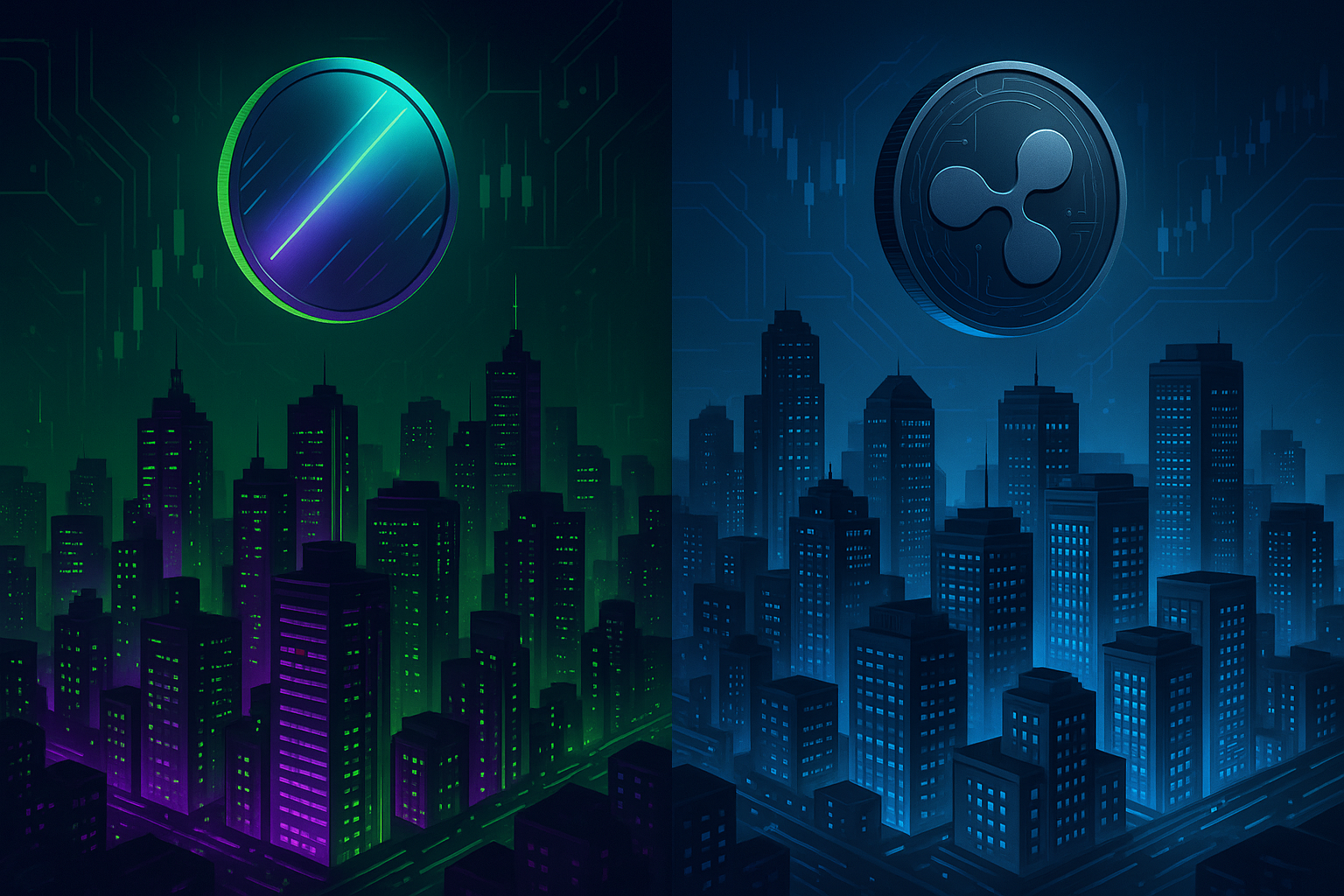
Solana (SOL) and XRP target very different problems: Solana focuses on high-performance smart contracts and DeFi, while XRP powers fast, low-cost international payments for banks, fintechs, and retail users. In 2026, XRP is larger by market cap, but Solana offers a richer on-chain ecosystem. The better choice depends on whether you believe more in programmable finance and NFTs (Solana) or global payments infrastructure (XRP). If you want to move between the two, you can swap SOL for XRP instantly on GhostSwap without creating an account.
| Feature | Solana (SOL) | XRP (XRP) |
|---|---|---|
| Current Price (2026-06-01) | $79.54 | $1.29 |
| Market Cap | $46.18B (Rank #7) | $80.00B (Rank #5) |
| Purpose / Use Case | High-speed smart contracts, DeFi, NFTs, scalable dApps | Fast, low-cost cross-border payments and liquidity |
| Consensus Mechanism | Proof of Stake + Proof of History | Ripple Protocol Consensus Algorithm (RPCA) with validator network |
| Transaction Speed | Up to tens of thousands of TPS in practice | ~3–5 seconds settlement per transaction |
| Fees | Very low (fractions of a cent per transaction) | Very low (typically fractions of a cent in XRP) |
Quick Overview: Solana (SOL) vs XRP
Solana and XRP are both high-throughput networks, but they live in different corners of the crypto stack.
- Solana (SOL) is a smart contract platform competing with Ethereum, Avalanche, and others. It is designed for scalable decentralized applications, decentralized exchanges, DeFi protocols, NFTs, gaming, and on-chain order books.
- XRP is the native asset of the XRP Ledger, built primarily to enable fast, cheap international transfers and on-chain asset settlements, especially for banks and fintechs.
From a market standpoint as of June 2026, XRP has a larger market cap at around $80B compared with Solana’s $46.18B. However, Solana’s ecosystem is generally more diverse, with a broader range of DeFi and NFT applications.
Choosing a winner in the Solana vs XRP debate requires looking at technology, decentralization, regulatory position, price history, and where future demand is likely to come from.
What Is Solana (SOL)?
Solana is a high-performance Layer 1 blockchain launched in 2020 by Solana Labs. It was built to solve the “scalability trilemma” by delivering low fees, high throughput, and decent decentralization for smart contracts and dApps. Solana’s signature innovation is Proof of History (PoH), a cryptographic clock that orders transactions before they are processed, allowing validators to reach consensus more efficiently.
Solana can handle tens of thousands of transactions per second in practice, with block times of around 400 milliseconds and transaction fees that are typically fractions of a cent. This makes it popular for high-frequency use cases like decentralized order books, NFT trading, gaming, and micropayments.
The network uses a combination of Proof of Stake and Proof of History, where validators stake SOL to secure the chain and earn rewards. Solana’s ecosystem has grown to include major DeFi protocols, NFT marketplaces, and on-chain infrastructure. As of June 2026, SOL trades at $79.54 with a market cap of about $46.18B, making it one of the top smart contract platforms by value.
What Is XRP?
XRP is the native currency of the XRP Ledger (XRPL), an open-source blockchain launched in 2012 by developers who later founded Ripple Labs. Unlike Proof of Work or Proof of Stake blockchains, the XRPL uses the Ripple Protocol Consensus Algorithm (RPCA), where a set of validators agree on the state of the ledger every few seconds.
The XRP Ledger was built primarily for fast, low-cost cross-border payments. Transactions typically settle in 3–5 seconds, with fees of a fraction of a cent paid in XRP. Financial institutions and payment providers can use XRP as a bridge currency for foreign exchange, or simply use the ledger for tokenized assets and settlements.
There is a fixed maximum supply of 100 billion XRP, with about 61.98B XRP circulating as of June 2026. XRP’s design favors high throughput and predictable fees, making it suitable for remittances and institutional money flows. With a market cap around $80B and a price of $1.29, XRP remains one of the largest cryptoassets by value, especially popular among investors focused on the payments narrative and Ripple’s expanding partnerships.
Solana (SOL) vs XRP: Technology
Consensus Mechanism and Architecture
Solana and XRP use very different consensus approaches, which has implications for decentralization, throughput, and potential risks.
- Solana: Combines Proof of Stake (PoS) with Proof of History (PoH). PoH creates a verifiable time sequence of events, which allows validators to process transactions in parallel and dramatically increases throughput. Validators stake SOL, and misbehavior can be penalized through slashing. This aligns incentives similar to other PoS networks.
- XRP: Uses RPCA, where a set of validators on a Unique Node List (UNL) reach agreement on transactions every few seconds. Validators do not receive block rewards, and there is no staking. Instead, trust is based on selecting reliable validators. Ripple initially operated many validators, but the set has become more distributed over time.
For more technical details, you can review the official documentation for Solana and the XRP Ledger.
Smart Contracts and Programmability
This is one of the biggest differences in the Solana vs XRP comparison.
- Solana is a full-featured smart contract platform. Developers write on-chain programs (often in Rust or C) that power DeFi protocols, perpetual DEXs, lending markets, NFT platforms, DAOs, and more. End-users interact via wallets and dApps, similar to Ethereum but with lower fees and higher throughput.
- XRP Ledger historically offered more limited programmability focused on payments, escrows, and simple financial logic. However, it has been expanding with features like Hooks and sidechains, but its DeFi and NFT ecosystems remain much smaller compared with Solana or Ethereum.
If your thesis is that smart contracts, DeFi, and NFTs will dominate blockchain usage, Solana is clearly more aligned with that narrative than XRP.
Transactions, Speed, and Fees
Both networks are built for speed and cost-efficiency.
- Solana speed: Capable of processing tens of thousands of transactions per second in real-world conditions, with sub-second block times. This supports high-frequency trading on on-chain order books and complex dApp interactions.
- XRP speed: Transactions typically finalize in about 3–5 seconds, which is fast enough for consumer payments and institutional transfers. Throughput is high, though less emphasized than on Solana.
Fees are very low on both chains, often less than a cent per transaction. Solana fees are paid in SOL, while XRP fees are paid in XRP and are partially destroyed, contributing to a slowly deflationary supply effect.
Decentralization and Network Risks
Decentralization is often debated in the Solana vs XRP context.
- Solana has hundreds of validators, but hardware requirements are relatively high given its throughput. This may limit who can operate a node. The network has also experienced several high-profile outages in previous years, raising questions about resiliency, although the core team has been working on stability improvements.
- XRP uses a UNL model where each participant chooses which validators to trust. Critics argue this can lead to centralization, particularly around validators associated with Ripple or a small group of institutions. Supporters counter that the UNL has diversified over time and that anyone can run a validator.
From a pure technology standpoint, Solana is more sophisticated in terms of programmable logic, while XRP is more battle-tested as a payments ledger.
Solana (SOL) vs XRP: Use Cases
Primary Use Cases
- Solana:
- Decentralized exchanges (order books and AMMs)
- DeFi protocols: lending, borrowing, liquid staking, derivatives
- NFT marketplaces and gaming
- High-speed consumer apps and micropayments
- On-chain infrastructure such as oracles and cross-chain bridges
- XRP:
- Cross-border payments and remittances
- Liquidity bridge between fiat currencies and crypto
- Institutional settlements and treasury flows
- Tokenized assets and stablecoins on the XRPL
Solana aims to be a “world computer” for all kinds of on-chain applications, while XRP focuses on being a neutral, fast asset for moving value across borders.
Ecosystem and Adoption
Solana ecosystem includes a large number of DeFi and NFT projects, often attracting users who value speed for trading and gaming. It has become a popular chain for retail users exploring NFTs, yield farming, and on-chain trading experiences that can feel close to centralized exchanges in speed.
XRP ecosystem is more oriented around financial institutions, remittance companies, and payment providers. Ripple has forged partnerships with banks and payment networks worldwide, seeking to integrate XRP or the XRP Ledger into their back-end infrastructure. Retail usage also exists, especially in regions where remittance costs are high.
This difference in focus means that SOL may be more visible in crypto-native circles, while XRP’s traction is often tied to enterprise and regulatory developments.
Regulatory and Institutional Angle
Regulation has played an especially large role in XRP’s story, given Ripple’s legal battles in the United States. While some clarity has emerged over time, XRP still sees significant price reactions to legal and regulatory news.
Solana has faced less direct regulatory pressure as a project but still exists in an environment where global regulators continue to evaluate the status of various cryptoassets. How each project navigates evolving rules for securities, payments, and stablecoins will be key to long-term adoption.
You can swap SOL for BTC, ETH, USDT and 1,500+ other coins on GhostSwap without KYC.
Solana (SOL) vs XRP: Price Performance
Current Market Snapshot (June 2026)
- Solana (SOL):
- Price: $79.54
- Market Cap: $46.18B (Rank #7)
- 24h Volume: $2.18B
- All-Time High: $293.31 (January 19, 2025)
- All-Time Low: $0.5008 (May 11, 2020)
- Change 24h: -3.73%
- Change 7d: -7.33%
- Change 30d: -5.17%
- Change 1y: -47.34%
- XRP:
- Price: $1.29
- Market Cap: $80.00B (Rank #5)
- 24h Volume: $1.66B
- All-Time High: $3.65 (July 18, 2025)
- All-Time Low: $0.002686 (May 22, 2014)
- Change 24h: -3.89%
- Change 7d: -4.98%
- Change 30d: -7.03%
- Change 1y: -39.59%
Relative Performance and Volatility
Both assets are well below their all-time highs, reflecting the volatility typical in crypto markets. Over the past year, Solana has fallen about 47.34%, while XRP is down around 39.59%. That suggests Solana has been somewhat more volatile on a yearly basis.
Solana’s price action tends to be highly sensitive to DeFi activity, NFT volumes, and network stability. XRP’s price remains strongly influenced by macro factors affecting payments and by regulatory headlines, especially in major jurisdictions like the United States and the EU.
When comparing Solana vs XRP as investments, it is important to remember that both carry substantial downside risk as well as upside potential. Monitoring live data from sources like CoinGecko or CoinMarketCap is essential before making any decision.
Solana (SOL) vs XRP: Future Potential
Growth Drivers for Solana
Several trends could support Solana’s future:
- DeFi expansion: If decentralized exchanges, lending protocols, and derivatives markets continue to grow, Solana’s high throughput and low fees make it an attractive venue.
- NFTs and gaming: Solana’s speed is well suited for on-chain games, NFT marketplaces, and social/creator apps requiring frequent, low-value transactions.
- Scalability roadmap: Ongoing improvements to stability, validator software, and parallelization could reduce the risk of outages that previously hurt sentiment.
However, Solana faces intense competition from Ethereum, layer-2 networks, and other high-performance chains. Its long-term success hinges on maintaining developer mindshare and user liquidity.
Growth Drivers for XRP
XRP’s upside is more tied to the evolution of global payments:
- Institutional integration: Wider adoption of Ripple’s solutions by banks, remittance companies, and fintechs could increase demand for XRP as a bridge asset.
- Regulatory clarity: Positive or clear regulatory outcomes in major markets could lower perceived risk and broaden institutional participation.
- Tokenization and CBDCs: If governments and institutions issue tokenized assets or central bank digital currencies that interact with the XRP Ledger, that could reinforce its role as a settlement layer.
XRP must navigate evolving regulations and competition from alternative payment blockchains and stablecoin networks, as well as from traditional systems like SWIFT improving their own rails.
Risk Profile Comparison
- Solana risks:
- Network outages or security incidents
- Smart contract vulnerabilities in DeFi protocols
- Competition from other programmable chains
- XRP risks:
- Regulatory or legal setbacks affecting Ripple or XRP
- Centralization concerns around validator governance
- Slower growth in institutional adoption than expected
Both assets are high-risk and speculative. Any allocation should reflect your risk tolerance and time horizon.
Which Should You Invest In?
Investment Thesis: Solana (SOL)
You might lean toward SOL if you:
- Believe that smart contracts, DeFi, and NFTs will be the main drivers of crypto adoption.
- Prefer exposure to a vibrant on-chain economy with many dApps and protocols.
- Are comfortable with technical risks in a fast-evolving Layer 1, including possible network issues.
In this view, SOL is closer to a “tech/growth” play on Web3 infrastructure and decentralized finance.
Investment Thesis: XRP
You might favor XRP if you:
- Believe cross-border payments and remittances will increasingly use blockchain rails.
- Expect Ripple and partners to win significant market share from traditional payment systems.
- Are betting that regulatory clarity will ultimately benefit established networks like the XRP Ledger.
Here, XRP is more of a “payments and settlement” thesis, tied to the evolution of financial infrastructure rather than DeFi usage.
Diversification: Holding Both?
For many investors, the most balanced approach in the Solana vs XRP debate is not to choose a single winner. Because the two assets serve different roles, a diversified portfolio can include both, with position sizes adjusted according to conviction and risk tolerance.
Some users keep a core holdings strategy in BTC and ETH, then add smaller allocations to high-conviction altcoins like SOL and XRP. If your views change over time, non-custodial services like GhostSwap make it straightforward to rebalance between SOL, XRP, stablecoins, and other assets.
How to Swap Solana (SOL) for XRP
Step-by-Step: Swap SOL to XRP on GhostSwap
On GhostSwap, you can swap SOL to XRP instantly without KYC, registration, or giving up control of your private keys. The platform is non-custodial, so your funds always move directly between wallets.
- Prepare your wallets: Make sure you have a Solana wallet holding SOL and an XRP-compatible wallet address for receiving XRP.
- Go to the SOL/XRP swap page: Visit the dedicated Solana to XRP exchange route on GhostSwap.
- Select amounts: Choose how much SOL you want to swap. The interface will show the estimated amount of XRP you will receive, including all fees.
- Enter your XRP address: Paste your destination XRP address (and destination tag if required by your wallet or exchange).
- Send SOL: GhostSwap will provide a deposit address. Send your SOL from your wallet to this address.
- Receive XRP: Once the SOL transaction is confirmed, GhostSwap will execute the swap and send XRP directly to your specified XRP wallet.
The entire process usually completes within minutes, depending on network conditions. This approach gives you a fast, private way to move between on-chain DeFi exposure (SOL) and payments-focused exposure (XRP).
Ready to Swap SOL or XRP?
If you have a thesis on Solana vs XRP and want to position your portfolio accordingly, you can use GhostSwap as a private, non-custodial swap between the two. With 1,500+ trading pairs, low slippage routing, and no KYC requirements, GhostSwap makes it simple to rotate between SOL, XRP, and the rest of your crypto stack whenever your strategy changes.
Frequently Asked Questions
Is Solana (SOL) better than XRP?
Solana is not objectively “better” than XRP; they serve different purposes. Solana is generally better if you want exposure to a smart contract platform powering DeFi, NFTs, and dApps. XRP is more suitable if your thesis focuses on cross-border payments and institutional settlements.
From a technical standpoint, Solana is more programmable and supports a richer ecosystem of decentralized applications. XRP, however, has a longer history in payments and benefits from partnerships aimed at integrating blockchain-based settlements into existing financial rails.
Can Solana (SOL) overtake XRP?
Solana can overtake XRP by market cap if its ecosystem continues to expand and investors value its role in DeFi and Web3 highly enough. As of June 2026, XRP’s market cap (~$80B) is larger than Solana’s (~$46.18B), but these rankings have changed multiple times in crypto history.
Whether Solana surpasses XRP depends on factors like network stability, developer growth, regulatory news, and overall market cycles. There is no guarantee that either asset will hold or increase its market cap, so treat any such scenario as speculative.
Should I hold both SOL and XRP?
Holding both SOL and XRP can make sense if you want diversified exposure across different crypto narratives. SOL gives you access to the smart contract and DeFi ecosystem, while XRP offers a stake in the cross-border payments and settlement story.
By holding both, you reduce the risk of being wrong about which sector will outperform. You can always rebalance between them using a non-custodial swap service like GhostSwap as market conditions or your convictions change.
Where can I swap SOL to XRP?
You can swap SOL to XRP on GhostSwap, a non-custodial instant swap platform that supports over 1,500 trading pairs. Simply go to the SOL to XRP swap page, enter your amounts and addresses, and complete the transaction directly from your wallets.
Because GhostSwap does not require KYC or account creation, it is a convenient option if you value privacy and self-custody while moving between Solana and XRP or any other supported assets.