How to Swap ETH to SOL in 2026: Fast, Private & Low-Fee Guide
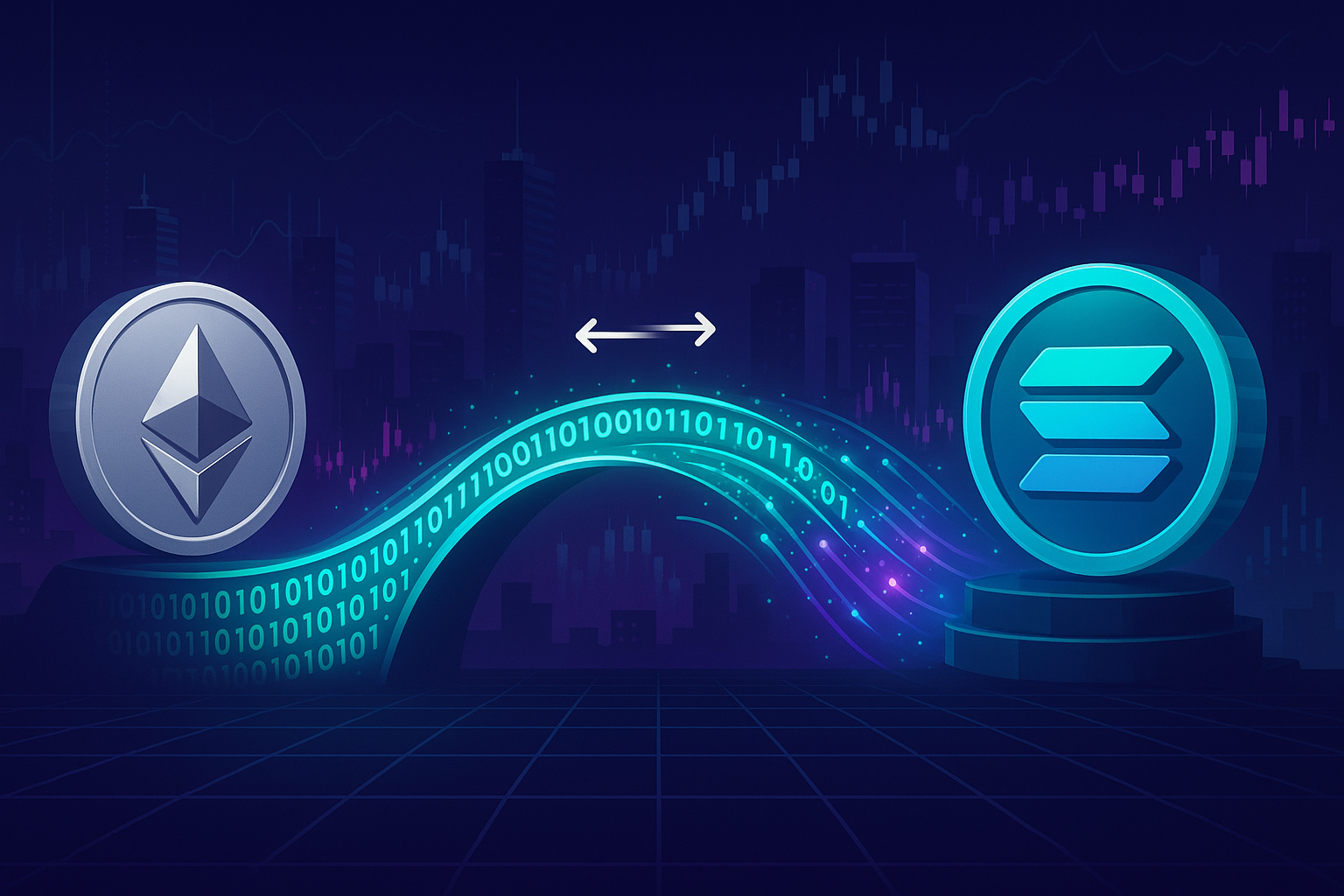
The quickest way to swap ETH to SOL in 2026 is to use a non-custodial instant swap platform with no KYC. On GhostSwap, you just choose ETH and SOL, paste your Solana wallet address, send ETH to the deposit address, and receive SOL directly in your wallet within minutes via a private exchange flow.
- Connect or open your Ethereum and Solana wallets.
- Choose an instant swap service and select ETH → SOL.
- Enter your SOL address, confirm the rate, and send ETH.
- Wait for network confirmations and receive SOL in your Solana wallet.
What You Need Before You Start
Before you swap ETH to SOL, prepare a few essentials so the transaction is smooth and safe.
1. Compatible wallets
To complete an ETH to SOL swap, you need two wallets:
- Ethereum wallet that holds your ETH, such as MetaMask, Trust Wallet, Rabby, or a hardware wallet like Ledger or Trezor.
- Solana wallet to receive SOL, such as Phantom, Solflare, Backpack, or a hardware wallet that supports Solana.
Make sure:
- Your Ethereum wallet is on the correct network (Ethereum mainnet, not a testnet).
- Your Solana wallet can display SOL and Solana tokens (most popular Solana wallets do).
- You have backed up seed phrases and kept them offline and private.
2. Minimum amounts and gas fees
Every swap has a practical minimum amount because of network fees. On Ethereum, gas fees can fluctuate significantly, especially during congestion.
General guidelines:
- Try to swap at least $50–$100 equivalent in ETH to make gas and routing fees proportionally reasonable.
- Always keep a small ETH balance left over to pay gas fees for the sending transaction.
- On Solana, transaction fees are usually very low, so receiving SOL will not cost you much on that side.
The minimum you can swap varies by service. When you use GhostSwap’s ETH to SOL widget, it will show the exact minimum amount for that pair in real time.
3. Time required
The time to swap ETH to SOL depends mainly on Ethereum network confirmations and the specific method you use.
Typical ranges in 2026:
- Instant swap platforms: 5–30 minutes on average, sometimes faster in low congestion.
- Centralized exchanges: 30 minutes to several hours, plus potential KYC delays of 1–3 days.
- DeFi bridges or DEX routes: 10–45 minutes depending on routing and gas.
Set aside at least 30 minutes for your first swap so you can double-check addresses and confirmations carefully.
Method 1: Using GhostSwap (No KYC — Recommended)
For most users, the easiest way to swap ETH to SOL in 2026 is via a non-custodial instant swap like GhostSwap. You retain control of your wallets, no account is needed, and there is no identity verification.
Step 1: Go to GhostSwap.io
Open your browser and navigate to GhostSwap.io.
GhostSwap is a non-custodial crypto-to-crypto swap service with 1,500+ trading pairs and no KYC requirement. It connects to liquidity across multiple venues and routes orders for you automatically.
On the homepage you will see an exchange widget where you select which coin you send and which coin you want to receive.
Step 2: Select SOL in the exchange widget
In the widget:
- On the “You send” side, choose ETH (Ethereum).
- On the “You get” side, choose SOL (Solana).
Then:
- Enter the amount of ETH you want to swap, or the amount of SOL you want to receive, depending on the widget style.
- Check the estimated rate, network fee, and the minimum and maximum amounts shown.
The quote you see is based on live market conditions, so it can change slightly until you lock it in by starting the swap.
Step 3: Enter your Solana wallet address
Next, paste your Solana wallet address in the field that asks where to send your SOL.
Tips to avoid mistakes:
- Copy the address directly from your wallet app. Do not type it manually.
- Check the first 4–5 and last 4–5 characters to make sure they match.
- Confirm you are using a Solana (SOL) mainnet address, not an address for another chain.
Some Solana wallets offer an “identity” or “name” service, but you should always confirm the raw address the name resolves to.
Step 4: Send your ETH and receive SOL
After entering your address and reviewing the quote:
- Click to confirm or start the swap.
- GhostSwap will show you a unique ETH deposit address and the exact amount of ETH to send.
- In your Ethereum wallet (for example MetaMask), send that precise amount of ETH to that address.
- Wait for the required Ethereum network confirmations.
- Once confirmed, GhostSwap executes the swap and sends SOL directly to your Solana wallet.
You can follow the status using the transaction hash from your Ethereum wallet and the progress indicator on the swap page.
Pros of using GhostSwap
- No KYC or account signup for crypto-to-crypto swaps.
- Non-custodial: funds go from your wallet to the destination; you do not leave coins on a platform.
- Fast execution: typically minutes, depending on Ethereum congestion.
- 1,500+ trading pairs, so you can route from ETH to SOL and many other assets in one step.
- Simple, consistent UX suitable for both beginners and advanced users.
Cons of using GhostSwap
- No direct fiat on-ramp in the swap flow; it is strictly crypto-to-crypto unless you use an integrated “buy crypto” partner separately.
- As with any on-chain transaction, you still pay network fees and are subject to market volatility.
You can swap ETH, SOL and 1,500+ other cryptocurrencies on GhostSwap without KYC, using your own wallets and a clean, one-page interface.
Method 2: Using a Centralized Exchange
If you prefer a traditional exchange account, you can swap ETH to SOL via a centralized exchange (CEX). This method is common but less private and usually slower to set up.
How it works
The general flow is:
- Create an account on a centralized exchange that lists both ETH and SOL.
- Complete KYC (Know Your Customer) verification by submitting ID and sometimes proof of address.
- Deposit ETH from your wallet to your exchange ETH deposit address.
- Use the spot market to trade ETH/SOL or ETH/USDT → SOL/USDT.
- Withdraw your SOL to your personal Solana wallet.
KYC and verification delays
Most large centralized exchanges require:
- Government-issued ID (passport, ID card, or driver’s license).
- Selfie or video verification.
- Sometimes proof of address such as a utility bill or bank statement.
These steps can take anywhere from a few minutes to several days, particularly during periods of heavy user onboarding or stricter regulatory checks. Until KYC is complete, withdrawal limits may be low or transfers may be locked.
If your goal is simply to convert some ETH to SOL quickly and privately, this overhead is often unnecessary compared to an instant non-custodial swap.
Pros of using a centralized exchange
- Advanced trading tools, order types, and liquidity on major pairs.
- Fiat on-ramps and off-ramps via bank transfer or card (depending on jurisdiction).
- Sometimes slightly tighter spreads on large orders for very liquid pairs.
Cons of using a centralized exchange
- Full KYC and ID submission almost always required.
- Your funds sit in a custodial wallet, adding exchange counterparty risk.
- More complex interface compared to a simple ETH → SOL swap form.
- Potential withdrawal limits, banking issues, or compliance-related freezes.
For many everyday swaps, the trade-off of privacy, speed, and simplicity makes non-custodial instant swaps more attractive than CEX accounts.
Method 3: Using DeFi (DEXes, Bridges & P2P)
If you are comfortable with decentralized finance, you can also swap ETH to SOL using DEX-based routes, cross-chain bridges, or P2P arrangements.
Option A: DEX and cross-chain bridge route
On-chain, ETH exists on Ethereum while SOL is native to the Solana network. Direct cross-chain swaps require a bridge or liquidity route that can handle both ecosystems.
A typical DeFi path:
- Use an Ethereum DEX (like Uniswap or another major AMM) to swap ETH → a widely bridged stablecoin (for example USDC).
- Use a cross-chain bridge that supports Ethereum and Solana to move USDC from Ethereum to Solana.
- On Solana, use a Solana-based DEX (for example, Orca, Raydium, or another large AMM) to swap USDC → SOL.
Each step is non-custodial, but:
- You pay gas on Ethereum and a small fee on Solana.
- You interact with multiple protocols, each with unique risks and UIs.
Always verify you are using the correct bridge contracts and DEX URLs. Check official links via the official Solana website or reputable project pages and aggregators like CoinGecko or CoinMarketCap.
Option B: P2P (peer-to-peer) trades
In a P2P swap, you find another person willing to trade SOL for your ETH directly.
Possible approaches:
- Use a P2P listing platform with escrow.
- Trade with someone you know and trust, coordinating addresses and amounts in person or via a secure channel.
Risks and considerations:
- High counterparty risk if there is no escrow or reputation system.
- Potential scams, fake payment proofs, or chargebacks if fiat is involved.
- Less convenient and slower than automatic routing through an instant swap service.
For most users, DeFi routes and P2P are only recommended if you already understand how to verify contracts, manage slippage, and handle smart contract risks, or if you have special requirements that other methods cannot meet.
Tips for Staying Safe
Swapping ETH to SOL is straightforward, but mistakes can be costly. Follow these safety best practices whenever you use GhostSwap or any other tool.
1. Verify URLs and smart contracts
- Type URLs manually or use trusted bookmarks; avoid links from random DMs or emails.
- On DeFi protocols, double-check contract addresses via official documentation or reputable aggregators.
- Look for HTTPS and make sure the domain is spelled correctly (no substitution characters or misspellings).
2. Double-check wallet addresses
Sending crypto to the wrong address is usually irreversible.
- Copy-paste addresses; never retype them.
- Compare the first and last few characters after pasting.
- Ensure you are sending to the correct chain: ETH address on Ethereum, SOL address on Solana.
If you are worried about clipboard malware, send a very small test amount first, then the remainder after confirming receipt.
3. Use reputable wallets and keep them updated
Recommended wallet types:
- Hardware wallets (Ledger, Trezor, etc.) for higher-value holdings.
- Well-known software wallets like MetaMask for Ethereum and Phantom or Solflare for Solana.
Keep your wallets updated to the latest version to benefit from security patches. Store your seed phrase offline, never in cloud notes or screenshots.
4. Beware of phishing and fake support
Common attack vectors:
- Fake “support agents” on Telegram, Discord, or Twitter asking for your seed phrase or private key.
- Google ads leading to look-alike websites.
- Malicious browser extensions pretending to be wallets.
Remember: no legitimate service, including GhostSwap, will ever ask for your seed phrase or private key. You sign transactions only in your wallet interface.
5. Start with small test swaps
When using a new platform or method to swap ETH to SOL:
- First send a small amount of ETH and complete a mini-swap.
- Confirm the SOL arrives in your Solana wallet.
- Only then proceed with the full amount.
This approach costs a bit more in gas but dramatically reduces risk from misconfiguration or address errors.
Ready to Trade Solana (SOL)?
If you are ready to convert Ethereum to Solana in a few clicks, use GhostSwap’s dedicated route to swap ETH to SOL instantly with no registration, no KYC, and full control over your wallets.
Ready to Get Started?
Solana has grown into one of the most active high-throughput blockchains, with fast block times and low transaction fees, making SOL a popular asset for traders and developers alike.
To move from Ethereum into the Solana ecosystem:
- Prepare secure Ethereum and Solana wallets.
- Choose your preferred method: non-custodial instant swap, centralized exchange, or DeFi route.
- Start with a small test, then scale up once you confirm the process.
For a balance of speed, privacy, and simplicity, many users opt for a non-custodial swap instead of going through an exchange account. GhostSwap lets you swap crypto instantly while keeping custody of your funds at all times.
Frequently Asked Questions
Can I do this without ID?
Yes. You can swap ETH to SOL without ID by using a non-custodial instant swap platform such as GhostSwap or by using DeFi routes with DEXes and bridges.
These methods do not require an account or KYC because you connect with your own wallets and transact directly on-chain. Centralized exchanges, by contrast, almost always require ID verification before allowing significant deposits, trading, or withdrawals.
What is the best method?
The best method depends on your priorities:
- Privacy & speed: A non-custodial instant swap like GhostSwap is usually best. You keep control of your keys and avoid long KYC processes.
- Integrated fiat options & advanced order types: A centralized exchange may suit you if you also need bank or card funding and complex trading tools.
- On-chain flexibility: DeFi routes using DEXes and bridges are powerful if you are already comfortable managing multiple protocols.
For most people who simply want to move value from Ethereum to Solana quickly, GhostSwap’s ETH → SOL flow is a strong default choice.
How long does it take?
For a typical ETH to SOL swap:
- On an instant non-custodial swap service, expect about 5–30 minutes, depending on Ethereum congestion.
- On a centralized exchange, you may spend minutes to hours on deposits, internal transfers, and withdrawals, plus days if you are completing KYC for the first time.
- DeFi routes with bridges and DEXes usually complete in 10–45 minutes, but involve multiple steps.
Delays are most commonly caused by slow Ethereum confirmations or temporary congestion on bridges or exchanges.
Is it safe to use GhostSwap?
Using GhostSwap is generally safe if you follow standard crypto security practices:
- You never share your seed phrase or private key; you only send coins from your wallet to a one-time address.
- GhostSwap operates in a non-custodial model: it does not hold your long-term balances, it only processes your swap.
- The risk of exchange hacks or account freezes is reduced because you are not maintaining a custodial account.
However, all crypto transactions carry risk. Always:
- Verify you are on the correct GhostSwap URL.
- Check your input addresses and amounts carefully.
- Consider performing a small test swap first.
When used correctly, services like GhostSwap provide a simple, private way to move between networks such as Ethereum and Solana while keeping you in control of your assets.