How to Convert Crypto to Cash in 2026: Step‑by‑Step Guide for Every Skill Level
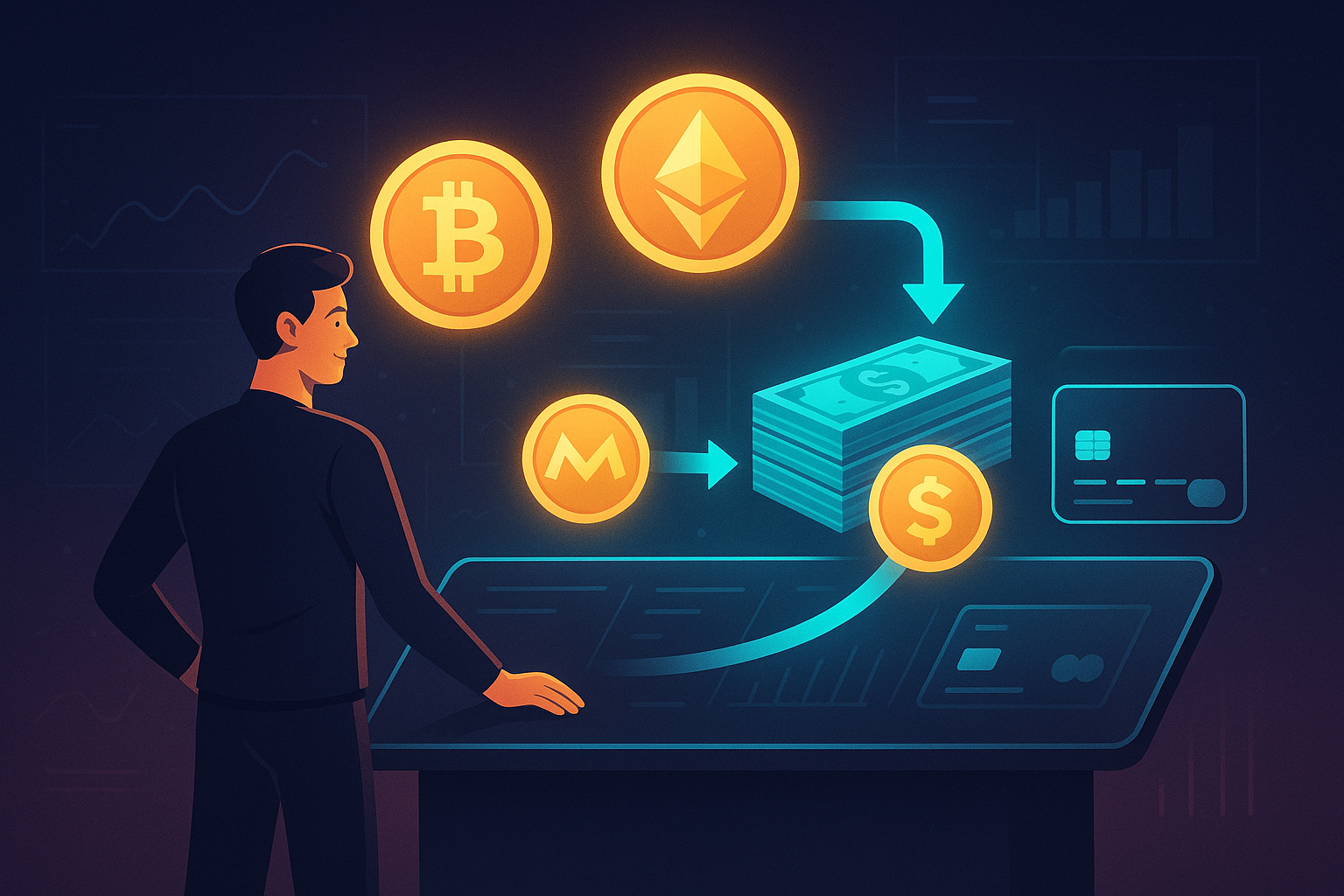
The quickest way to convert crypto to cash in 2026 is to first swap your coin into a highly liquid asset like USDT, USDC, or BTC using a non‑custodial instant swap such as GhostSwap, then cash out that asset through a centralized exchange, bank transfer, card off‑ramp, or local peer‑to‑peer trade. This minimizes fees, delays, and KYC friction.
- Swap your coin into a major asset (USDT/USDC/BTC) using an instant, no‑KYC swap.
- Send that asset to an off‑ramp (exchange, card, ATM, or P2P platform).
- Sell the crypto for your local currency (USD, EUR, etc.).
- Withdraw funds to your bank, card, or take physical cash.
Below is a complete, beginner‑friendly guide on exactly how to convert crypto to cash in 2026, with different methods, pros and cons, and safety tips.
What You Need Before You Start
1. A secure crypto wallet you control
Before you can learn how to convert crypto to cash, you need to control your coins.
Use a non‑custodial wallet where you hold the private keys or seed phrase. Examples include:
- Software wallets like MetaMask or Trust Wallet
- Hardware wallets like Ledger or Trezor
A non‑custodial wallet lets you interact with instant swap services and decentralized exchanges directly. It also reduces the risk of exchange hacks or frozen accounts.
2. Your receiving details for cash
You cannot convert crypto to cash without somewhere for the cash to go. Have at least one of these ready:
- Bank account details (IBAN, routing/account number, etc.)
- Debit/credit card compatible with crypto off‑ramps
- Mobile money app or payment app (where supported)
- Cash‑friendly option such as a Bitcoin ATM within travel distance
Check your bank or payment provider’s policy on cryptocurrency. Some banks are strict and may block transfers from exchanges.
3. Minimum amounts and fees
Most methods for how to convert crypto to cash have minimum limits. Typical examples:
- Centralized exchanges often require $5–$20 equivalent minimum per trade or withdrawal
- Bitcoin ATMs may have minimums around $20–$50 equivalent
- Network fees (gas fees) can make very small withdrawals uneconomical
Always check:
– The network fee for sending your coin
– Service fees on the swap or exchange
– Bank withdrawal or ATM fees
4. Time required
Depending on the method, converting crypto to cash can take anywhere from a few minutes to several days:
- Instant swap + P2P trade: as fast as 10–60 minutes once you find a buyer
- Instant swap + centralized exchange: usually 10–60 minutes for the crypto part, plus a few hours to 3 business days for bank transfer
- Bitcoin ATM: generally 10–30 minutes (depending on blockchain confirmations and machine queue)
If you need cash today, favor methods with instant or same‑day settlement.
Method 1: Using GhostSwap (No KYC — Recommended)
GhostSwap is a non‑custodial, instant crypto‑to‑crypto swap platform with 1,500+ trading pairs and no KYC requirements. It is ideal when you want to turn a long‑tail or illiquid coin into a major asset that is easy to cash out.
Why start with an instant non‑custodial swap?
Many off‑ramps and exchanges only support a limited number of coins. If you hold something more niche, the fastest path when learning how to convert crypto to cash is usually:
- Swap your niche coin into a major asset (BTC, ETH, USDT, USDC, etc.).
- Send that major asset to a cash‑out method like a centralized exchange, P2P platform, or ATM.
GhostSwap helps you handle step 1 privately and quickly, without creating accounts or submitting ID.
Step 1: Go to GhostSwap.io
Open your browser and visit GhostSwap.io. The main exchange widget is visible on the homepage, so there is nothing to download or install.
Make sure the URL is correct and bookmarked. Always double‑check you are not on a phishing site with a similar name.
Step 2: Select crypto in the exchange widget
In the “You send” field, choose the coin or token you currently hold. You can search by ticker symbol like BTC, ETH, SOL, or by typing the token name.
In the “You receive” field, choose a highly liquid asset that is easy to cash out, such as:
- USDT or USDC (popular on/off‑ramp stablecoins)
- BTC (widely supported for ATM withdrawals and exchanges)
- ETH (frequently supported, but gas fees can be higher during congestion)
GhostSwap will automatically show you the estimated rate and amount you will receive.
Step 3: Enter your wallet address
Copy the receiving address from your non‑custodial wallet where you want to get the new asset. Paste it into the “Destination address” field.
Double‑check:
- The address format matches the correct network (e.g., ERC‑20 vs TRC‑20)
- You own and control this wallet
- There are no typos (send a small test amount if you are nervous)
Step 4: Send your crypto and receive crypto
GhostSwap will display a deposit address for the coin you are sending. From your wallet:
- Send the exact amount of the coin to the provided deposit address.
- Wait for blockchain confirmations; GhostSwap monitors the transaction.
- After confirmation, GhostSwap performs the swap and sends the output coin to your destination address.
This process usually takes minutes depending on network congestion.
Pros of using GhostSwap
- No KYC: Convert between more than 1,500 assets without submitting ID.
- Instant: Swaps typically finalize within minutes after your transaction confirms.
- Non‑custodial: Funds move directly between your wallets; GhostSwap does not hold your balance.
- Flexible pairs: You can go from niche coins into cash‑friendly assets in one step.
Cons of using GhostSwap
- Crypto‑to‑crypto only: GhostSwap itself does not send you fiat currency or bank transfers.
- You still need a separate cash off‑ramp: exchange, P2P, ATM, or card to actually receive money.
You can swap almost any coin you hold for BTC, ETH, USDT and 1,500+ other assets on GhostSwap without KYC, then cash out that asset using your preferred off‑ramp.
Method 2: Using a Centralized Exchange
One of the most common ways to convert crypto to cash is through a centralized exchange (CEX) that offers bank withdrawals or card withdrawals.
How centralized exchanges work for cashing out
Centralized exchanges act as intermediaries between buyers and sellers and maintain order books. To cash out:
- You deposit your crypto to the exchange.
- You sell it on the market for fiat currency (USD, EUR, etc.).
- You withdraw the fiat to your bank or card.
Many large exchanges publish their supported fiat currencies and payment methods in help centers you can find via Google, or on ranking sites like CoinGecko or CoinMarketCap.
Important: KYC and ID verification
Almost every major centralized exchange in 2026 requires Know Your Customer (KYC) verification for fiat withdrawals. Expect to provide:
- Government ID (passport, national ID card, or driver’s license)
- Selfie or live video verification
- Sometimes proof of address (utility bill, bank statement)
KYC review can take from a few minutes up to several days during busy periods. If you need anonymity, this method is not for you.
Step‑by‑step: Converting via a centralized exchange
- Create an account
Sign up at your chosen exchange with an email and strong password. Enable 2FA for security. - Complete KYC
Upload required documents and wait for approval. Without level‑2 KYC, you may have low or zero fiat withdrawal limits. - Deposit crypto
From the exchange “Deposit” page, select the coin and network. Copy the deposit address, then withdraw from your wallet to that address. If your coin is unsupported, first convert it to BTC/USDT using an instant swap like this private exchange service, then deposit. - Sell crypto for fiat
Use a “Sell” or “Spot trading” section to sell your crypto into your chosen fiat currency. Market orders are simplest for beginners. - Withdraw fiat
Go to the “Withdraw” or “Cash out” page, choose bank transfer, card payout, or other local method, and follow the instructions.
Pros and cons of centralized exchanges
Pros
- Direct fiat off‑ramp to bank accounts and cards
- Often competitive exchange rates and liquidity
- Support for multiple fiat currencies and local payment rails
Cons
- Requires full KYC and ID, which removes privacy
- Onboarding and bank withdrawals can take days
- Funds are custodial while on the exchange, meaning you trust a third party
Method 3: Peer‑to‑Peer, DEX, and Crypto ATMs
If you are looking for alternatives on how to convert crypto to cash besides standard exchanges, three major options are peer‑to‑peer trading, decentralized exchanges, and crypto ATMs.
Peer‑to‑peer (P2P) marketplaces
P2P platforms connect buyers and sellers directly, often with escrow. You can sell your crypto to someone who pays you via bank transfer, mobile money, PayPal, or in‑person cash.
How P2P works to cash out
- Create a sell order for your coin and set your price and payment method.
- When a buyer accepts, send your crypto into the platform’s escrow address.
- The buyer sends fiat to your chosen payment method.
- Once you confirm receipt, the platform releases crypto from escrow to the buyer.
Pros
- Often available in countries with limited banking integration
- Can access local payment methods and sometimes better rates
- Some platforms allow higher privacy compared with standard exchanges
Cons
- Requires careful due diligence on counterparties
- Scam risk if you do not follow escrow rules
- Typical learning curve and need for platform reputation
Decentralized exchanges (DEXs)
DEXs like Uniswap or PancakeSwap let you trade directly from your wallet without accounts. However, most DEXs are crypto‑only and do not handle fiat. They are best used in combination with other methods.
Using DEXs in a cash‑out workflow
You might:
- Use a DEX to sell a token for a stablecoin on its native chain.
- Bridge or swap that stablecoin to a widely supported chain or coin.
- Use an instant swap like GhostSwap to move into BTC/USDT on a cheap network.
- Send that final asset to a P2P platform, exchange, or ATM to get cash.
DEXs are powerful tools for on‑chain liquidity but do not themselves send you money to your bank.
Bitcoin and crypto ATMs
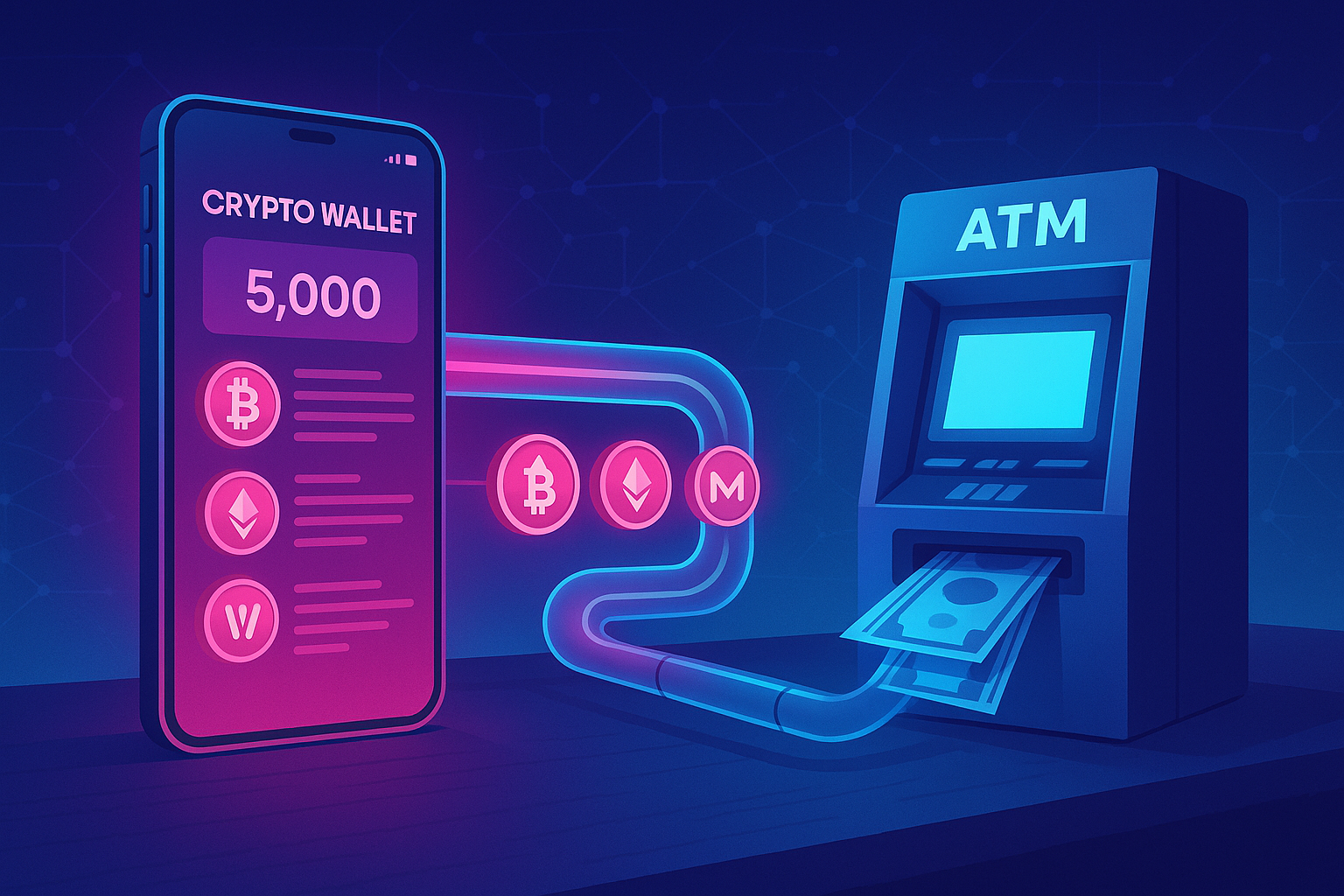
Crypto ATMs are physical machines that let you buy or sell cryptocurrency for cash. You can find them on aggregator sites like Coin ATM Radar or by searching “Bitcoin ATM near me.”
How a crypto ATM cash‑out works
- Select “Sell” or “Withdraw cash” on the machine.
- Choose the amount of crypto you want to sell or the cash amount you want.
- The ATM gives you a QR code address; send your crypto to it.
- After blockchain confirmations, the machine dispenses your local currency.
Pros
- Physical cash in hand, often within 10–30 minutes
- In some regions, low‑value withdrawals may have lighter ID checks
- Useful if you do not have a compatible bank account
Cons
- Fees can be higher than online exchanges
- Machine limits; large withdrawals may be impossible in one visit
- Geographic availability is uneven, mostly in big cities
Tips for Staying Safe While Converting Crypto to Cash
1. Protect your wallet and seed phrase
Your seed phrase or private key controls your funds. Never share it with anyone, ever.
- Write your seed phrase on paper or metal, not in plain text files or screenshots.
- Avoid entering your seed phrase into random websites or browser extensions.
- Use hardware wallets for large balances whenever possible.
2. Double‑check addresses, networks, and chains
Sending crypto to the wrong address or chain is usually irreversible.
- Verify you selected the correct network (e.g., ERC‑20 vs BEP‑20 vs TRC‑20).
- Test with a small transaction before sending a large amount.
- Copy‑paste addresses; never type them by hand.
3. Beware of P2P and social scams
When using P2P methods to convert crypto to cash:
- Only trade through platforms with escrow and dispute resolution.
- Do not release crypto until your bank or payment app confirms the money is received and irreversible.
- Be cautious with chargeback‑prone methods like PayPal and credit cards.
4. Use reputable tools and data sources
To avoid bad rates or fake tokens, use recognized data sources and official project documentation:
- Check coin tickers and contract addresses on sites like CoinGecko and CoinMarketCap.
- Verify token contracts through official project websites or documentation.
GhostSwap integrates a wide list of legitimate assets, but it is still good practice to confirm you are dealing with the correct token.
5. Understand tax implications
In many jurisdictions, selling crypto for cash is a taxable event. Keep clear records of:
- Purchase price and date for each coin
- Date and value when you convert crypto to cash
- Fees paid to exchanges, ATMs, or networks
Consult a qualified tax professional in your country. Tax rules can change frequently.
Ready to Trade Your Coin?
If you want a private, fast way to move from niche assets into BTC, ETH, USDT and other cash‑friendly coins, you can use a non‑custodial swap to prepare for your cash‑out in minutes.
Ready to Get Started?
The most efficient strategy for how to convert crypto to cash in 2026 is to separate the process into two clear steps:
- Use a flexible instant swap to move from any coin into a major, liquid asset.
- Use the best off‑ramp for your region and risk profile to get fiat or physical cash.
GhostSwap gives you the first step without KYC, supporting more than 1,500 trading pairs in a non‑custodial way. From there, you can choose whether to send your BTC, ETH, or stablecoins to a centralized exchange, P2P marketplace, or crypto ATM to receive your local currency.
Visit GhostSwap.io to swap crypto instantly, then complete your cash‑out with the method that fits your needs, timeline, and privacy preferences.
Frequently Asked Questions
Can I do this without ID?
You can convert crypto to cash without ID for part of the process, but fully anonymous cash‑outs are increasingly limited.
Using GhostSwap or a DEX, you can privately swap into BTC or stablecoins with no KYC. However, most regulated off‑ramps like centralized exchanges or card providers require ID for fiat withdrawals.
Some P2P trades and lower‑value crypto ATM withdrawals may be possible without formal KYC, depending on local regulations, but limits and fees can be restrictive. Always check the rules in your country.
What is the best method to convert crypto to cash?
The best method depends on your priorities:
- Speed: Instant swap + P2P or ATM is often fastest.
- Convenience and bank integration: Centralized exchanges with local bank rails are generally easiest.
- Privacy: Non‑custodial swaps combined with P2P or smaller ATM withdrawals can offer higher privacy but require more effort.
For most people, a hybrid approach works best: use a non‑custodial swap to consolidate into a major coin, then off‑ramp through whichever service is most efficient in your region.
How long does it take to convert crypto to cash?
Timing varies by network congestion and chosen method:
- Instant swaps: usually a few minutes after your transaction confirms.
- Centralized exchange deposits: 5–60 minutes for blockchain confirmations.
- Bank withdrawals: a few hours to 1–3 business days, depending on country and banking rails.
- Crypto ATMs: around 10–30 minutes, mostly waiting for network confirmations.
If you plan ahead, you can often go from crypto to usable cash within the same day.
Is it safe to use GhostSwap?
GhostSwap is non‑custodial, meaning it does not hold your long‑term balance. You send crypto from your wallet and receive crypto directly back to your wallet, reducing counterparty risk compared to keeping funds on centralized exchanges.
As with any on‑chain interaction, your security depends on using the correct website, protecting your wallet keys, and verifying transaction details. Always:
- Use the official GhostSwap.io URL
- Check destination addresses carefully
- Send a test amount first if you are swapping a large balance
No platform can eliminate blockchain risks completely, but a non‑custodial design and simple workflow help minimize many common attack surfaces when you are learning how to convert crypto to cash.