Best Bitcoin to Monero Exchange: How to Choose the Right Platform for Private Swaps
Introduction
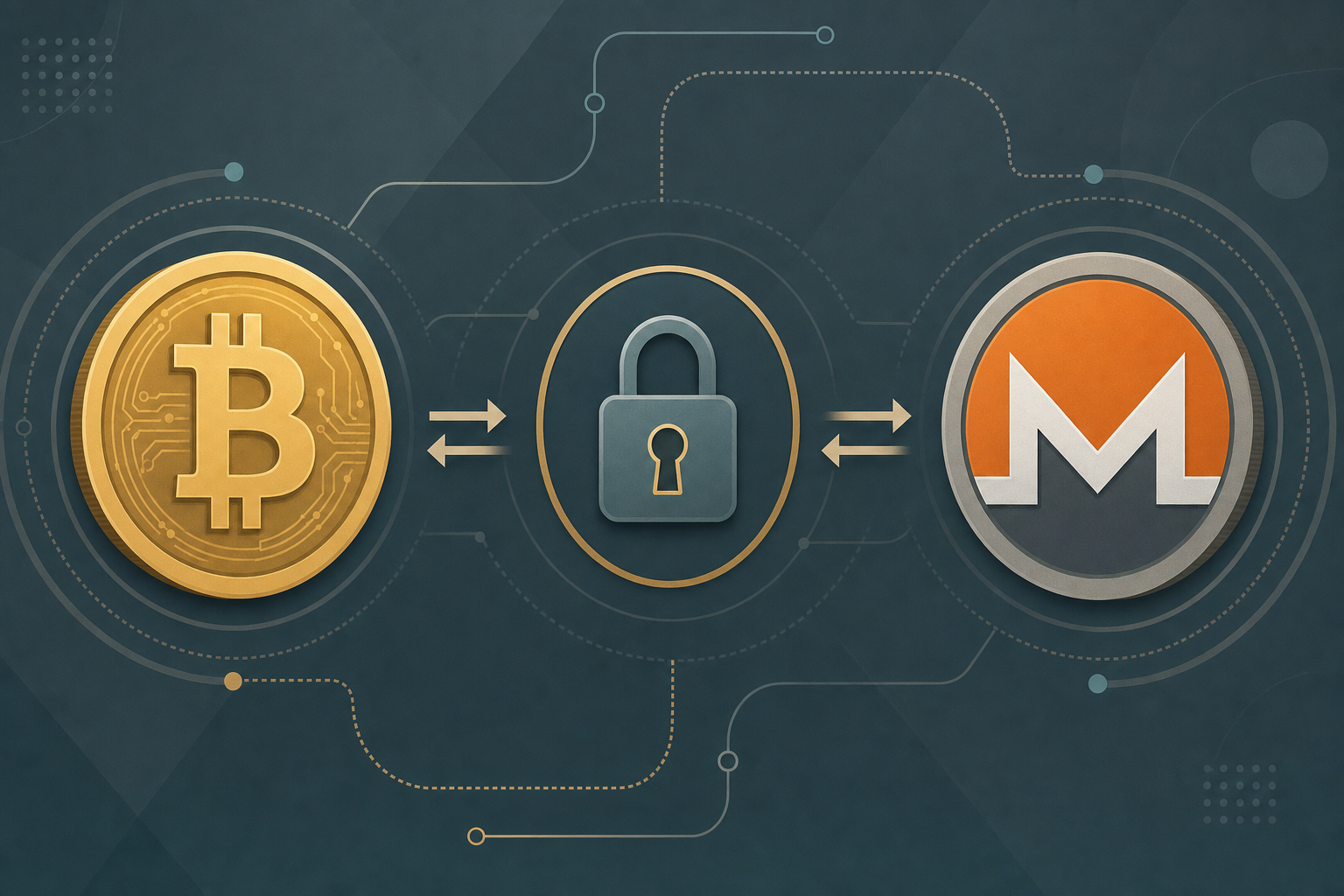
Bitcoin and Monero serve very different purposes in the crypto ecosystem. Bitcoin is widely adopted, transparent and easy to track, while Monero is purpose-built for privacy and financial confidentiality. As a result, many users regularly convert BTC to XMR whenever they want to increase their on-chain privacy or make less traceable payments.
Finding the best bitcoin to monero exchange is not as simple as picking the first result on a search engine. You need to balance factors like privacy, trust, liquidity, speed, and fees. In many cases, a specialized non-custodial swap service, such as this option for a best bitcoin to monero exchange experience, can be more suitable than a traditional centralized exchange.
This guide walks through what matters when converting BTC to XMR, how to evaluate different platforms, the trade-offs you should be aware of, and a practical step-by-step process so you can swap safely and efficiently.
Why Bitcoin to Monero Swaps Matter
Privacy in an increasingly transparent world
Bitcoin’s blockchain is public and permanently stored. Every transaction, wallet balance, and transfer path can be analyzed. While addresses are pseudonymous, clustering techniques and off-chain metadata (like KYC from exchanges) make it possible to link addresses to real-world identities.
Monero addresses this by using privacy technologies such as:
- Ring signatures to hide which input is actually being spent
- Stealth addresses to prevent recipients from being publicly identified
- Confidential transactions to obscure transaction amounts
Moving part of your Bitcoin holdings into Monero can:
- Break on-chain surveillance heuristics
- Make future spending harder to correlate
- Provide more discretion for donations, salaries, or personal transfers
Regulatory and censorship considerations
Centralized exchanges are increasingly subject to:
- Strict KYC/AML requirements
- Sanctions and blacklist enforcement
- Geographical restrictions and account freezes
By contrast, non-custodial BTC to XMR swaps give users more autonomy. You retain control of your keys, typically provide minimal personal data, and reduce dependence on a single entity that can be pressured or compromised.
What Makes the “Best Bitcoin to Monero Exchange”?
Not all BTC to XMR exchanges are equal. The “best” option depends on your priorities, but you should evaluate each platform on several core criteria.
1. Privacy model
Ask:
- KYC requirements: Do you need to submit full identity documents, or can you trade without registration?
- Data retention: What logs are stored, and for how long?
- On-chain traceability: Does the service reuse addresses or use patterns that weaken your privacy?
If privacy is your main reason for moving from BTC to XMR, it makes sense to use a private exchange with a non-custodial swap flow rather than a fully KYC’d centralized exchange.
2. Custodial vs non-custodial
- Custodial exchange: You deposit BTC into an account controlled by the platform, trade on their internal order book, then withdraw XMR.
- Non-custodial swap service: You send BTC directly from your wallet to a swap address, and receive XMR directly into your Monero wallet, without leaving funds on the platform.
Benefits of non-custodial services:
- Less counterparty risk, since they hold your funds only during the swap
- No need to maintain balances or accounts on multiple exchanges
- Simpler setup for one-off or occasional swaps
3. Exchange rates and fees
The cost structure typically has two components:
- Network fees: Miner fees on the Bitcoin and Monero networks
- Service spread or fee: The platform’s markup or trading fee
To identify the best bitcoin to monero exchange for cost efficiency, look for:
- Transparent, clearly stated fees
- Competitive spreads close to market rates
- Options for fixed vs floating rate swaps, if available
4. Liquidity and limits
Liquidity affects:
- Execution speed: How fast your BTC is converted to XMR
- Slippage: How much the final rate moves during your swap
- Maximum trade size: How much you can swap at once
Check:
- Minimum and maximum amounts for BTC to XMR
- Historical feedback from users on large swaps
- Whether the platform sources liquidity from multiple markets
5. Reliability, UX, and support
A strong platform should offer:
- Clear, intuitive user interface
- Accurate status tracking for your swap
- Responsive support in case of stuck or delayed transactions
- Educational resources and FAQs that explain how the swap process works
Key Benefits of Using a Specialized BTC to XMR Exchange
1. Enhanced privacy
Monero’s design gives you:
- Unlinkable transactions: Observers cannot reliably tie incoming and outgoing funds
- Hidden balances and amounts
- Resistance to chain analysis and most standard blockchain surveillance tools
Regularly moving part of your Bitcoin holdings into Monero adds a privacy layer on top of Bitcoin’s transparent ledger.
2. Non-custodial control
Using a non-custodial BTC to XMR service means:
- You always hold your own keys on both chains
- There is no long-term deposit balance at risk on an exchange
- Swap failure scenarios usually mean you still control your original BTC, minus network fees
3. Simplicity and speed
Compared with setting up and verifying an account on a traditional exchange, a dedicated swap interface can provide:
- No registration for small to medium swaps (platform-dependent)
- Direct from-wallet to-wallet swaps
- Execution within minutes once the Bitcoin transaction confirms
4. Better fit for privacy-focused use cases
Use cases that particularly benefit from BTC to XMR conversions:
- Private donations to individuals or NGOs
- Discreet payments for sensitive services
- Separating your public, identity-linked BTC from your private holdings
- Reducing the data trail before spending or moving funds across borders
Risks and Drawbacks to Consider
No exchange method is perfect. When deciding on the best bitcoin to monero exchange for your situation, weigh the following trade-offs carefully.
1. Counterparty and platform risk
Even with non-custodial swaps, you rely on a third party to:
- Quote accurate rates
- Send the correct amount of XMR
- Handle support if something goes wrong
Mitigation strategies:
- Start with a small test transaction before larger swaps
- Research user reviews and reputational history
- Use platforms that clearly explain their refund and dispute processes
2. Volatility and slippage
Bitcoin and Monero are both volatile. Between the time you send BTC and the time the provider executes the swap, the price can move.
- Fixed-rate swaps lock in a rate but may come with higher spreads
- Floating-rate swaps track the market more closely but you bear slippage risk
You should always confirm whether your chosen platform guarantees a rate at the time of initiation or only at execution.
3. Regulatory and compliance concerns
Privacy coins periodically face regulatory scrutiny:
- Some centralized exchanges delist or restrict Monero
- Certain jurisdictions may have reporting requirements for large transfers
- Bank accounts can be sensitive to fiat inflows sourced from privacy coins
You are responsible for understanding and complying with the laws in your country.
4. Network congestion and fees
High Bitcoin network congestion can:
- Increase miner fees for your swap
- Slow down confirmations, which delays the XMR payout
Monero fees are generally lower, but still non-zero. The “best” exchange experience balances network fee recommendations and swap timing to avoid unnecessary cost.
Step-by-Step Guide: How to Swap Bitcoin to Monero Safely
Below is a typical flow for using a non-custodial BTC to XMR swap service. Exact steps vary by platform, but this outlines what to expect.
Step 1: Prepare your wallets
- Bitcoin wallet: Use a reputable, non-custodial BTC wallet where you control the seed phrase.
- Monero wallet: Install and set up a Monero wallet (GUI, CLI, or a trusted mobile/desktop wallet). Make sure you:
- Back up your seed phrase securely
- Have a receiving address ready for XMR
Step 2: Choose a BTC to XMR swap platform
Criteria to check:
- Non-custodial design with clear instructions
- Transparent rates and fees
- Good community reputation
- No unnecessary data collection for your intended swap size
A service focused on swap crypto instantly between BTC and XMR can streamline this process significantly.
Step 3: Enter the swap details
On the swap interface:
- Select the pair: From BTC to To XMR.
- Specify the amount of BTC you want to exchange.
- Paste your Monero receiving address carefully.
- Optionally, provide a refund BTC address in case the swap fails or expires.
Double-check:
- The XMR estimate you will receive
- Any displayed fees or spreads
- Minimum and maximum allowable amounts
Step 4: Review and confirm the offer
The platform will show you a quote and a BTC deposit address (or a payment link). Before sending:
- Confirm that the URL is correct and secured with HTTPS
- Verify the rate type (fixed vs floating) and any time limit on the quote
- Note transaction IDs or order IDs for future reference
Step 5: Send BTC from your wallet
From your Bitcoin wallet:
- Paste the deposit address provided by the exchange.
- Set an appropriate network fee based on current mempool conditions.
- Send the transaction and save the transaction ID (TXID).
The platform will usually wait for a certain number of Bitcoin confirmations before executing the Monero payout.
Step 6: Wait for confirmations and XMR payout
After the required BTC confirmations:
- The service executes the swap internally.
- XMR is then sent to the Monero address you provided.
- You can monitor swap status on the platform’s tracking page using your order ID or TXID.
Once the XMR arrives:
- Verify the received amount in your Monero wallet.
- Optionally, tag or label the transaction for your records.
Practical Tips for Finding and Using the Best Bitcoin to Monero Exchange
1. Start small and scale up
For new platforms:
- Begin with a small test swap to confirm the service works as advertised
- Check that XMR arrives in your wallet in a reasonable time
- Then gradually increase the swap size if satisfied
2. Optimize timing and network fees
- Use mempool explorers to gauge Bitcoin congestion before sending
- Avoid peak periods when BTC fees spike
- Choose reasonable fee settings in your BTC wallet so your transaction confirms within the validity window for your swap quote
3. Maintain good privacy hygiene
If your goal is privacy:
- Do not reuse Monero receiving addresses unnecessarily
- Avoid combining newly received XMR with old, potentially deanonymized funds
- Be careful about linking your Monero wallet to personal information through exchange withdrawals or centralized services
4. Keep thorough records
Even while valuing privacy, you may still need records for personal accounting or legal compliance:
- Save swap order IDs and transaction IDs
- Record approximate fiat values at the time of swap if needed for tax purposes
- Store this data securely and privately
5. Reassess your provider periodically
The “best bitcoin to monero exchange” at one point in time may not remain the best forever. Markets and regulations evolve, and platforms change policies.
Regularly reassess:
- Fee competitiveness
- Privacy policies and any new KYC thresholds
- User feedback, reviews, and incident history
Conclusion: Choosing the Best Bitcoin to Monero Exchange for You
Selecting the best bitcoin to monero exchange is about aligning the service with your goals: privacy, security, cost, and ease of use. For many users, the ideal choice is a non-custodial, privacy-conscious platform that keeps control in your hands, requires minimal data, and offers transparent rates with predictable execution.
By preparing your wallets, starting with small test swaps, and following the practical steps in this guide, you can convert BTC to XMR confidently while minimizing risk. If your priority is to perform a private, non-custodial swap from Bitcoin to Monero, a dedicated BTC/XMR swap interface can be a powerful tool in your privacy toolkit. For a fast, private option, you can ETH to XMR exchange on a non-custodial platform with no account required.
Always remember that cryptocurrencies are inherently risky and volatile. Do your own research, stay within your risk tolerance, and continuously refine your exchange choices as the ecosystem matures.
Ready to Swap?
Convert your crypto instantly on GhostSwap — no KYC, no sign-up required.
Popular swaps: BTC to XMR | BTC to ETH | XMR to BTC | ETH to XMR | BTC to SOL