Pepe to BTC Swap: How to Exchange PEPE for Bitcoin Safely and Efficiently
Introduction
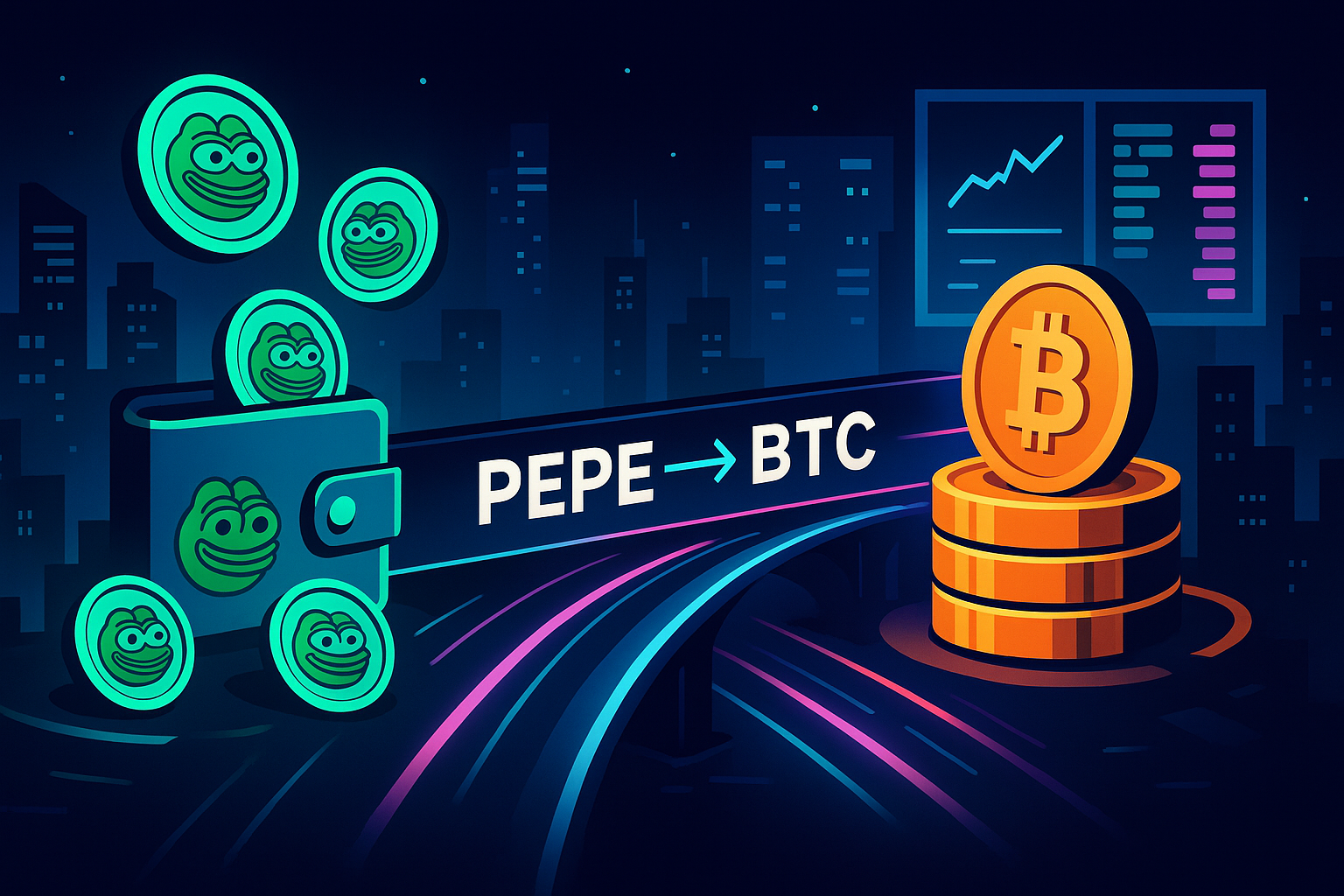
Pepe coin has become one of the most talked‑about meme coins in the market, attracting traders looking for high volatility and quick gains. At some point though, many holders want to convert part of their stack into something more established like Bitcoin. That is where a smooth, secure pepe to btc swap becomes crucial.
Whether you are locking in profits, diversifying out of a speculative position, or simply repositioning your portfolio, understanding the best way to swap PEPE for BTC can save you time, fees, and headaches. Modern non‑custodial swap platforms let you handle a pepe to btc swap in minutes without handing your funds to a centralized exchange.
In this guide, you will learn why swapping PEPE to Bitcoin matters, the benefits and risks, how to perform the swap step by step, and practical tips to avoid common mistakes.
Why a Pepe to BTC Swap Matters
Locking in gains and reducing volatility
PEPE is a highly speculative meme coin. That volatility cuts both ways: it can produce outsized gains, but it can also lead to brutal drawdowns. Converting a portion of your holdings from PEPE to BTC lets you:
- Realize profits from rapid price spikes
- Move part of your capital into a more established asset
- Reduce overall portfolio volatility while staying in crypto
Bitcoin is still volatile, but compared to many meme coins it is significantly more mature, with deeper liquidity and broader adoption.
Portfolio diversification inside crypto
If you are all‑in on PEPE, your risk is concentrated in one highly speculative asset. Diversifying into BTC can:
- Spread risk across different types of assets
- Balance speculative positions with a long‑term store of value narrative
- Give you exposure to different market cycles and catalysts
A straightforward pepe to btc swap lets you rebalance your portfolio without cashing out to fiat.
Avoiding friction from centralized exchanges
Traditional centralized exchanges often require full registration, KYC, and custody of your funds before you can trade. Non‑custodial swap platforms make it possible to:
- Trade directly from your wallet
- Keep custody of your private keys
- Minimize personal data sharing
For many users, a fast, private exchange route is far more appealing than uploading identity documents and waiting for approvals.
Key Benefits of Swapping PEPE to BTC
1. Non‑custodial control of your funds
With a non‑custodial pepe to btc swap, you do not deposit into a centralized platform that holds your assets. Instead, you:
- Initiate the trade from your own wallet
- Sign transactions using your private keys
- Receive BTC directly into a wallet under your control
This can significantly reduce counterparty risk compared with leaving assets on centralized exchanges for extended periods.
2. Speed and convenience
Modern swap services are designed for fast, streamlined conversions:
- No lengthy account setup in many cases
- No order books to navigate
- No need to convert through multiple pairs like PEPE → USDT → BTC
You select PEPE as the asset you are sending, BTC as the asset you want to receive, confirm the quote, and send your PEPE. The service handles the routing behind the scenes.
3. Direct PEPE to BTC trading pair
Not every centralized exchange offers a direct PEPE/BTC trading pair. Some require you to trade PEPE into a stablecoin first, then trade that stablecoin for BTC, incurring multiple trading fees and slippage.
A direct pepe to btc swap:
- Reduces complexity
- Can lower total fees
- Limits extra exposure to price movements during intermediate steps
4. Privacy advantages
Some swap platforms allow you to trade with:
- Minimal or no KYC for reasonable limits
- No centralized account history tied to your identity
- Direct wallet‑to‑wallet transfers
While blockchain transactions are still public, the absence of centralized accounts can be attractive for users who value privacy within legal and regulatory frameworks.
Risks and Drawbacks of a Pepe to BTC Swap
No swap is risk free. Before you convert PEPE into BTC, consider the following.
1. Market volatility and timing risk
Crypto prices move fast. Between the time you get a quote and the time your swap is fully executed:
- PEPE’s price can spike after you sell
- BTC can drop right after you buy
- The quote can expire, forcing you to accept a new rate
To manage this risk:
- Use platforms that offer transparent, time‑bound quotes
- Swap in tranches if you are moving a large amount
- Focus on long‑term positioning rather than perfect timing
2. Smart contract or platform risk
If you are using a DEX or a swap aggregator that relies on smart contracts, there is some risk of:
- Smart contract bugs
- Routing issues
- Temporary liquidity shortages
If you use an off‑chain swap service, risk shifts instead to the integrity, liquidity, and security practices of the provider. Do your research, verify URLs, and avoid interacting with unverified smart contracts.
3. Network fees and congestion
Your swap might involve one or more blockchains, depending on where your PEPE is held and how BTC is delivered. You can face:
- High gas fees on Ethereum or other networks
- Slow confirmations during periods of congestion
- Potential need to bridge tokens if PEPE is on a non‑native chain
Always check current network fees before committing to a swap and factor them into your overall cost.
4. Irreversible transactions
Crypto transfers are typically final. If you:
- Send PEPE to the wrong address
- Paste an incorrect BTC destination wallet
- Choose a wrong network for your tokens
There is usually no way to reverse the transaction. Double‑check every address, chain, and amount before confirming.
Step‑by‑Step Guide: How to Do a Pepe to BTC Swap
Below is a general workflow you can adapt on most non‑custodial swap platforms. Exact screens vary, but the logic is similar.
Step 1: Prepare your wallets
You will need:
- A wallet holding your PEPE tokens
- A Bitcoin wallet address where you want to receive BTC
Make sure you know:
- Which network your PEPE resides on (commonly Ethereum, but it could be another chain)
- That you have enough native gas token (for example ETH) to pay network fees for sending PEPE
Step 2: Choose a non‑custodial swap service
Look for a platform that:
- Supports the PEPE to BTC trading route
- Offers clear fees and rates
- Is non‑custodial, so you retain control of your keys
For instance, you can use a service like GhostSwap to swap crypto instantly between PEPE and BTC in a non‑custodial manner. Always verify the correct domain manually or via trusted bookmarks before connecting any wallet.
Step 3: Select PEPE and BTC as your trading pair
On the swap interface:
- Set the “From” token to PEPE
- Set the “To” asset to BTC
- Enter the amount of PEPE you want to convert, or the amount of BTC you want to receive
The platform should show:
- An estimated rate (how much BTC you will receive for your PEPE)
- Any service fees or routing costs
- An estimated completion time
Step 4: Review the quote and terms
Before proceeding, check:
- The exchange rate compared with a public market reference
- Minimum and maximum amounts allowed
- Whether the quote is fixed for a short time or fully variable
- All network fees that might apply
If something seems off, cancel and re‑check your parameters or try again later.
Step 5: Provide your BTC destination address
Paste your Bitcoin wallet address into the “Receive” or “Destination” field. Then:
- Verify the address format is correct for Bitcoin
- Confirm which type it is (for example, SegWit or Taproot) if the platform asks
- Copy the address from your wallet directly rather than typing it manually
Double‑check the first and last several characters to ensure it matches exactly.
Step 6: Send your PEPE from your wallet
The swap interface will display a deposit address or prompt your connected wallet:
- If your wallet is connected: confirm the transaction directly in your wallet app or browser extension.
- If your wallet is not connected: manually send the specified amount of PEPE to the provided deposit address.
Make sure:
- You send the exact amount requested, or within the platform’s allowed range
- You use the correct token and network for PEPE
- You keep the transaction hash (TXID) for reference
Step 7: Wait for confirmations and receive BTC
The platform will detect your PEPE deposit after the required number of network confirmations. Then it will perform the swap and send BTC to your destination address.
You can monitor:
- The status of your PEPE transaction on the relevant block explorer
- The BTC transaction on a Bitcoin block explorer once it is broadcast
When your Bitcoin transaction confirms, your pepe to btc swap is complete.
Practical Tips for a Smooth Pepe to BTC Swap
1. Start with a small test amount
If you are using a platform for the first time, test it:
- Send a small amount of PEPE through the swap
- Verify that BTC arrives correctly in your wallet
- Check how long the full process takes
Once you are comfortable, you can run larger swaps with greater confidence.
2. Mind minimums and maximums
Swap services typically set:
- A minimum swap size, below which the transaction will not process
- Maximum limits, sometimes depending on KYC completion
Check those values before sending funds, so you do not end up with stuck or rejected transactions.
3. Check your networks carefully
Common pitfalls include:
- Sending PEPE on one chain while the service expects it on another
- Pasting a BTC address from a wrapped Bitcoin network instead of native Bitcoin
- Confusing testnet and mainnet wallets
Always verify the network and token standard in your wallet and on the swap page.
4. Monitor fees and on‑chain congestion
To avoid overpaying:
- Use gas trackers to see current fees on the PEPE network (for example, Ethereum gas trackers)
- Avoid peak times when possible
- Weigh whether it makes sense to wait for lower network load if you are not in a rush
This matters especially if you are swapping smaller amounts where fees eat up a larger percentage of the value.
5. Keep your security hygiene tight
Some essential safeguards:
- Bookmark official swap URLs and use those bookmarks instead of links from social media
- Never share seed phrases or private keys with any website or support agent
- Use hardware wallets for larger holdings
- Watch out for fake browser extensions or mobile apps mimicking popular wallets
Security mistakes can cost far more than any trading fee.
Conclusion
A well‑executed pepe to btc swap can help you lock in gains, manage risk, and transition from speculative meme coin exposure to a more established asset like Bitcoin, all while staying fully within the crypto ecosystem. Non‑custodial platforms that facilitate a non‑custodial swap between PEPE and BTC give you flexibility, privacy advantages, and continued control over your keys.
Before you convert, weigh the benefits against the risks, check fees and network conditions, and always verify addresses and platforms carefully. Start with small test swaps, build familiarity with the process, and gradually size up as your confidence and understanding grow.
Handled thoughtfully, swapping PEPE into BTC can be a strategic move in your broader crypto portfolio, helping you balance speculation with long‑term conviction in the Bitcoin ecosystem.

Ready to Swap?
Convert your crypto instantly on GhostSwap — no KYC, no sign-up required.
Popular swaps: BTC to XMR | BTC to ETH | XMR to BTC | ETH to XMR | BTC to SOL