FIL to BTC Swap: How to Exchange Filecoin for Bitcoin Safely and Efficiently
Introduction
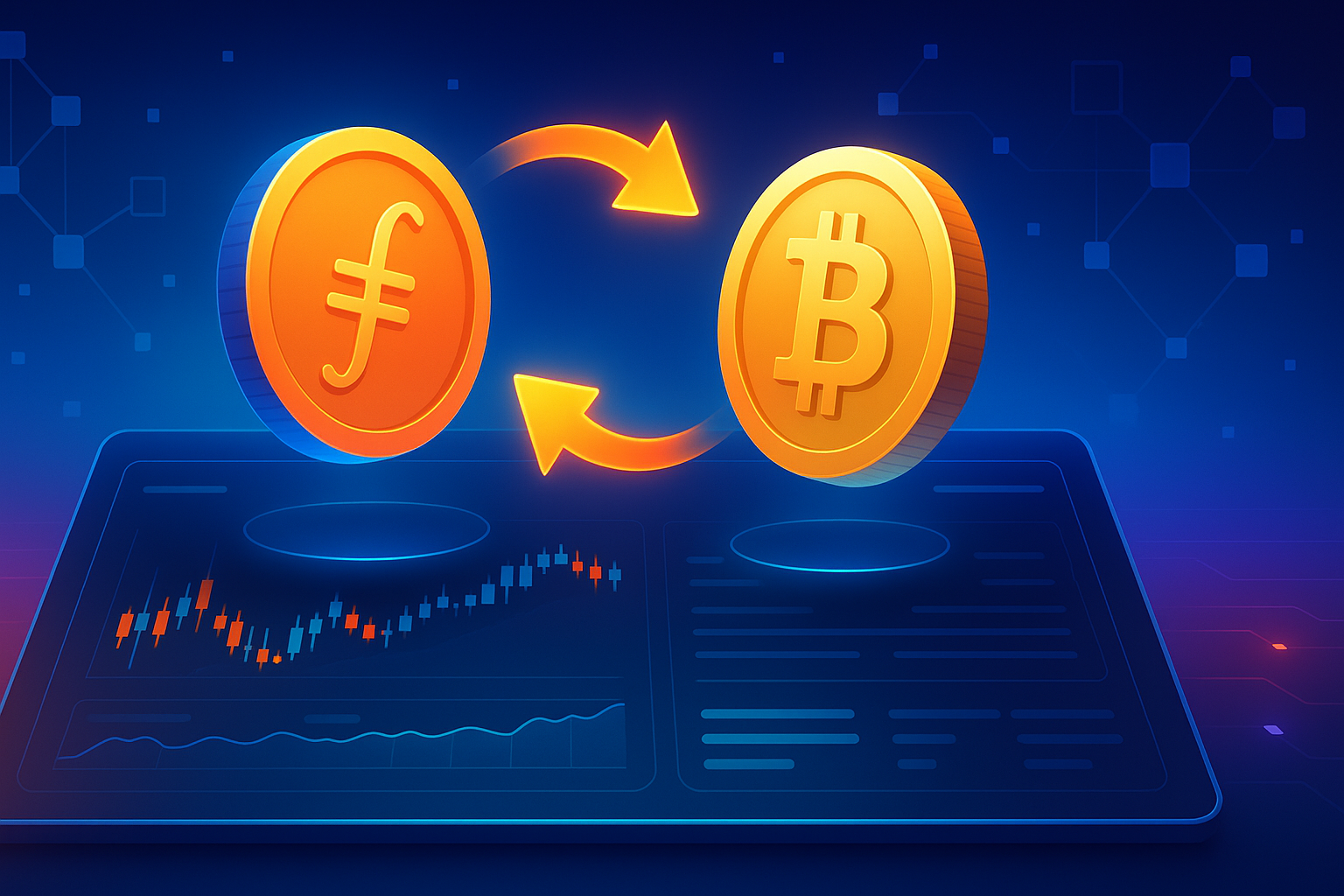
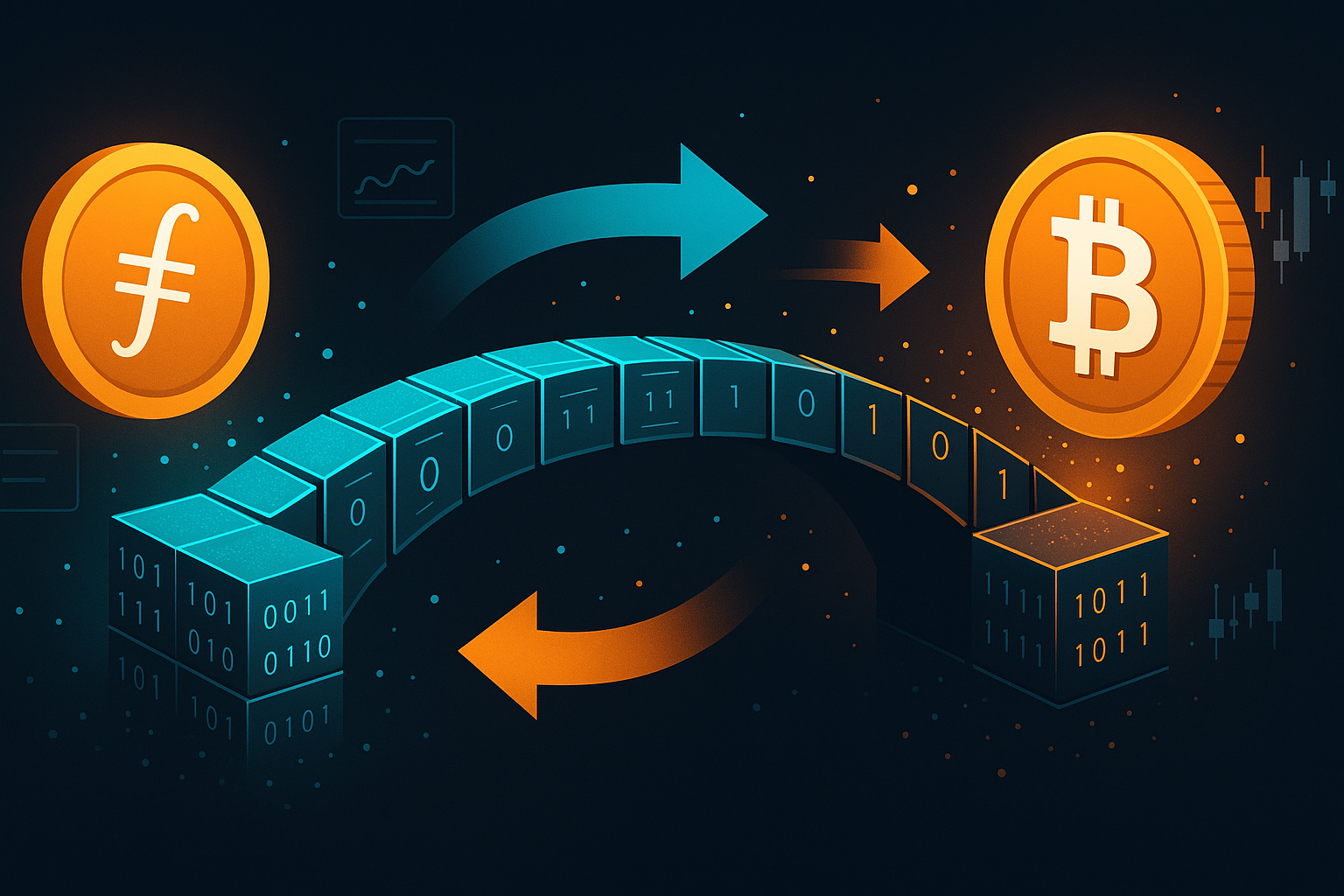
As the crypto ecosystem matures, moving value between different networks has become a core activity for both traders and long-term holders. One of the more popular pairs today is FIL to BTC swap, which lets you convert Filecoin, a storage-focused token, into Bitcoin, the most established cryptocurrency on the market.
Whether you earned FIL through storage deals, mining, or long-term holding, there are many reasons you may want to shift part of that exposure into BTC. The good news is that you no longer have to register on a centralized exchange, complete lengthy KYC, and deal with complex order books to make this happen. With a modern fil to btc swap interface, you can often complete the entire exchange in minutes, directly from your own wallet.
This guide explains why swapping FIL to BTC matters, how it works, what to watch out for, and shows you a simple, step-by-step workflow anyone can follow, even without trading experience.
Why FIL to BTC Swaps Matter
Filecoin and Bitcoin serve very different purposes in the crypto universe. Understanding those roles makes it easier to decide when and why to rotate from FIL to BTC.
Different roles in your crypto portfolio
- Bitcoin (BTC) is widely viewed as digital gold, a long-term store of value and macro hedge. It is often the base asset for many portfolios.
- Filecoin (FIL) powers a decentralized storage network, where users pay for space and miners are rewarded for providing and proving storage.
Swapping from FIL to BTC essentially moves capital from an infrastructure and utility token into a more conservative, liquidity-rich asset. For many, this is a way to lock in gains from FIL or rebalance risk.
Growing need for cross-asset flexibility
As decentralized storage, DeFi, and Web3 applications evolve, users might accumulate multiple tokens over time. Instead of cashing out to fiat, converting FIL into BTC lets you:
- Consolidate your holdings into a core asset
- Access Bitcoin-based yield strategies or collateral options
- Reduce exposure to protocol-specific risks associated with Filecoin
Efficient FIL to BTC swaps help you respond quickly to market conditions, without relying on a single centralized exchange or surrendering custody of your funds for longer than necessary.
Key Benefits of a FIL to BTC Swap
Fil to BTC conversions are not only about changing one coin for another. When done with the right tools, they can add both security and convenience to your crypto management.
1. Portfolio diversification and risk management
If your holdings are heavily tilted toward FIL because of mining, staking, or working in the Filecoin ecosystem, converting a portion into BTC can help:
- Reduce concentration risk in a single protocol
- Balance volatility, as BTC often behaves differently than smaller-cap tokens
- Preserve profits when FIL has appreciated strongly against BTC
2. Increased liquidity and spending options
Bitcoin typically has deeper liquidity on global markets, more trading pairs, and wider merchant acceptance compared to FIL. After a FIL to BTC swap you may find it easier to:
- Move between exchanges and platforms
- On-ramp or off-ramp to fiat if needed
- Access Bitcoin-focused services, including certain lending or yield platforms
3. Privacy and security with non-custodial swaps
Traditional centralized exchanges often require extensive identity verification, and they hold user funds in their own wallets. In contrast, a non-custodial swap lets you keep control of your own keys:
- No account needed in many cases
- Less data exposure, enhancing privacy
- Lower counterparty risk, because your coins are not held on an exchange balance sheet
When you use a non-custodial, private exchange that connects directly with your wallet, your funds only leave your control to be swapped and then go straight to a destination address you specify.
Risks and Drawbacks You Should Understand
Even the most streamlined FIL to BTC swap carries risk. Understanding these trade-offs helps you avoid costly mistakes and choose your tools wisely.
1. Market volatility
Both FIL and BTC can be highly volatile. Swapping at the wrong moment might mean:
- Getting fewer BTC than you expected if FIL drops mid-swap
- Missing potential upside of FIL if it rallies strongly against BTC afterward
Because many instant swap services quote a rate for a limited time window, reacting slowly can also affect your final outcome.

2. Liquidity and slippage
On some platforms, especially during high volatility, FIL to BTC pairs might have:
- Wider spreads between buy and sell prices
- Higher slippage when executing large swaps
This translates into fewer BTC for your FIL. Always review quoted rates, estimated output, and any minimum or maximum swap amounts before you confirm.
3. Platform and smart contract risk
No service is completely risk-free. Potential issues include:
- Technical failures or downtime that delay your swap
- Incorrect addresses pasted by the user, causing loss of funds
- Smart contract vulnerabilities for certain decentralized protocols
Choosing a reputable, audited, and well-reviewed platform is essential. Never send funds to a swap address that looks suspicious or comes from an untrusted source.
4. Network fees and congestion
Both Filecoin and Bitcoin networks can experience congestion. During busy periods, network fees for FIL or BTC transactions can rise significantly. This affects:
- The total cost of your swap
- How fast your transaction is mined or confirmed
For time-sensitive swaps, consider both network conditions and fee ceilings set by the service you are using.
Step-by-Step Guide: How to Perform a FIL to BTC Swap
Below is a practical process you can follow using a non-custodial, instant swap service. Specific details may vary by platform, but the general workflow is similar.
Step 1: Prepare your wallets
- Filecoin wallet: Make sure you have FIL available in a wallet you control, not locked on an exchange. This could be a browser extension wallet, a hardware wallet, or a mobile wallet that supports Filecoin.
- Bitcoin wallet: Have a BTC address ready to receive the swapped coins. Hardware or non-custodial software wallets are generally recommended for better security.
Confirm that you can send FIL from your wallet and that your BTC address is valid and under your control.
Step 2: Choose a reliable swap platform
Look for a service that offers:
- Direct FIL to BTC pair support
- Non-custodial architecture, so you retain control of your funds
- Transparent rate display and fee structure
- Good uptime and a solid reputation among users
For example, you can use a privacy-focused swap crypto instantly solution that supports direct FIL to BTC swaps without requiring a full account registration.
Step 3: Enter the swap details
- Select the pair: Choose FIL as the coin you are sending and BTC as the coin you want to receive.
- Specify the amount: Enter how much FIL you want to swap. Many interfaces will automatically calculate the estimated BTC output.
- Provide your BTC address: Paste your receiving Bitcoin address carefully. Double-check every character, as crypto transactions are irreversible.
Review the quoted rate, minimum and maximum limits, and the estimated time to complete the swap.
Step 4: Confirm the quote and receive the deposit address
After you confirm:
- The platform will generate a unique deposit address for your FIL.
- You will usually have a limited time window to send the FIL to that address at the quoted rate.
Keep this tab open or save the order ID so you can monitor progress.
Step 5: Send FIL from your wallet
From your Filecoin wallet:
- Paste the deposit address provided by the swap service.
- Enter the exact FIL amount specified, unless the platform allows flexible amounts.
- Confirm the transaction and pay the network fee.
Wait for the Filecoin transaction to receive the required number of confirmations. The swap platform will track these automatically.
Step 6: Wait for BTC delivery
After your FIL transaction is confirmed, the platform executes the swap and sends BTC to your specified Bitcoin address. The time required depends on:
- Internal processing times of the service
- Bitcoin network congestion and confirmation requirements
Once completed, you should see the incoming BTC in your wallet, with a transaction ID you can verify on a blockchain explorer.
Practical Tips for a Smooth FIL to BTC Swap
1. Start with a small test amount
If this is your first swap on a new platform, consider sending a small amount of FIL first. This allows you to:
- Verify that the workflow is clear
- Confirm your BTC address is correct
- Get comfortable with processing times and fee levels
Once everything checks out, you can proceed with larger amounts if desired.
2. Double-check all addresses and amounts
Human error is still one of the biggest risk factors in crypto. To reduce it:
- Copy and paste addresses instead of typing them manually
- Compare the first and last few characters of addresses to ensure they match
- Make sure you send the exact amount specified for fixed-rate quotes
3. Watch network fees and confirmation requirements
Before sending, review:
- The estimated Filecoin network fee in your wallet
- Any extra fee mentioned by the swap platform
- How many confirmations are needed on both networks for the swap to complete
This helps you avoid surprises and choose an appropriate time to swap when fees are reasonable.
4. Use secure devices and connections
To protect your funds and privacy:
- Perform swaps from a trusted device with updated software
- Avoid public Wi-Fi networks when handling crypto transactions
- Consider using hardware wallets for significant amounts of FIL and BTC
5. Document your transactions
Keeping basic records helps with both tracking and tax reporting:
- Save screenshots or notes of swap details, including input and output amounts
- Store transaction hashes for your FIL and BTC transfers
- Keep timestamps and rates if you need to calculate gains or losses later
Conclusion
A FIL to BTC swap is a powerful tool for managing your crypto portfolio, reducing protocol-specific risk, and gaining exposure to Bitcoin while remaining inside the crypto ecosystem. By using a reputable, private exchange that supports non-custodial swaps, you can convert Filecoin to BTC quickly, without giving up control of your keys for extended periods.
The key is to approach each swap with a clear plan: understand why you are rotating from FIL into BTC, check fees and network conditions, verify all addresses and amounts, and start small if you are using a new service. With these practices in place, swapping FIL for BTC becomes a straightforward, repeatable process that supports your broader crypto strategy rather than adding unnecessary risk.
Ready to Swap?
Convert your crypto instantly on GhostSwap — no KYC, no sign-up required.
Popular swaps: BTC to XMR | BTC to ETH | XMR to BTC | ETH to XMR | BTC to SOL